






Vintage Metal Safe
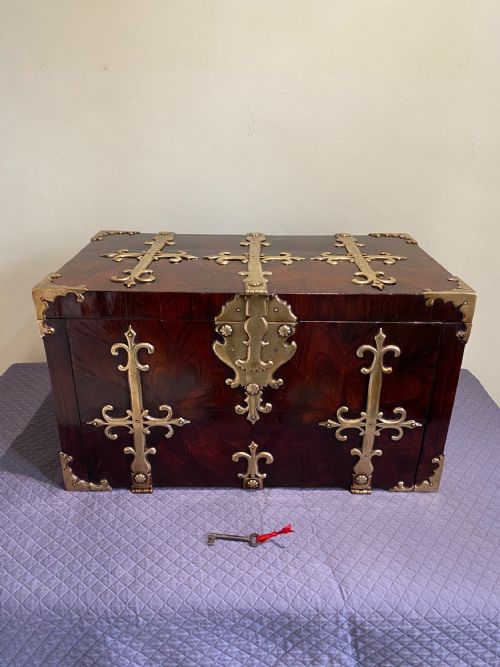
These vintage metal safe pieces are heavy-duty containers forged from iron, steel and brass, offering robust security and industrial character.
Vintage Metal Safe
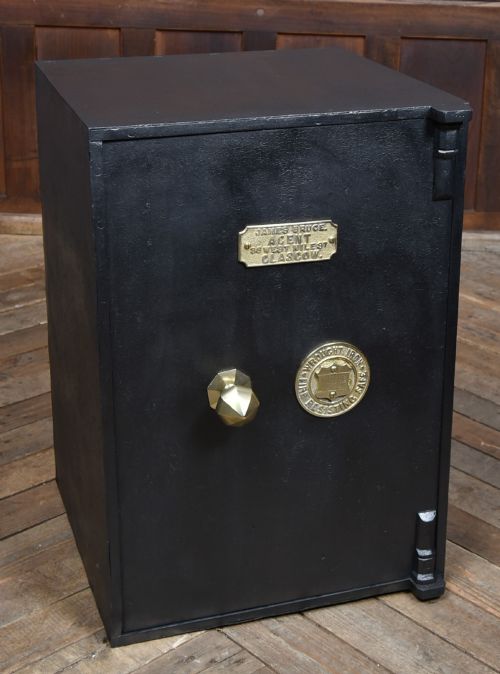
When you search for a vintage metal safe, you are looking at heavy-duty storage containers designed for document and valuables security. The pieces on this page span several centuries, with a strong representation of Victorian examples alongside earlier strongboxes and deed boxes.
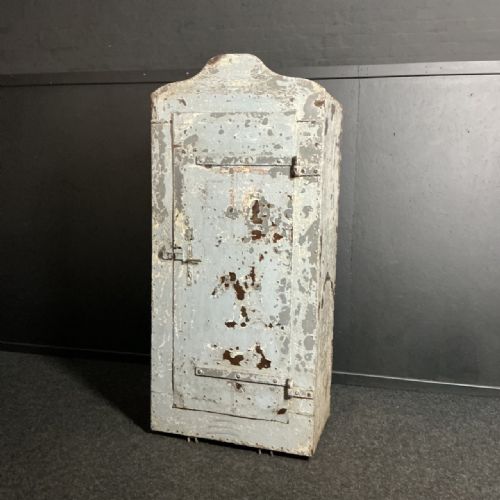
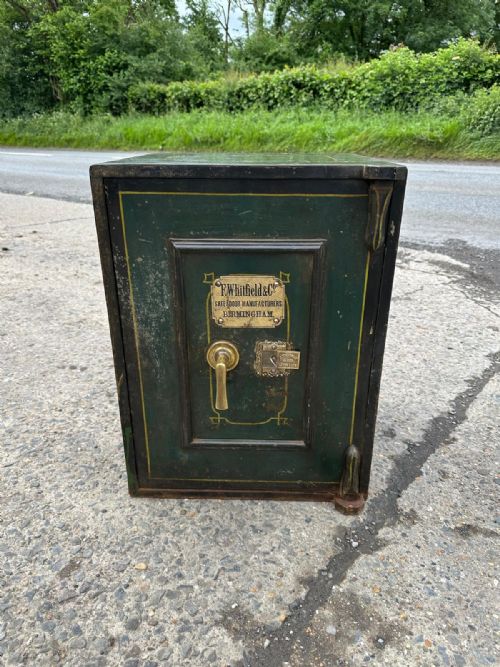
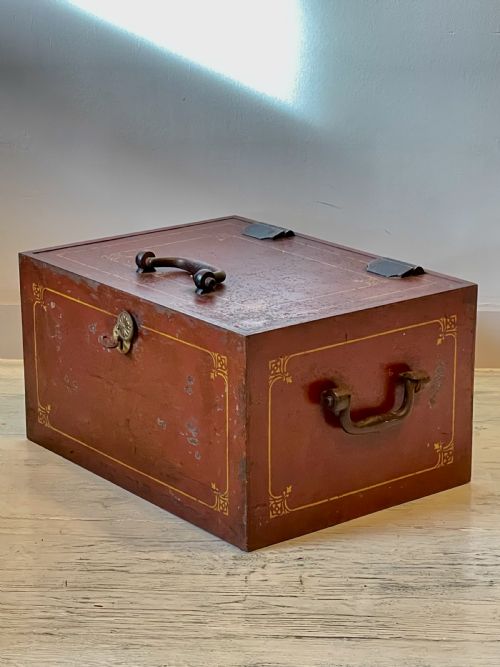
You will encounter various forms ranging from large fireproof floor models to small desk lock boxes and deed cases. Materials shift from early wrought iron and wood constructions to later cast iron and painted steel bodies fitted with intricate brass locks.
How they were made
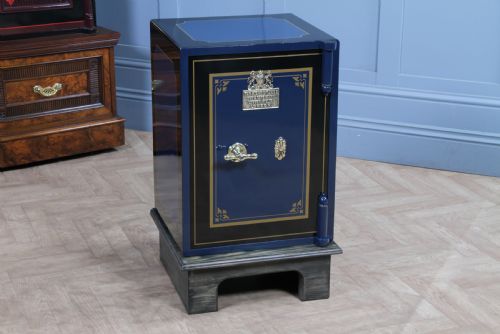
Makers constructed these objects using robust metals including cast iron, wrought iron and steel plates, often reinforced with brass hardware. Wooden elements appear in internal fittings and dedicated stands fashioned from oak or walnut.
Surface treatment involved protective paintwork alongside polished brass plaques and intricate locking mechanisms. Artisans integrated heavy hinges and specialised bolt systems to ensure structural integrity and fire resistance.
Objects categorized under this search phrase include floor-standing fireproof safes, small deed boxes, ladies safe chests and silver storage trunks.
What varies in quality
Quality in a vintage metal safe rests upon the complexity of the locking mechanism and the original maker's reputation. Finer examples exhibit elaborate brass work, maker plaques and fully restored finishes that preserve original operational integrity.
The degree of preservation and the presence of specialised cabinetry, such as custom wood stands, differentiate standard utility boxes from high-status luxury pieces.
James Bruce Glasgow·Tanns Defiance London·F Whitfield and Co·Milners of Liverpool·George Price
The Vintage Metal Safe Glossary
- Strongbox
- A heavily reinforced metal or iron-bound chest used for securing valuables. These precursors to the modern safe often feature complex internal locking mechanisms.
- Deed box
- A portable metal storage case designed for legal documents and private papers. They typically utilise a drop-front or hinged lid secured by a brass lock.
- Cast iron
- A heavy alloy poured into moulds to create rigid structural components. This material provided fire resistance and strength in Victorian security containers.
- Wrought iron
- A tough, malleable iron form beaten into shape by hand. It appears in early brackets, straps and hinges on storage chests.
Vintage Metal Safe: Frequently Asked Questions
What is a vintage metal safe used for?
These pieces serve as secure containers for documents, jewellery and valuables while adding industrial character to a room. Their heavy construction and compartmented interiors make them practical for modern storage.
Historically, they protected assets from theft and fire in offices and domestic settings. Today, owners utilise them as statement furniture pieces or functional security cabinets.
How do I date a metal safe?
Dating relies on maker plaques, lock technology and stylistic indicators such as painted decoration or brass mounts. Victorian examples often bear distinct foundry stamps and patent dates.
Earlier pieces from the seventeenth and eighteenth centuries display hand-forged ironwork and simpler box construction. Later twentieth-century versions transition to standardised steel fabrication.
Are these safes fireproof?
Certain Victorian models were specifically engineered as fireproof safes using double-walled iron construction and insulating packing materials. Maker inscriptions often highlight these fire-resisting properties.
However, historical fireproofing standards differ significantly from modern ratings. Buyers should treat them primarily for secure storage rather than certified fire protection.
How do I clean a metal safe?
Maintenance involves removing dust with a soft brush and preserving painted or oxidized metal surfaces with appropriate microcrystalline wax. Brass elements benefit from careful polishing if a bright finish is desired.
Harsh chemical cleaners should be avoided to protect original paintwork and maker plaques. Keeping the metal in a stable indoor environment prevents further corrosion.