





Vintage Metal Hearth Stand
These vintage metal hearth stand items bring practical warmth and character to the fireplace, combining period craftsmanship with enduring utility.
Vintage Metal Hearth Stand
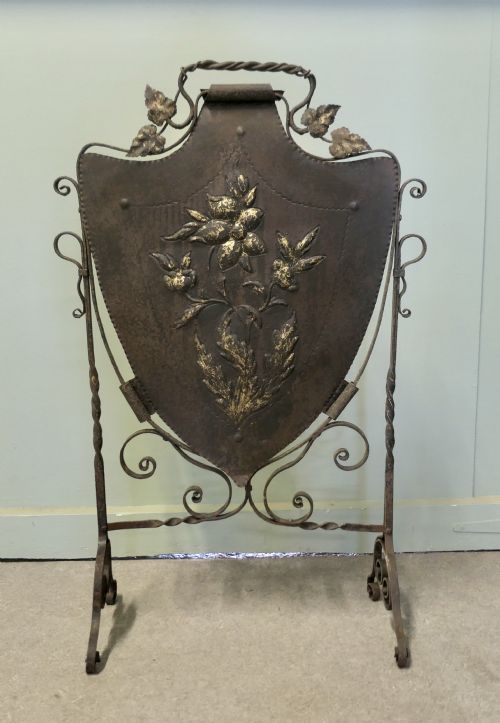
A vintage metal hearth stand encompasses a wide variety of fireplace accessories designed to serve functional and decorative purposes beside the fire. Buyers searching for this phrase encounter items spanning from the eighteenth century through to the early twentieth century, taking forms such as footmen, trivets, fire screens, companion sets, and log bins.
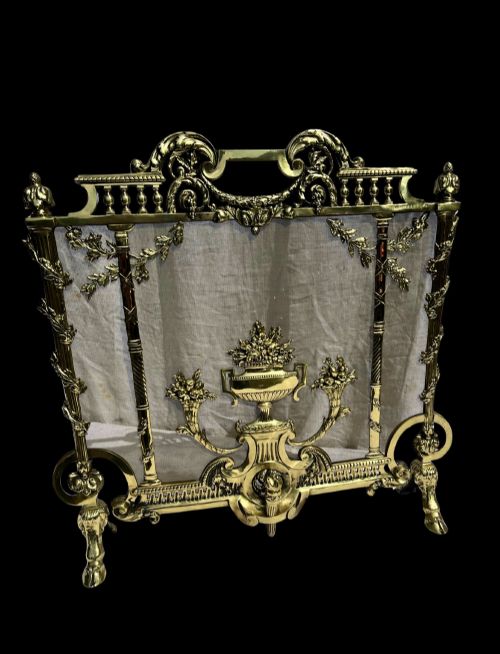
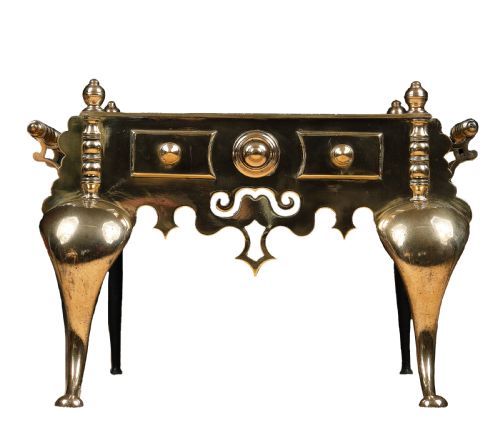
The most common examples on this page are footmen and trivets constructed from brass and steel, alongside copper coal buckets and fire screens from the Victorian and Edwardian periods. These pieces reflect specific historical styles including Georgian, Gothic Revival, Arts and Crafts, and French Rococo Revival.
Objects range from small country house kettle stands to substantial pairs of fire dogs and large spark screens. Each item fulfils a role related to heating, fuel storage, or fire safety within the domestic interior.
Materials and construction methods
Construction relies heavily on metals such as brass, wrought iron, copper, steel, and cast iron, often utilised in combination for both structural strength and decorative contrast. Brass and copper provide bright reflective surfaces or warm tones, while iron and steel supply the necessary rigidity for load-bearing items like footmen and fire dogs.
Manufacturing techniques combine casting, hammering, and forging, as seen in finely cast brass fire dogs and hand-shaped copper bowls on stands. Artisans joined components through riveting or fitting, applying painted finishes or retaining the natural metallic lustre depending on the prevailing style.
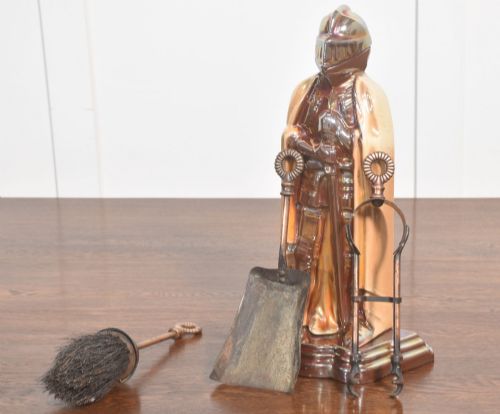
Painted metal knights stand ready to guard the hearth, bringing theatrical Victorian personality directly to the fireside.
Distinguishing quality in hearth metalwork
Quality reveals itself in the weight of the metal and the precision of the casting or forging, where heavier gauges and crisper decorative details separate superior items from lighter, utilitarian productions. Substantial metal thickness ensures durability and stability, particularly in items subjected to heat and heavy daily use.
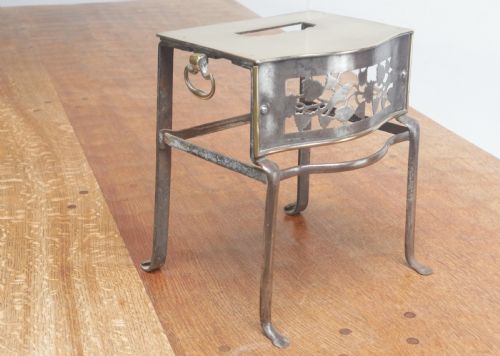
Design integrity and stylistic coherence further separate the range, as seen in pieces that integrate functional requirements with considered ornamentation such as pierced brass panels or hand-wrought iron frames.
The Vintage Metal Hearth Stand Glossary
- Footman
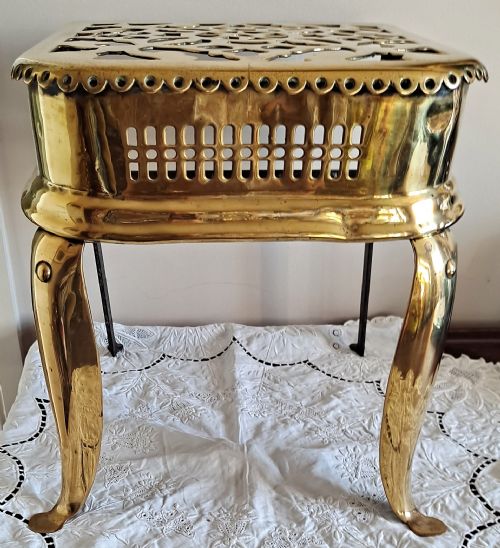
- A metal stand placed before a fire to keep food or kettles warm. These items typically feature four legs and a perforated top.
- Trivet
- A small three-legged or four-legged stand used to support cooking vessels near the fire. They are frequently cast in brass or forged in iron.
- Fire Screen
- A decorative barrier placed in front of a fireplace when not in use to conceal the grate. Examples include folding panels and mesh spark guards.
- Companion Set
- A collection of fireplace tools, such as pokers, tongs, and shovels, usually housed together on a dedicated stand. Sets often match the style of the surrounding hearth furniture.
Vintage Metal Hearth Stand: Frequently Asked Questions
What is a footman used for?
A footman is a traditional metal stand positioned directly in front of the hearth to keep food warm or to heat water. Historically, servants placed kettles or dishes upon its surface.
Today, these pieces serve decorative roles beside period fireplaces or function as plant stands within traditional interiors.
How do I date a brass hearth stand?
Dating relies upon examining manufacturing techniques, stylistic cues, and material composition. Georgian and Victorian pieces often exhibit hand-finishing marks and specific decorative motifs.
Comparing the form and construction to documented examples helps establish the correct period of origin.
Can I use these items with an active fire?
Many solid brass and iron accessories are structurally robust enough for contemporary fireplace use. However, fragile decorative elements or painted surfaces require careful handling.
It is advisable to assess the metal thickness and original purpose before exposing antique items to intense modern heat.
What is the difference between a trivet and a footman?
Trivets are generally smaller stands designed specifically to hold a single kettle or pot close to the coals. Footmen are larger, bench-like structures meant for multiple dishes.
Both items utilise similar metals and casting techniques but serve different capacities in the historic kitchen.