
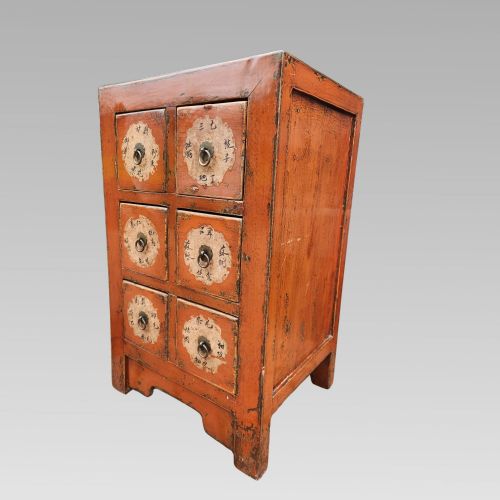
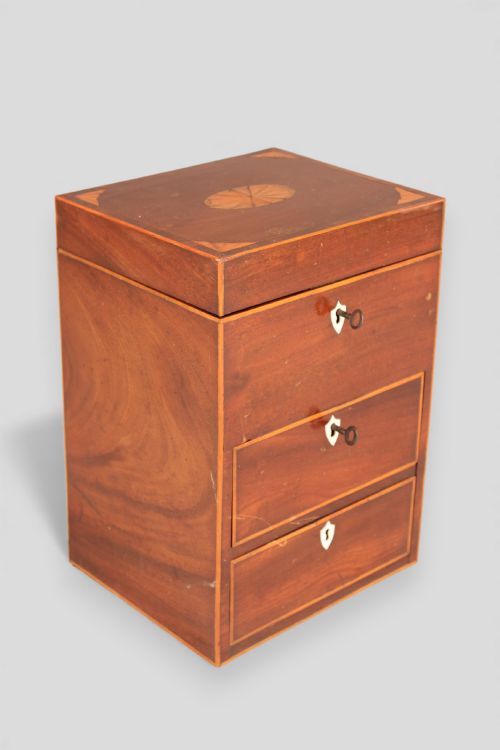


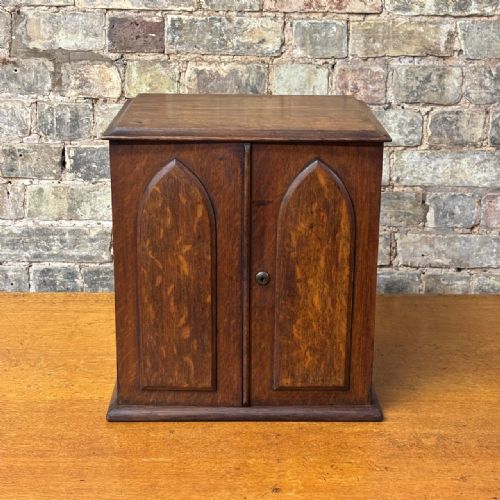


Vintage Medicine Cabinet
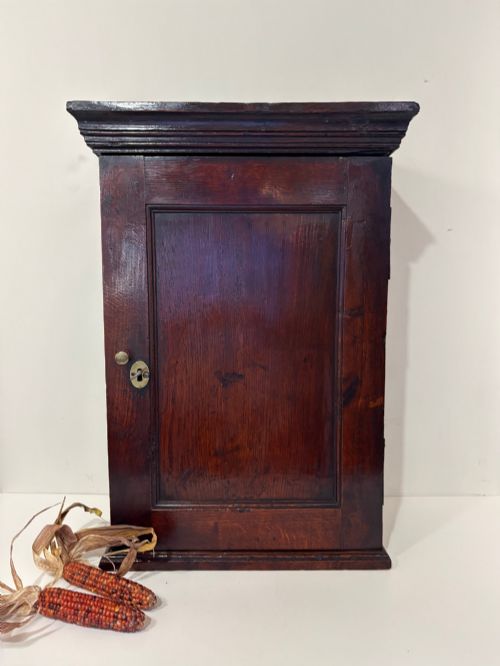
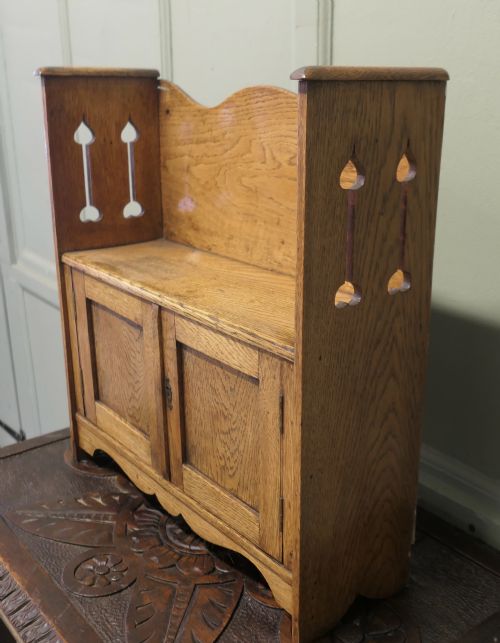
Vintage medicine cabinet selections range from oak wall cupboards to fitted mahogany apothecary boxes used to store remedies and provisions.
Vintage Medicine Cabinet
A vintage medicine cabinet serves as a compact storage unit for remedies, instruments, and personal provisions, appearing in various forms across different regions. When exploring vintage medicine cabinet options, buyers encounter wall cabinets, tabletop chests, and multi-drawer apothecary boxes.
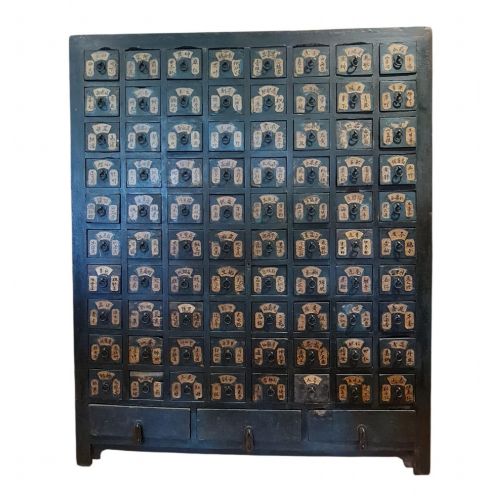
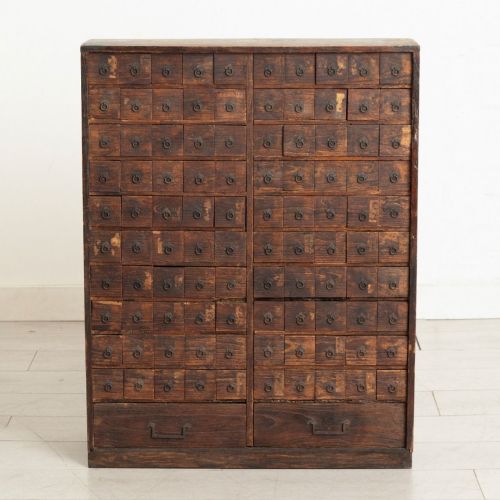
The pieces on this page originate from diverse eras, including the eighteenth, nineteenth, and early twentieth centuries. Styles span from Georgian mahogany boxes to Scandinavian pine wall cupboards and Oriental apothecary chests.
Domestic English and European wall cupboards share space with Chinese elm chest forms and Japanese banks of drawers. Each iteration reflects the storage needs of its specific origin and period.
Materials and construction
Craftsmen built these cabinets primarily using timbers such as oak, mahogany, pine, elm, and walnut. Hardwoods provided durability for portable apothecary boxes, while softer woods suited painted wall cupboards.
Joinery methods varied according to the object type, incorporating fitted internal compartments for glass bottles in portable boxes and pegged joints in larger wall cupboards. Metal hardware like brass pulls, hinges, and locks secured the contents safely.
Surfaces received treatments ranging from clear polish on mahogany to painted finishes on Scandinavian and Austrian cupboards, alongside intricate inlaid details.
Listings feature timbers such as mahogany, oak, pine, elm, and brass across nineteenth and twentieth-century examples.
Variations in quality
Quality in these cabinets hinges on the integrity of the timber selection and the precision of the joinery. Superior examples maintain original hardware, internal fittings, and glass bottles where applicable.
Finer pieces display thoughtful decorative elements such as inlaid veneers, carved panels, or painted finishes applied with genuine skill. The preservation of original surfaces elevates an example above altered or heavily restored counterparts.
The Vintage Medicine Cabinet Glossary
- Apothecary box
- A portable wooden chest fitted with internal compartments designed to hold glass bottles, scales, and medicinal ingredients securely during travel.
- Wall cupboard
- A hanging storage cabinet attached to room surfaces by brackets or fixings, saving floor space in domestic or professional quarters.
- Table cabinet
- A small freestanding storage unit designed to sit upon a desk, counter, or table surface rather than hang upon a wall.
- Inlay
- A decorative technique where contrasting woods or materials are set into recesses flush with the surrounding surface.
- Glazed cabinet
- A storage unit featuring glass panels set into doors or sides to display contents while protecting them from dust.
Vintage Medicine Cabinet: Frequently Asked Questions
What fits inside an apothecary box?
These portable boxes typically contain bespoke internal partitions designed to hold small glass bottles, vials, scales, and dry ingredients securely.
Travellers and practitioners utilised these fitted compartments to transport remedies safely without breakage during transit.
How do I hang a wall cabinet?
Hanging cabinets require secure fixings into wall studs or appropriate masonry anchors to support the weight of the timber and contents.
Older pieces often feature original mounting brackets or internal screw points placed through the backboards for installation.
Are the glass bottles usually original?
Some surviving boxes retain their original set of matched glass bottles, while others acquired replacement phials over time.
Original bottles often match the exact dimensions of the fitted internal wooden slots precisely.
How do I distinguish regional styles?
Regional variations appear clearly through timber choice, construction methods, and decorative motifs unique to specific areas.
European pieces favour mahogany and oak with classical lines, whereas Asian examples utilise elm and multi-drawer configurations.