
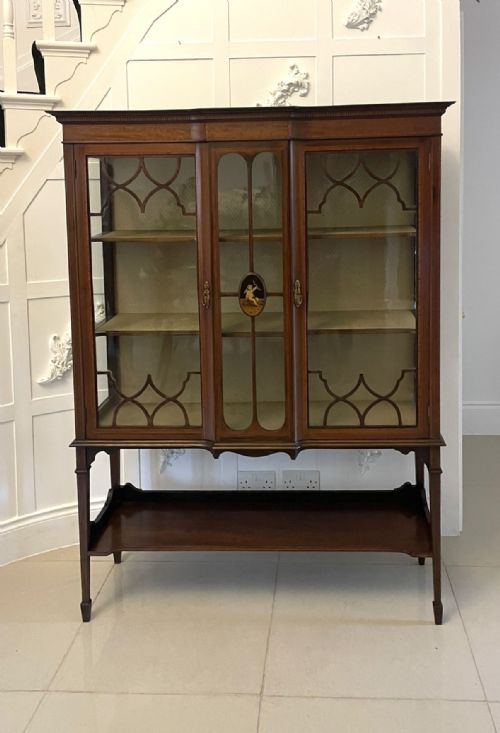
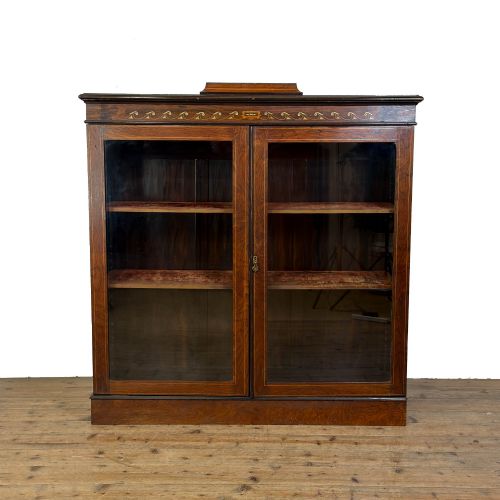
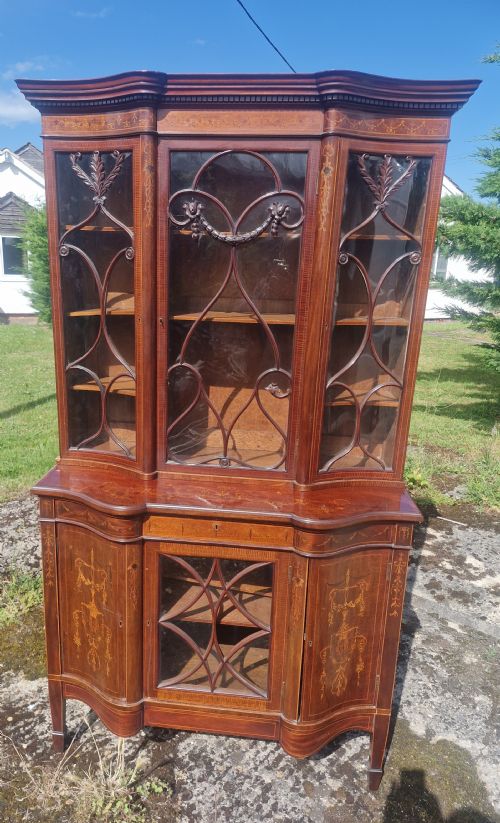
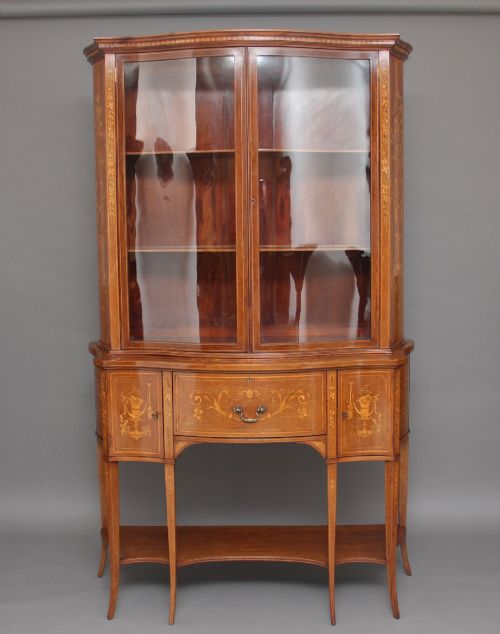

Vintage Marquetry Display Cupboard
A vintage marquetry display cupboard brings warmth and intricate botanical or geometric patterns into a room while safely housing precious glassware and collections.
Vintage Marquetry Display Cupboard
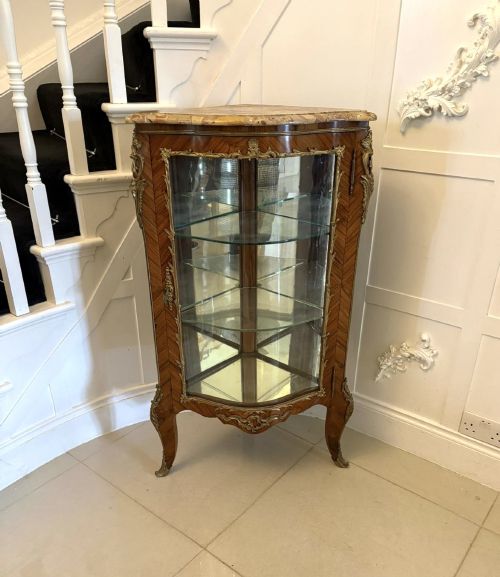
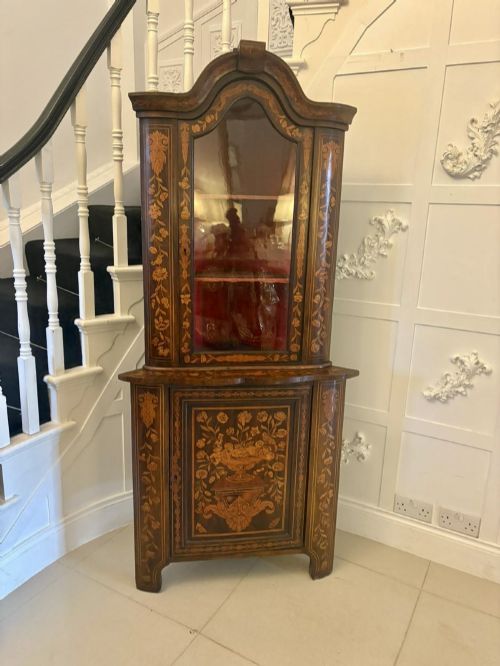
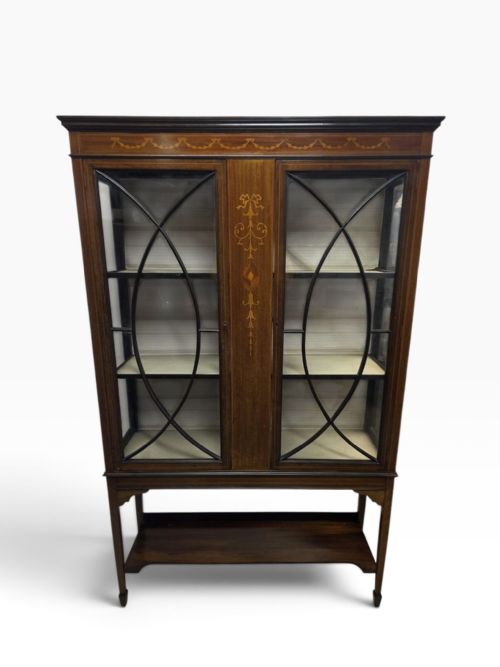
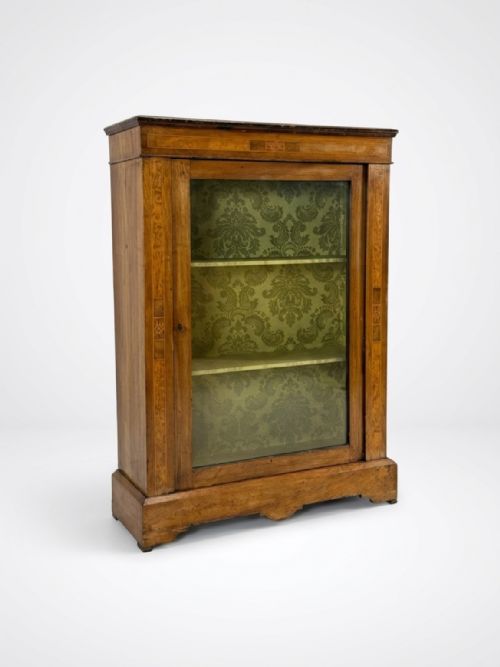
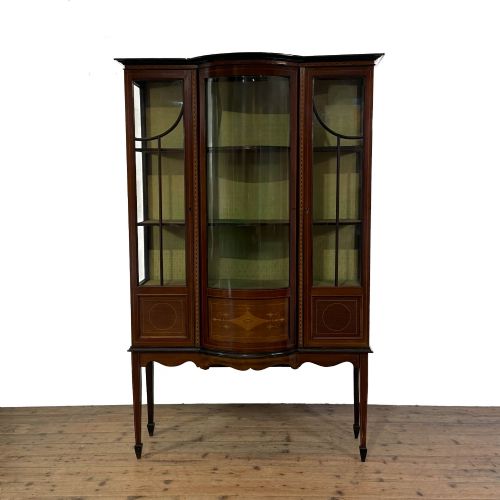
When searching for a vintage marquetry display cupboard, collectors encounter a variety of forms designed to showcase treasured possessions behind glass doors. The selection spans freestanding architectural pieces, tall bookcases, and space-saving corner cabinets tailored for domestic interiors.
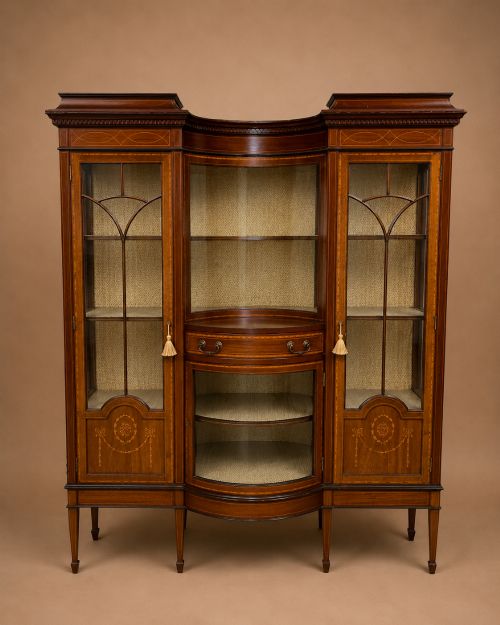
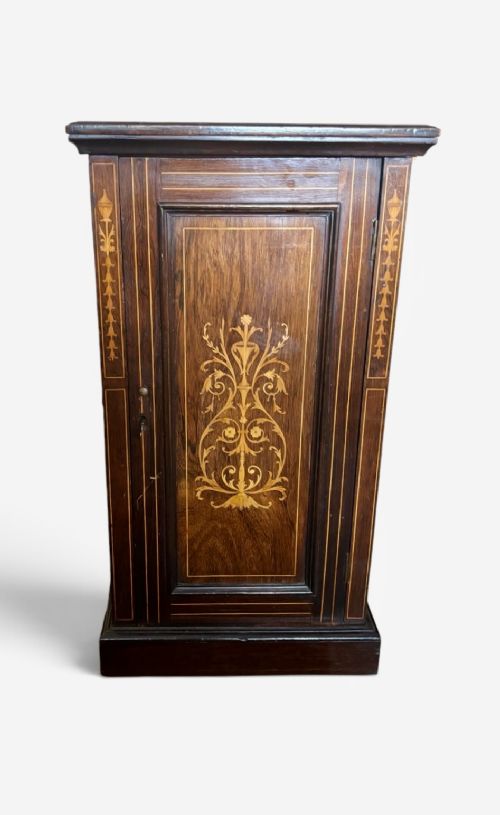
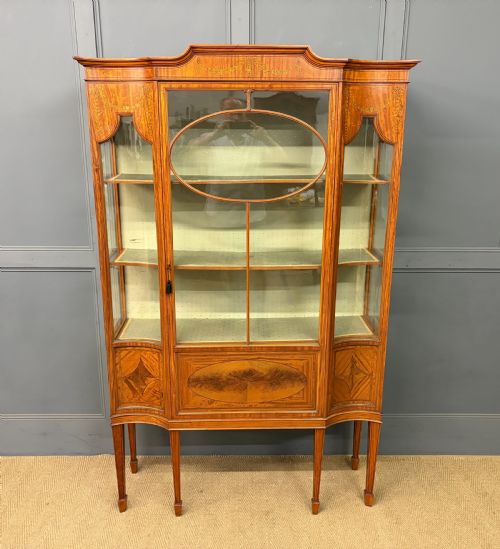
Edwardian mahogany examples and pieces influenced by Sheraton Revival designs dominate the selection, often featuring delicate floral wood inlay. Pieces from the nineteenth century alongside later twentieth-century iterations provide diverse scales suitable for different room proportions.
Makers utilised various formats, including narrow pier cabinets, bow-fronted side cabinets, and hanging wall cupboards. These items served both a functional storage role and an ornamental purpose within period drawing rooms and parlours.
Materials and construction methods
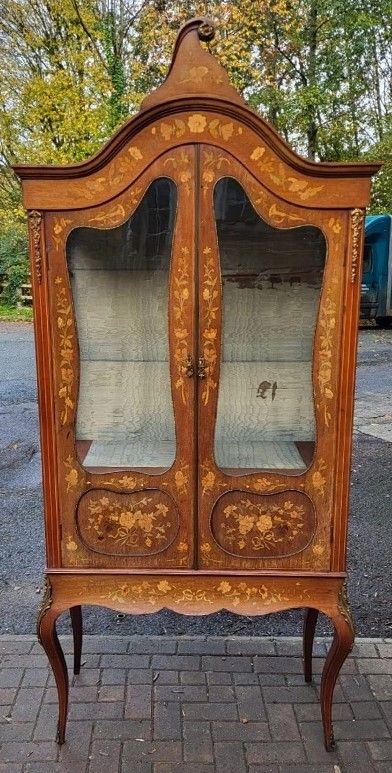
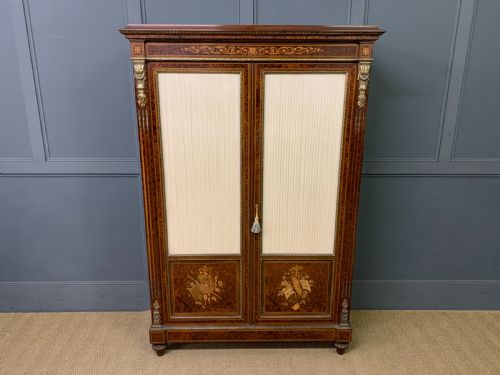
Craftsmen built these cabinets primarily using mahogany, walnut, or satinwood as a structural timber, frequently applying contrasting wood veneers for the decorative surface patterns. Marquetry panels involved precisely cutting fine veneers of various timbers and fitting them together like a puzzle to form floral, scroll, or architectural motifs.
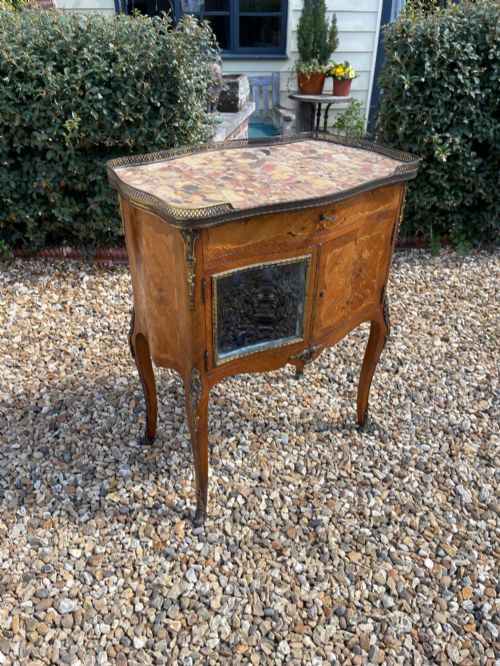
Glass panels were fitted into wooden doors to protect the interior shelves and display items from dust while maintaining clear visibility. Brass fittings, occasional marble tops, and ormolu mounts added structural reinforcement and refined detail to French and English iterations alike.
Listings feature cabinets spanning from the eighteenth century through the Edwardian era into the nineteen-sixties, constructed in mahogany, satinwood, walnut, and oak.
Evaluating craftsmanship and distinction
Quality rests upon the precision of the marquetry work and the crispness of the inlaid details rather than simple age alone. Finer pieces demonstrate seamless integration of contrasting timbers where individual floral petals or geometric lines fit tightly without visible filler.
The choice of primary timber and secondary wood thickness dictates the structural integrity and weight of the cabinet. Superior examples exhibit balanced proportions, well-figured grain patterns in the mahogany or satinwood, and original brass hardware that complements the overall design.
Maple & Co.·Edwards And Roberts
The Vintage Marquetry Display Cupboard Glossary
- Marquetry
- Decorative veneer work arranged in pictorial or symmetrical patterns using various coloured woods. This technique requires immense skill to cut and assemble delicate wooden segments into intricate designs.
- Satinwood
- A pale, lustrous hardwood prized for its yellow sheen and smooth grain. It frequently serves as a contrasting background or primary timber in Sheraton Revival furniture.
- Vitrine
- A glass-fronted cabinet specifically designed for displaying fine porcelain, curiosities, or collections. The term often describes French or revival-style pieces with extensive glazing.
- Ormolu
- Gilt-bronze mounts applied to furniture for decorative effect during the nineteenth century. These metallic ornaments highlight corners, feet, and friezes on high-status cabinets.
- Serpentine
- A furniture front curving inward centrally and outward at the sides in a gentle, undulating wave. This shape requires advanced woodworking skill to execute properly.
Vintage Marquetry Display Cupboard: Frequently Asked Questions
What is the difference between a display cabinet and a corner cupboard?
A display cabinet generally stands flat against a wall with extensive glass panels on the front and sometimes the sides to maximise visibility for decorative objects.
A corner cupboard is specifically built with an angled back to fit neatly into the corner of a room, saving floor space while offering functional storage behind glazed or solid doors.
How do I care for marquetry furniture?
Keep wooden cabinets away from direct sunlight and strong heat sources to prevent the delicate veneer from drying out or lifting over time. Regular dusting with a soft, dry cloth is sufficient, supplemented occasionally by high-quality wax suitable for antique polished wood.
Avoid using modern liquid polishes or silicone sprays, as these can penetrate vulnerable veneer joints and degrade the historic finish.
How do I distinguish Edwardian pieces from nineteenth-century ones?
Edwardian marquetry display cupboards often display lighter satinwood influences and brighter mahogany tones associated with the Sheraton Revival movement around nineteen hundred. Nineteenth-century variants tend to feature heavier proportions, deeper French polish, and darker walnut or kingwood timbers.
Examining the interior construction, secondary woods used for drawer linings, and hinge types helps clarify the exact manufacturing period.
Can these cabinets support heavy books?
Most display cabinets and vitrines were engineered for porcelain, glassware, and lighter decorative objects rather than dense libraries. The internal shelving rests on fixed supports or simple wooden cleats intended for moderate loads.
If storing heavier volumes, check the thickness of the shelves and the strength of their supports to prevent bowing or structural strain.