

Vintage Marquetry Bureau
A vintage marquetry bureau brings together intricate wood veneers and practical writing surfaces, offering both a decorative focal point and a functional workspace.
Vintage Marquetry Bureau
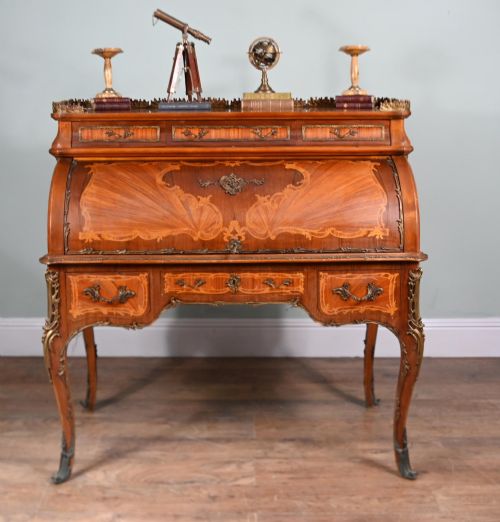
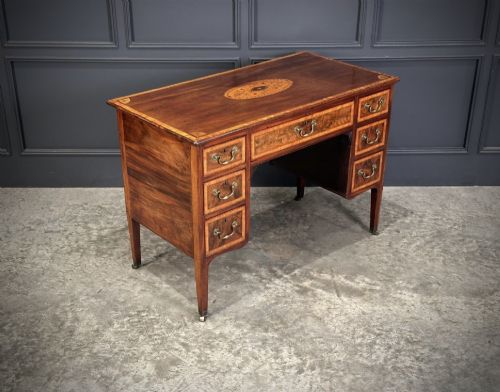
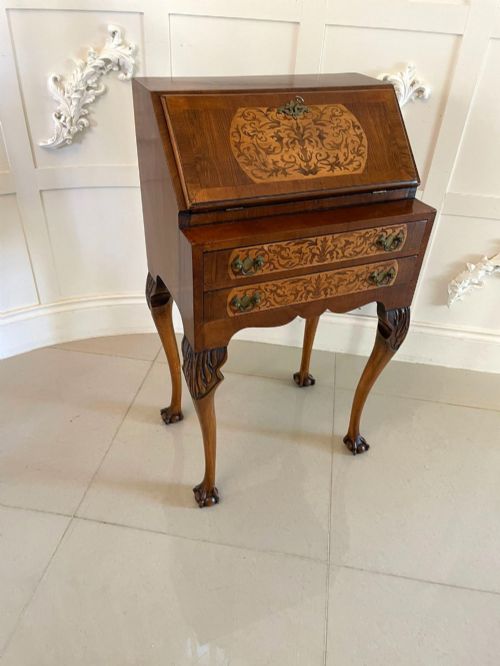
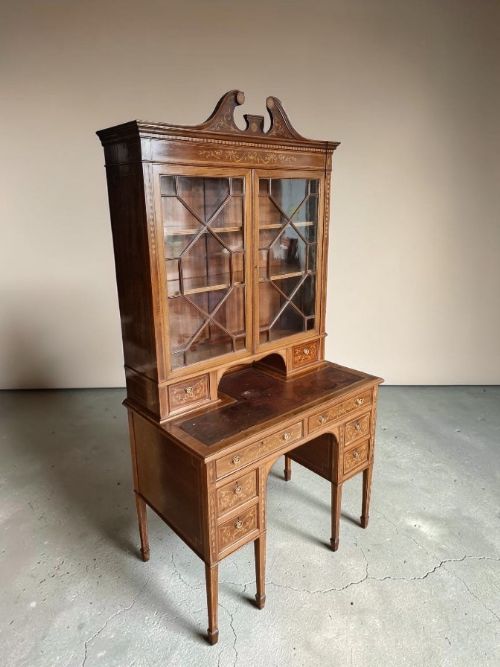
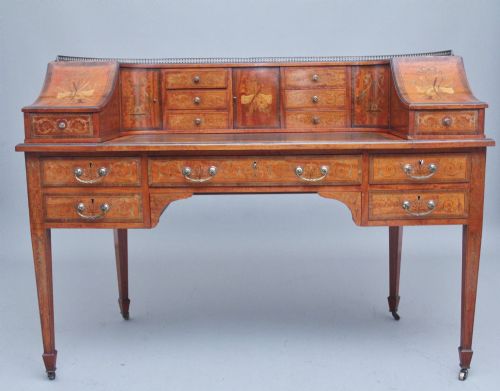
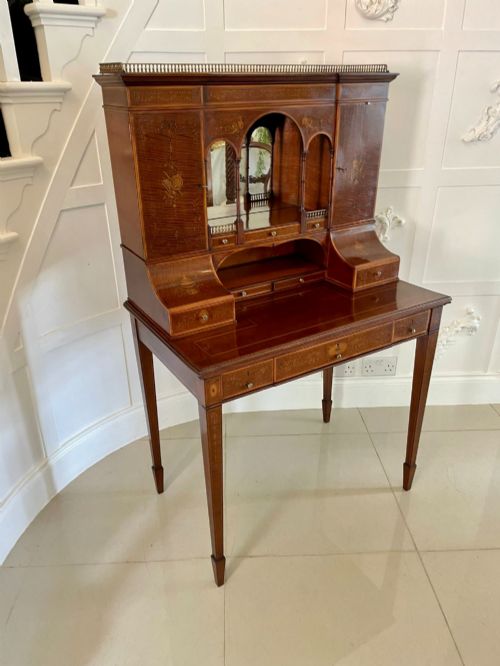
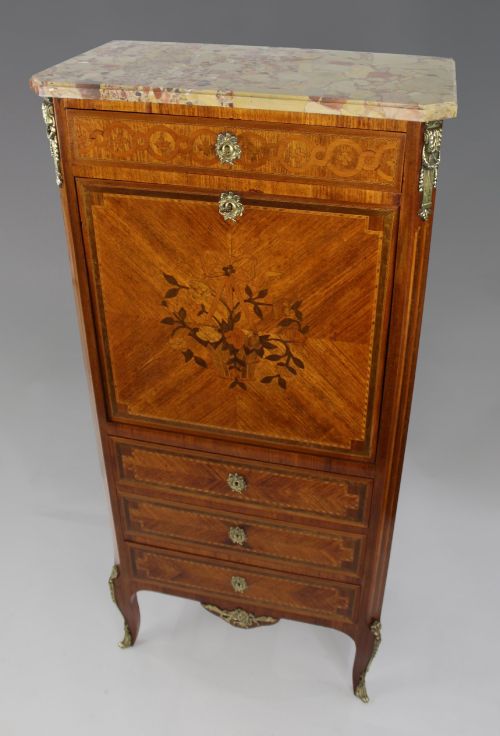
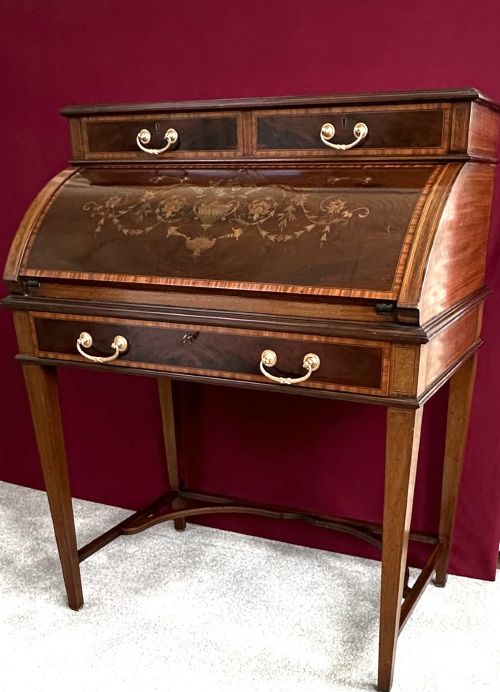
A vintage marquetry bureau combines fitted compartments and a sloping or flat writing surface decorated with detailed wood inlay patterns. These pieces appear across several periods, including the Victorian era, the Edwardian period, and the eighteenth and nineteenth centuries.
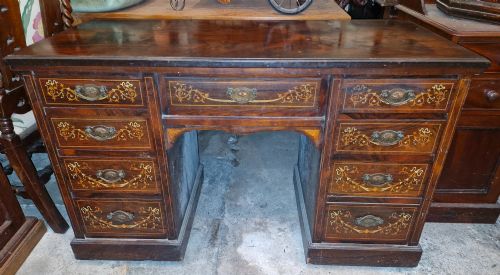
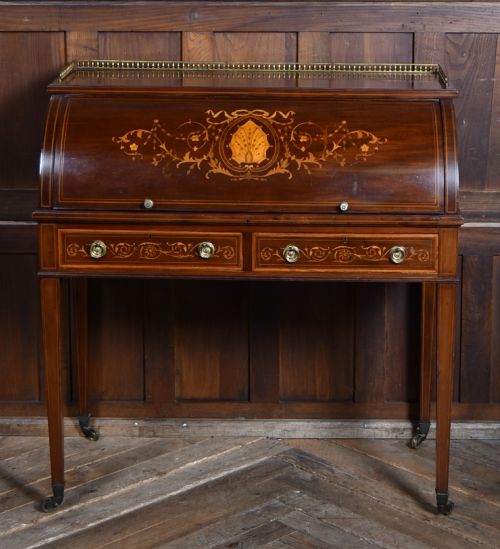
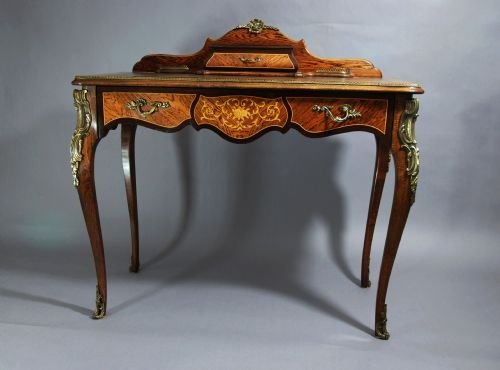
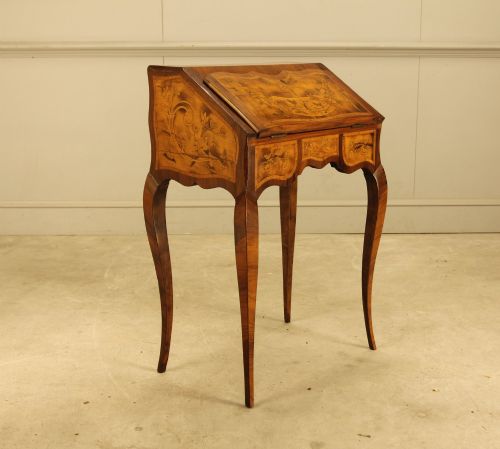
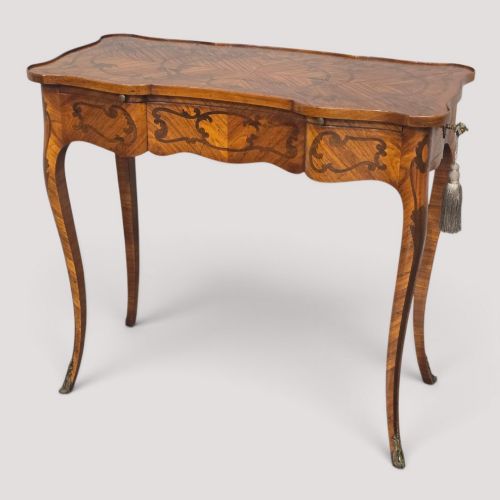
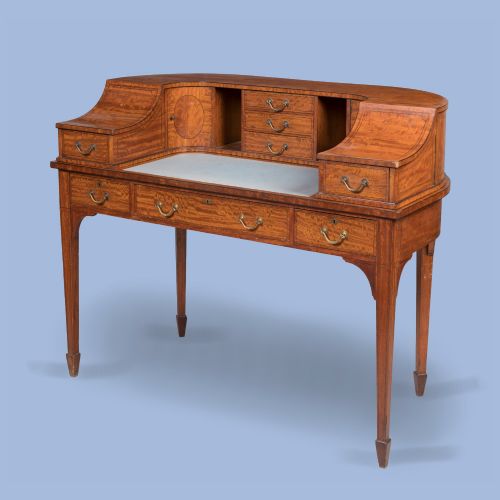
The selection includes fall-front writing desks, bureau bookcases, and cylinder desks executed in styles ranging from Sheraton Revival to French Rococo and Louis XV Revival. Walnut, mahogany, and satinwood provide the primary timber foundations for these pictorial inlay designs.
English and continental workshops produced these writing desks for domestic correspondence and record-keeping. The variety spans compact ladies writing tables to large Dutch and Italian floral marquetry cabinets.
Materials and construction methods
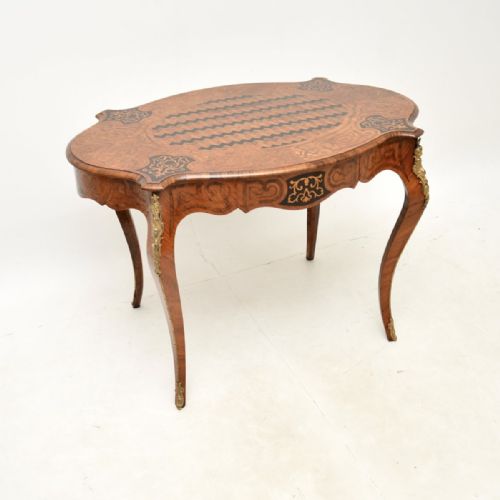
Cabinet makers constructed these pieces using a solid timber carcase overlaid with fine veneers of walnut, mahogany, satinwood, kingwood, and rosewood. Artisans then hand-cut contrasting woods to form pictorial marquetry and geometric parquetry motifs across the surfaces.
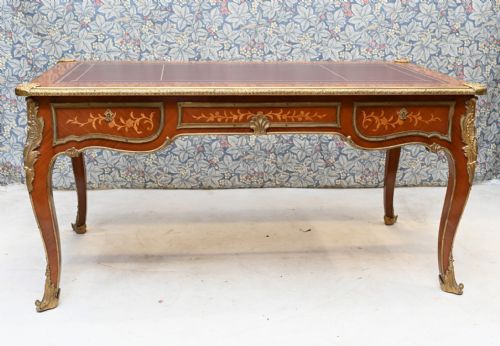
Ormolu mounts, cast brass handles, and leather writing inserts frequently complete the construction of French and English examples. These decorative metal additions highlight key architectural points such as escutcheons, feet, and desk perimeters.
Vintage Marquetry Bureau Retail Price Guide 2026
Typical asking prices for vintage marquetry bureau among the pieces listed under this phrase on Sellingantiques today, from the lower quarter to the upper quarter. They describe what is for sale here now, not the wider market.
Secret letter compartments wait inside these desks for forgotten love notes and tax bills alike.
Assessing craftsmanship and execution
Quality rests in the precision of the veneer cutting and the complexity of the floral or figural marquetry designs. Finer examples display a seamless integration of diverse timber grains with minimal filler.
The refinement of the internal stationary compartments and the weight of the bronze or ormolu mounts indicate the workshop standard. Secondary woods and internal drawer construction reveal the diligence applied to hidden structural elements.
Edwards & Roberts·James Shoolbred of London
The Vintage Marquetry Bureau Glossary
- Marquetry
- Decorative wood veneer arranged in pictorial or floral patterns across a surface. Artisans cut various tinted woods together to form complex imagery.
- Bureau plat
- A freestanding double-sided writing table without a superstructure, originating in France. These tables feature finished backs and frequently incorporate ormolu mounts.
- Escritoire
- A writing cabinet containing a fall-front flap that conceals drawers and pigeonholes. These standing units provide enclosed workspace.
- Ormolu
- Gilt bronze ornamentation applied to furniture mounts and feet. This decorative technique characterises French revival pieces.
- Parquetry
- Geometric wood inlay patterns constructed from small triangular or square veneer pieces. This technique creates repeating tiled visual textures.
Vintage Marquetry Bureau: Frequently Asked Questions
What is a marquetry bureau?
A marquetry bureau is a writing desk adorned with detailed wood inlay veneers arranged in floral or geometric patterns. These pieces typically feature a sloping fall-front or a cylinder top concealing internal compartments.
Craftsmen utilised contrasting natural timbers such as satinwood, walnut, and rosewood to build these decorative surfaces. They serve both as functional writing spaces and ornamental furniture.
How do I maintain the wood surface?
Maintenance involves protecting the veneer and polish from direct sunlight and excessive moisture. Regular dusting with a soft dry cloth preserves the finish.
Avoid placing these desks near heat sources which can cause the wood veneers to dry and lift. Professional wax polishing helps maintain the lustre of antique timber.
Where were these desks made?
Production locations include English workshops as well as French, Italian, and Dutch cabinet makers. Each region developed distinct stylistic preferences.
English pieces often follow Sheraton Revival designs, while continental examples frequently display Louis XV or Dutch Baroque influences with elaborate floral marquetry.
How do I tell periods apart?
Period identification relies on examining the timber choices, structural hardware, and stylistic revival cues. Eighteenth-century examples often feature dense walnut or floral marquetry, while Edwardian pieces frequently utilise satinwood and lighter mahogany.
Cabinet construction techniques and secondary woods inside the drawers also provide clues to the approximate date of manufacture. Ormolu mounts and specific revival styles help date nineteenth-century pieces.