


Vintage Marble Top Dresser
A vintage marble top dresser brings heavy stone and figured timber together in a practical storage piece designed to anchor a bedroom or living space.
Vintage Marble Top Dresser
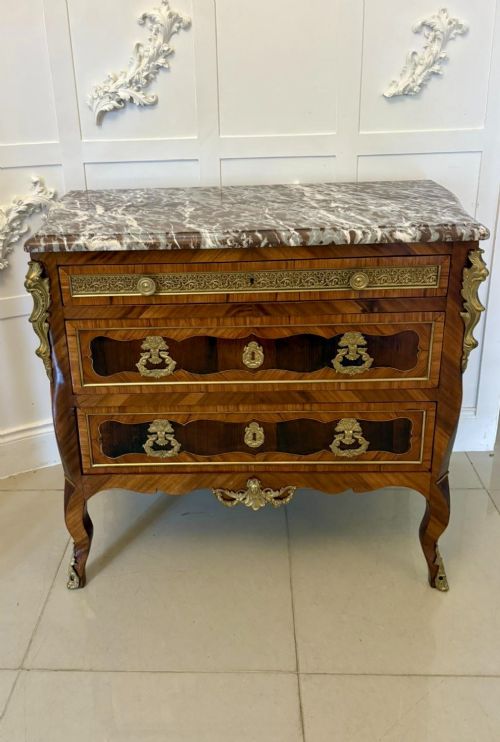
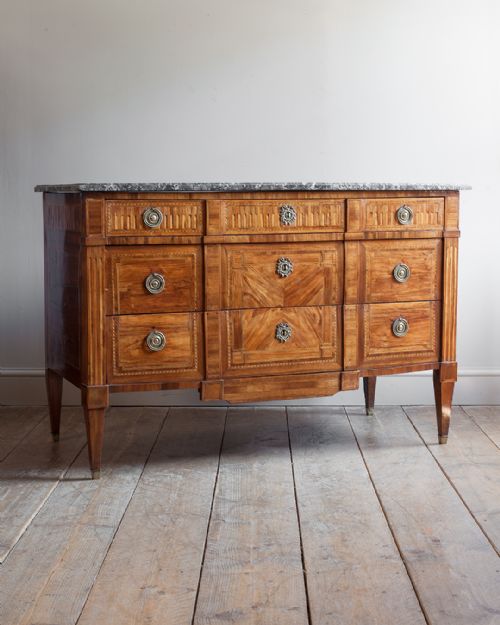
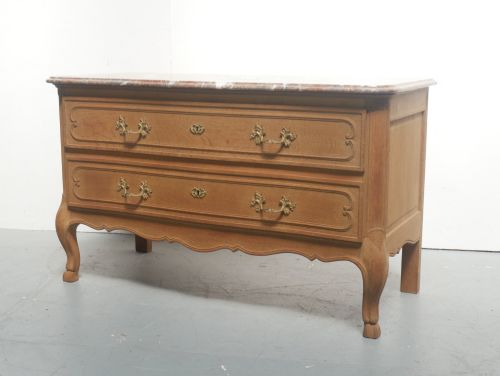
A vintage marble top dresser encompasses substantial case furniture configured primarily as chests of drawers, commodes, and occasional dressing tables. These items frequently originate from continental workshops, predominantly displaying French cabinet-making traditions across the eighteenth, nineteenth, and early twentieth centuries.
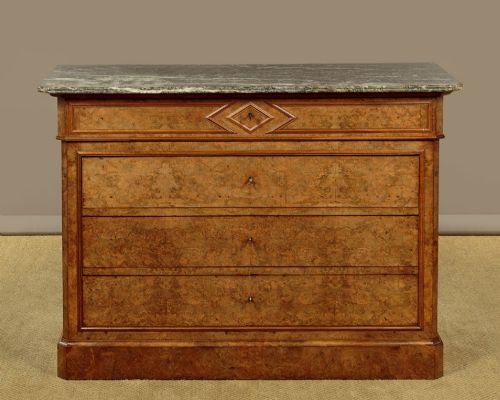
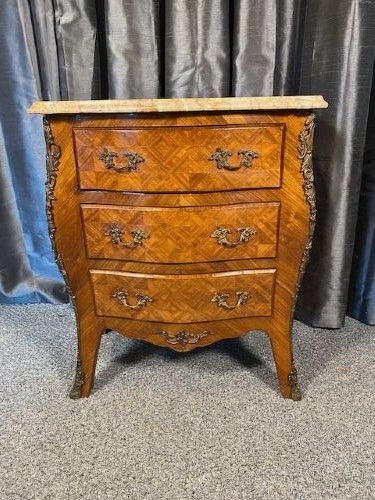
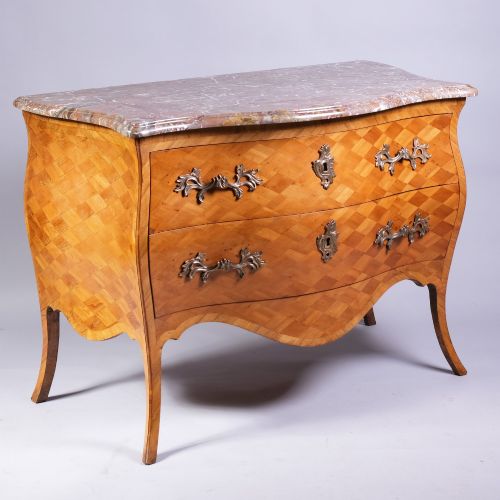
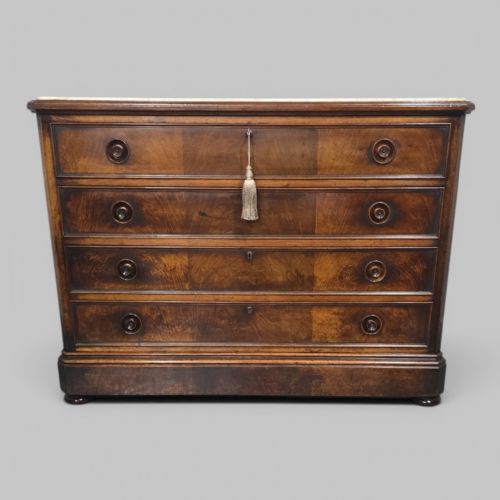
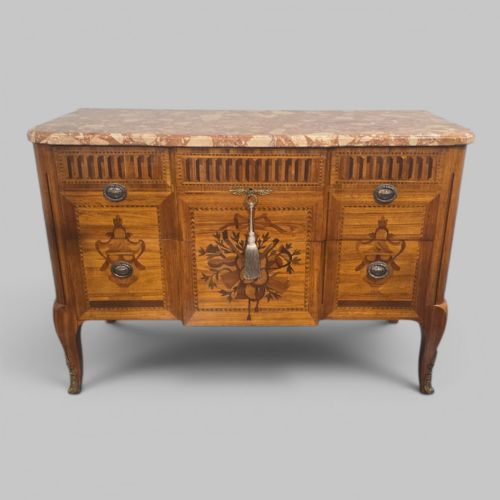
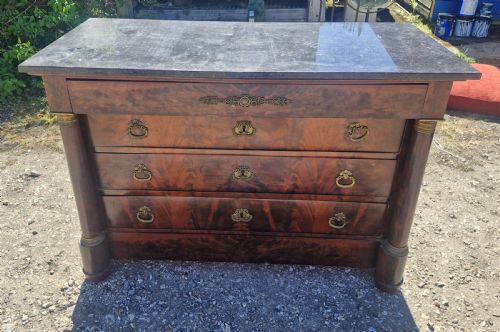
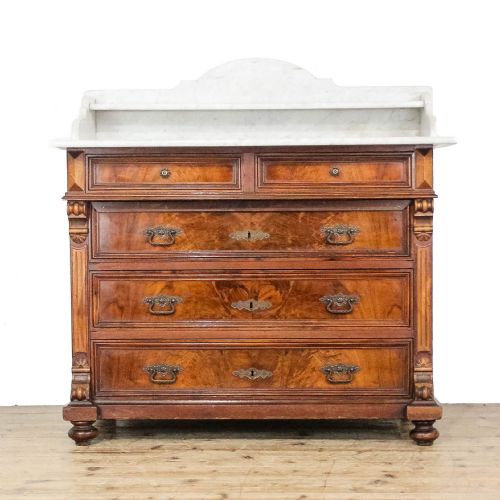
The physical form relies upon a rigid wooden carcass topped by a heavy slab of polished stone, which serves both a decorative and a utilitarian function. Common iterations range from serpentine and bombe profiles to straight-fronted chests executed in walnut, mahogany, oak, and exotic veneers.
Materials and Construction
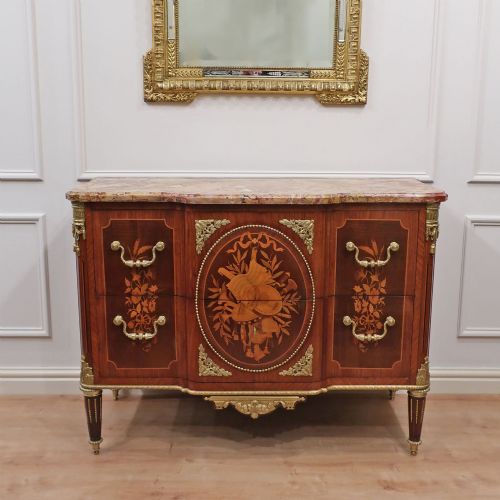
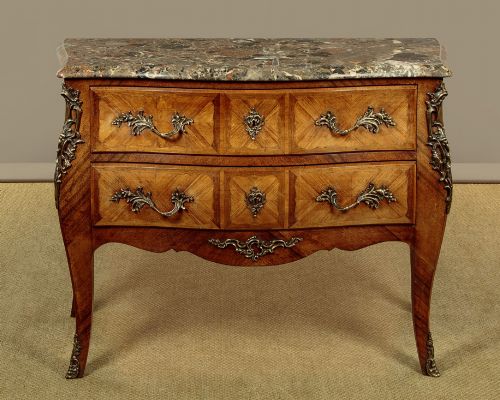
Cabinetmakers constructed these frames using native and imported hardwoods like mahogany, walnut, oak, and kingwood, often applying marquetry or floral inlay across the drawer fronts and sides. Ormolu mounts and brass hardware frequently accent the corners and handles, providing structural protection and visual contrast.
The defining feature rests upon slabs of natural marble, cut and polished to fit the exact contours of the wooden carcass, whether rectilinear, curved, or serpentine. Secondary timbers line the interior drawer boxes, which join together using traditional hand-cut dovetail techniques.
Listings feature pieces spanning the eighteenth, nineteenth, and early twentieth centuries, constructed in walnut, mahogany, oak, kingwood, and rosewood.
Assessing Craftsmanship
The refinement of the surface marquetry and the precision of the veneer matching separate standard domestic examples from finer artistic commissions. Cabinetmakers who spent additional hours selecting figured grain patterns produced pieces with greater visual depth.
The thickness and grain selection of the marble top, alongside the casting quality of any applied ormolu bronze mounts, dictate the overall tier of the piece. Integrated detailing such as brass stringing, flame mahogany panels, and secret drawers indicate a higher grade of workshop production.
The Vintage Marble Top Dresser Glossary
- Ormolu
- Gilt-bronze ornamentation applied to furniture mounts. This technique involves coating cast bronze with a finely ground mercury and gold amalgam.
- Marquetry
- The art of applying decorative veneer pieces to a structural carcass to form geometric or pictorial designs. Craftsmen utilise various contrasting timbers to achieve tonal variation.
- Bombe
- A swollen or bulging profile found on the sides and fronts of certain case furniture. This curved silhouette requires advanced woodworking skill to execute properly.
- Serpentine
- A wave-like contour featuring a convex centre flanked by concave curves. It defines the shaped fronts of specific eighteenth and nineteenth-century chests.
Vintage Marble Top Dresser: Frequently Asked Questions
How do I clean a marble top?
Wash the stone surface using warm water and a soft cloth, avoiding acidic cleaners that etch the polished finish.
Dry the marble thoroughly afterwards to prevent water marks from settling into the natural stone grain.
What periods do these dressers cover?
The inventory spans items made from the eighteenth century through the nineteenth century and into the early twentieth century.
Common stylistic movements include Louis XV, Louis XVI, Empire, and Art Deco designs executed in various continental workshops.
Are the marble tops attached?
Most marble slabs rest loosely by gravity upon the wooden carcass due to their considerable weight.
This loose fit allows for safer transport of the furniture piece by separating the heavy stone from the timber frame.
How do I identify a commode?
A commode is essentially a decorative chest of drawers designed with wider proportions and often more ornate wood veneers.
They function well as sideboards or bedroom storage units where surface display space is desired.