



Vintage Marble Splashback
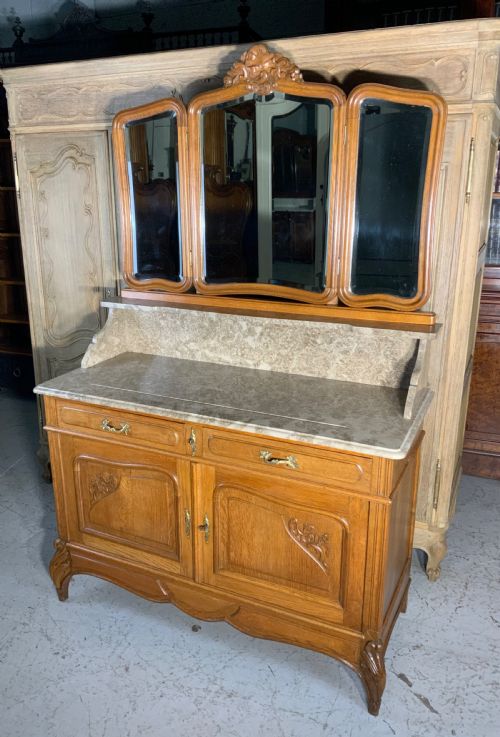
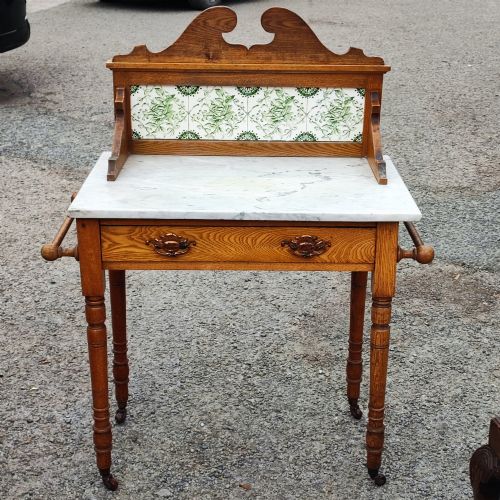
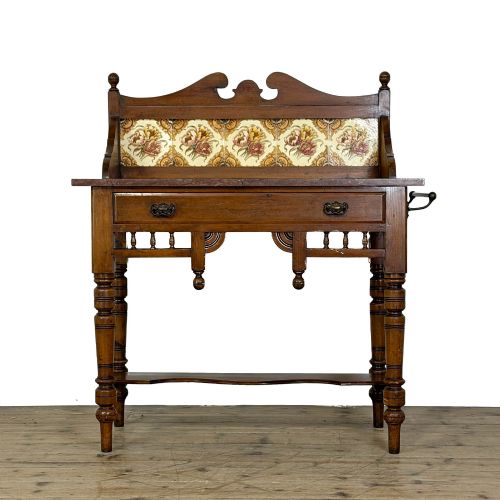
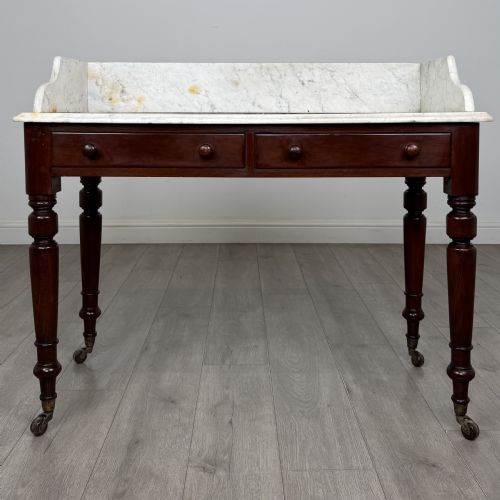
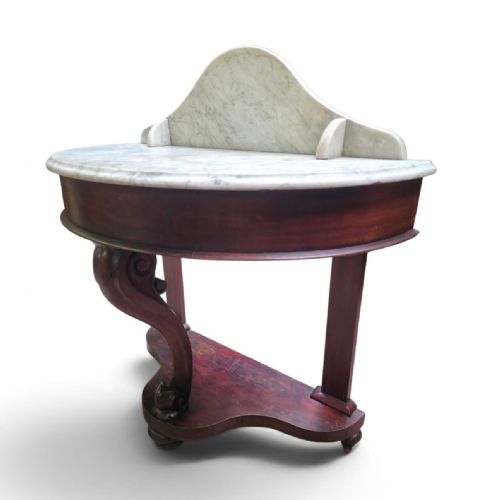
A vintage marble splashback sits behind a washstand, protecting walls from water with solid stone and period character.
Vintage Marble Splashback
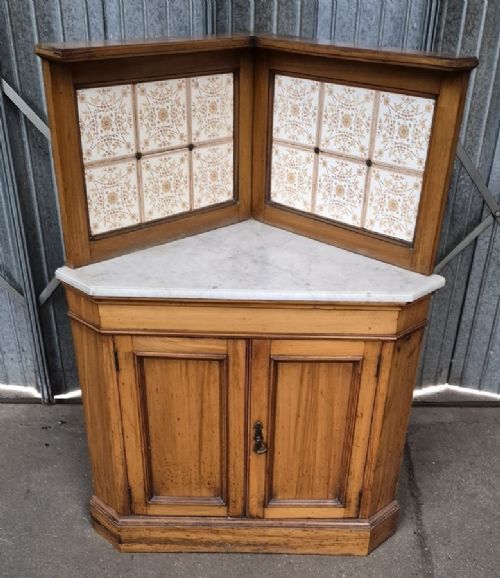
A vintage marble splashback forms the protective stone back and often the top of a washstand, fulfilling both a practical bathroom function and a decorative role in bedroom furniture. These slabs survive primarily attached to Victorian and Edwardian washstands, corner washstands, and bedroom suites rather than as isolated architectural salvage.
The pieces appearing on this page date predominantly from the Victorian and Edwardian eras, spanning from the late nineteenth century into the early twentieth century. Buyers encounter them integrated into mahogany, walnut, oak, satinwood, and painted pine furniture, alongside occasional French commodes and Arts and Crafts pieces.
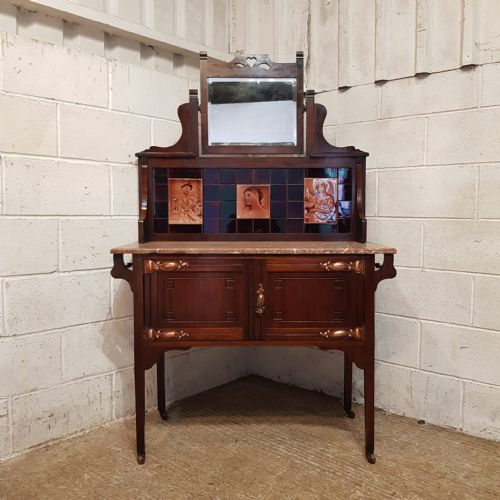
The most common form is the integral marble top and back fitted to a washstand designed for a period bedroom. These stone panels vary from simple white or grey marble to rich rouge marble and patterned varieties, frequently paired with tiled surrounds in Edwardian examples.
How they were made
Masons cut and polished natural marble into thick slabs to resist moisture, securing the upright splashback to the horizontal counter using wooden framing, brass brackets, or dowels. Cabinetmakers housed these stone surfaces within frames of mahogany, walnut, oak, or satinwood, often incorporating ceramic tiles into the splashback design.
Joinery techniques combined traditional framing with water-resistant surfaces suitable for daily washing before plumbed bathrooms became standard. Craftsmen carved, inlaid, or painted the surrounding timber carcases in styles ranging from plain Victorian utility to Sheraton Revival inlay and Art Nouveau curves.
Vintage Marble Splashback Retail Price Guide 2026
Typical asking prices for vintage marble splashback among the pieces listed under this phrase on Sellingantiques today, from the lower quarter to the upper quarter. They describe what is for sale here now, not the wider market.
Materials paired with these stone panels include mahogany, walnut, oak, satinwood, ceramic tiles, and painted pine.
What varies in quality
Quality rests in the thickness, figuring, and coloration of the marble slab itself, alongside the cabinet timber and joinery execution. Finer examples display rich rouge or heavily figured marble matched with dense mahogany, walnut, or intricate satinwood inlay.
The integration between the heavy stone splashback and the timber base dictates structural integrity. Superior pieces maintain tight joints and substantial stone without crude repairs, whereas lesser items rely on simpler painted pine or thin marble veneers.
Walker & Sons·Gillows
The Vintage Marble Splashback Glossary
- Splashback
- A vertical panel rising behind a washstand or basin to protect the wall from water splashes. It is usually made of marble or ceramic tiles and fixed directly to the furniture carcase.
- Rouge marble
- A deep red, multi-coloured limestone marble variety imported from France and favored for high-status Victorian and Edwardian furniture tops.
- Sheraton Revival
- A late nineteenth and early twentieth century design style reviving the classical geometry, satinwood timbers, and delicate inlay associated with eighteenth-century cabinetmaker Thomas Sheraton.
- Art Nouveau
- An international decorative style characterised by sinuous, organic lines and flowing natural motifs, appearing on furniture and splashback surrounds around nineteen hundred.
Vintage Marble Splashback: Frequently Asked Questions
What is a vintage marble splashback?
A vintage marble splashback is the stone panel fitted to the rear of a period washstand to protect bedroom walls from water. These slabs are typically integrated directly into nineteenth and early twentieth century washstand designs.
They combine heavy natural stone with timber framing, serving as both a functional barrier and a decorative feature of antique bedroom suites.
How do I date a marble splashback?
Dating relies on the accompanying timber furniture, the framing style, and the type of marble used. Victorian examples often feature solid mahogany or walnut, while Edwardian pieces frequently incorporate tiled borders or satinwood inlay.
Construction methods and secondary woods also help place the piece within the Victorian, Edwardian, or Arts and Crafts periods.
Were these splashbacks removable?
Most period splashbacks were secured to the washstand top using wooden tenons, screws, or brackets to allow for transport. Because marble is exceptionally heavy, the back panel was frequently built to detach from the main cabinet.
Buyers should examine how the stone meets the counter to understand if the splashback was originally designed as a fixed or separable component.
How do I care for antique marble?
Antique marble requires gentle cleaning with warm water and pH-neutral soap to preserve the polish and prevent staining. Avoid acidic cleaners, vinegar, or harsh chemicals that can etch the stone surface.
Regular dusting and immediate wiping of spills will maintain the natural appearance of the vintage stone over time.