



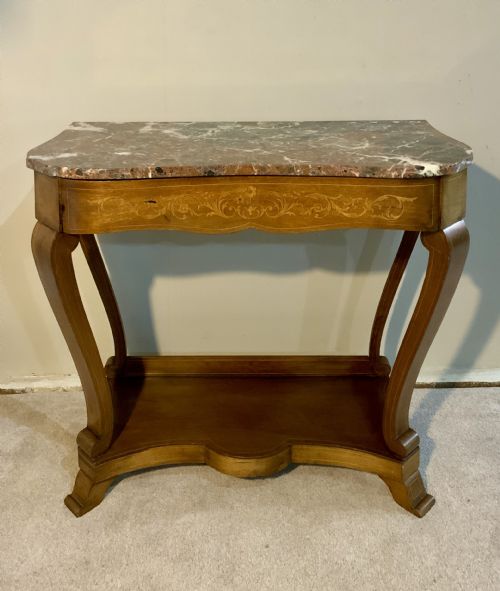
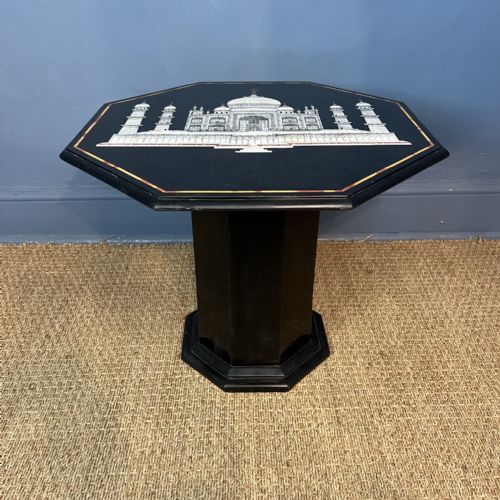
Vintage Marble Inlay Table
A vintage marble inlay table brings rich geological pattern and precise stonework into a room, offering a firm, cool surface for daily use.
Vintage Marble Inlay Table
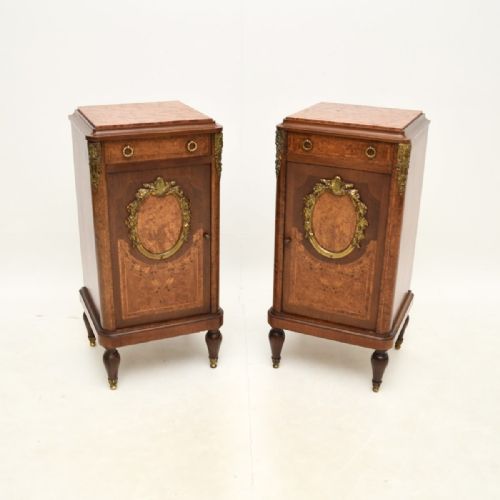
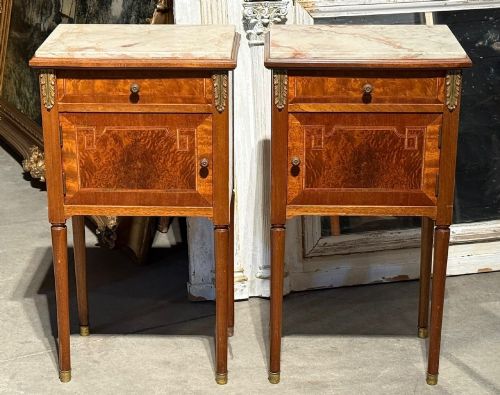
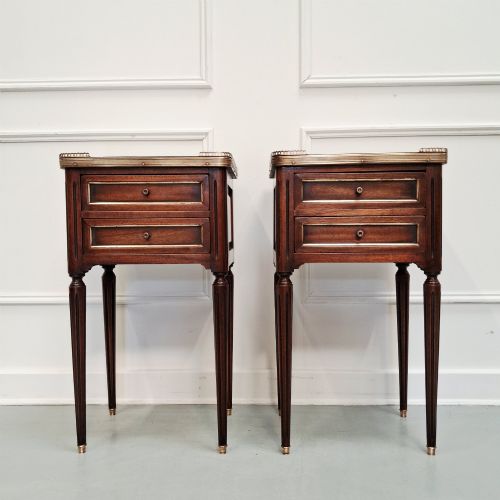
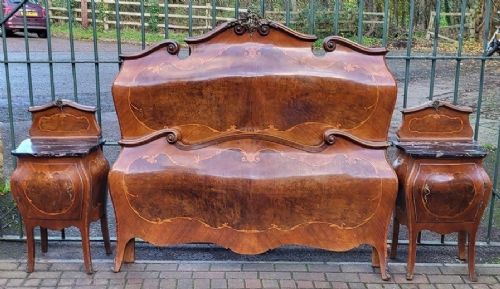
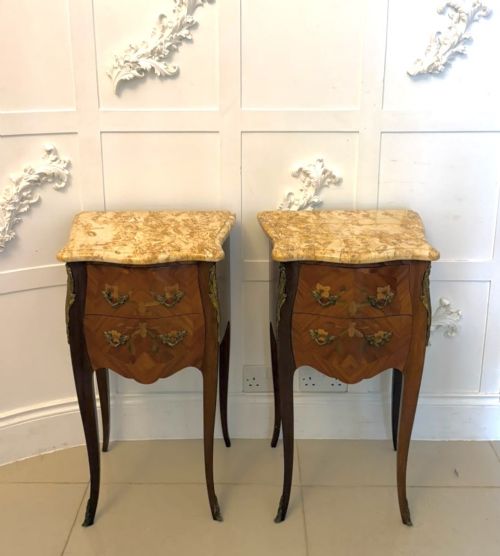
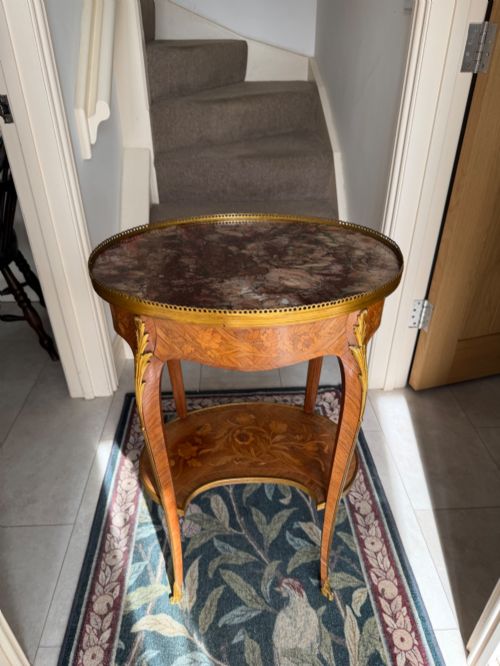
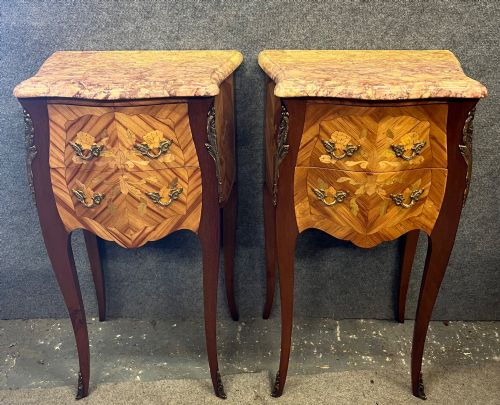
A vintage marble inlay table combines durable stone with intricate surface decoration, appearing across various forms including bedside cabinets, occasional pieces, and larger centre tables. These pieces span periods from the nineteenth century through the Edwardian era and into the 1930s, reflecting diverse international workshops.
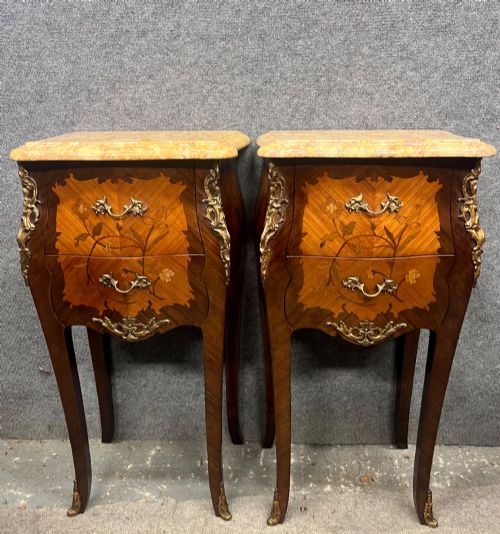
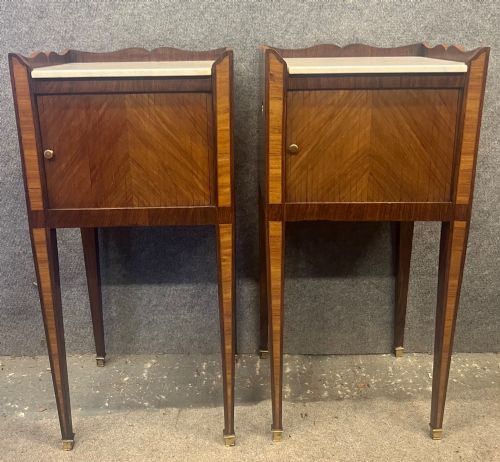
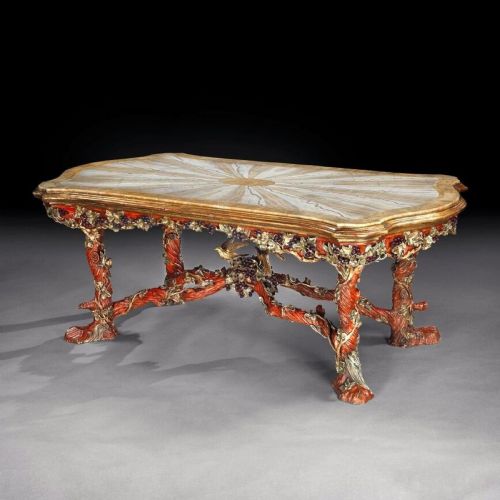
The most common formats on this page are French bedside cabinets and Italian tables featuring fitted stone surfaces, often paired with walnut, kingwood, or mahogany frames. Regional variations range from Anglo-Indian black marble designs to French Louis XV revival pieces.
Buyers encounter everything from small lamp tables to substantial console and serving tables. Each utilises natural stone combined with wood marquetry, parquetry, or mother-of-pearl accents to create distinctive decorative patterns.
Materials and construction methods
These tables rely on a foundation of dense hardwoods such as mahogany, walnut, and kingwood, frequently enhanced by decorative veneer work including marquetry and parquetry. Metal mounts in ormolu and brass often frame the woodwork and support the structural joints.
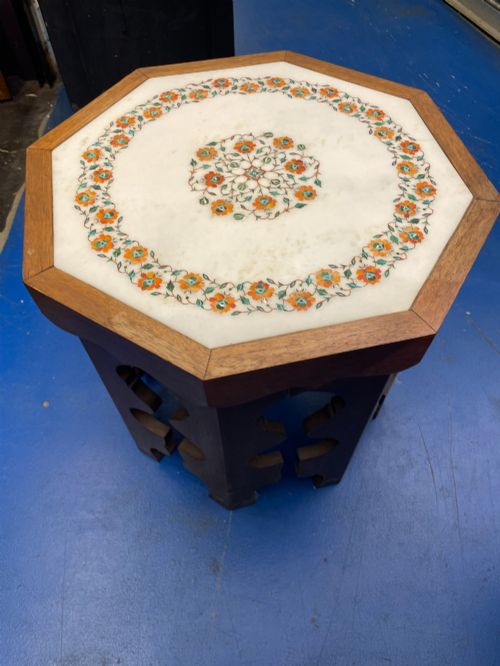
The distinctive tops utilise solid marble, onyx, or tesselated stone, into which contrasting stones or mother-of-pearl are meticulously fitted by hand. Carved wood details and polychrome finishes complete the construction of the more elaborate Italian and French examples.
Vintage Marble Inlay Table Retail Price Guide 2026
Typical asking prices for vintage marble inlay table among the pieces listed under this phrase on Sellingantiques today, from the lower quarter to the upper quarter. They describe what is for sale here now, not the wider market.
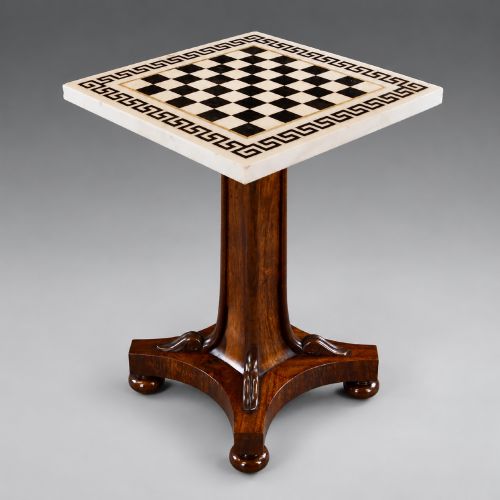
A nineteenth-century stone top quietly hides the game of kings within an original Kashmir chess table.
Distinguishing quality in stone and wood
Quality rests upon the precision of the stone cutting and the tightness of the joinery where the marble meets the wooden frame. Superior examples display seamless flush inlay work and finely figured timbers such as satinwood or kingwood.
The sophistication of the secondary materials also dictates the standard of the piece, visible in the weight of the brass and ormolu mounts and the intricacy of the underlying marquetry patterns.
Amleto Bertoni
The Vintage Marble Inlay Table Glossary
- Marquetry
- Decorative veneer applied to furniture in patterns using different coloured woods, metals, or shell. This technique creates pictorial or geometric designs across the surface of table tops and cabinet doors.
- Parquetry
- Geometric mosaic woodwork used for surfacing floors and furniture tops. It arranges small blocks of timber in repeating patterns such as cubes or chevrons.
- Ormolu
- Gilded bronze used for decorative mounts, feet, and handles on furniture. The technique involves applying a gold amalgam to a bronze base.
- Specimen marble
- Table tops composed of numerous different polished marble and mineral fragments arranged in geometric or pictorial compositions. This stonework often originates from Italian workshops.
- Etagere
- An open piece of furniture with multiple tiers for displaying small objects. These tables provide stacked surfaces supported by slender uprights.
Vintage Marble Inlay Table: Frequently Asked Questions
How do I clean a marble table top?
Use a soft cloth dampened with warm water and mild, pH-neutral soap to wipe the surface gently. Avoid acidic cleaners, vinegar, or harsh abrasives that can etch or dull the polished stone.
Dry the marble thoroughly with a clean towel to prevent water spots. Promptly wipe up spills, particularly oils or wine, which can penetrate porous stone if left unattended.
Where should I place an occasional table?
Position these pieces beside seating areas or beds where their decorative stone surfaces remain visible and useful for lamps or small items. Ensure they sit on level flooring to prevent rocking.
Keep tables away from direct heat sources and strong, prolonged sunlight to protect the underlying wooden frames and prevent veneer drying or cracking.
How do I date a marble topped table?
Examine the construction methods of the wooden base, including drawer dovetails, screw types, and secondary timbers. Nineteenth-century pieces often display hand-cut joinery and heavier mahogany or walnut carcases.
Compare the decorative style, such as Edwardian satinwood framing or French Louis XV revival curves, with documented design periods. The specific characteristics of the marble inlay and edge moulding also offer strong chronological clues.
Are these tables suitable for daily use?
Solid stone tops provide a resilient, heat-resistant surface that handles everyday items like cups and books with ease. Regular care ensures the piece withstands normal household activity.
Use coasters and placemats to protect both the polished stone from scratching and the wooden base from moisture rings. Treat the joints and veneers with standard gentle furniture care.