




Vintage Marble Garden Table
A vintage marble garden table brings enduring weight and cool surface texture to an outdoor terrace or conservatory.
Vintage Marble Garden Table
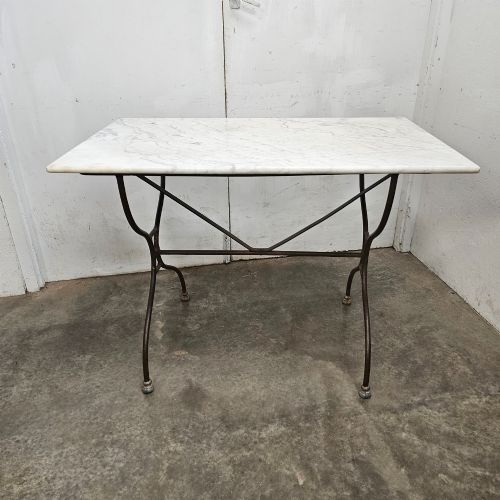
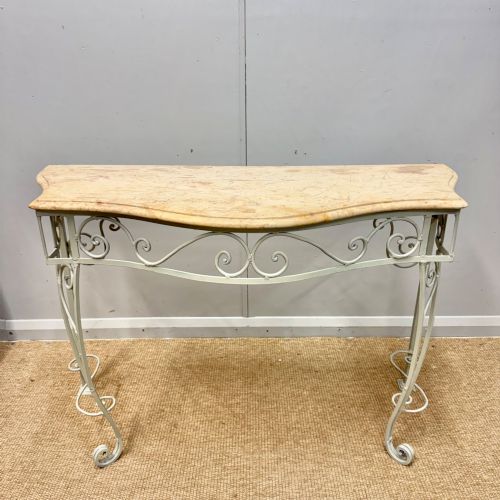
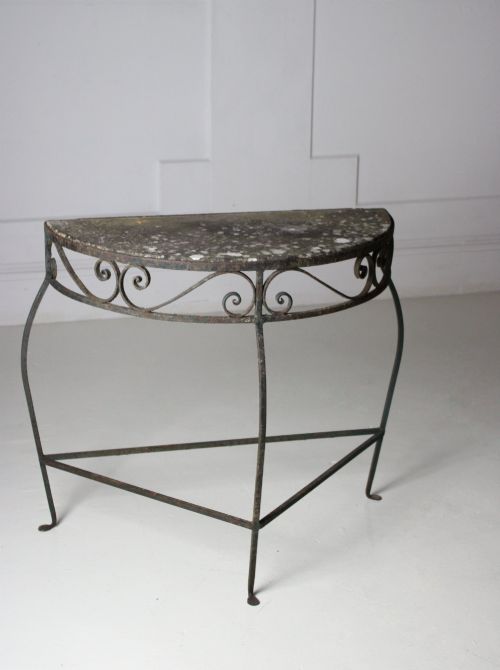
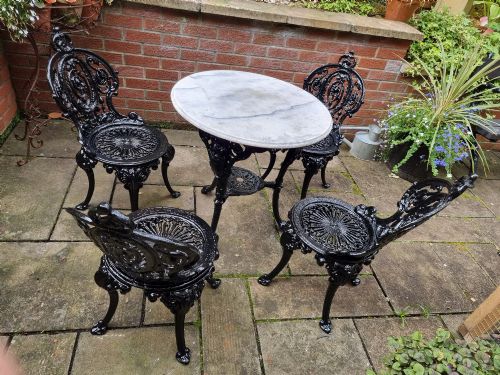
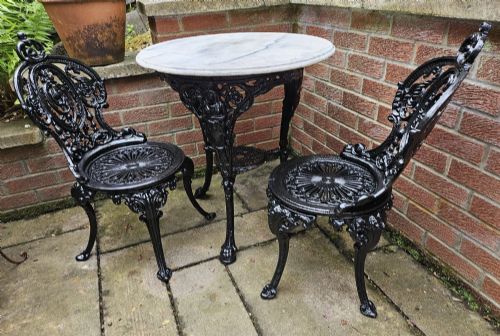
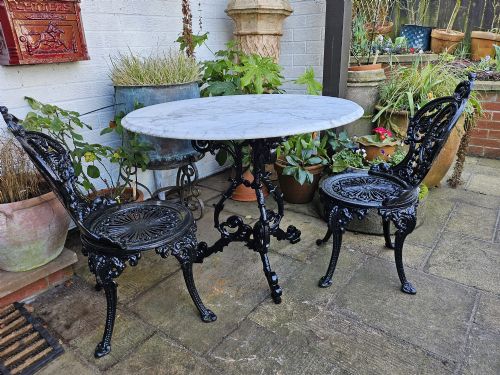
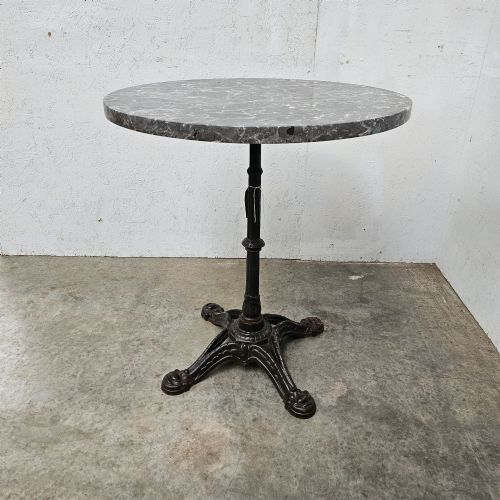
A vintage marble garden table combines a robust stone slab surface with a durable metal base, originating from periods spanning the Victorian era through the early twentieth century. Buyers seeking this classic combination encounter diverse formats including French bistro tables, side tables, console tables, and complete garden dining sets.
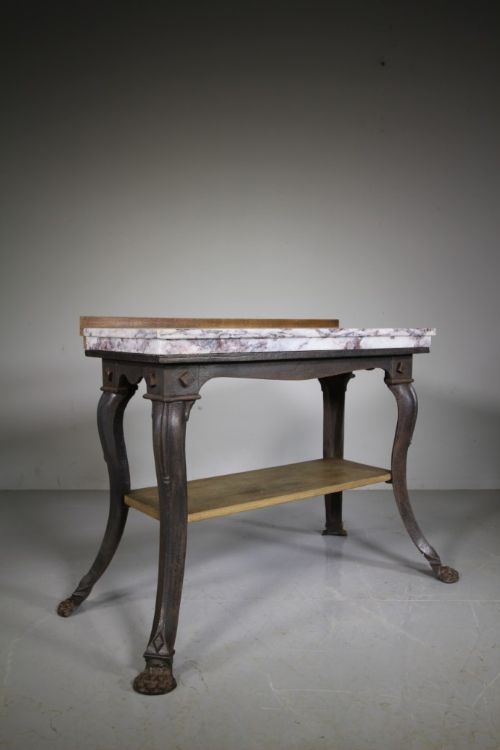
The selections recorded on this page reflect heavy cast iron and wrought iron frames paired with white, grey, green, or specimen marble tops. Originating largely from French café culture and British domestic gardens, these pieces function equally well as practical outdoor furniture and refined conservatory display stands.
How they were made
Foundry workers cast iron into intricate scrollwork and structural frames, providing the necessary weight to support heavy stone slabs outdoors. Wrought iron elements appear shaped by hand to form stable legs and supports for console and cafe tables.
Masons cut and polished natural marble into thick rectangular, circular, or specimen tops designed to withstand external elements while offering a smooth, cool utility surface.
Many a nineteenth-century French cafe table has survived decades of espresso cups and animated conversation to pour tea in a quiet English garden.
What varies in quality
The refinement of the cast iron base separates standard utility furniture from finer examples, with crisper moulding detail and more complex structural geometry indicating higher workshop standards. Heavier gauge metalwork provides superior stability and longevity.
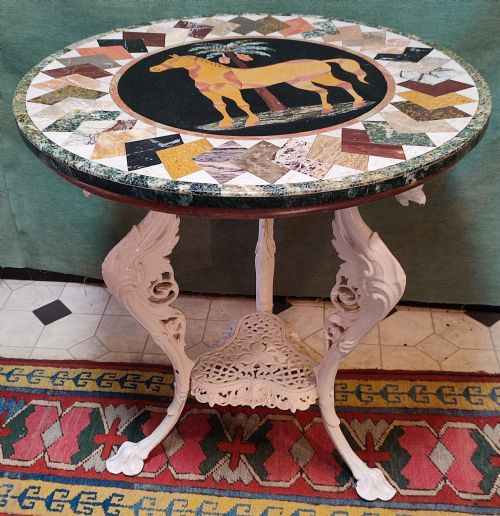
The quality of the marble itself varies from uniform white or grey slabs to complex multi-toned specimen marble arrangements. Finer stone tops exhibit harmonious veining and precise edge profiling that complement the metalwork beneath.
The Vintage Marble Garden Table Glossary
- Bistro table
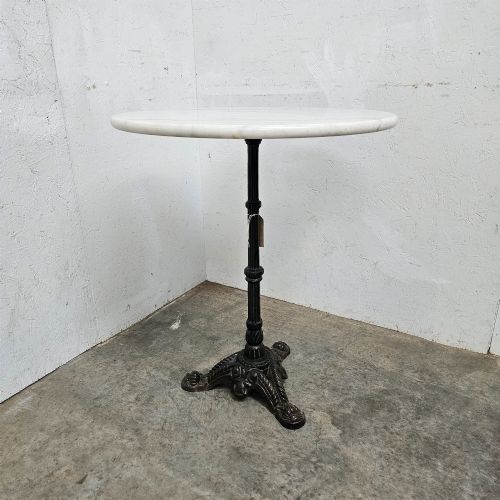
- A small café table typically featuring a round or rectangular top supported by a central cast iron pedestal or three-legged metal base. These pieces originated in French hospitality settings.
- Console table
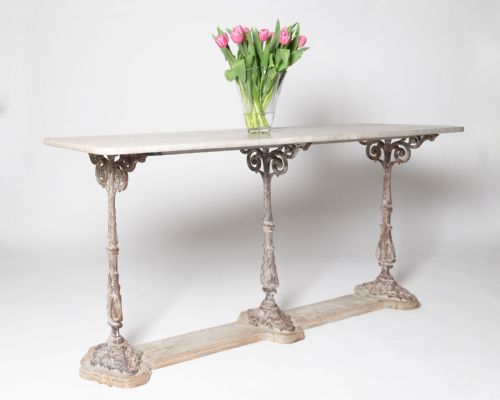
- A narrow table designed to stand against a wall, frequently utilised in hallways or conservatories. Versions with marble tops and iron bases offer robust surface space within a shallow footprint.
- Cast iron
- An iron-carbon alloy poured into moulds to create rigid decorative and structural components. This material provides the heavy ballast required to stabilise exterior stone-topped tables.
- Wrought iron
- Iron heated and hammered into shape by a smith rather than poured into a mould. This technique yields fibrous, resilient frames with characteristic handmade variances.
- Specimen marble
- A surface composed of numerous distinct types and colours of marble arranged in geometric patterns or mosaics. These decorative tops represent elevated stonemasonry skill.
Vintage Marble Garden Table: Frequently Asked Questions
Can I leave my marble table outside all year?
Cast iron and marble withstand outdoor conditions well, though extreme frost can occasionally affect stone or trap moisture in metal joints. Storing tables under cover during severe winter weather preserves the finish of both the marble and the iron.
Applying protective sealants to the marble surface helps prevent staining from organic debris and moisture penetration while outdoors.
How do I clean an antique marble top?
Warm water and a soft cloth suffice for routine cleaning of natural stone surfaces. Avoid acidic cleaners or harsh chemicals that can etch the polished marble.
Dry the surface thoroughly after washing to prevent water spotting, especially on darker green or grey varieties.
Are these tables heavy to move?
The combination of solid stone slabs and cast iron frames creates considerable weight. Most pieces require two people to lift and reposition safely around a garden or patio.
This substantial weight ensures the tables remain stable in windy outdoor environments without needing permanent fixings.
How can I tell a Victorian table from a later piece?
Victorian and nineteenth-century examples often feature deeper casting relief and heavier structural proportions compared to lighter twentieth-century café furniture. Details in the iron scrollwork and the thickness of the marble slab offer clues to the period.
Consulting the listed period indicators alongside the construction style helps determine the exact manufacturing era.