

Vintage Maple Table
A vintage maple table brings striking grain and clean lines into a room, spanning periods from nineteenth century drum tables to Art Deco low coffee pieces.
Vintage Maple Table
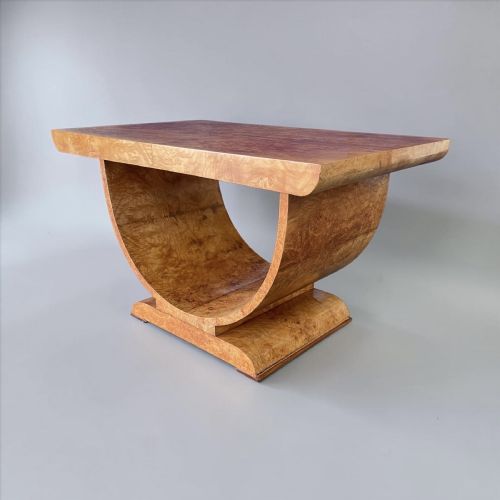
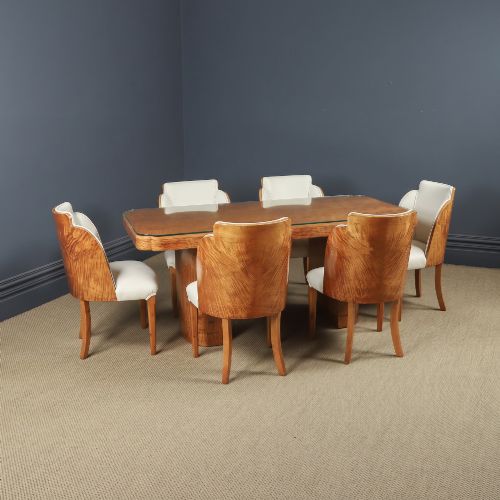
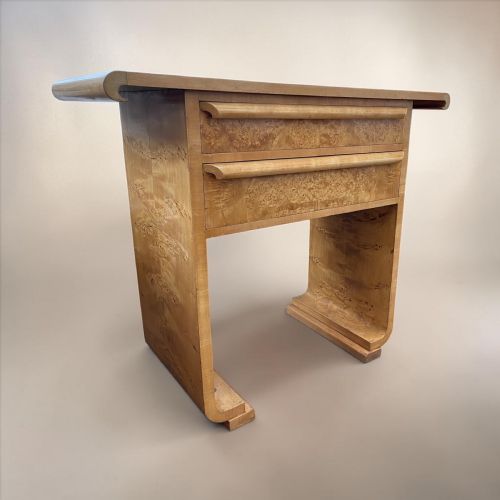
When you search for a vintage maple table, you enter a field dominated by Art Deco designs from nineteen thirty alongside nineteenth century examples and Edwardian pieces. The form shifts considerably, ranging from low coffee tables and occasional tiers to grand dining suites and console tables.
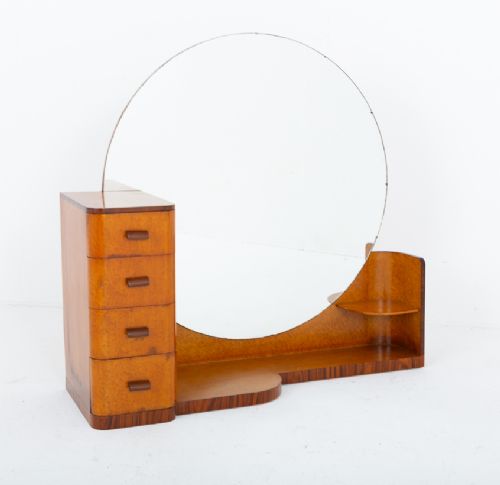
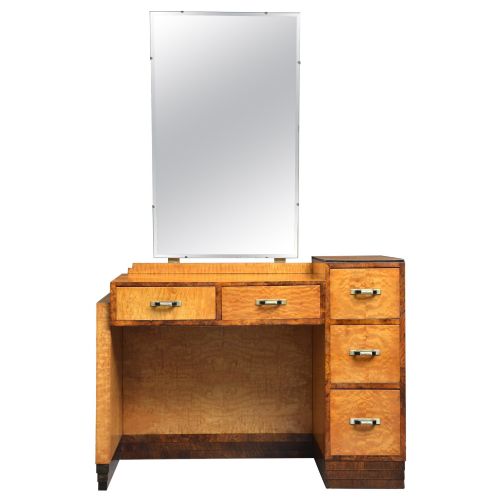
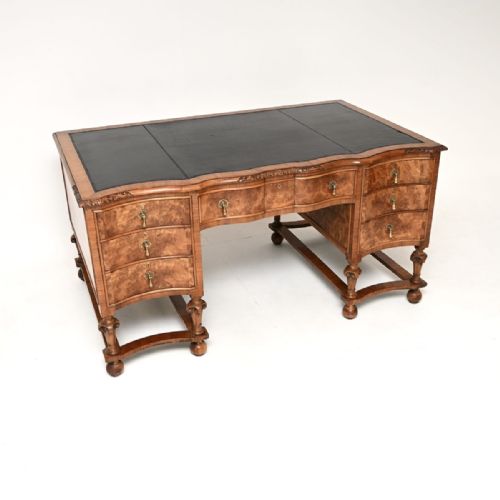
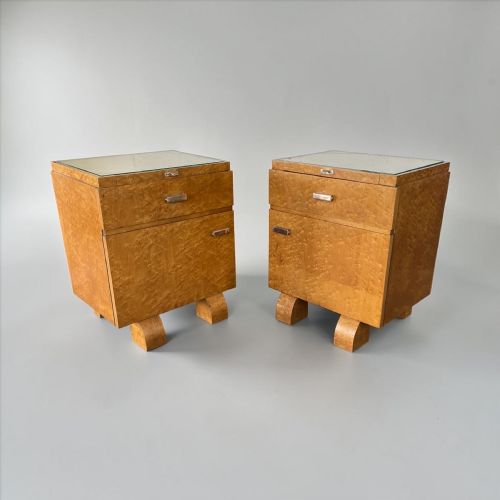
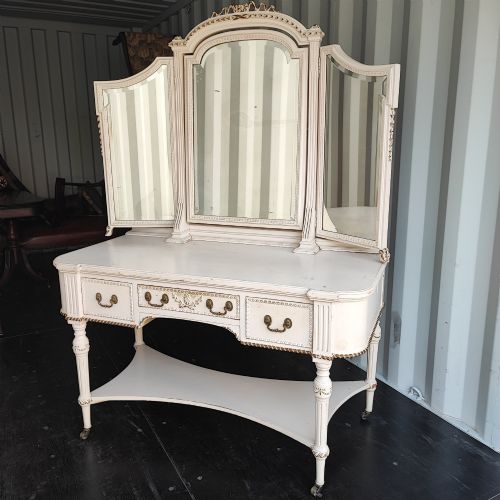
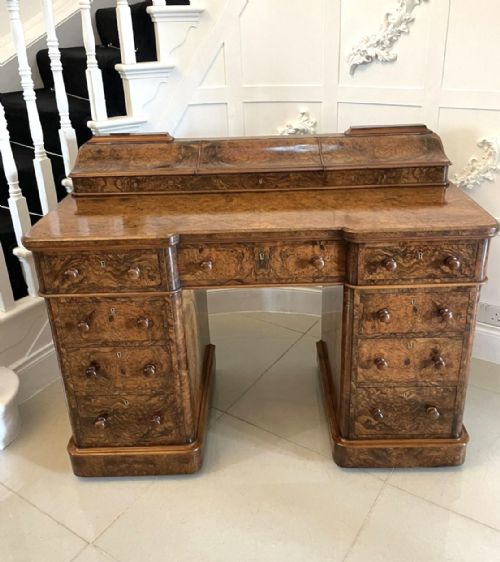
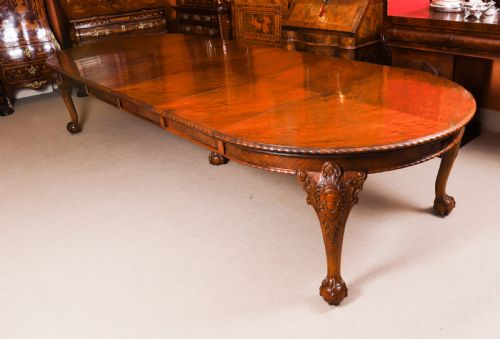
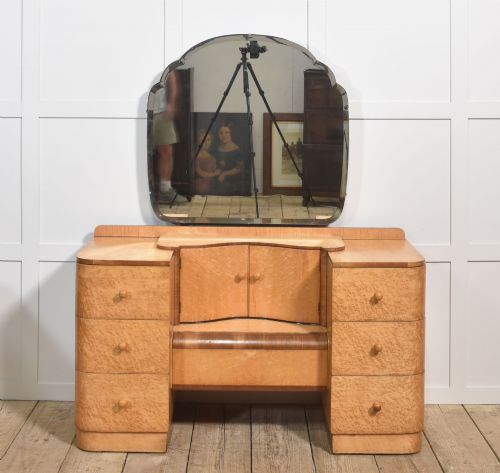
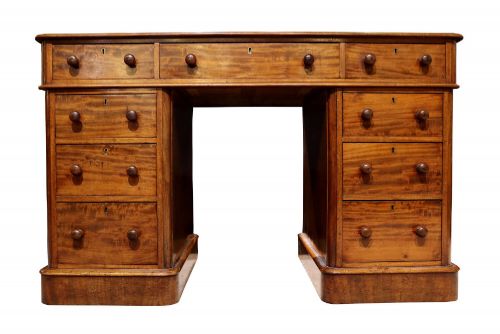
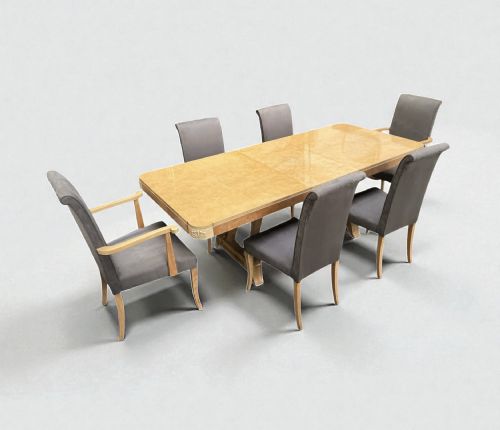
Makers such as Maple and Co. and Hille frequently shape these listings, offering items executed in birds eye maple, burr maple, and satinwood. Buyers encounter everything from compact bedside cupboards and dressing tables to massive partners desks and extending dining tables.
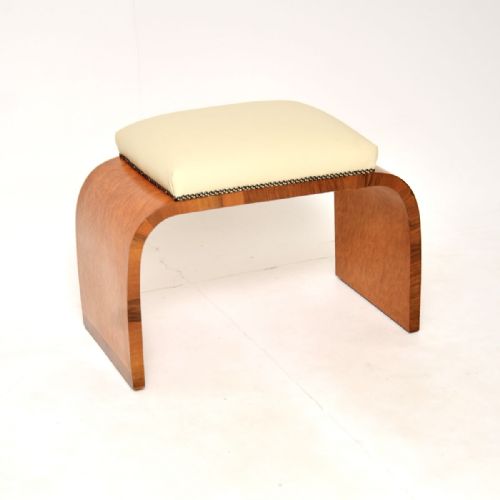
The aesthetic vocabulary stretches from strict Art Deco geometric forms to Queen Anne Revival and Scandinavian Neo-Classical details. Blonde veneers and rich golden tones dominate, often paired with contrasting mahogany, walnut, brass, and leather inserts.
How they were made
Cabinet makers relied heavily on the distinct figuring of birds eye maple and burr maple, applying thin veneers over solid secondary timbers to display intricate natural patterns. Artisans frequently combined these pale veneers with darker borders of walnut, rosewood, or mahogany to frame the grain.
Construction techniques involve traditional joinery, seen in pedestal desks, drop-leaf occasional pieces, and heavy dining tables. Surfaces receive clear polishes to protect the wood while accentuating the varied figuring inherent in maple roots and burls.
Some Art Deco bedside cabinets arrive with secret compartments designed purely to hide midnight reading from wandering eyes.
What varies in quality
The calibre of a piece rests primarily on the choice and matching of the maple veneer across large surfaces like table tops and dressing table drawers. Superior examples display symmetrical grain patterns that flow seamlessly across joints, whereas lesser items use mismatched sections.
Makership elevates certain pieces, with recognised firms contributing superior structural integrity and refined brass or leather details. The crispness of carved elements and the integration of contrasting timbers dictate the standing of the piece within the range.
Maple and Co·Maples of London·Hille·Fortnum and Mason·Harry and Lou Epstein
The Vintage Maple Table Glossary
- Birds Eye Maple
- A figure in sugar maple wood where small knots give the appearance of tiny swirling eyes. This desirable pattern is sliced into veneers for cabinet work.
- Burr Maple
- An irregular growth on a maple tree producing complex, swirling grain patterns. Highly prized by makers for decorative table tops and desk surfaces.
- Partners Desk
- A large double-sided desk designed for two people to work opposite one another. These frequently feature leather writing inserts and multiple pedestal drawers.
- Sutherland Table
- A narrow drop-leaf table where the leaves fold down almost vertically. It rests on a pivoted gateleg frame when extended.
- Drum Table
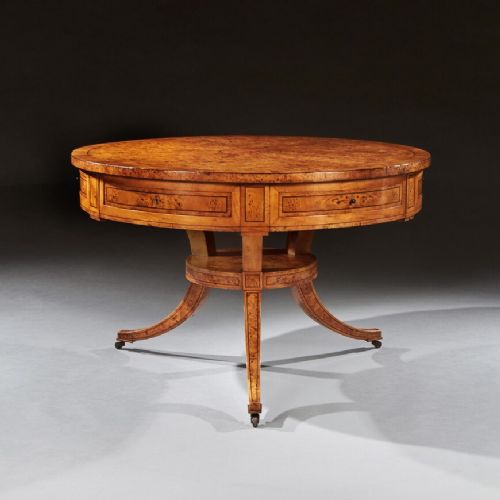
- A circular occasional or library table with a deep skirt housing drawers. These typically stand on a central pillar supported by carved feet.
Vintage Maple Table: Frequently Asked Questions
How do I care for a maple surface?
Keep wooden surfaces away from direct heat sources and strong sunlight to prevent the veneers from drying out or fading over decades of use.
Dust regularly with a dry cloth and avoid harsh chemical polishes that can degrade the historic polish on vintage timber.
Are these tables suitable for daily dining?
Many dining tables and suites listed from the period are built for robust everyday use with sturdy pedestal or extending frames.
Protect the veneer surface with heat mats and table pads during meals to preserve the delicate maple grain.
How do I distinguish Art Deco pieces?
Art Deco items rely on streamlined silhouettes, geometric symmetry, and blonde birds eye maple contrasted against darker rosewood or walnut borders.
These pieces typically date to around nineteen thirty and favor functional minimalism over heavy historic revival carvings.