




Vintage Maple Mirror
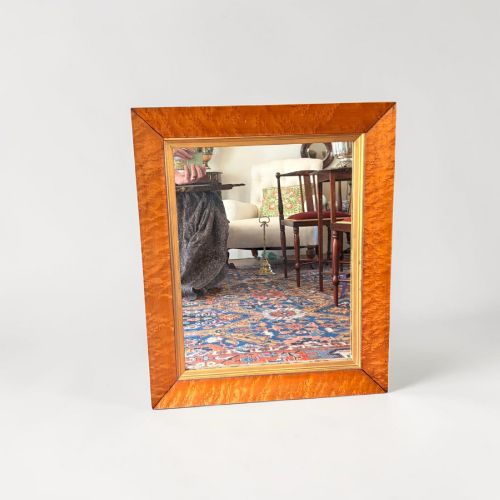
A vintage maple mirror brings distinctive wood grain and warm tone to a room, whether hanging on a wall or mounted to a dressing table.
Vintage Maple Mirror
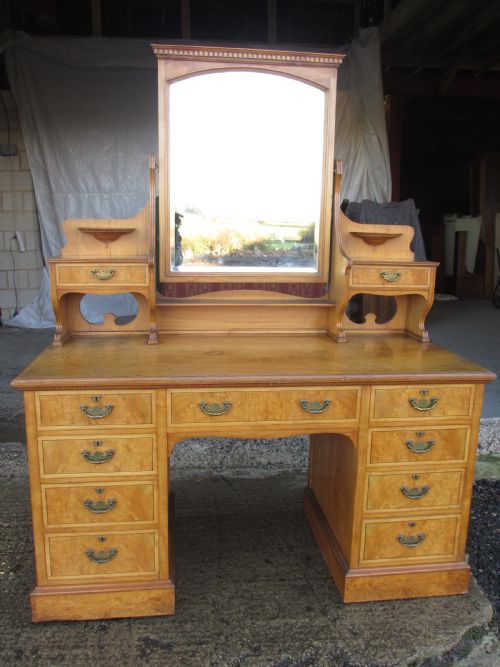
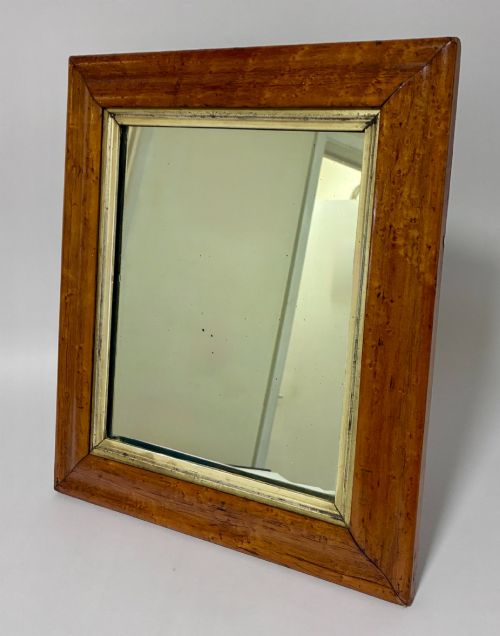
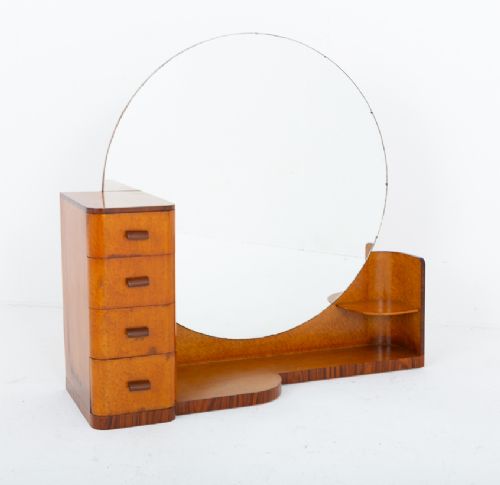
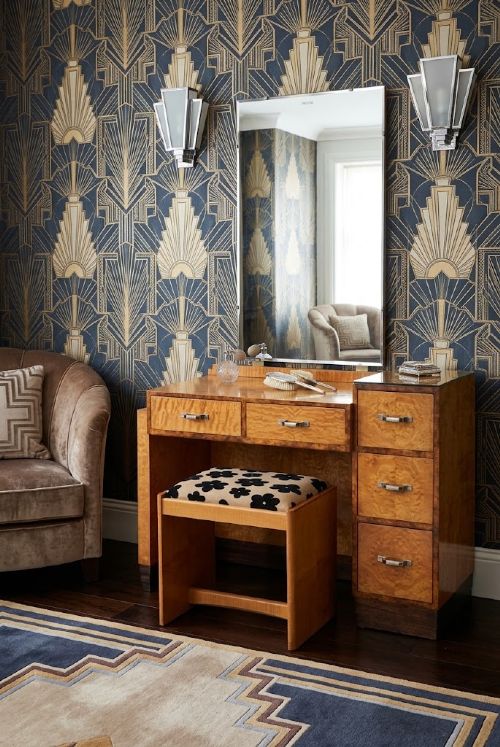
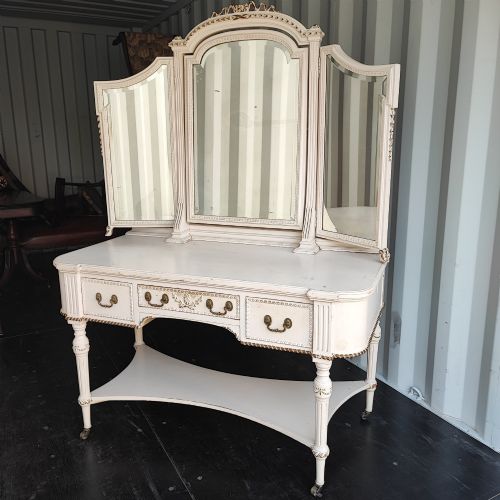
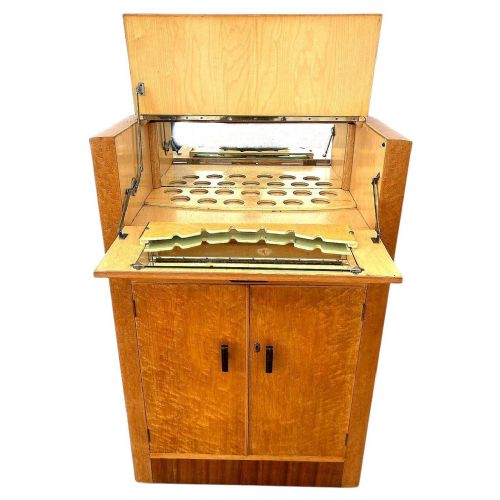
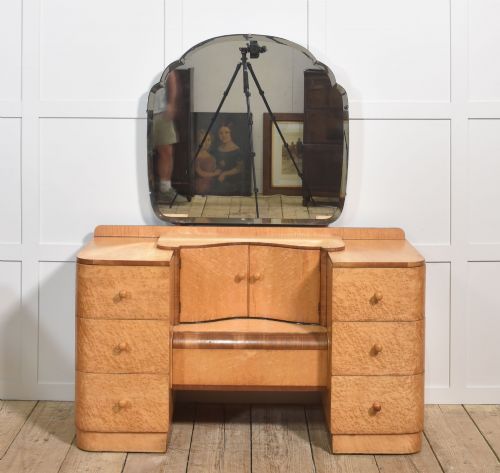
A vintage maple mirror takes several distinct forms across the periods represented on this page, appearing as standalone wall mirrors, overmantle mirrors, and mirrors attached to dressing tables. The selection spans the nineteenth century through the Art Deco era of the nineteen-thirties, with materials ranging from plain maple to highly figured birds eye maple.
Wall-hanging examples and overmantle pieces provide straightforward reflections framed in timber, while dressing table mirrors often integrate with complex furniture pieces like vanity tables and cocktail cabinets. Buyers most frequently encounter twentieth-century Art Deco interpretations alongside earlier nineteenth-century variants including William IV and Georgian styles.
What varies in quality
Quality in these pieces is dictated by the selection and matching of the timber veneer, particularly how evenly the birds eye figure is distributed across the frame or furniture facade. Superior examples display thoughtful grain alignment and crisp joinery that remains stable over decades of use.
The condition and clarity of the original mirror glass also separate standard items from finer specimens, as does the presence of makers' signatures or attribution to notable workshops such as Maples and Co or designers like Harry and Lou Epstein.
Vintage Maple Mirror Retail Price Guide 2026
Typical asking prices for vintage maple mirror among the pieces listed under this phrase on Sellingantiques today, from the lower quarter to the upper quarter. They describe what is for sale here now, not the wider market.
The listings span multiple historical periods, ranging from Georgian and William IV through the Edwardian era to Art Deco designs of the nineteen-thirties.
Maples and Co·Maurice Adams·Harry and Lou Epstein
The Vintage Maple Mirror Glossary
- Birds Eye Maple
- A figure in maple wood where the grain has tiny swirls resembling small eyes, highly prized by cabinetmakers for decorative veneers.
- Overmantle Mirror
- A large mirror designed specifically to be hung on the wall immediately above a fireplace mantelpiece.
- Art Deco
- A design style spanning the nineteen-twenties and nineteen-thirties characterised by sleek geometric shapes, streamlined forms, and modern materials.
- Reverse Glass Painting
- An art technique where the image is painted directly onto the back of a glass panel so the finished picture is viewed through the front.
- Compactum Wardrobe
- A large fitted wardrobe combining hanging space with internal drawers, shelves, and occasionally small compartments.
Vintage Maple Mirror: Frequently Asked Questions
How do I clean a vintage mirror frame?
Dust the wooden frame gently with a dry, soft cloth to remove surface particles without disturbing the finish. Avoid commercial chemical sprays that can strip or damage historical wood treatments.
For the glass plate, apply a mild glass cleaner to a cloth rather than spraying directly onto the surface. This prevents liquid from seeping behind the frame and damaging the silver backing or the wood.
Can I hang a dressing table mirror on the wall?
Most dressing table mirrors are constructed with specific pivoting brackets or mounting arms intended to attach directly to a piece of furniture. Removing them for wall hanging usually requires professional adaptation.
Wall mounting these mirrors safely requires assessing the weight of the timber frame and the mirror glass. Proper picture wire and wall fixings suited to the specific wall type must be used to bear the load securely.
What is birds eye maple?
Birds eye maple is not a separate species of tree, but rather a natural anomaly in the growth of sugar maple timber. Small circular patterns appear in the grain, resembling the eye of a bird.
Cabinetmakers slice this figured wood into thin veneers to cover larger surfaces of furniture and mirror frames. The distinctive patterning makes each finished piece entirely unique.
How do I date a maple mirror?
Dating relies on examining the construction methods, edge bevelling of the glass, and overall stylistic markers. Georgian and William IV pieces show heavier timber mouldings and hand-cut joinery.
Twentieth-century examples from the Art Deco period display streamlined geometry and frequent use of modern chrome or brass accents. Maker marks or stamps on the reverse can also help confirm the production era.