
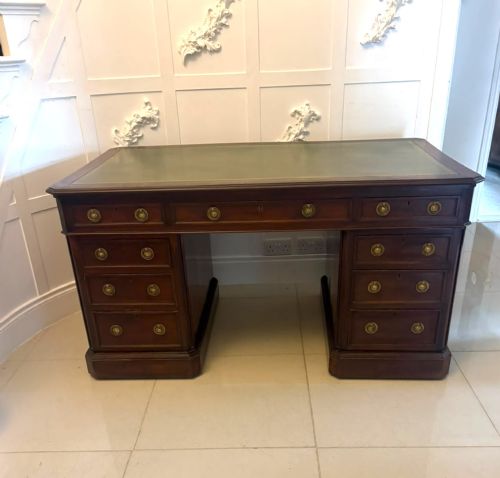
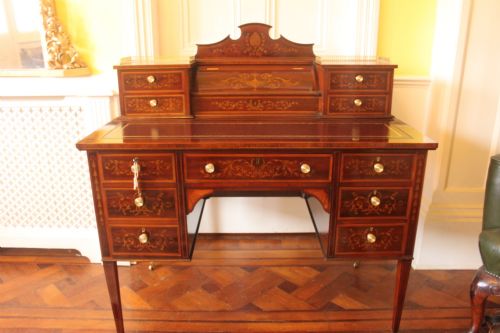
Vintage Mahogany Writing Bureau
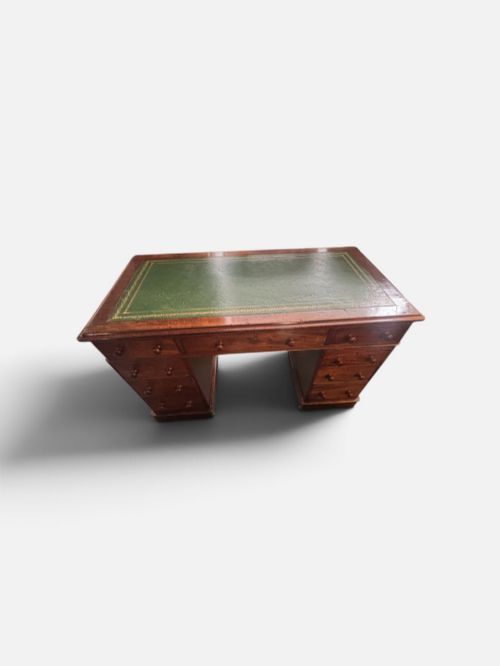
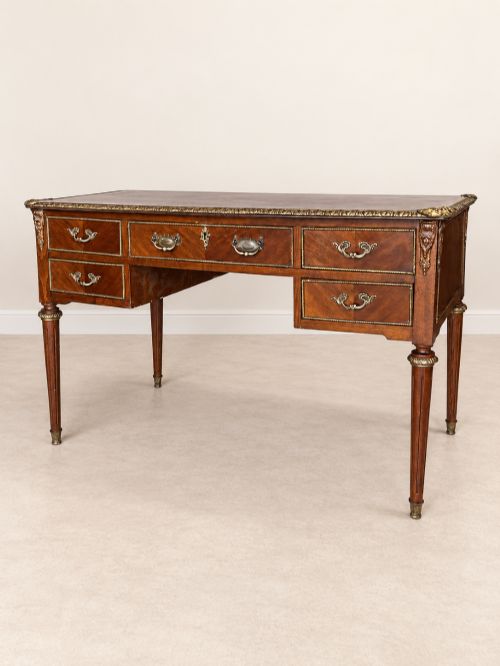
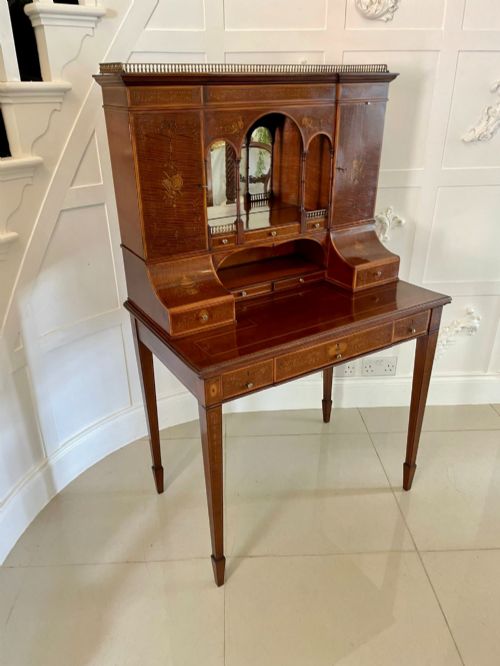
A vintage mahogany writing bureau brings together solid timber and compartmented storage to serve as a working desk that closes away cleanly.
Vintage Mahogany Writing Bureau
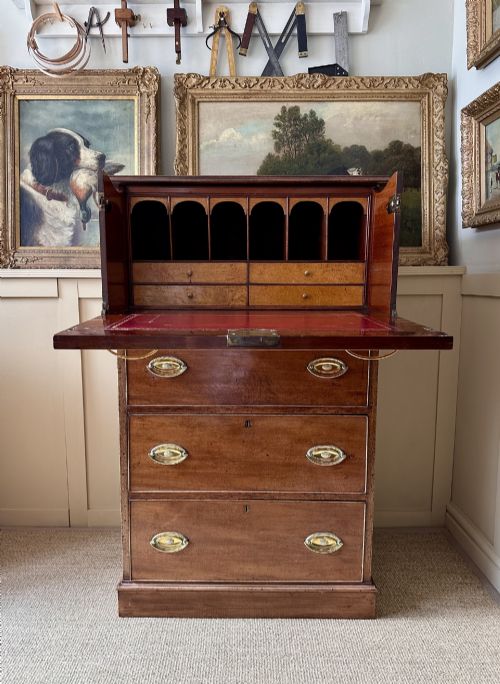
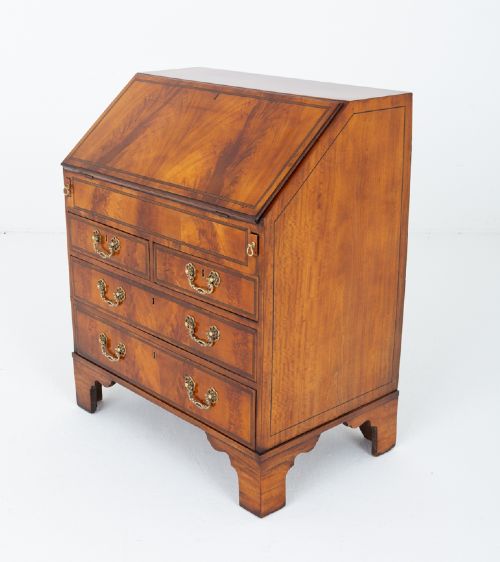
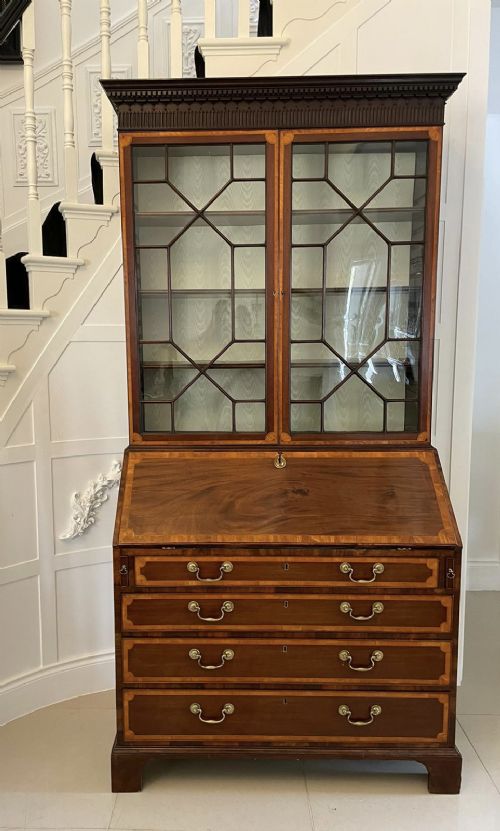
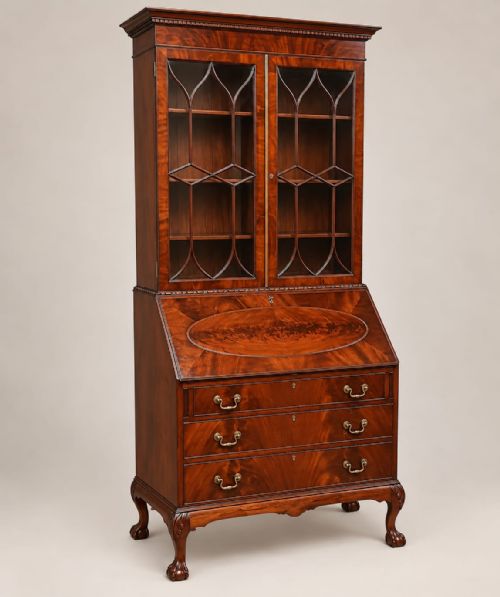
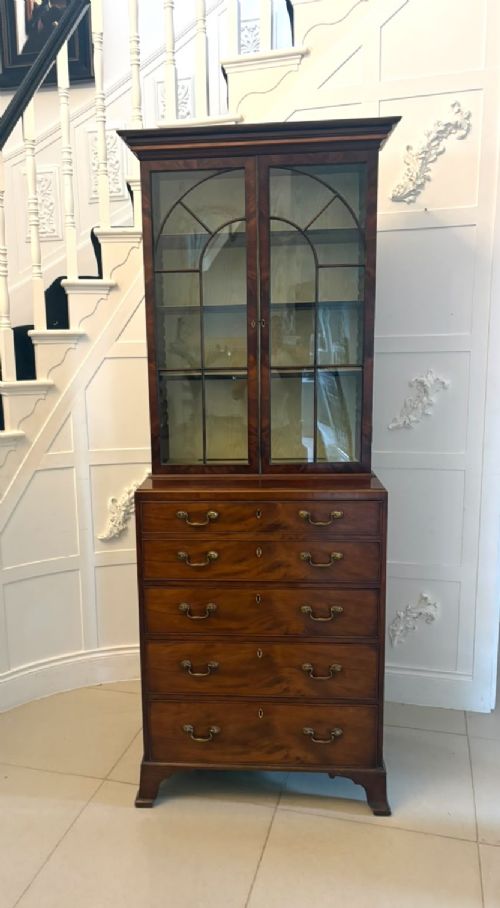
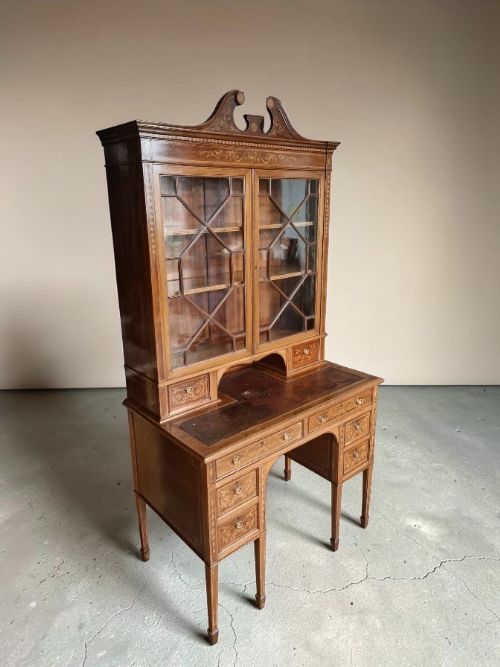
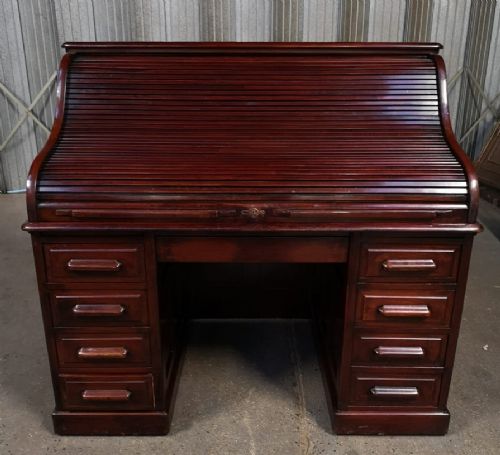
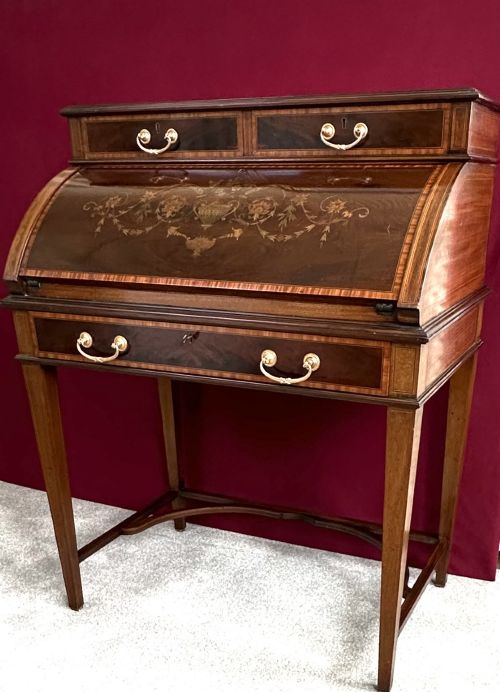
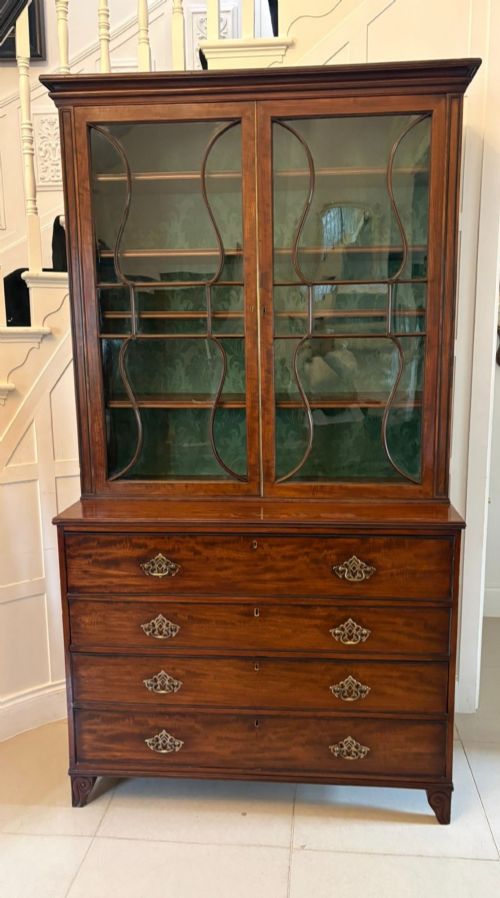
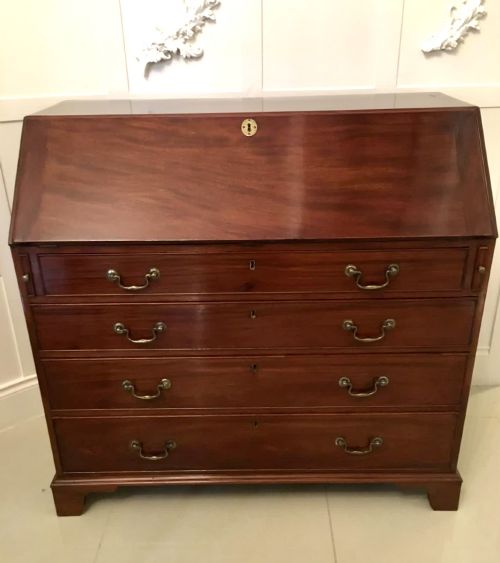
A vintage mahogany writing bureau typically manifests as a fall front desk, a cylinder desk, or a larger bureau bookcase with glazed upper doors. These pieces span periods from the eighteenth century through the Georgian, Victorian, and Edwardian eras, alongside later revivals.
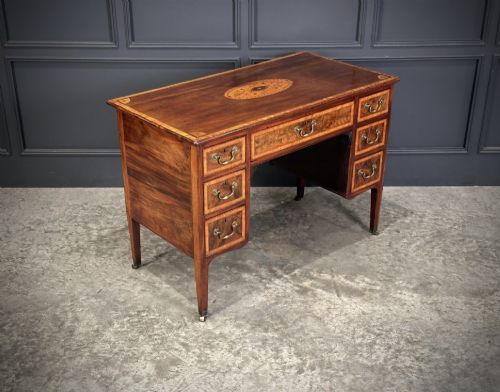
The practical layout generally combines a sloping flap or pull out cylinder that opens to reveal internal pigeonholes and small drawers, positioned above a set of full width exterior drawers. Variations range from compact kneehole desks and Davenport forms to tall secretaire bookcases designed for both writing and storage.
Originating largely from British workshops, these items utilise dense tropical timber shaped into forms that adapt domestic studies and drawing rooms from the 1700s up to the 1930s.
Materials and Construction
Makers built these pieces primarily from solid mahogany and flame mahogany veneers, often incorporating secondary timbers and applying brass hardware for handles, key escutcheons, and hinges. Glass panels appear on the upper doors of bookcase variants, while writing surfaces frequently feature inset panels of leather.
Decorative detailing relies on inlaid banding using contrasting woods such as satinwood and kingwood, alongside carved motifs seen in Chippendale and Arts and Crafts examples, and ormolu mounts on French pieces. Internal fitted compartments employ fine boxwood stringing and secret drawers concealed behind sliding partitions.
Listings span the eighteenth, nineteenth, and early twentieth centuries, encompassing Georgian, Victorian, Edwardian, and Regency periods.
Judging Quality
The standard of timber selection sets the baseline, where highly figured flame mahogany veneers and consistent grain patterns distinguish superior cabinet work from plain stock. The crispness of internal joinery, from hand cut dovetails on drawer linings to the smooth action of fall front stays and cylinder tracks, indicates the maker's competence.
Proportion and decorative restraint dictate the aesthetic tier, with well balanced brasses, restrained inlay, and integrated secondary woods marking out pieces produced by skilled cabinet makers rather than mass workshop output.
James Mein of Kelso
The Vintage Mahogany Writing Bureau Glossary
- Bureau
- A desk featuring a sloping lid that drops down to form a writing surface, enclosing a set of small drawers and pigeonholes. This form provides secure storage for correspondence.
- Secretaire
- A piece of furniture containing a pull out or drop down writing drawer disguised as a standard drawer or concealed behind a cabinet door. It integrates writing facilities into chests and bookcases.
- Cylinder desk
- A desk with a curving quarter circle wooden shutter that rolls back into the body to uncover the writing surface and internal fittings. This mechanism clears the desk top entirely when closed.
- Fall front
- A hinged writing flap that pulls down from a vertical position to rest at a right angle for writing. It conceals the internal stationery compartments when locked upright.
- Davenport
- A compact small desk featuring a sloping writing top and a pedestal of drawers accessed from the side. It was widely used in Victorian boudoirs for brief correspondence.
Vintage Mahogany Writing Bureau: Frequently Asked Questions
What is a bureau bookcase?
A bureau bookcase combines a lower writing desk section with an upper cabinet enclosed by glass or wooden doors, designed to hold books and stationery in one tall unit.
This form served as a principal piece of furniture in Georgian and Victorian libraries or parlours, housing both a working surface and a personal library.
How do cylinder desks work?
A cylinder desk uses a curved wooden shutter that slides on tracks in a quarter circle arc to open or close over the writing area.
Pulling the sliding writing slide forward often causes the cylinder to retract automatically, revealing the internal drawers and pigeonholes.
Where were these desks placed?
These pieces sat in studies, bedrooms, and reception rooms as functional furniture for managing household accounts, writing letters, and storing documents.
Freestanding variants allowed placement away from walls in larger rooms, while smaller kneehole forms fitted snugly into compact domestic spaces.
How do I care for mahogany?
Mahogany surfaces require dusting with a dry lint-free cloth and occasional treatment with traditional beeswax to maintain the natural lustre of the timber.
Keeping the wood away from direct heat sources and strong sunlight prevents the grain from drying out and preserves the rich colour.