
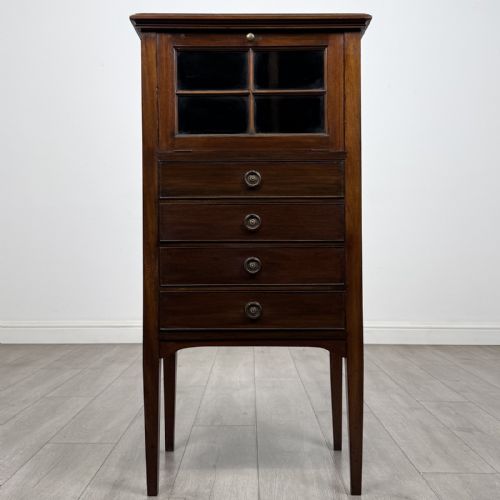
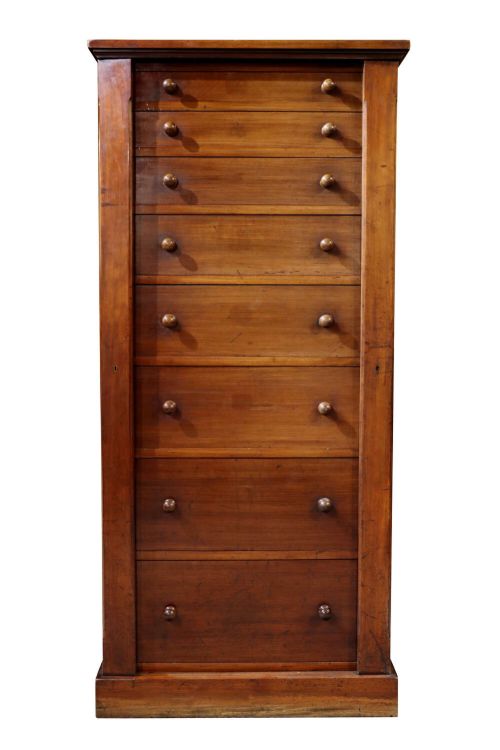
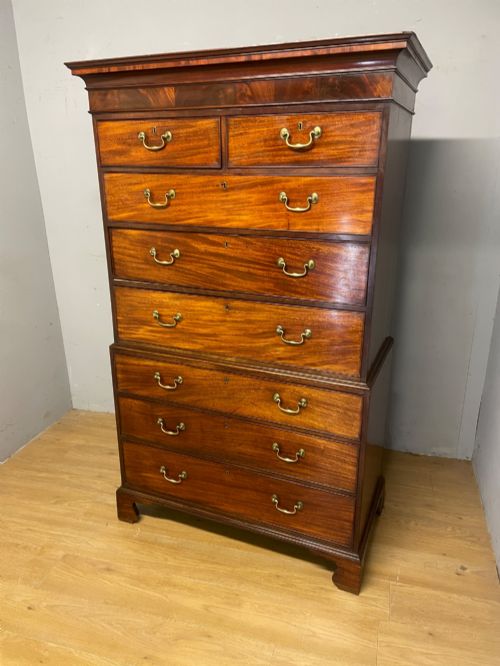
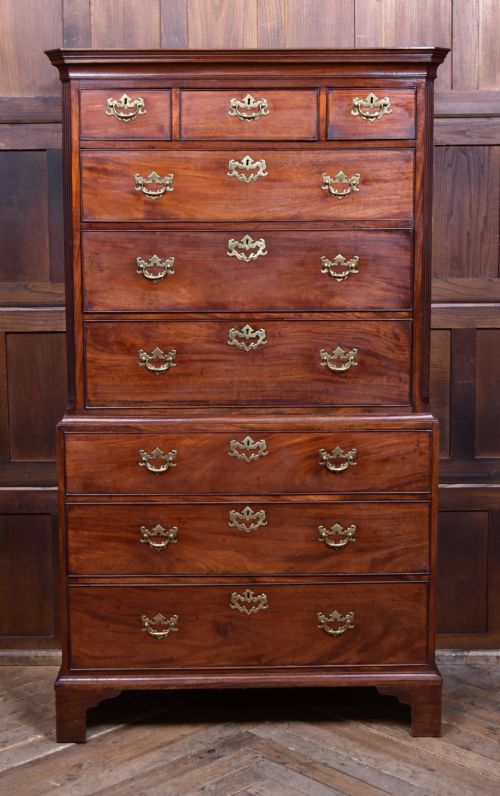
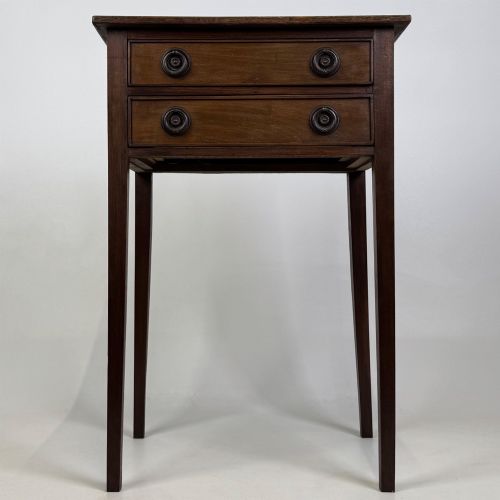
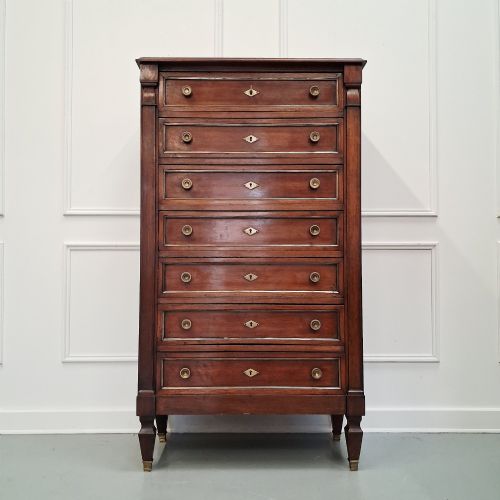
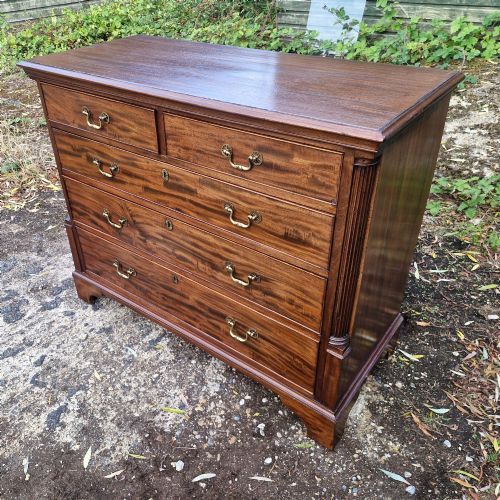
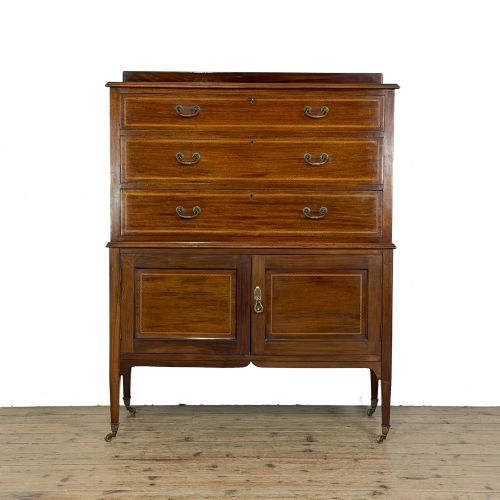
Vintage Mahogany Tall Chest
A vintage mahogany tall chest organises your bedroom with deep drawers and upright proportions, bringing rich timber grain to narrow wall spaces.
Vintage Mahogany Tall Chest
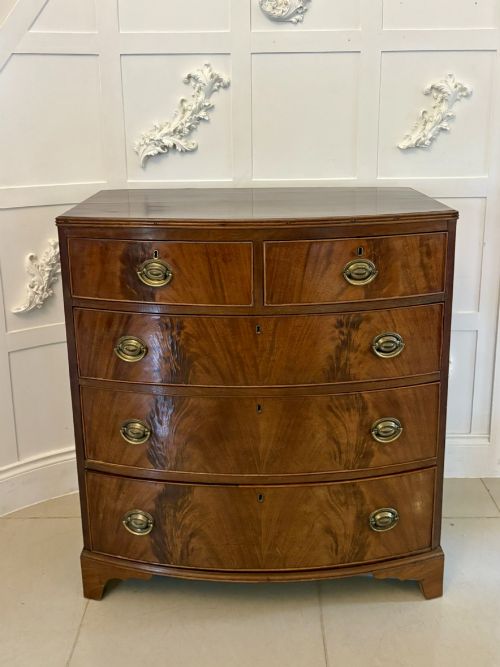
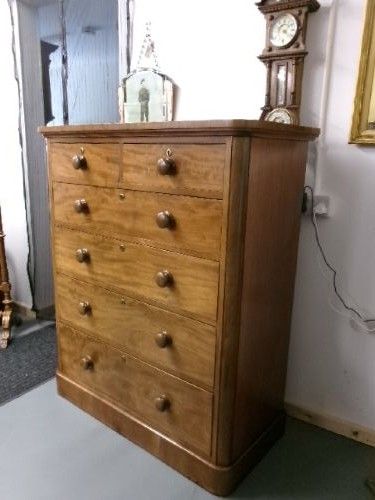
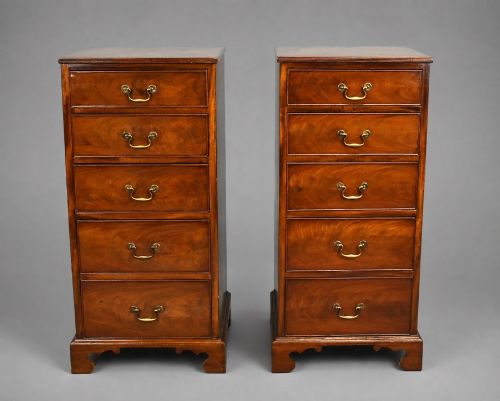
When you search for a vintage mahogany tall chest, you encounter upright storage pieces designed to maximise drawer capacity while occupying minimal floor space in a bedroom or dressing room. These range from substantial Georgian tallboys and chest on chest configurations to Edwardian bedroom chests, narrow Wellington chests, and twentieth-century revivals.
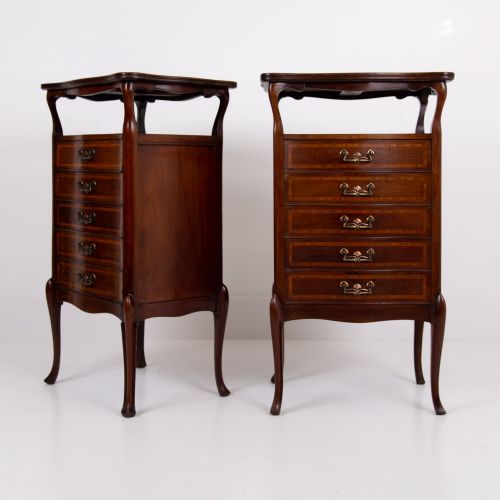
You are most likely to meet pieces dating from the eighteenth century through to the Edwardian period and the early twentieth century. Common formats include five-height chests, tall narrow chests of drawers, and stacked chest on chest designs that divide storage between upper and lower sections.
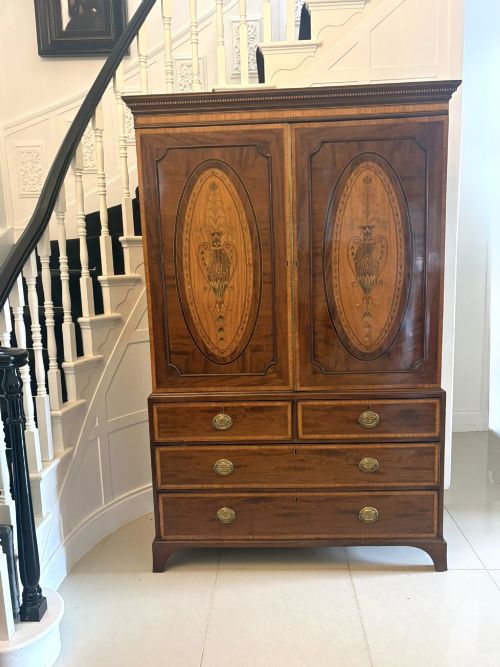
The materials span solid mahogany and figured mahogany veneers, frequently accented with satinwood inlay, brass drawer pulls, and oak drawer linings. Surviving examples reflect the shifting stylistic preferences of their makers, moving from austere Georgian proportions through Victorian utility to Edwardian and revival interpretations.
What varies in quality
The standard of a vintage mahogany tall chest rests on the selection of timber, the precision of the joinery, and the integrity of the original hardware. Pieces featuring well-figured mahogany veneers and careful matching of grain patterns across multiple drawer fronts represent higher craftsmanship.
Internal construction reveals much about origin and skill, particularly the tightness of dovetail joints in the drawer construction and the use of secondary woods like oak rather than softer pine. Original brasses, smooth drawer action, and the presence of makers' details or locking mechanisms further distinguish superior examples from utilitarian production.
Materials recorded across these pieces include solid mahogany, glass, satinwood, oak, rosewood, and inlay wood.
Gillows
The Vintage Mahogany Tall Chest Glossary
- Tallboy
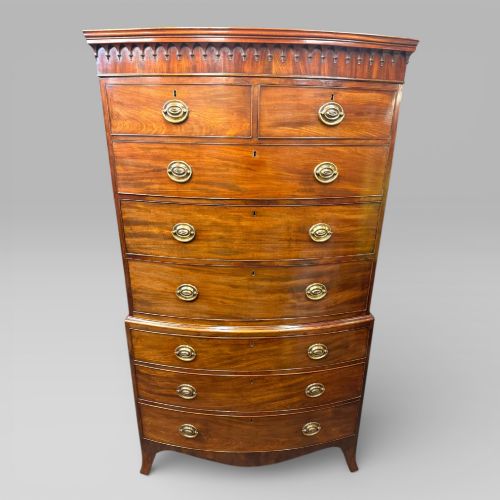
- A tall chest of drawers, often constructed as a chest on chest where a smaller upper section sits upon a larger base.
- Wellington chest
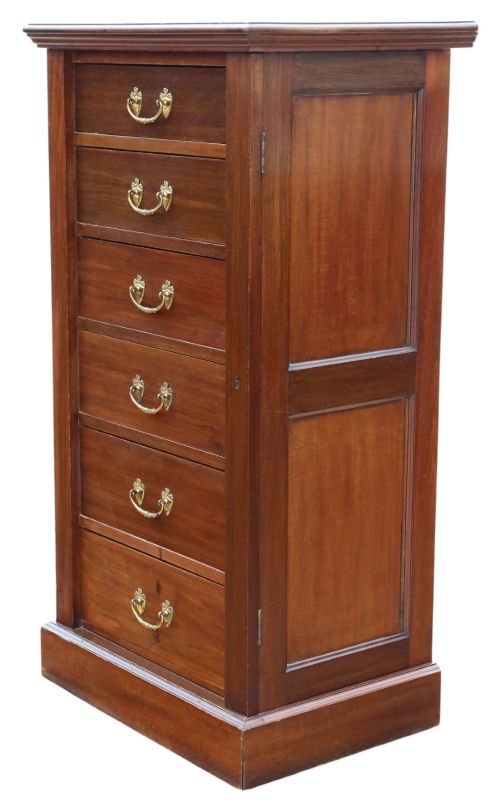
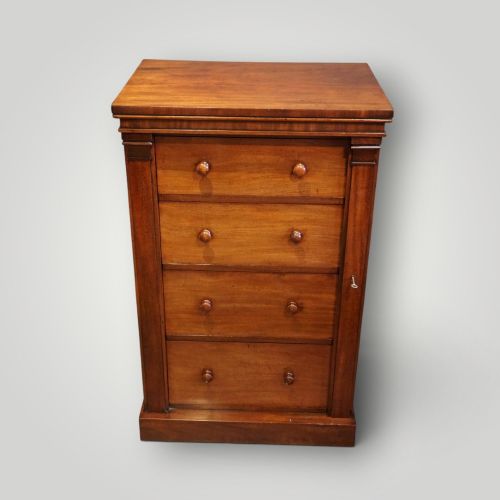
- A tall, narrow chest featuring a hinged vertical locking stile on one side that secures all the drawers when locked.
- Dovetail
- A joint used in drawer construction formed by interlocking wedge-shaped fingers that provide strong resistance to being pulled apart.
- Satinwood
- A pale, hard timber used frequently for decorative inlay and banding on mahogany furniture during the Georgian and revival periods.
- Escutcheon
- A protective plate surrounding a keyhole, usually made of brass, fitted to drawer fronts and cabinet doors.
Vintage Mahogany Tall Chest: Frequently Asked Questions
What is a tallboy chest?
A tallboy is an upright storage piece that typically combines two distinct chest sections, placing a smaller set of drawers atop a wider base. This configuration provided substantial garment storage without requiring a larger floor footprint.
Cabinet makers produced these pieces primarily in eighteenth and nineteenth-century workshops, adapting the form through Georgian and revival periods to suit changing domestic interiors.
How do I spot a Wellington chest?
A Wellington chest is identified by its unusually tall and narrow proportions paired with a hinged wooden flap on one side. This locking bar secures every drawer simultaneously when a key is turned in the integrated lock.
Originating in the nineteenth century, this specific form allowed owners to secure valuable garments or documents efficiently within a compact vertical footprint.
Where should I place a tall chest?
These upright pieces suit bedrooms, dressing rooms, and hallways where floor space is limited but vertical storage capacity is required. Their narrow proportions allow them to fit into alcoves or between windows while offering deep drawers for linens and clothing.
Positioning them away from direct heat sources and strong sunlight helps protect the polished mahogany surfaces and historic veneers from drying out.
How do I care for mahogany?
Maintenance involves dusting with a soft, dry cloth and applying occasional quality wax to nourish the polished wood surface. Avoiding synthetic sprays and maintaining stable indoor humidity prevents the timber and veneers from warping or cracking.
Gentle handling of original brass hardware and drawer runners ensures the internal joinery remains stable and functional over time.