





Vintage Mahogany Piano Bench
A vintage mahogany piano bench sits quietly by the keyboard, offering a sturdy seat and often storage for sheet music.
Vintage Mahogany Piano Bench
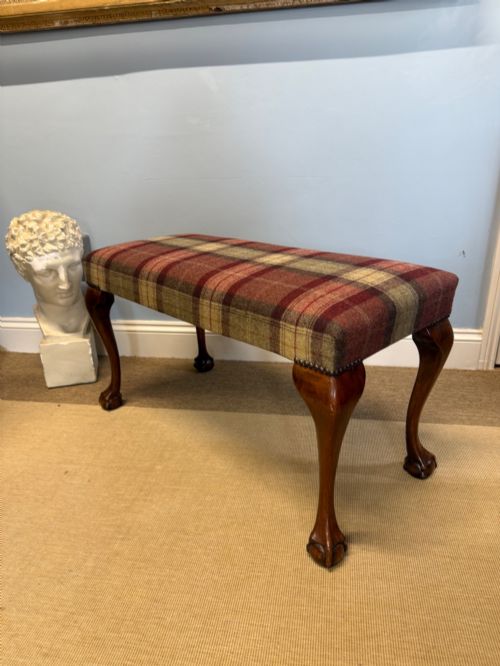
A vintage mahogany piano bench serves the practical purpose of seating a musician while complementing the timber of the instrument itself. When searching for a vintage mahogany piano bench, buyers encounter pieces stretching from the Victorian era through the Edwardian period and into the early twentieth century.
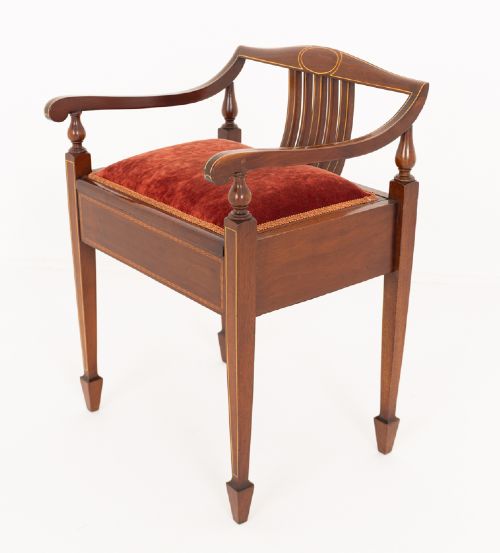
Most examples appearing here belong to the Edwardian era or date around nineteen hundred, often displaying the warm grain of mahogany alongside revival styles such as Sheraton, Chippendale, or Queen Anne.
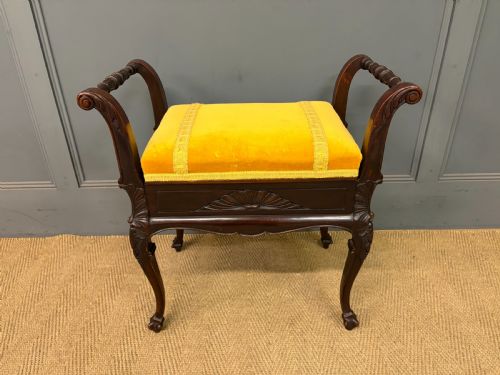
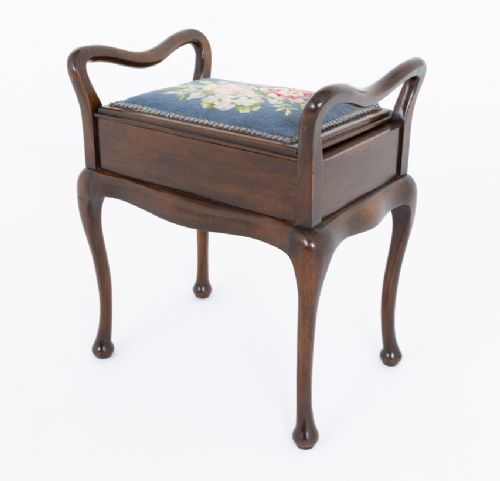
Forms range from single seats to longer duet stools designed for two players, alongside variations featuring lift-up lids for storing scores or revolving mechanisms for adjusting height.
Materials and construction methods
Cabinet makers utilised solid mahogany and mahogany veneers for the frames, frequently incorporating satinwood inlay for decorative contrast on Edwardian examples.
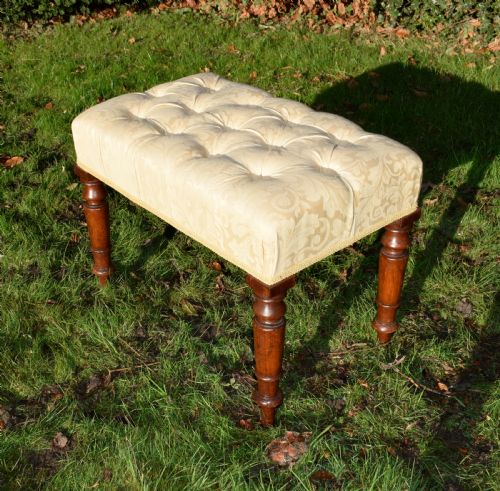
Upholstery materials vary from traditional buttoned velvet and fabric to tapestry, leather, and modern replacement coverings atop sprung or padded seats.
Structural details include brass fittings, castors for mobility, cross stretchers for added stability, and carved elements like ball and claw feet.
Vintage Mahogany Piano Bench Retail Price Guide 2026
Typical asking prices for vintage mahogany piano bench among the pieces listed under this phrase on Sellingantiques today, from the lower quarter to the upper quarter. They describe what is for sale here now, not the wider market.
The listings span the Victorian era, the Edwardian period, and the nineteen twenties, constructed in mahogany with fabric, leather, and brass details.
Assessing construction and design standards
The distinction between standard production items and finer pieces lies in the crispness of the mahogany carving, the precision of satinwood inlay, and the structural integrity of the frame.
Original mechanisms in revolving stools or sound hinges on lift-up music compartments separate better-executed furniture from simpler utilitarian seating.
The choice of original upholstery materials, such as deep buttoned leather or structured tapestry, alters the character and overall refinement of the stool.
Jas Shoolbred
The Vintage Mahogany Piano Bench Glossary
- Duet stool
- A wider bench designed to accommodate two pianists side by side. These longer seats often feature lift-up lids giving access to internal music storage compartments.
- Satinwood inlay
- A contrasting lighter wood embedded into the mahogany surface in geometric or floral motifs. This technique defines much of the Edwardian cabinet work seen on these benches.
- Revolving stool
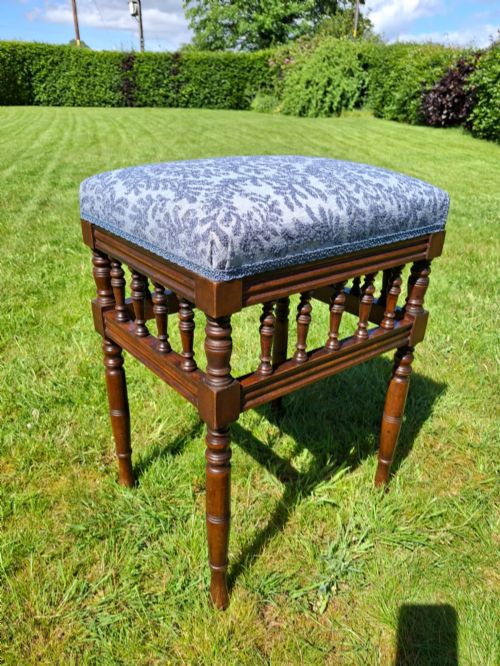
- A seat featuring a threaded spindle mechanism allowing the pianist to adjust their height by spinning the top. Victorian examples frequently utilise this design.
- Cross stretcher
- Wooden rails connecting the legs near the base for structural reinforcement. They appear on various dressing and piano stools to provide extra rigidity.
- Cabriole leg
- A furniture leg with a double curve resembling the shape of an animal's curving leg, ending in a pad or ball and claw foot. This style reflects revival design influences.
Vintage Mahogany Piano Bench: Frequently Asked Questions
What is a duet piano stool?
A duet piano stool is an elongated bench built to seat two people simultaneously during piano practice or performance. They frequently include hinged seats that open for sheet music storage.
These pieces match larger instruments and provide a practical seating solution for households with multiple players.
How do I spot an Edwardian piano bench?
Edwardian piano benches often feature lighter mahogany frames, sometimes enhanced with delicate satinwood inlay work. They date from the early twentieth century and frequently showcase Sheraton or Edwardian revival design characteristics.
Makers of this period favoured clean lines combined with subtle decorative stringing rather than heavy Victorian carving.
Did piano benches always have storage?
Not all vintage piano benches include storage compartments, though many Edwardian and later examples feature lift-up upholstered seats designed to hold music scores. Earlier Victorian revolving stools typically relied on solid pillars and lacked internal space.
Buyers should check the seat mechanism to determine whether a hinged lid is present.
Can I use a piano bench as a dressing table stool?
Many piano benches function well as dressing table seats or window seats due to their compact dimensions and matching heights. Their upholstered tops and decorative frames suit bedroom or hallway placement.
Their sturdy mahogany construction ensures they handle daily use outside the music room.