
Vintage Mahogany Linen Press
A vintage mahogany linen press combines generous linen storage with architectural presence, offering a practical cabinet for contemporary bedrooms.
Vintage Mahogany Linen Press
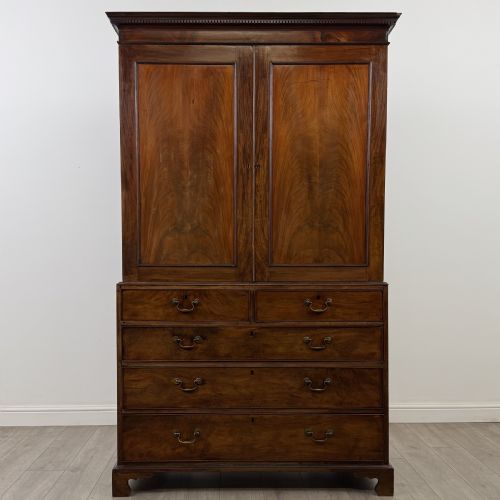
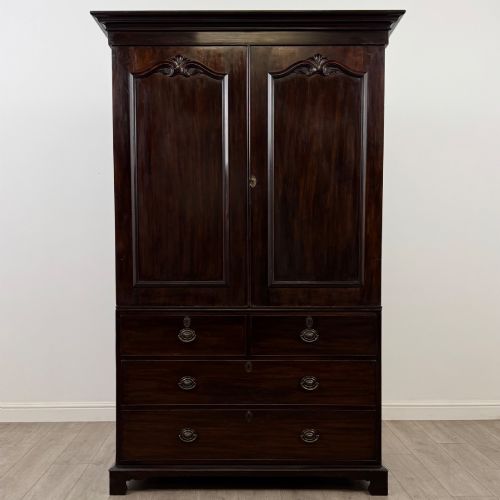
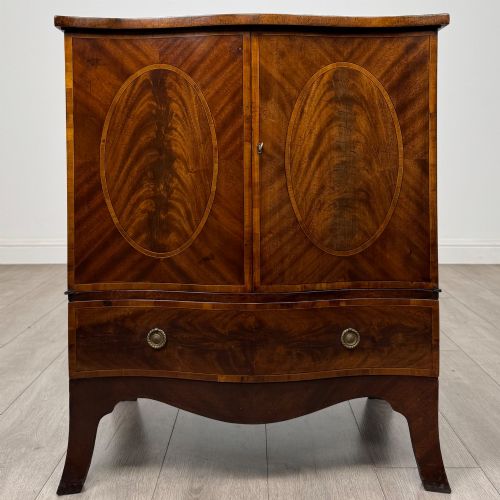
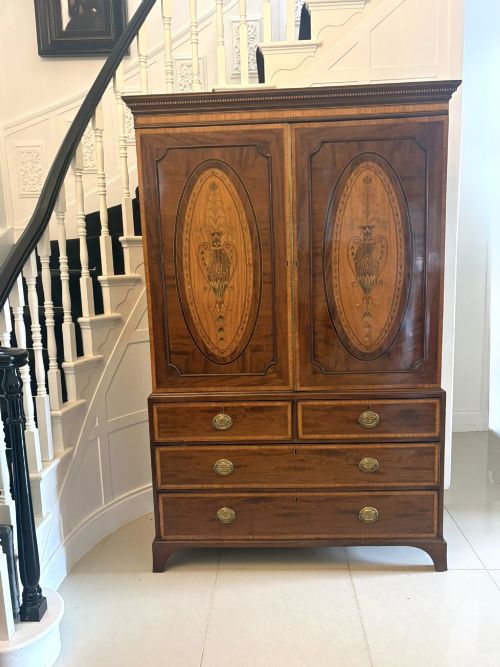
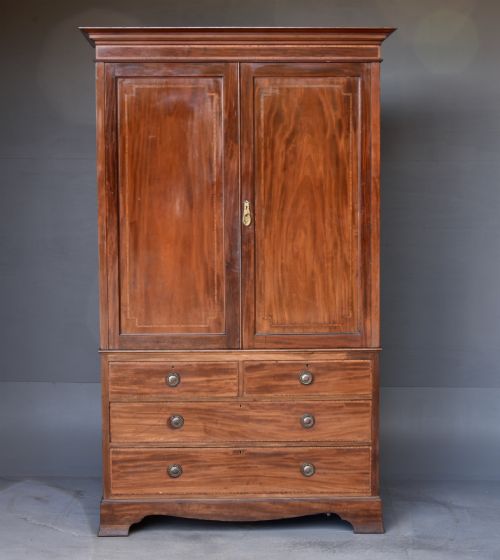
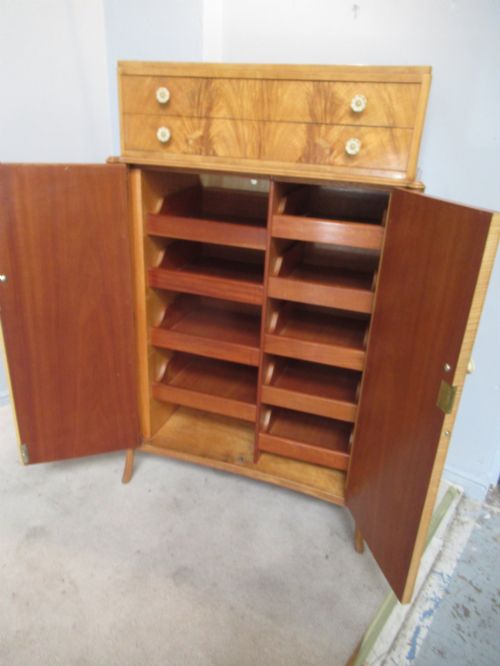
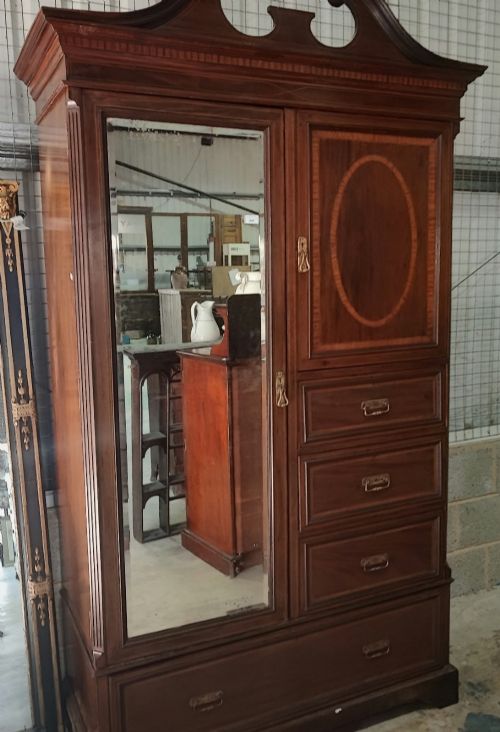
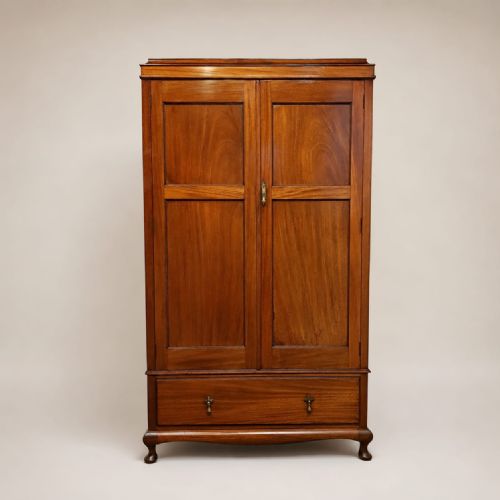
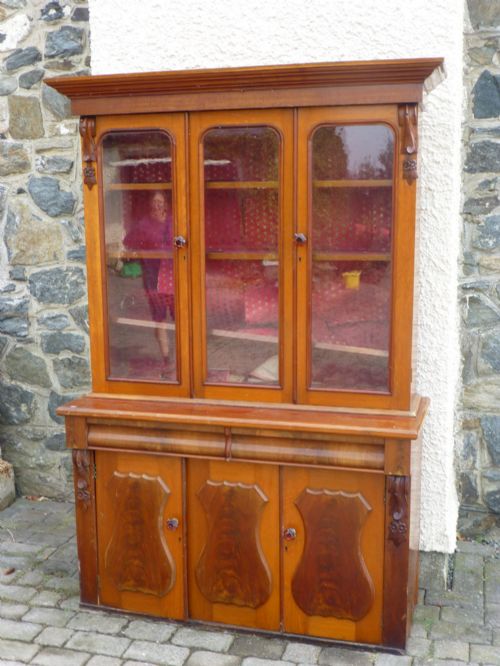
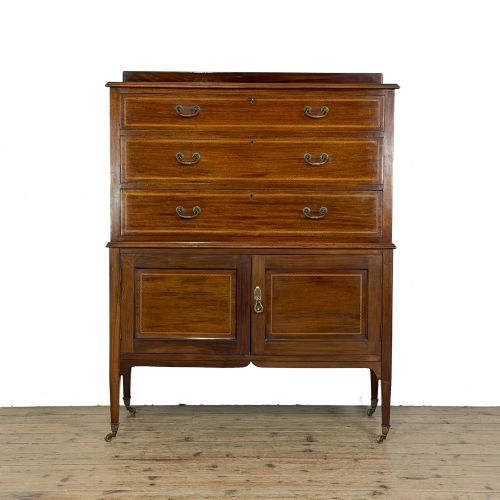
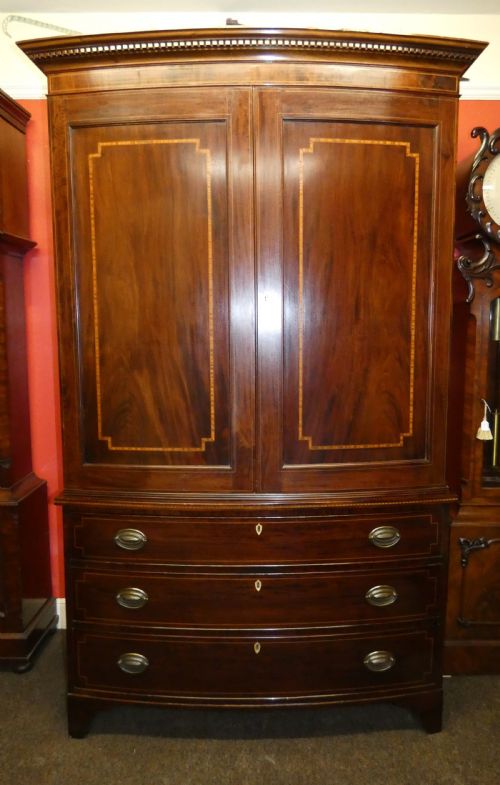
A vintage mahogany linen press sits at the intersection of utilitarian bedroom storage and formal cabinet making, designed originally to keep household linens flat and crisp. Buyers seeking a vintage mahogany linen press encounter pieces primarily from the Georgian, Victorian, and Edwardian periods, alongside later Georgian style revivals. These large case pieces typically pair a pair of upper panelled doors enclosing sliding trays with a chest of drawers beneath.
The format evolved through the nineteenth and early twentieth centuries, shifting from deep architectural cornices and bracket feet to slender Edwardian proportions and satinwood stringing. Most examples on offer measure substantial heights, requiring careful room measurement before placement in modern homes.
Factors influencing quality
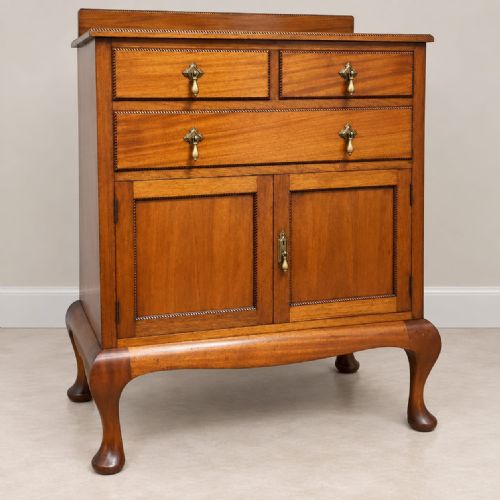
The choice of timber creates a distinct visual hierarchy, ranging from plain solid mahogany boards to highly figured Cuban mahogany and book-matched flame mahogany veneers. Superior pieces display continuous grain alignment across drawer fronts and door panels, whereas standard utility pieces utilise simpler sawn timber constructions.
Listings feature periods spanning from the eighteenth-century Georgian era through Victorian and Edwardian decades into the 1930s.
maples & co·Edwards and Roberts·Johnston’s of London·Druce & Co·Heals
The Vintage Mahogany Linen Press Glossary
- Linen press
- A tall storage cabinet featuring an upper section with sliding trays for folded textiles and a lower chest of drawers. Originally utilised for household linen storage before hanging wardrobes became standard.
- Flame mahogany
- A veneer cut from the fork of the mahogany tree where branches join the trunk, producing a distinctive flickering flame pattern. Highly prized by cabinet makers for principal door panels and drawer fronts.
- Compactum
- A multi-functional wardrobe combining hanging space, linen slides, and multiple drawers within a single fitted cabinet. This form maximises storage efficiency in bedrooms.
- Blind fretwork
- Carved ornamentation applied to a flat surface in imitation of pierced fretwork, often seen along cornices on eighteenth-century presses. It provides texture without weakening structural edges.
- Satinwood inlay
- Contrasting pale hardwood veneers embedded into the darker mahogany ground in geometric or linear patterns. This technique defines Edwardian and Regency decorative styles.
Vintage Mahogany Linen Press: Frequently Asked Questions
How do I fit a linen press inside a modern bedroom?
Measure your ceiling height and floor space carefully, remembering that these cabinets often separate into upper and lower sections for easier transport and installation up stairs.
Position the piece away from direct sunlight and heating vents to protect the mahogany polish and prevent timber movement.
What is the difference between a linen press and a wardrobe?
A linen press contains horizontal sliding trays or shelves behind its upper doors, designed for stacking folded garments and household linens flat.
A wardrobe provides vertical hanging space for coats and dresses on rails, though many later compactum designs combine both internal layouts.
How do I care for mahogany surfaces?
Dust the timber regularly with a soft, dry cloth and apply a quality beeswax polish sparingly to maintain the natural sheen of the wood.
Avoid liquid cleaners and silicone sprays, which can penetrate porous antique finishes and attract airborne dust over time.
How do I distinguish Georgian from Victorian pieces?
Georgian presses typically display architectural cornices, bracket or ogee feet, and understated classical proportions with minimal applied ornament.
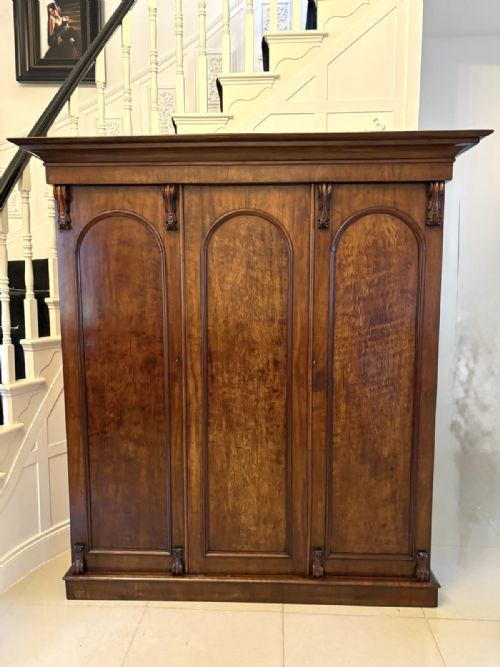
Victorian and later examples often introduce heavier figured veneers, plinth bases, carved corbels, and three-door configurations reflecting changing domestic tastes.