




Vintage Mahogany Hall Clock
These vintage mahogany hall clock pieces span Georgian, Victorian, and Edwardian eras, offering classic cabinet-making and timekeeping for the hallway.
Vintage Mahogany Hall Clock
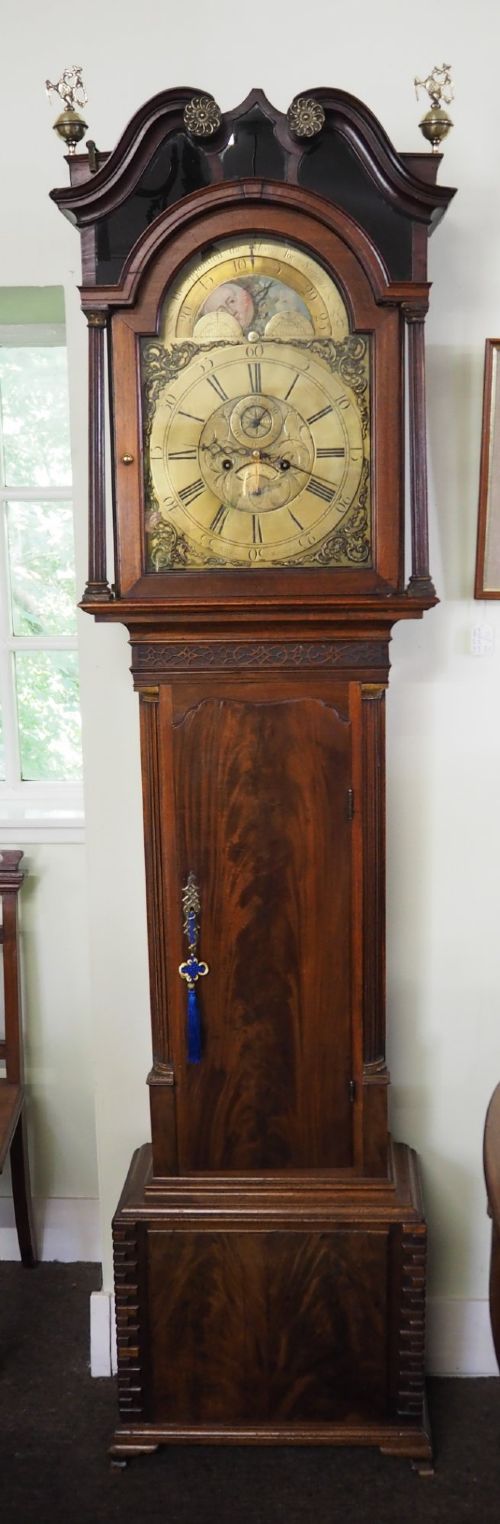
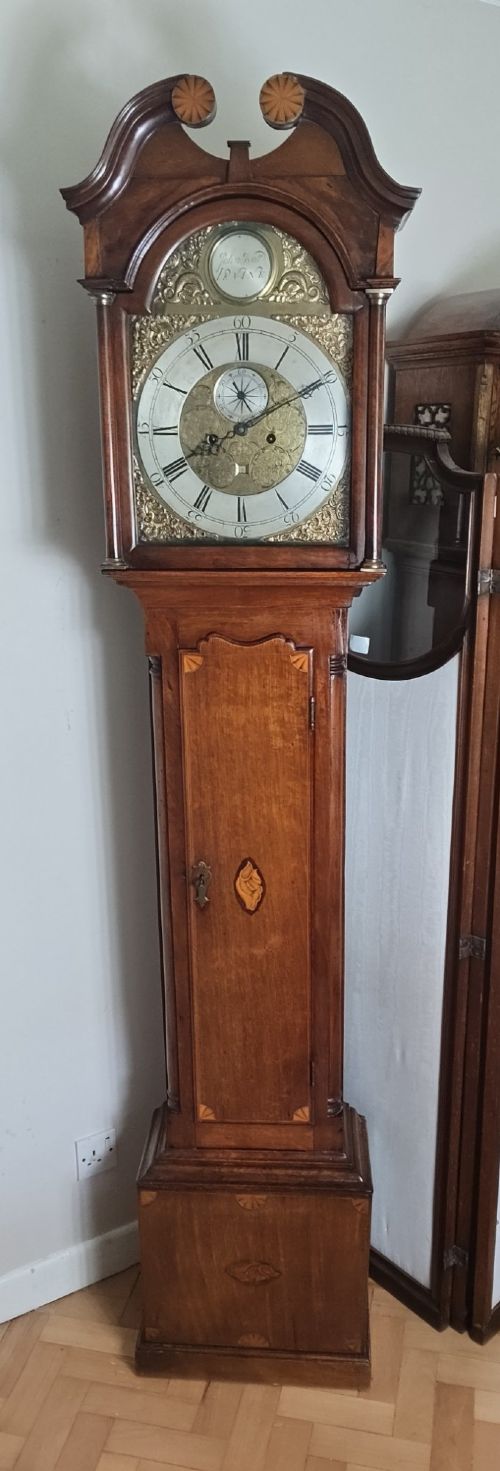
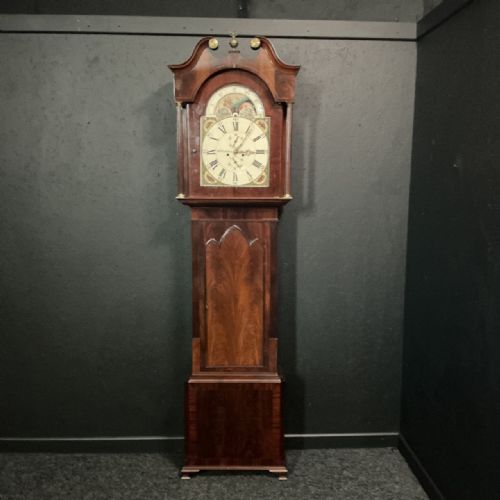
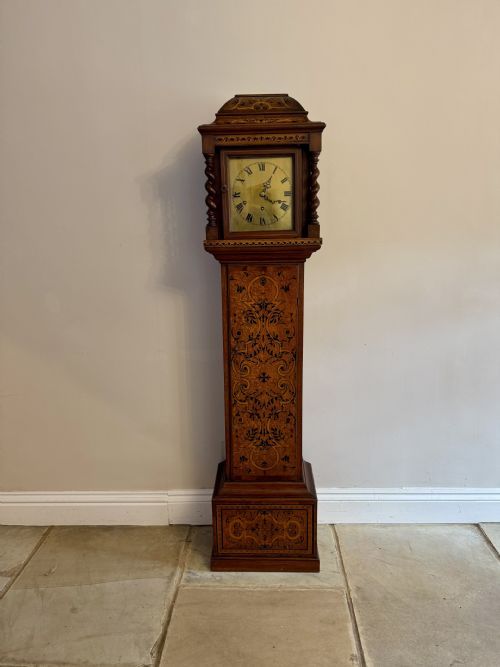
A vintage mahogany hall clock brings traditional timekeeping into domestic spaces, appearing primarily as longcase, grandfather, and grandmother clocks. These floor-standing pieces range from full-sized 18th-century examples to smaller Edwardian and 19th-century variants.
The selection on this page includes Scottish Georgian, Chippendale style, and Edwardian inlaid designs. Alongside tall longcase clocks, buyers will encounter smaller mantel clocks and wall clocks housing diverse movements.
How they were made
Cabinet makers utilised solid mahogany, often enhanced with satinwood inlay, burr walnut, ebonised wood, and oak accents. Cases were constructed to house intricate mechanisms, incorporating brass dials and glass panels to protect the face.
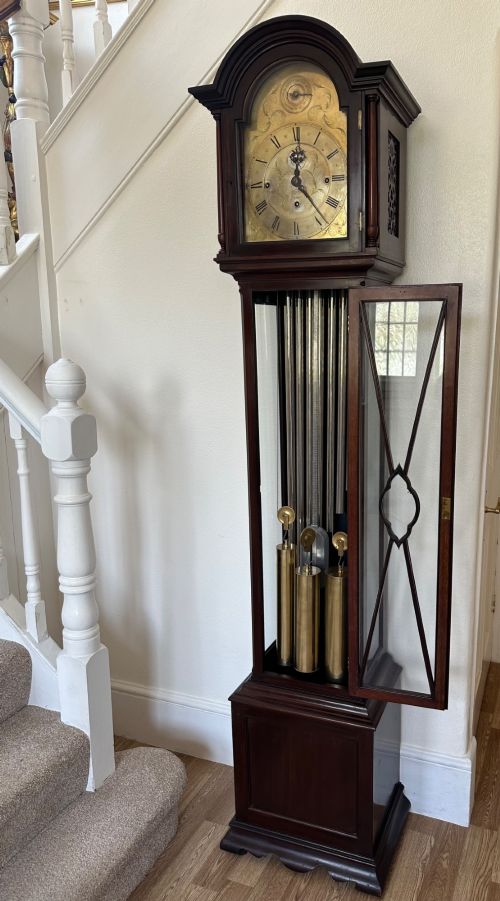
Internal engineering varied from standard 8-day movements to musical tubular bell systems and Westminster quarter-chimes. Weight-driven mechanisms and spring-driven regulators powered these timepieces across different periods.
Vintage Mahogany Hall Clock Retail Price Guide 2026
Typical asking prices for vintage mahogany hall clock among the pieces listed under this phrase on Sellingantiques today, from the lower quarter to the upper quarter. They describe what is for sale here now, not the wider market.
Object types recorded include longcase clocks, grandmother clocks, mantel clocks, and wall clocks with musical tubular bell movements.
What varies in quality
Quality rests upon the refinement of the mahogany case work, where marquetry inlay and proportions distinguish finer examples from standard production. Cabinet makers working in Chippendale and Scottish Georgian styles achieved notable architectural distinction.
The sophistication of the internal movement dictates the calibre of the piece. Tubular bell mechanisms, musical systems, and miniature proportions elevate the horological interest beyond simple timekeeping.
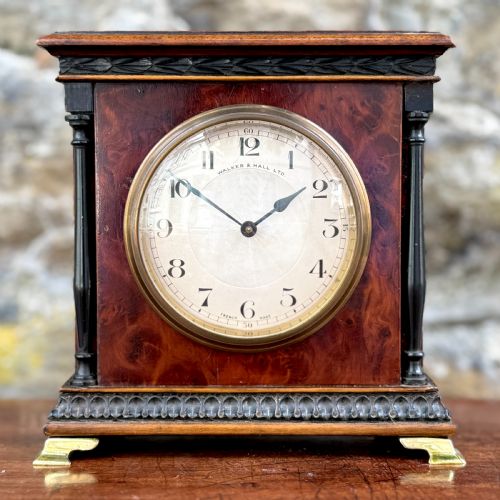
Walker and Hall·JJ Elliot
The Vintage Mahogany Hall Clock Glossary
- Longcase clock
- A tall, floor-standing pendulum clock enclosed in a wooden case, commonly called a grandfather clock.
- Grandmother clock
- A smaller, more slender version of the traditional longcase clock, popular during the Edwardian period.
- Fusee movement
- A conical pulley mechanism designed to equalise the drive of the mainspring as it unwinds.
- Marquetry
- Decorative veneer work arranged in intricate patterns across the mahogany surface of the clock case.
- Paterae
- Small, round decorative medallions carved or inlaid into furniture, frequently seen on 19th-century pieces.
Vintage Mahogany Hall Clock: Frequently Asked Questions
What is a grandmother clock?
A grandmother clock is a smaller, more slender variant of the traditional longcase clock. These scaled-down timepieces emerged strongly during the Edwardian era to fit modern domestic proportions.
They retain the weights, pendulums, and striking movements of their taller counterparts while occupying significantly less floor space in a hallway.
How do I identify an Edwardian clock?
Edwardian timepieces often feature refined mahogany cases embellished with detailed marquetry inlay and satinwood banding. Their production clustered around the turn of the twentieth century.
Many examples from this era adopt smaller proportions, such as miniature longcase regulators or chiming grandmother clocks.
What is an 8 day movement?
An 8 day movement is a clock mechanism that requires winding only once a week. This system uses driven weights or springs that take eight days to fully descend or unwind.
It represents a practical domestic standard found across Georgian and 19th-century longcase clocks.
Where should I place a hall clock?
A hall clock traditionally stands in an entrance hall or reception room where its height and chime can be appreciated. The tall mahogany case requires a stable, level floor away from direct sunlight.
Adequate clearance is essential to allow the pendulum to swing freely and weights to descend without obstruction.