




Vintage Mahogany Gateleg Table
A vintage mahogany gateleg table folds to save space and opens on pivoted legs to seat guests or serve tea.
Vintage Mahogany Gateleg Table
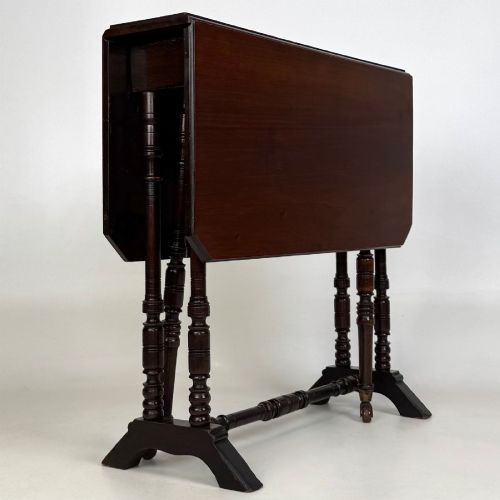
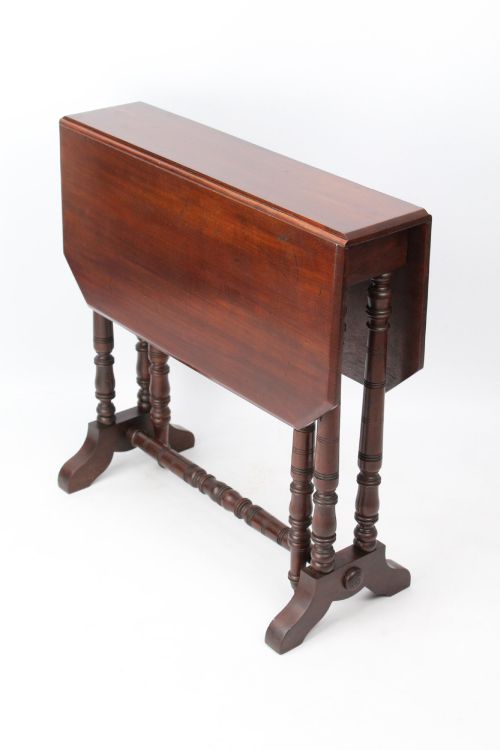
When you search for a vintage mahogany gateleg table, you encounter drop-leaf dining tables, smaller occasional tables, and slender Sutherland designs spanning the eighteenth century to the 1930s.
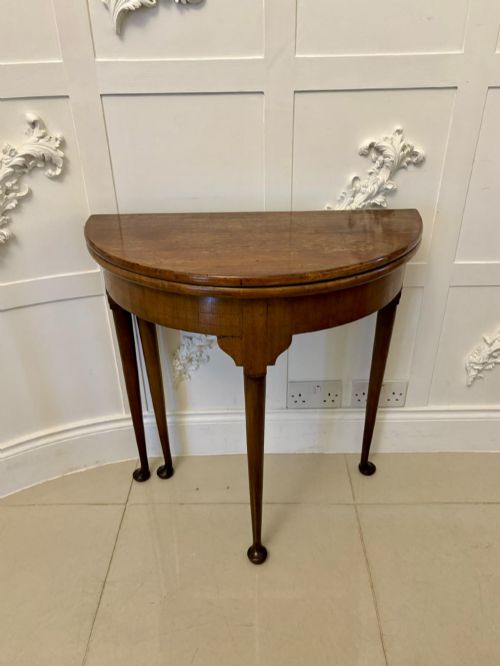
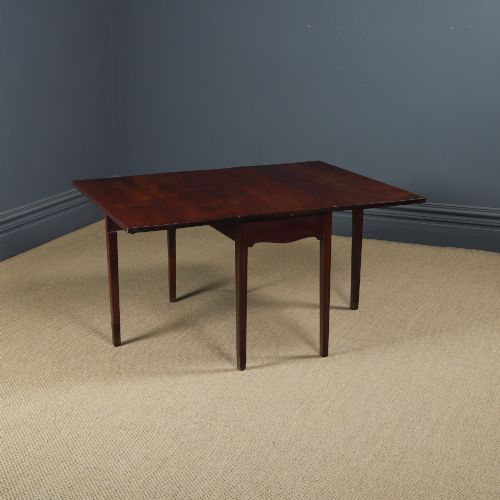
The pieces on this page appear mostly in Edwardian and Georgian iterations, ranging from compact coffee tables and spider-leg forms to large folding dining tables.
Makers shaped these utilitarian surfaces from solid timber and veneers, creating hinged leaves supported by swing-out legs that lock into position for everyday use.
Materials and construction
Cabinet makers built these tables primarily using mahogany, often incorporating solid timber alongside figured veneers to achieve rich grain patterns across the folding leaves.
Details such as brass fittings, ceramic elements, and satinwood or boxwood inlay appear on specific Edwardian and Georgian examples to accent the timber frames.
Hinged gateleg mechanisms, pivoting wooden struts, and slender spider-leg supports distribute weight when the leaves are raised for dining or games.
Vintage Mahogany Gateleg Table Retail Price Guide 2026
Typical asking prices for vintage mahogany gateleg table among the pieces listed under this phrase on Sellingantiques today, from the lower quarter to the upper quarter. They describe what is for sale here now, not the wider market.
Some Edwardian spider-leg tables feature leaves so slender they seem to hover on toothpicks, defying anyone to rest a heavy teapot upon them.
Markers of quality
Superior examples display dense, figured mahogany timber with careful book-matching across the drop leaves, whereas simpler pieces utilise plain boards.
The tightness of the joints at the pivot points and the rigidity of the swing-out legs determine how steadily the table stands when fully opened.
Refined stringing, satinwood banding, and original brass or ceramic castors elevate the finish of Edwardian and Georgian pieces.
The Vintage Mahogany Gateleg Table Glossary
- Gateleg table
- A table with hinged leaves supported by one or more legs that swing outward like a gate. This design provides a large surface area when open and folds flat for storage.
- Sutherland table
- A narrow drop-leaf table with particularly slender legs and leaves that drop almost to the floor. They function primarily as tea or occasional tables.
- Spider-leg table
- A small table characterised by exceptionally thin, turned legs connected by delicate stretchers. They are typical of Edwardian and Georgian occasional furniture.
- Drop-leaf table
- A table featuring a fixed centre section and two hinged flaps that rise to extend the top. The leaves are supported by swing legs, brackets, or fly brackets.
Vintage Mahogany Gateleg Table: Frequently Asked Questions
How do you open a gateleg table?
Lift the hinged drop leaf upward until the surface sits level with the fixed centre board. Swing the pivoted leg outward from the frame until it locks into position beneath the raised leaf.
Ensure the wooden strut rests securely to bear weight before placing items on the surface. To close the table, swing the leg back inward and lower the leaf gently.
What is the difference between a gateleg and a Sutherland table?
A standard gateleg table is typically built heavier and wider for dining or general use, featuring sturdy turned legs. A Sutherland table is a specific, narrower variant of the gateleg design.
Sutherland tables possess much thinner legs, often termed spider legs, and leaves that hang down nearly to the floor. They occupy less space and suit lighter occasional use.
Can these tables be used for everyday dining?
Many examples function well for daily meals when the leaves are fully raised and supported by the swinging legs. Larger Georgian and Edwardian drop-leaf tables were specifically built to seat several people.
Check the stability of the pivot joints and the clearance for chairs before regular dining use. Protect the mahogany surface with heat mats and coasters to preserve the polished finish.
How do I date an antique mahogany table?
Examine the timber species, construction joints, and hardware styles to determine the likely period of manufacture. Eighteenth-century pieces often show hand-cut joinery and dense Honduras mahogany, while Edwardian versions frequently feature machine-cut elements and satinwood inlay.
Leg turnings, stretcher placements, and the presence of brass or ceramic castors also provide clues. Comparing the overall proportions against documented period forms helps confirm the era.