
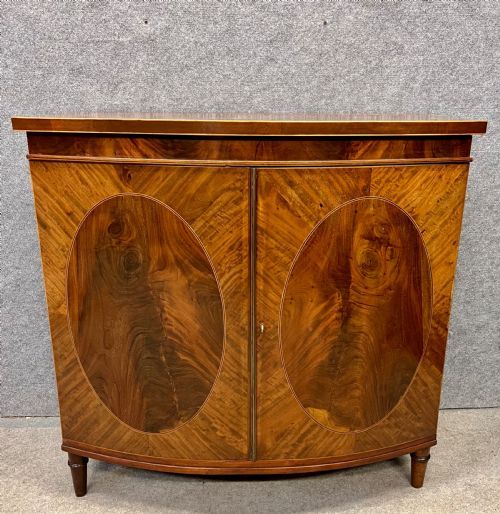
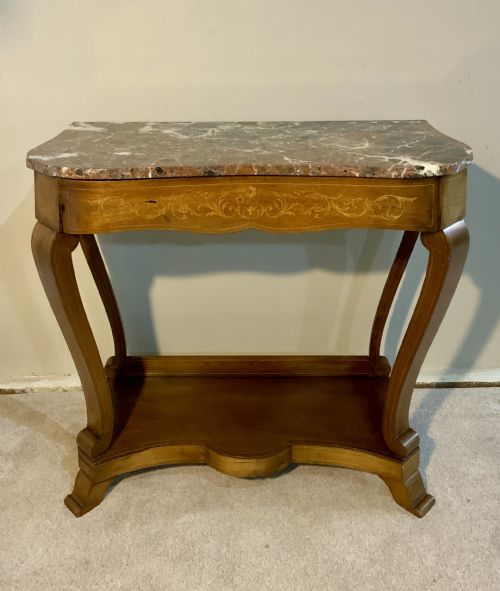
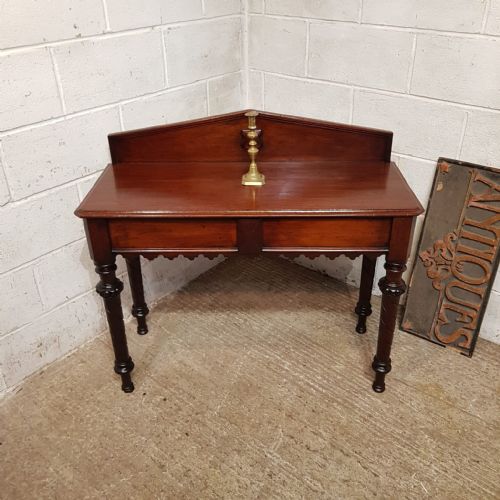


Vintage Mahogany Entryway Table
A vintage mahogany entryway table brings warmth and dependable utility to a hallway, drawing the eye with rich timber grain and classic proportions.
Vintage Mahogany Entryway Table
A vintage mahogany entryway table typically takes the form of a console table, a hall table, or a demi-lune cabinet designed to fit neatly against a wall. These foundational hallway surfaces serve as the immediate landing spot upon entering a home, combining practical display space with formal presence.
The pieces appearing on this page span several distinct periods, including the Georgian, Regency, Victorian, Edwardian, and William IV eras. Such items showcase the enduring appeal of mahogany timber across more than a century of British and continental cabinet-making.
Formats vary from simple rectangular hall tables to half-moon demi-lune shapes and console tables fitted with marble tops. Buyers frequently encounter variations featuring satinwood inlay, brass accents, and scroll carvings that reflect specific period styles like French Empire or French Chateau.
How they were made
Cabinet-makers relied heavily on solid mahogany and wood veneer over secondary timbers to construct these hallway surfaces. The structural integrity of each piece depends upon traditional joinery techniques honed throughout the nineteenth and early twentieth centuries.
Many examples incorporate decorative details such as satinwood inlay, contrasting wood inlays, and applied paintwork. Surfaces are frequently finished with fitted marble or fossil marble tops that add weight and structural contrast to the timber frames.
Metal components like brass hardware appear on select cabinet doors and drawers, while hand-carved elements such as scroll work demonstrate the skill of period woodcarvers.
Some console tables wear their fossil marble tops like heavy stone hats, proving that timber and rock make surprisingly harmonious hallway companions.
What varies in quality
The refinement of the timber and the crispness of the carving set exceptional examples apart from standard workshop production. Superior pieces display carefully chosen mahogany grain patterns and finely executed satinwood inlay that catch the light naturally.
Structural harmony and the integrity of applied elements, such as marble tops and brass mounts, dictate the overall calibre of a hall table. Cabinet-makers who paid close attention to proportion and joinery produced items that retain their stability and visual balance over generations.
The Vintage Mahogany Entryway Table Glossary
- Demi-lune
- A half-moon shape popular for console tables and cabinets designed to sit flat against a wall. This profile saves floor space in narrow hallways.
- Console table
- A table supported by wall brackets or console legs, traditionally positioned in an entryway or hallway. These surfaces often feature decorative marble tops.
- Satinwood inlay
- A contrasting light-coloured wood inserted into the mahogany surface to form decorative patterns. This technique highlights the skill of the cabinet-maker.
- Veneer
- A thin layer of choice wood applied to a base timber to provide a superior decorative surface. This method maximises the visual impact of figured mahogany.
Vintage Mahogany Entryway Table: Frequently Asked Questions
How do I style a hall table?
A hall table functions best when kept uncluttered, offering a designated drop zone for keys and post. Pairing the surface with a mirror or a piece of framed art creates a welcoming focal point.
Heavier items like marble-topped consoles benefit from minimal styling to let the stone and timber grain speak for themselves. Smaller decorative objects can balance the proportions without crowding the surface.
Are these tables suitable for daily use?
Mahogany hall tables and console tables were built to withstand regular household traffic. The dense timber provides a sturdy structure capable of supporting daily items.
Care should be taken with unsealed wooden surfaces when placing wet items or keys directly onto the timber. Using coasters or small trays helps preserve the original polish and finish.
How do I identify a Georgian console?
Georgian console tables reflect the classical proportions and restrained ornament of the eighteenth century. They frequently feature architectural details and fine timber selection.
Later Victorian and Edwardian interpretations often adopted heavier carving or integrated cabinet doors. Comparing the leg structure and edge moulding helps clarify the period of manufacture.