
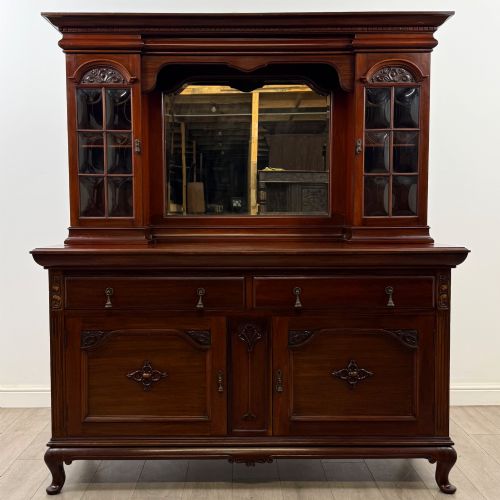
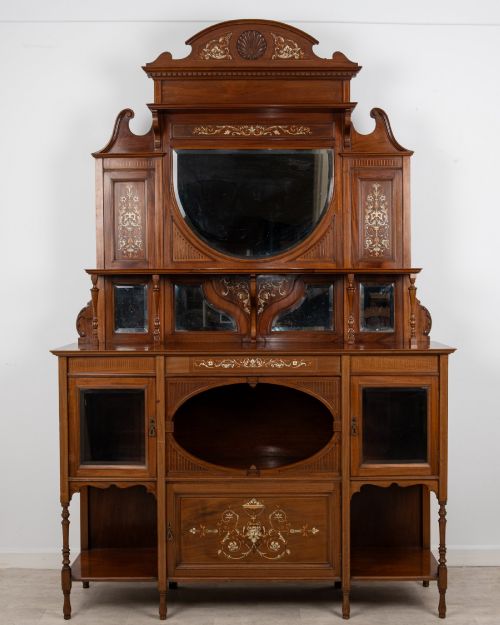
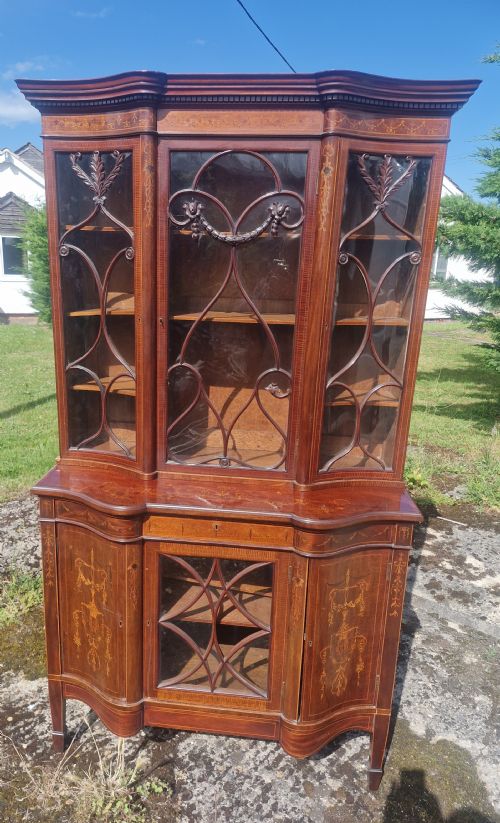
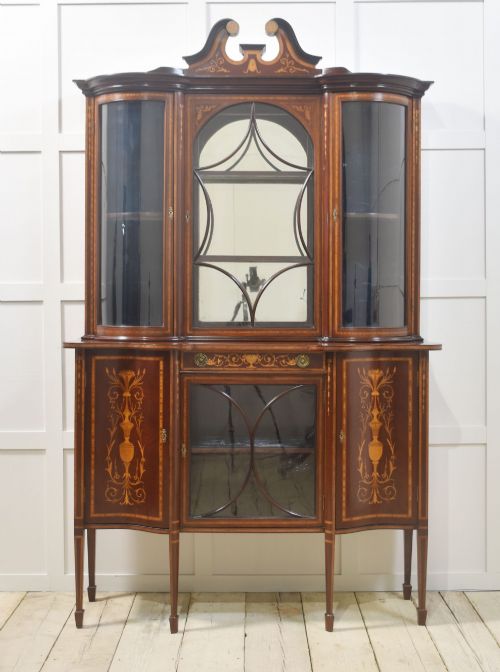


Vintage Mahogany Display Sideboard
A vintage mahogany display sideboard brings warmth and functional elegance to a room, combining timber storage with glazed display space.
Vintage Mahogany Display Sideboard
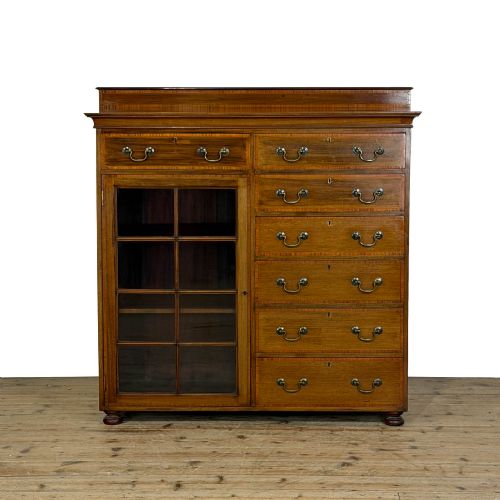
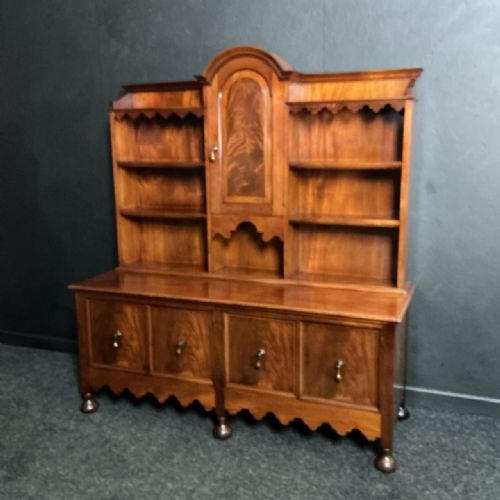
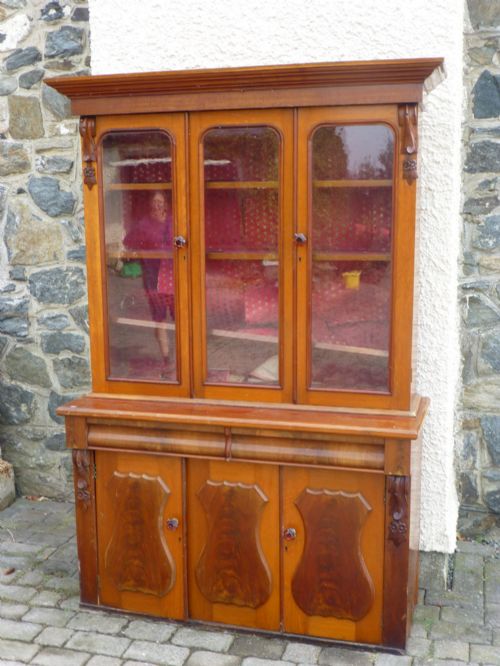
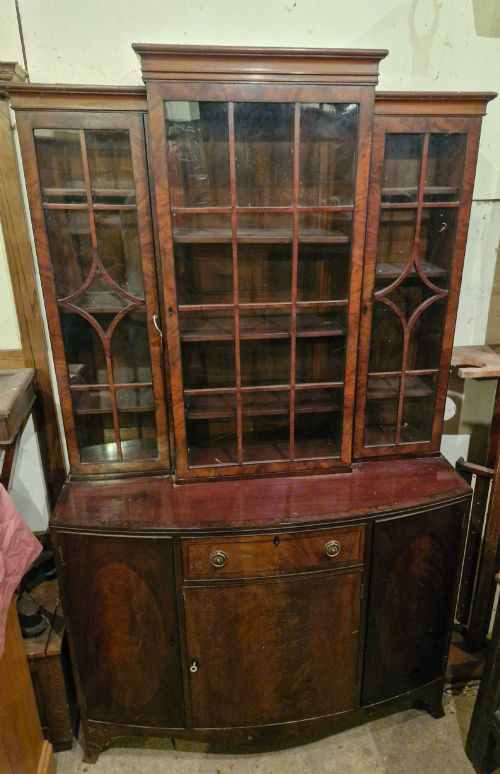
A vintage mahogany display sideboard unites the timber storage of a traditional base unit with upper shelving or glazed display capacity. These items range across periods including Victorian, Edwardian, and the early twentieth century, reflecting varied interpretations of classical designs.
Buyers frequently encounter Edwardian and Victorian examples on this page, often featuring revivalist influences such as Sheraton, Chippendale, and Arts and Crafts aesthetics. Forms extend from glazed display cabinets and chiffoniers to mirrorback sideboards and serving pieces.
The materials span solid mahogany and flame mahogany veneers, frequently enhanced with contrasting satinwood inlay, glass panels, and brass hardware. Such combinations deliver both structural presence and lighter decorative details suitable for period and eclectic interiors.
How they were made
Cabinet makers utilised solid mahogany and rich flame mahogany veneers applied to secondary timbers, building robust carcases designed for daily household use. Timber selection was central, with figured grains chosen specifically for prominent door panels and friezes.
Surface enrichment relied heavily on precise satinwood stringing, marquetry inlay, and carved detailing reflecting Chippendale or Sheraton revival patterns. Glazed doors utilised timber framing to secure glass panes, while brass handles, locks, and adjustable internal fittings completed the construction.
Keep an eye out for shop counters fitted with adjustable feet, proving that even retail history needed a steady stance on uneven floors.
What varies in quality
Quality separates pieces through the crispness of carved woodwork, the precision of satinwood inlay, and the depth of figure within the mahogany veneers. Superior items display meticulous hand-joinery and balanced proportions that reflect skilled workshop production rather than standard factory output.
The integrity of original brass hardware, undamaged glass, and well-fitted doors or drawers further distinguishes finer examples. Subtle details such as polished timber interiors and refined marquetry indicate higher manufacturing standards from the outset.
Edwards and Roberts
The Vintage Mahogany Display Sideboard Glossary
- Flame mahogany
- A veneer cut from timber where the grain creates a distinctive flickering flame pattern. This decorative effect is typically reserved for prominent display surfaces.
- Chiffonier
- A low sideboard cabinet, often fitted with a shelved superstructure or mirror back. It developed during the nineteenth century for dining and living spaces.
- Marquetry
- The art of applying decorative pieces of veneer to a structure to form intricate pictorial or geometric designs. It appears frequently on revivalist cabinet work.
- Satinwood
- A lustrous yellowish timber utilised for contrasting stringing and inlay work on mahogany furniture. It provides a sharp visual border to panels.
- Serpentine
- A curved furniture front characterised by a convex centre flanked by concave ends. This contour adds fluidity and movement to cabinet designs.
Vintage Mahogany Display Sideboard: Frequently Asked Questions
What is a vintage mahogany display sideboard?
It is a hybrid furniture form that merges lower storage cupboards with upper shelving or glass-fronted display areas. Constructed primarily in mahogany, these pieces date across the Victorian and Edwardian eras.
Such items served as practical furniture for storing dining ware while exhibiting decorative ceramics and glassware behind glass panels.
How do I style a sideboard at home?
Position the piece against a main wall in a dining room, hallway, or living space to anchor the room's decorative scheme. The timber tones pair naturally with neutral walls and traditional or eclectic interiors.
Use the internal shelving to display glassware or collections, while the top surface accommodates lamps, trays, or decorative objects.
What styles are common in these sideboards?
Revival styles predominate, particularly Chippendale and Sheraton revivals that draw upon eighteenth-century classical proportions. Edwardian and Victorian interpretations often incorporate fine satinwood inlay and marquetry.
Other variations include Arts and Crafts designs and mirrorback sideboards that introduce reflected light into smaller rooms.
How do I identify Edwardian pieces?
Edwardian examples frequently display lighter proportions, delicate satinwood stringing, and refined revivalist detailing. The mahogany used can range from plain timber to highly figured flame veneer.
Construction methods from this period include machine-assisted joinery alongside traditional hand finishing, distinguishing them from earlier nineteenth-century items.