


Vintage Lyre Back Chairs
Vintage lyre back chairs bring classical music motifs into everyday seating through graceful timber splats shaped like ancient stringed instruments.
Vintage Lyre Back Chairs
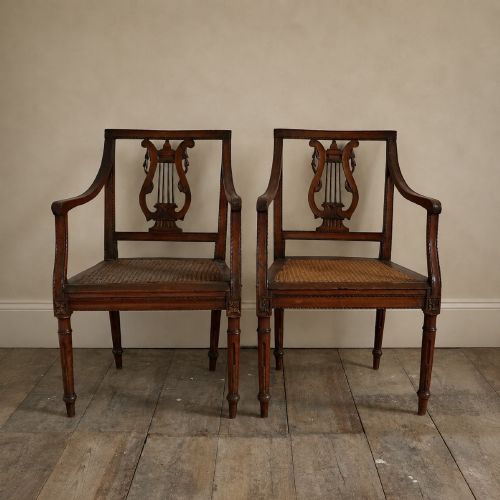
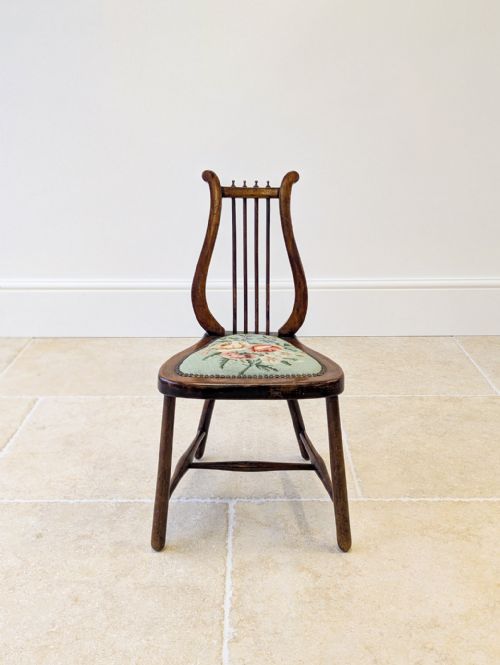
Vintage lyre back chairs draw on classical design motifs, framing a distinctive musical instrument shape within the central splat of the backrest. When you search for vintage lyre back chairs, you encounter a varied selection spanning the nineteenth and early twentieth centuries, from the Victorian era through the Edwardian period.
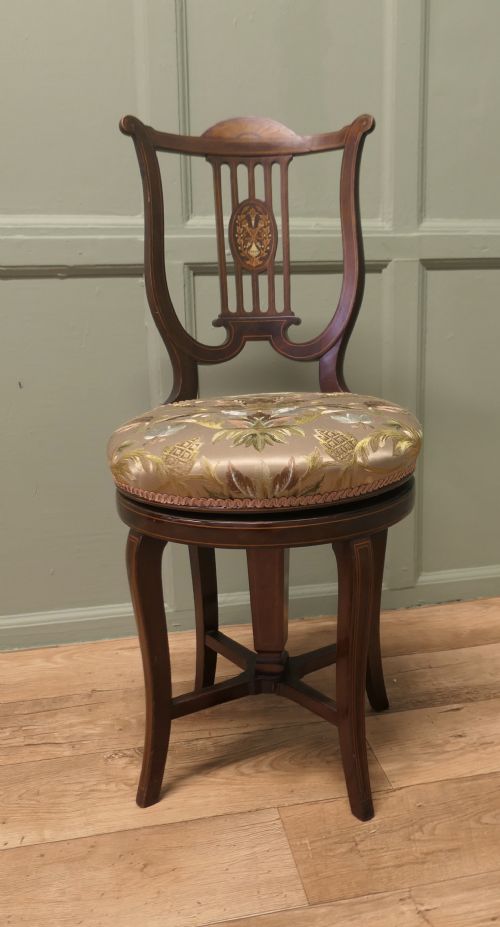
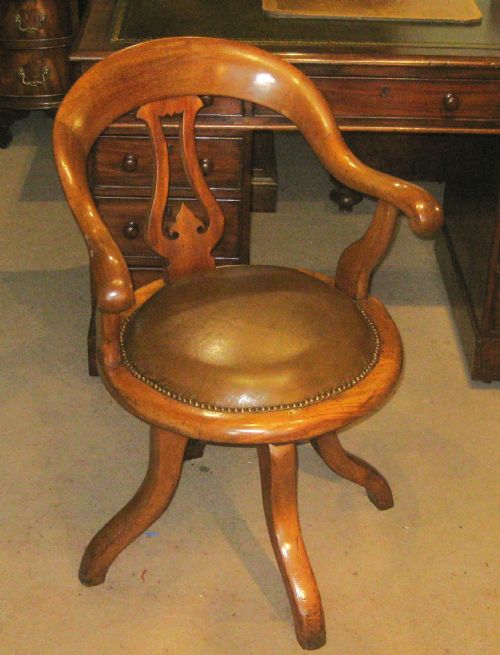
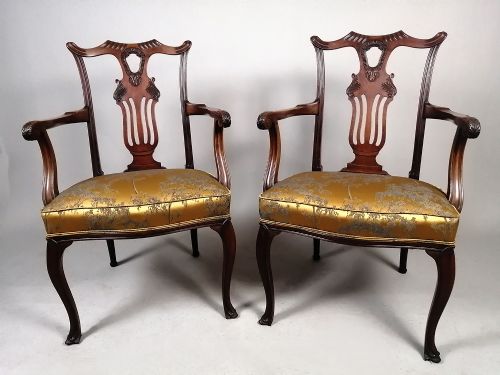
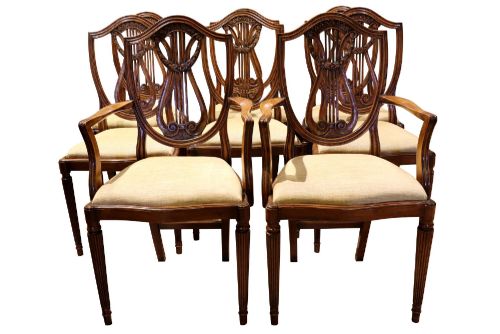
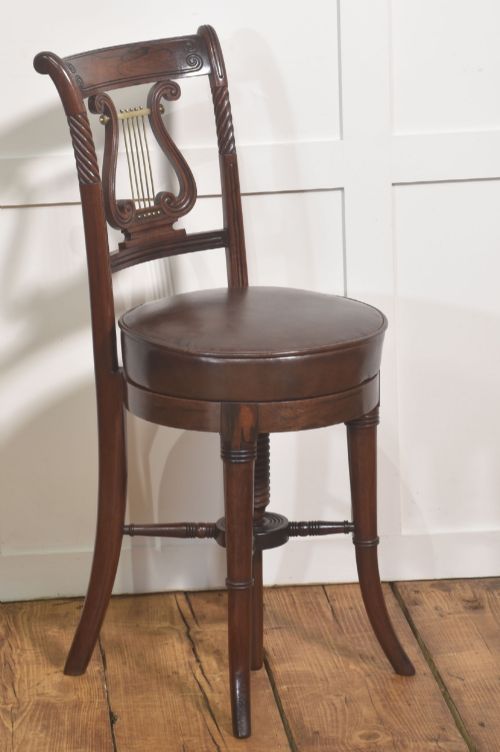
The assortment on this page ranges from formal dining sets to specialised seating forms. You will find revolving music chairs, adjustable dressing table chairs, library armchairs, and side chairs designed for various rooms of the house.
Mahogany predominates among the surviving timbers, alongside walnut, beech, and elm. Stylistic influences lean heavily toward Regency, Sheraton Revival, and Hepplewhite style revivals alongside straightforward Victorian workmanship.
Materials and construction
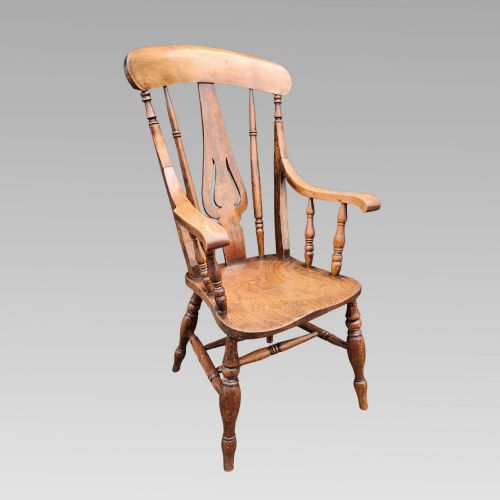
Cabinetmakers constructed these frames primarily using dense hardwoods such as mahogany and walnut, which permitted intricate carving of the slender curves defining the lyre shape. Beech and elm appear in provincial and farmhouse iterations, offering robust structural integrity for everyday utility.
Cellists and harpists enjoyed specialised revolving music chairs designed to keep them balanced while plucking strings in Victorian parlours.
Factors of quality
Quality rests significantly on the precision of the timber carving within the lyre splat and the crispness of any applied brass or reeded details. Finer examples display harmonious proportions where the curved members of the instrument motif balance cleanly against the supporting frame.
Construction methods also separate standard production from superior pieces, particularly in the tightness of joinery at the stress points where the backrest meets the seat rails. The selection of primary timber veneers and the integrity of secondary woods reveal the original maker's commitment to durability.
The Vintage Lyre Back Chairs Glossary
- Lyre back
- A chair back featuring an openwork splat carved or pierced in the symmetrical shape of an ancient Greek lyre.
- Splat
- The vertical central strip of wood running from the seat up to the top rail of a chair back.
- Revolving
- A mechanical swivel function allowing the seat portion to rotate independently of the base frame, common in music and desk chairs.
- Carver chair
- An armchair designed in a matching style to a set of dining chairs, traditionally placed at the head of a table.
- Cane seat
- A seating surface woven from thin strips of rattan or bamboo cane, providing flexible support.
Vintage Lyre Back Chairs: Frequently Asked Questions
What rooms suit vintage lyre back chairs?
These pieces integrate easily into dining rooms, studies, and bedrooms depending on the specific form chosen. Smaller side chairs and dressing chairs fit neatly into corners or alongside desks.
Larger armchairs and dining sets function well as statement seating around formal tables or as occasional chairs in a living space.
How do I care for mahogany frames?
Maintain the timber surfaces by dusting regularly with a soft, dry cloth and avoiding placement near direct heat sources. Periodic application of traditional beeswax helps preserve the natural lustre of the polished wood.
Protect upholstered and cane seat inserts from excessive moisture and direct sunlight to prevent premature fading or fibre breakage.
Are music chairs adjustable?
Certain specialised music and piano stool variants incorporate revolving mechanisms or adjustable height screws. These functional elements allowed nineteenth-century musicians to customize their seating height.
Standard dining and side chairs remain fixed in position without mechanical adjustments.
How do I identify Regency style influences?
Regency revival and nineteenth-century pieces often display clean classical lines, reeded legs, and brass inlay inspired by ancient Greek and Roman furniture. The lyre motif itself stems directly from this classical revival tradition.
Later Edwardian interpretations tend to soften these strict geometries with lighter wood tones and more delicate proportions.