





Vintage Lustre Pottery
Vintage lustre pottery captures light with metallic surfaces, bringing rich nineteenth-century and early twentieth-century character into any room.
Vintage Lustre Pottery
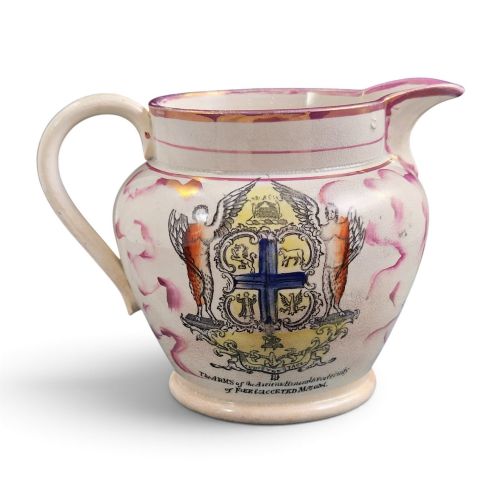
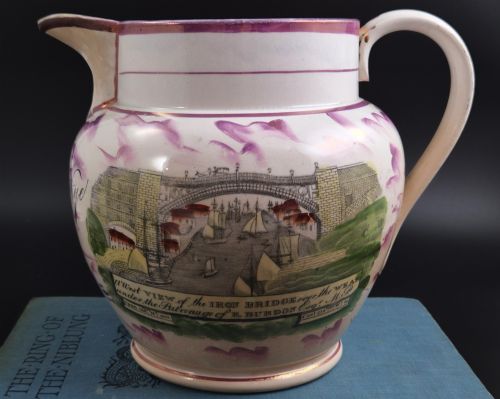
When you search for vintage lustre pottery, you encounter earthenware and ceramic vessels treated with metallic glazes that create a shimmering, reflective surface. The selection spans robust nineteenth-century Sunderland jugs and Staffordshire figures to ornate twentieth-century bowls.
Makers utilised copper, pink splash, and gold leaf techniques to produce decorative bowls, vases, and jugs. These pieces range from Georgian and Victorian utilitarian items to elaborate Art Deco and Art Nouveau presentation pieces.
The most common forms on this page include commemorative jugs featuring transfer prints, mantel dogs, and intricate bowls. Each piece relies on metallic oxides fired onto the ceramic body to achieve its characteristic sheen.
How they were made
Potters applied metallic glazes containing copper, silver, or gold over an earthenware or ironstone body before firing the piece in a kiln. This chemical reduction process left a thin metallic film on the surface, creating the signature iridescent shine.
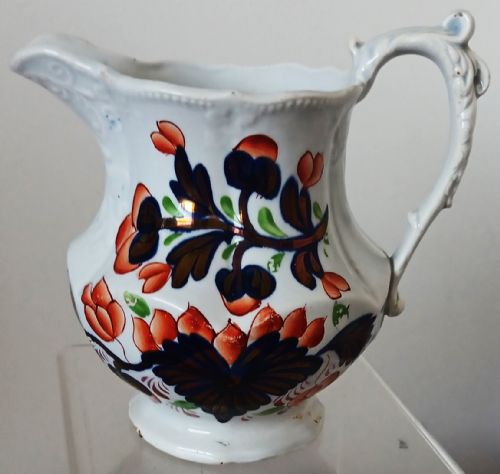
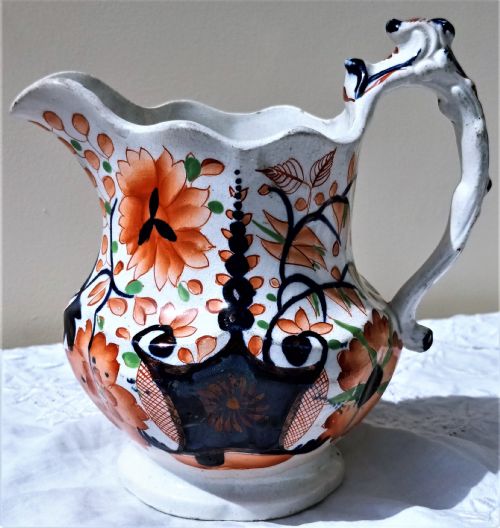
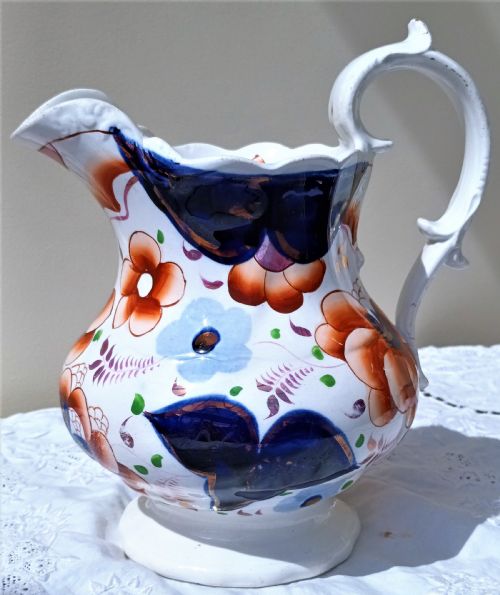
Many items combined these lustre glazes with hand-painted enamel colours and transfer-printed designs, particularly on Sunderland jugs and Gaudy Welsh pottery. Skilled decorators layered these elements to build complex pictorial scenes and geometric patterns.
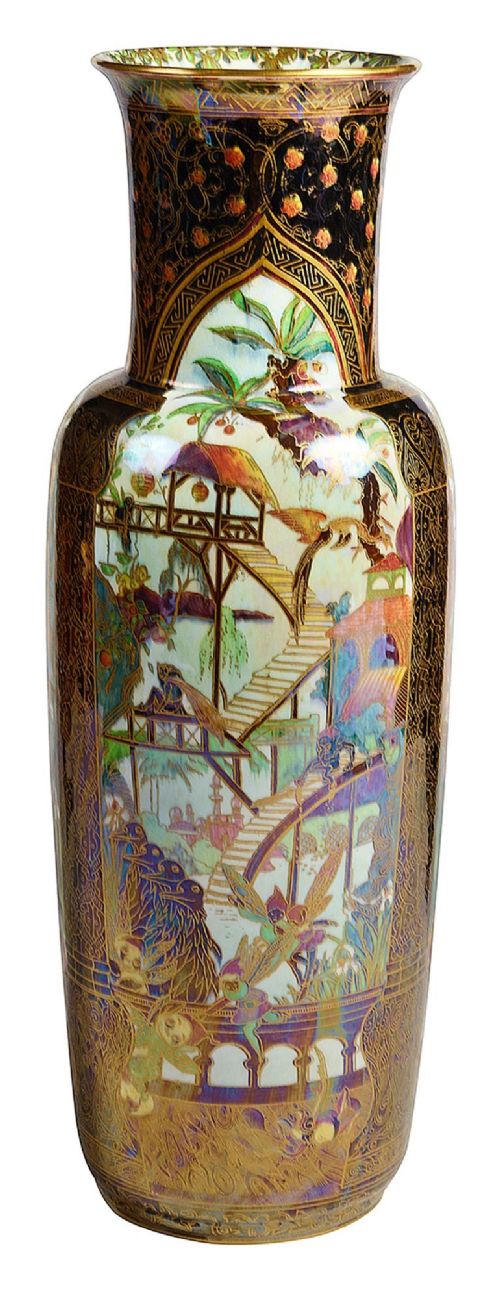
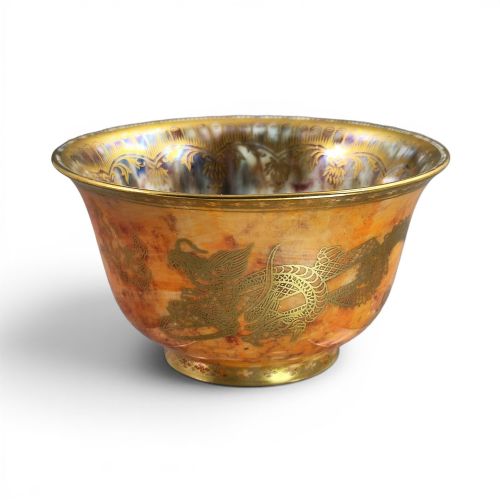
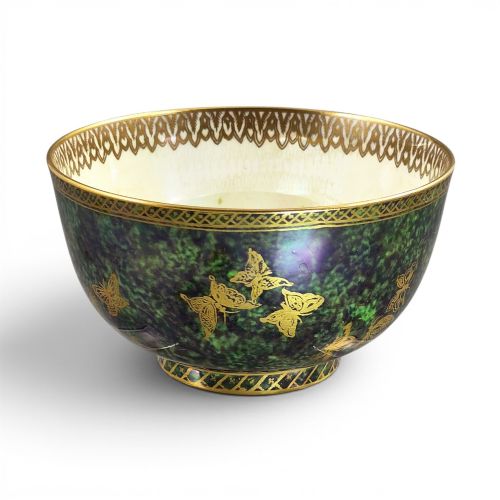
Later twentieth-century works incorporated specialised lustre glazes onto porcelain and creamware bases, demanding precise kiln temperature control to secure deep orange, green, and blue butterfly or dragon motifs.
Vintage Lustre Pottery Retail Price Guide 2026
Typical asking prices for vintage lustre pottery among the pieces listed under this phrase on Sellingantiques today, from the lower quarter to the upper quarter. They describe what is for sale here now, not the wider market.
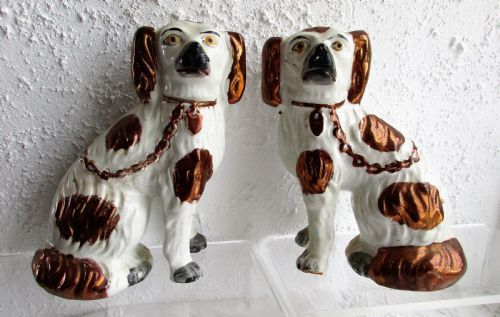
Staffordshire spaniels sit patiently across these listings, keeping silent watch over centuries of pottery traditions.
What varies in quality
Quality rests upon the clarity and depth of the metallic glaze, alongside the crispness of any transfer printing or hand-painted enamel work. Superior pieces display an even, shimmering coat without dull patches or heavy firing blemishes.
Design complexity also separates standard utility wares from masterworks by notable designers, where meticulous detailing on intricate subjects like dragons or fairyland scenes elevates the piece. The execution of the ceramic form itself, from moulded spaniels to thrown bowls, dictates the overall refinement.
Wedgwood·Maling·Minton·Royal Lancastrian·Cantagalli·Livesley Powell & Co·Shelley
The Vintage Lustre Pottery Glossary
- Lustre Glaze
- A type of pottery glaze containing metallic salts that produce an iridescent or reflective finish upon firing. It gives the ceramic body a metallic sheen resembling copper, silver, or gold.
- Earthenware
- Porous pottery fired at lower temperatures, commonly used as the base body for nineteenth-century jugs and decorative figures before being glazed.
- Transfer Print
- A method of applying decorative designs to ceramics by engraving an image on a copper plate, pulling it on paper, and transferring it onto the pottery surface prior to glazing.
- Ironstone
- A heavy, durable type of ceramic developed as a tougher alternative to porcelain, frequently utilised for nineteenth-century jugs and tableware.
Vintage Lustre Pottery: Frequently Asked Questions
Can I use these jugs for serving?
Most antique lustre pieces function best as decorative display items rather than functional tableware. Older glazes may contain materials unsuitable for modern food safety standards.
Enjoy them on mantelpieces, dressers, or tables where their reflective surfaces catch the natural light. Keeping them off daily dining duty preserves the metallic finish for the future.
How do I date a lustre jug?
Examine the ceramic body, handle shape, and transfer printing style to narrow down the period. Pieces marked with specific pottery names or commemorative dates offer clear chronological markers.
Heavier earthenware bodies often point towards the nineteenth century, while finer porcelain bodies and stylised motifs frequently indicate twentieth-century production.
What caused the pink splash effect?
Potters achieved the pink splash effect by flicking metallic solution onto the white earthenware surface before firing. The metallic droplets separated during the kiln process to create a mottled pink and purple pattern.
This technique became a defining characteristic of nineteenth-century Sunderland pottery. It frequently frames transfer-printed bridges, ships, and commemorative verses.