

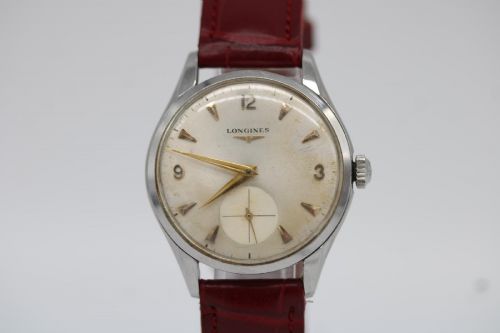


Vintage Longines Wristwatch
A vintage longines wristwatch offers mechanical precision and mid-century elegance, spanning decades of fine Swiss watchmaking.
Vintage Longines Wristwatch
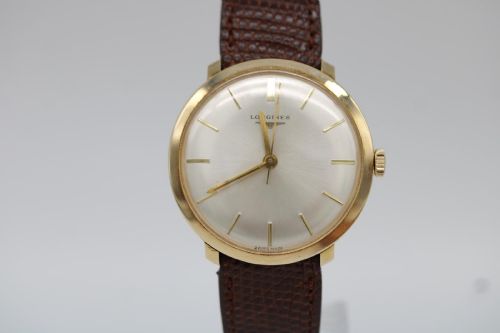
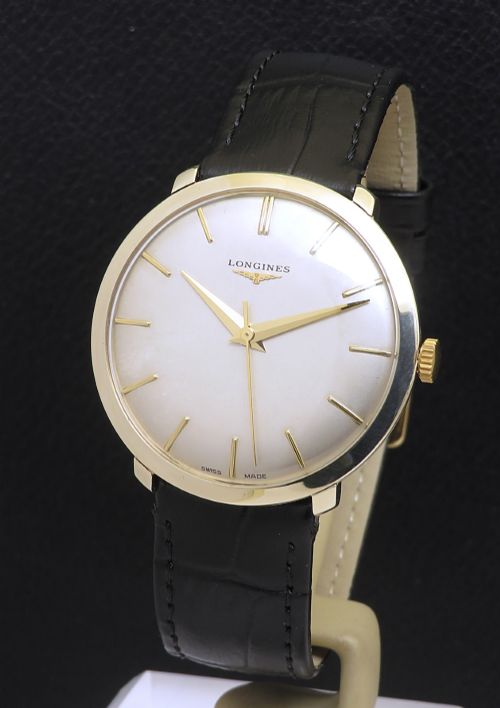
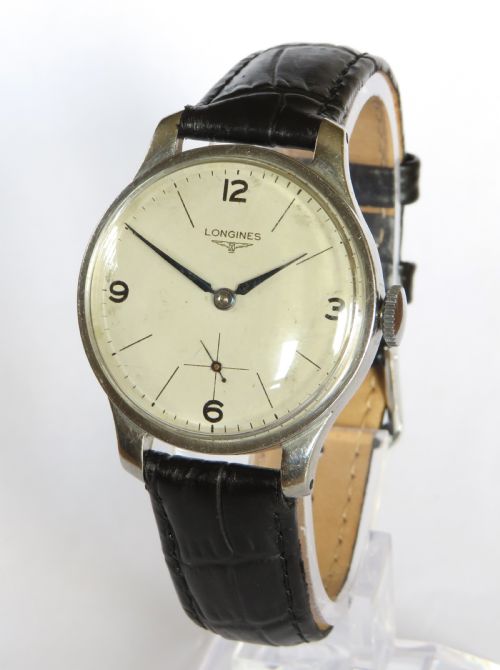
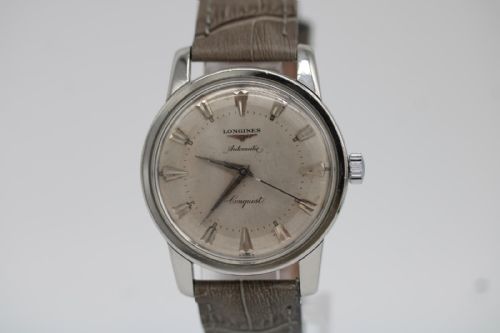
A vintage longines wristwatch is a timepiece produced by the historic Swiss manufacturer during the mid-twentieth century. Buyers searching this phrase encounter gents dress watches, automatic models, and occasional cocktail pieces.
The inventory on this page draws primarily from the 1940s, 1950s, and 1960s. These decades encompass straightforward manual wind movements alongside iconic sub-brands like the Conquest and the Flagship.
Forms range from robust stainless steel daily wearers to precious metal dress pieces in 9K gold and 14ct white gold. Art Deco influences also appear in decorative cocktail watches set with diamonds.
How they were made
Watchmakers housed intricate mechanical movements inside cases forged from stainless steel, gold plate, 9K gold, or 14ct white gold. These materials were paired with traditional glass or acrylic crystals to protect the dials.
Straps were predominantly fashioned from leather to secure the watch to the wrist. Internal mechanics relied on specialised components such as the Calibre 12.68Z manual wind movement and jewelled escapements.
Vintage Longines Wristwatch Retail Price Guide 2026
Typical asking prices for vintage longines wristwatch among the pieces listed under this phrase on Sellingantiques today, from the lower quarter to the upper quarter. They describe what is for sale here now, not the wider market.
Case materials recorded in the inventory include leather, acrylic, stainless steel, gold plate, 9K gold, glass, metal, and 14ct white gold.
What varies in quality
Quality in a vintage longines wristwatch rests upon the purity of the metal and the complexity of the movement. Solid 9K gold and 14ct white gold cases sit at the higher end of the scale compared to gold-plated or standard stainless steel alternatives.
The integrity of the dial and the sophistication of the calibre - such as automatic mechanisms versus basic manual wind - distinguish standard production models from top-tier dress and flagship pieces.
The Vintage Longines Wristwatch Glossary
- Manual wind
- A mechanical watch movement that requires the wearer to manually turn the crown to tension the mainspring. This traditional method predates widespread automatic winding technology.
- Automatic
- A self-winding mechanical movement that uses a weighted rotor to wind the mainspring using the natural motion of the wearer's wrist. Flagship and Conquest lines frequently utilised this technology.
- Calibre
- The specific designation given by the manufacturer to a particular watch movement design. The Calibre 12.68Z is a noted example found in mid-century pieces.
- Cocktail watch
- A small, decorative dress watch intended for evening wear. These pieces often incorporate precious metals and gemstones such as diamonds in an Art Deco style.
- Jewels
- Synthetic rubies or sapphires placed at friction points within a watch movement to reduce wear and improve timekeeping accuracy. Swiss movements commonly utilised seventeen or more jewels.
Vintage Longines Wristwatch: Frequently Asked Questions
How do I wind a manual watch?
Turn the crown clockwise between your thumb and forefinger until you feel gentle resistance. Stop immediately to avoid damaging the internal mainspring.
Do this at the same time each day to maintain consistent tension and accurate timekeeping.
Are these watches waterproof?
Vintage timepieces lack modern rubber gaskets and screw-down crowns. Exposure to moisture can rust internal steel components and ruin the dial.
Keep these watches away from water, heavy rain, and high humidity.
How do I date a vintage longines?
Examine the movement serial number and match it against manufacturer production records. Stylistic cues like Art Deco geometry or mid-century typography also narrow the decade.
Original boxes and papers, when present, provide definitive dates of sale.
Can I wear one every day?
Many buyers wear their mid-century watches daily, provided the pieces receive regular mechanical servicing. Manual and automatic movements require periodic lubrication to function properly.
Treat the acrylic or glass crystal with care to prevent deep scratches during daily activities.