


Vintage Liqueur Decanter Set
These vintage liqueur decanter set pieces bring together matched glasses, fitted boxes and silver-plated stands for serving after-dinner drinks.
Vintage Liqueur Decanter Set
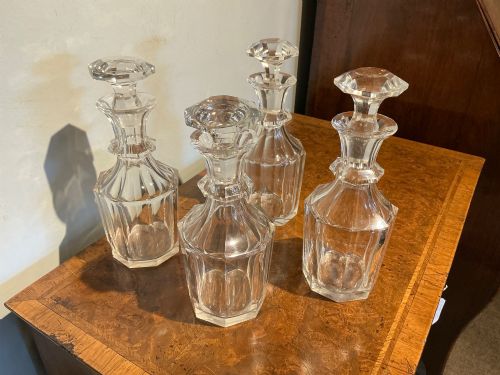
A vintage liqueur decanter set encompasses matched groupings of small bottles, glasses and trays designed specifically for serving spirits after a meal. When you search for a vintage liqueur decanter set, you encounter everything from ornate nineteenth-century French presentation boxes to streamlined geometric glass services from the nineteen-thirties.
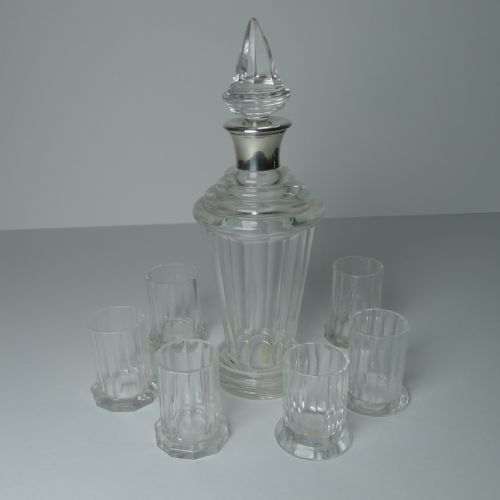
The most common examples on this page date from the Art Deco period, featuring brightly coloured or enamelled Czech and Belgian crystal paired with six matching glasses. Alongside these, nineteenth-century examples often take the form of wooden tantaluses or caves à liqueur fitted with cut crystal vessels.
Forms range from simple tray-mounted sets to secure locking boxes lined in velvet and exotic wood. These pieces reflect the formal dining and entertaining customs of Victorian households and twentieth-century cocktail culture alike.
How they were made
Makers shaped these sets using lead crystal, cut glass, and standard glass, often finished with applied enamel details or metallic accents. Production methods combined traditional glassblowing and hand-cutting with silver plating for the accompanying trays and stands.
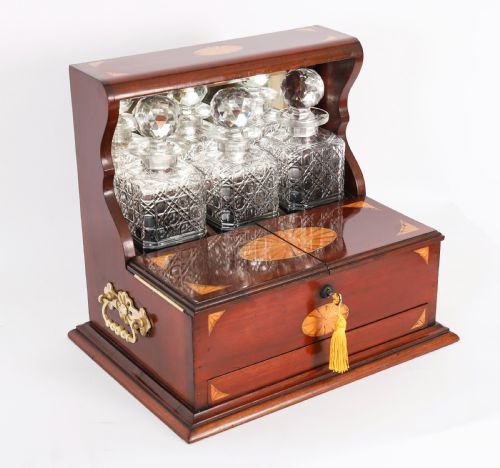
Woodwork played a structural role in the portable boxes and tantaluses, utilising satinwood inlay and carved elements such as those seen in Black Forest examples. Metal components like silver-plated mounts and brass hardware secured the bottles within their fitted frames.
Tantaluses earned their name from the mythical Greek figure Tantalus, keeping drinks perpetually visible yet just out of reach.
What varies in quality
Quality rests upon the precision of the glass-cutting, the clarity of the crystal, and the integrity of any fitted housing. Maker attribution to houses such as Baccarat, Moser, or Val Saint Lambert elevates a piece through superior weight, brilliance, and refined enamel work.
The completeness of the set and the match between decanters and glasses dictate the standard. Superior examples retain their original matching trays, undamaged stoppers, and fully functional locking mechanisms on the enclosing boxes.
Baccarat·Val Saint Lambert·Moser·Salviati·Karl Palda
The Vintage Liqueur Decanter Set Glossary
- Cave à liqueur
- A fitted box or cabinet designed to hold a set of liqueur decanters and matching glasses securely. These portable containers often feature locking mechanisms and decorative wood veneers.
- Tantalus
- A locking frame that holds decanters securely by their necks, preventing removal without a key while still displaying the contents. The design originated in the Victorian era.
- Lead crystal
- Glass containing metallic oxide that increases weight, refractive index, and clarity. This material allows for deep, sharp cuts that catch the light.
- Enamel
- Opaque vitreous material fused to the surface of glassware through firing for decoration. It provides raised colour and metallic highlights.
Vintage Liqueur Decanter Set: Frequently Asked Questions
How do I secure the bottles in a tantalus?
A tantalus secures bottles by means of a metal locking bar that clamps down over the stoppers. You unlock the mechanism with a key to release the decanters for pouring.
This clever physical restraint allowed hosts to display expensive spirits while preventing unauthorized access by guests or staff.
Are all glasses in these sets original?
Many sets retain their matching glasses, though some assembled groupings pair period decanters with complementary glassware. You can check consistency through matching glass thickness, colour tone, and decorative motifs.
Complete sets featuring identical matching glasses command greater interest among collectors of vintage barware.
What is the difference between a cave à liqueur and a tantalus?
A cave à liqueur encloses the decanters and glasses entirely within a lidded wooden box, often lined with velvet or silk. A tantalus leaves the bottles visible within an open frame secured by a locking bar.
Both served the same social function of storing and displaying after-dinner spirits during the nineteenth and early twentieth centuries.