
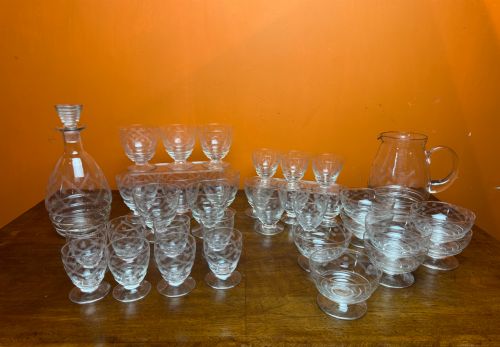


1930s Glass Decanter Set
A 1930s glass decanter set brings sharp geometry and vibrant period charm to a drinks tray, offering an essential centrepiece for entertaining.
1930s Glass Decanter Set
A 1930s glass decanter set captures the bold spirit of Art Deco design, typically comprising a central serving vessel accompanied by matching glasses or a tray. These suites range from geometric Czech crystal arrangements to French liquor services and framed chrome tantalus designs.
Buyers most frequently encounter complete sets featuring hand-enamelled decoration, clear glass, black glass, or amber tones. The aesthetic relies on clean lines, angular forms, and functional elegance tailored for period hospitality.
How they were made
Makers utilised lead crystal, clear glass, black glass, and amber glass, shaping them through cutting, engraving, and moulding techniques. Artisans often applied enamel detailing by hand to create striking geometric motifs across the decanters and matching glassware.
Metal components such as chrome were integrated to form frames and locking mechanisms for tantalus sets. The combination of reflective glass and polished metal defines the technical execution of this era.
Listings feature lead crystal, chrome, black glass, amber glass, and hand enamel applied to geometric Art Deco forms.
What varies in quality
Quality separates ordinary glassware from exceptional craftsmanship through the crispness of the glass cutting, the precision of hand-enamelled lines, and the weight of the lead crystal. Maker attribution and the completeness of the matching service heavily influence the standing of a piece.
The sophistication of the design, whether an elaborate Czech geometric crystal suite or a streamlined French modernist creation, dictates the desirability of the set. Intricacy in engraved decoration and the preservation of original enamel surfaces mark out the superior examples.
Karl Palda·Val Saint Lambert·Jacques Adnet·Mosey
The 1930s Glass Decanter Set Glossary
- Art Deco
- A design style of the 1930s characterised by sleek geometric shapes, stylised motifs, and modern industrial materials. It moves away from floral ornamentation towards clean architectural lines.
- Tantalus
- A locked cabinet or metal frame holding decanters securely while displaying their contents visibly. The locking mechanism prevents unauthorised access to the spirits inside.
- Lead crystal
- A high-clarity glass containing metal oxide that increases weight and brilliance. This material allows for deep, sharp cutting and crisp refractive facets.
- Enamel
- A decorative vitreous substance fused onto the surface of the glass through firing. It provides durable colour and opaque geometric patterns.
1930s Glass Decanter Set: Frequently Asked Questions
What is included in a typical set?
A standard set usually includes a central decanter paired with several matching drinking glasses, sometimes resting on a dedicated glass or metal tray.
Larger suites expand this arrangement to include numerous glasses and specialised liquor service components designed for formal entertaining.
How do I identify a period set?
Authentic period pieces display characteristic Art Deco geometry, specific material combinations like chrome and black glass, and traditional manufacturing techniques such as hand engraving.
Signatures or attributions to known workshops and designers further confirm the production era.
Were these sets used daily?
These ensembles were designed primarily for domestic entertaining, cocktail hours, and display on sideboards or drinks trolleys during the interwar period.
While functional, many survive in excellent condition because they served as decorative statement pieces in the home.
How should I clean enameled glass?
Painted and enameled surfaces require gentle hand washing in lukewarm water with mild detergent to preserve the delicate coloured decoration.
Harsh abrasives and soaking must be avoided to protect the original hand-applied enamel work from fading.