



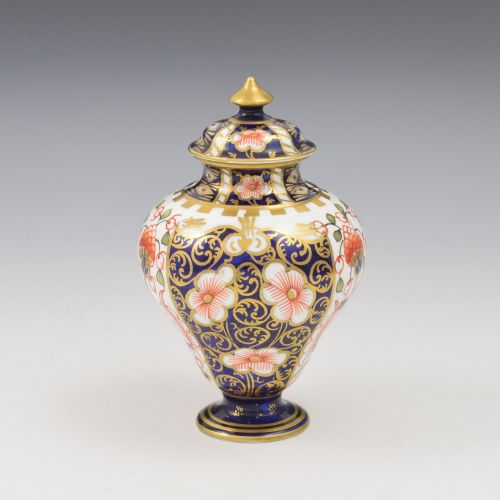


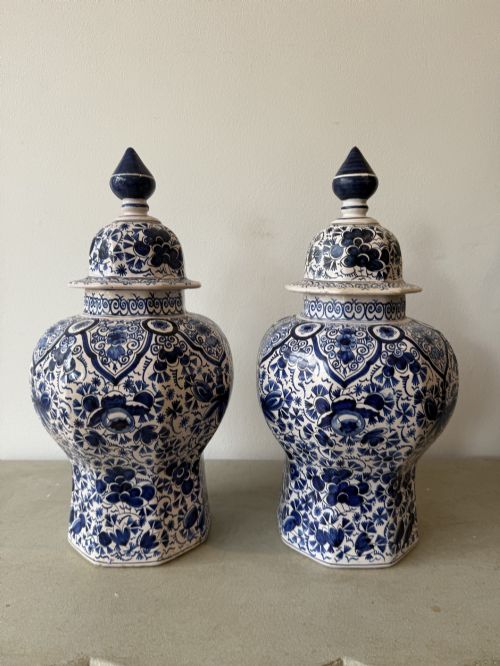


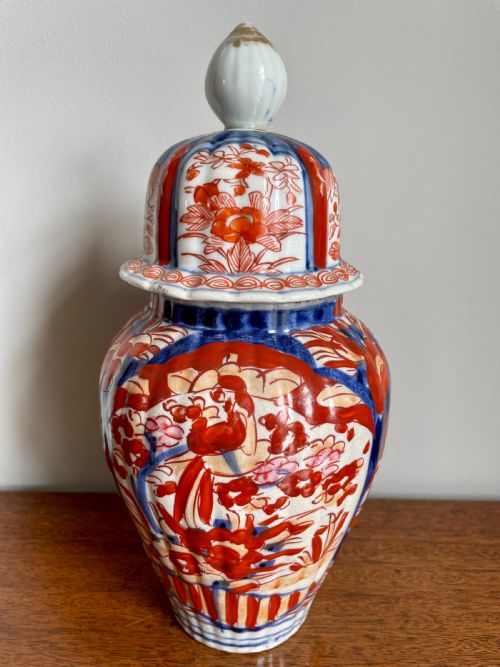

Vintage Lidded Ginger Jar
A vintage lidded ginger jar brings weight and pattern to a room, offering a functional vessel that spans Japanese, Chinese and European traditions.
Vintage Lidded Ginger Jar
A vintage lidded ginger jar functions as a decorative vessel originating from diverse cultural traditions including Japanese, Chinese and European workshops. These objects take the form of covered jars, vases and tea caddies spanning periods from the late Edo and Meiji eras through the mid twentieth century.
The pieces appearing most frequently on this page combine porcelain, pottery and enamel constructions with painted or cloisonne decoration. Makers from Arita to English factories produced these covered vessels in scales ranging from miniature cabinet pieces to large floor vases.
How they were made
Makers utilised porcelain, earthenware and ceramic bodies, often applying cobalt blue, enamel or glaze over the surface. Metal vessels incorporate cloisonne wirework soldered to brass or copper foundations to create cellular compartments for enamel paste.
Hand painting and gilding with gold leaf frequently finish the ceramic pieces, while Japanese cloisonne items involve repeated firing and polishing of enamel powders. Potters shaped these jars on wheels or cast them in moulds before applying glazes and decorative motifs.
Vintage Lidded Ginger Jar Retail Price Guide 2026
Typical asking prices for vintage lidded ginger jar among the pieces listed under this phrase on Sellingantiques today, from the lower quarter to the upper quarter. They describe what is for sale here now, not the wider market.
Several ginger jars share cabinet space with exotic birds and tiny tea caddies.
What varies in quality
The finesse of the hand painting or the precision of the cloisonne wirework determines the standing of an individual jar. Crisp detailing in motifs such as birds, mosaics and Imari patterns separates superior examples from simpler commercial output.
The integrity of the glaze, the weight of the ceramic or metal body, and the matching quality of the lid contribute to the overall standard of the piece. Well preserved enamel surfaces and intact gold leaf elevate the visual impact of the jar.
Royal Crown Derby·Fielding’s Crown Devon·Herend·Royal Winton·Samson of Paris·Royal Worcester·Fukagawa
The Vintage Lidded Ginger Jar Glossary
- Cloisonne
- A decorative metalwork technique where thin metal wires are soldered to a base to form cells filled with enamel paste. These pieces are then fired and polished smooth.
- Imari
- A style of Japanese porcelain featuring distinctive cobalt blue, iron red and gilt decoration. This palette originated in Arita and influenced European potteries.
- Kamcheng
- A type of covered ceramic jar historically used in Peranakan households for storing food or personal items. These jars often feature vibrant enamels on a porcelain body.
- Satsuma
- A type of Japanese earthenware characterised by a pale ivory crackle glaze decorated with polychrome enamels and gilding. These items became popular for export during the late nineteenth century.
- Delftware
- Tin glazed earthenware produced in the Netherlands, traditionally finished in blue and white. It frequently mimics Chinese porcelain designs from earlier dynasties.
Vintage Lidded Ginger Jar: Frequently Asked Questions
What is a vintage lidded ginger jar used for?
These vessels originally served to store spices, ginger or tea leaves in domestic settings.
Today, collectors place them on mantelpieces, sideboards or shelves simply to display the painted or enamelled patterns.
How do I identify a Japanese Imari jar?
Japanese Imari pieces display a characteristic palette of cobalt blue underglaze combined with iron red and gold leaf overglaze.
They often depict floral or geometric motifs across a porcelain body originating from Arita.
What is the difference between cloisonne and porcelain jars?
Cloisonne jars utilise metal bases made of brass or copper with soldered wire and coloured enamel pastes.
Porcelain jars consist of fired ceramic clay finished with glazes, hand painted pigments and sometimes gold leaf.
How should I clean a painted ceramic jar?
Dust these vessels gently with a dry, soft cloth to protect delicate enamel and gold leaf decorations.
Avoid immersing antique pieces in water or using harsh chemical cleaners that might damage the glaze.