


Vintage Library Writing Table
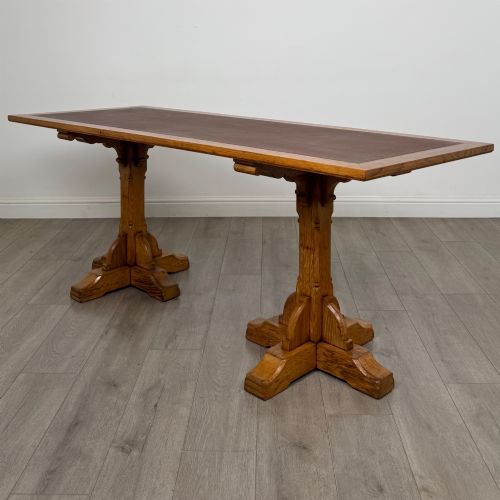
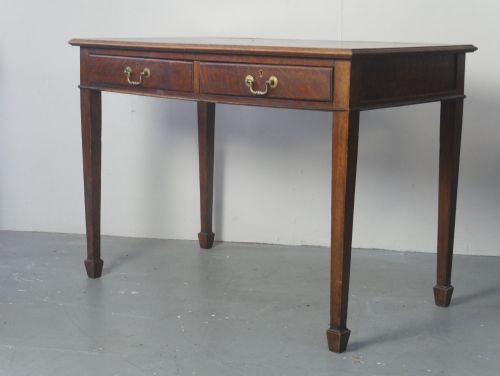
A vintage library writing table brings sturdy timber and leather work surfaces to a study, built across the nineteenth and early twentieth centuries.
Vintage Library Writing Table
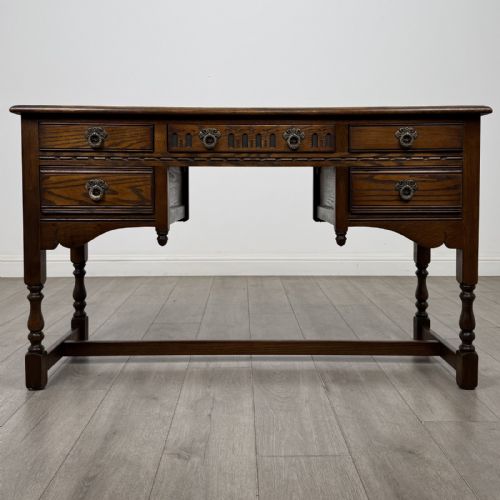
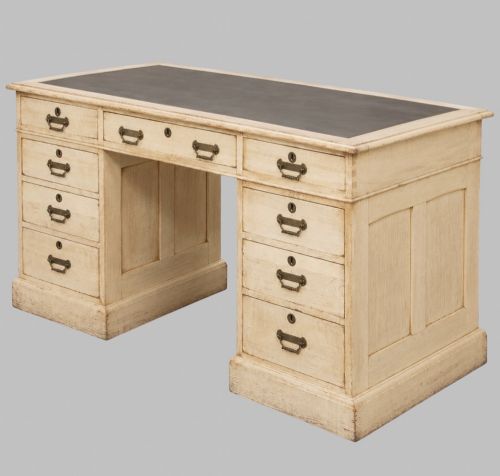
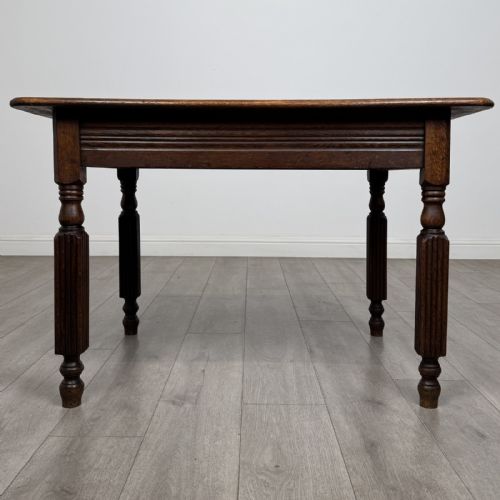
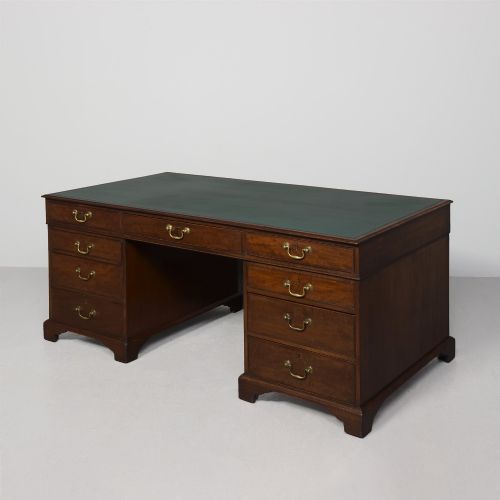
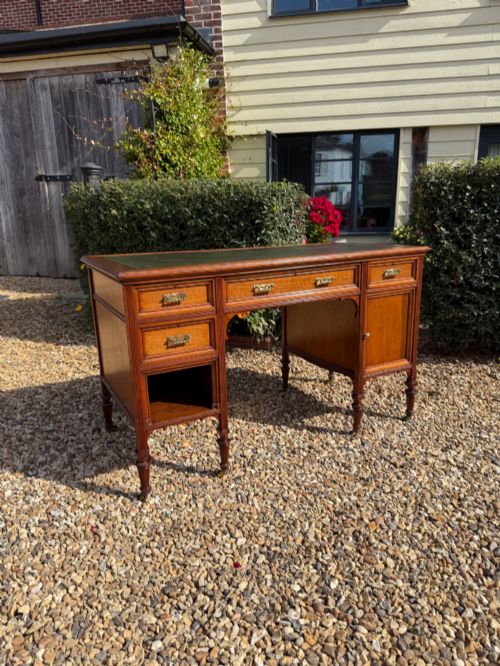
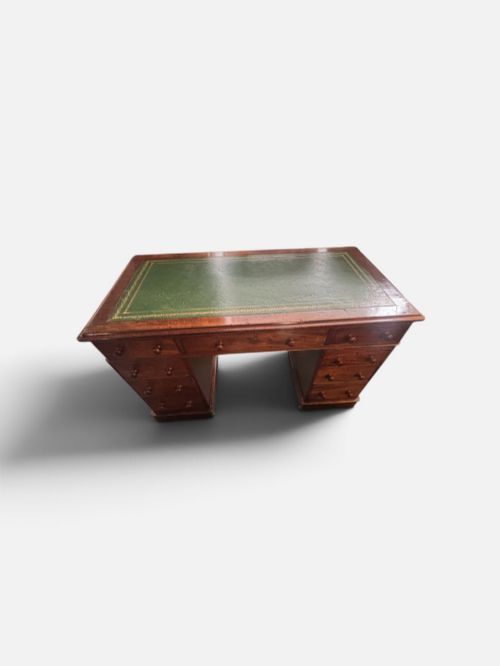
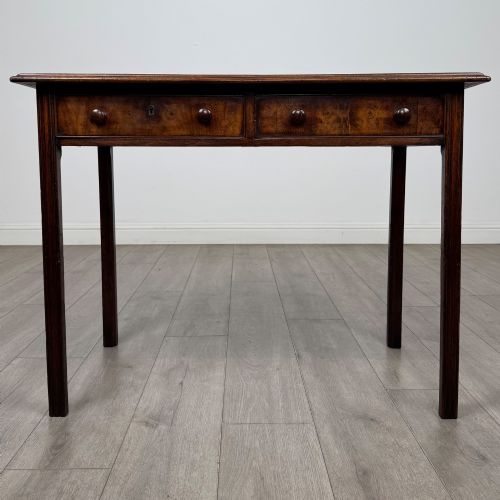
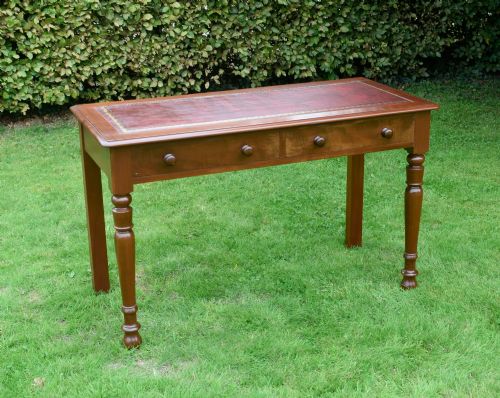
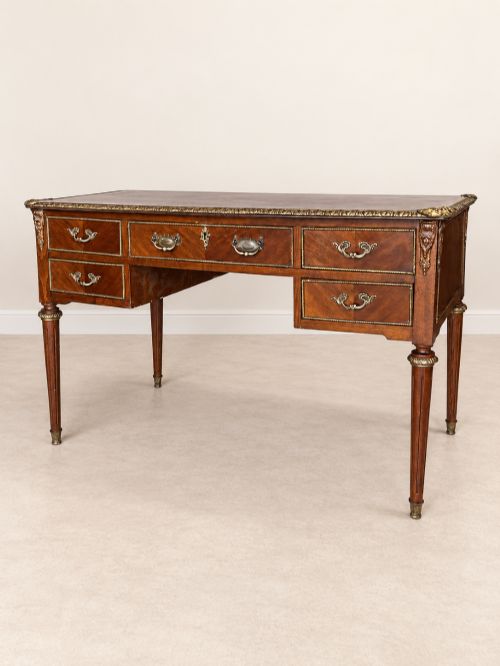
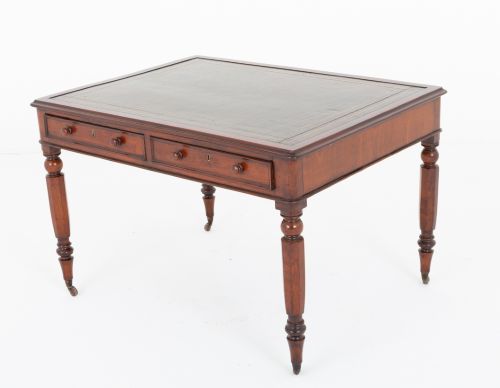
When you search for a vintage library writing table, you encounter substantial freestanding furniture designed for heavy paperwork and reference books. The pieces on this page span the nineteenth century through the 1930s, taking forms such as pedestal desks, partners desks, kneehole desks, and free-standing library tables.
Victorian and Edwardian examples predominate, alongside earlier Regency and William IV pieces and later twentieth-century walnut and rosewood designs. Makers include notable cabinet-making firms like Edwards and Roberts, Maple and Co, and Holland and Sons.
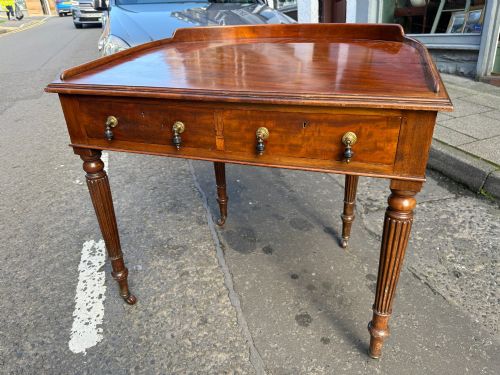
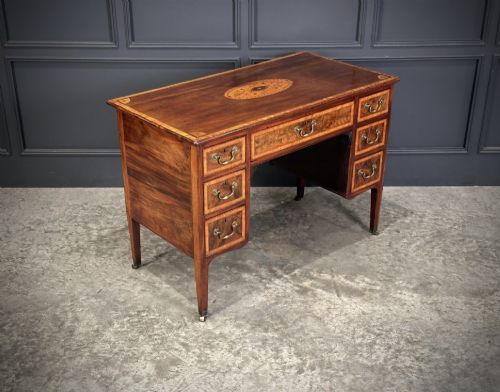
Most variations include inset leather writing surfaces in shades of red or green, often complemented by turned legs, inlaid mahogany, or raised galleries. They function equally well as writing desks, centre tables, or reading tables in domestic and institutional settings.
Materials and Construction
Cabinet makers relied heavily on solid hardwoods, predominantly mahogany, oak, and walnut, alongside burr walnut and rosewood for finer decorative veneers. Structural frames frequently combined oak and pine for hidden stability beneath polished exterior surfaces.
Writing surfaces were typically inset with tooled leather, whilst decorative elements incorporated brass handles, ormolu mounts, and intricate wood inlays. Construction techniques spanned traditional dovetailing in drawers and turned or carved legs suited to each period style.
The listings feature oak, mahogany, walnut, burr walnut, and rosewood, paired with brass, leather, and ormolu across Victorian, Edwardian, and Regency styles.
Judging Quality and Craftsmanship
The distinction between standard and superior pieces rests on timber selection and cabinet-making execution. Finer examples utilise dense mahogany or burr walnut with precise joinery, original hardware, and refined carving rather than mass-produced uniformity.
Attribution to recognised makers or workshops elevates a piece, as does the presence of original leather writing surfaces and intact drawer linings. Proportion and stability in free-standing designs also separate everyday utilitarian desks from exceptional library tables.
Howard and Sons·Trollope and sons·Edwards and Roberts·Maple and Co·CH Jeanselme and Co·Holland and Sons
The Vintage Library Writing Table Glossary
- Partners desk
- A large double-sided desk designed for two people to work opposite each other, featuring drawers on both sides.
- Pedestal desk
- A heavy desk comprising a rectangular top supported by two independent banks of drawers or cupboards.
- Ormolu
- Gilded bronze ornamentation applied to furniture, common in French desks and tables of the period.
- Gallery
- A raised wooden or brass rail along the back or edges of a table top to prevent items from rolling off.
- Kneehole desk
- A compact desk with a central recess for the user's legs, flanked by pedestals containing drawers.
Vintage Library Writing Table: Frequently Asked Questions
What is a partners desk?
A partners desk is built with drawers and cupboards on both sides so two people can sit opposite each other to work. They often feature large leather writing surfaces and substantial timber pedestals.
These pieces were traditionally used in libraries and studies by business partners or professionals who shared workspace.
How do I care for a leather desk top?
Leather writing surfaces require gentle cleaning with a damp cloth and occasional treatment with appropriate leather balms to prevent cracking. Avoid harsh chemical cleaners and excessive moisture.
Keeping the leather conditioned preserves the gold tooling and the rich colour of the writing surface over decades of daily use.
Are these tables finished on all sides?
Library writing tables and partners desks are typically designed as free-standing pieces with finished backs so they can sit in the middle of a room. Standard pedestal desks, by contrast, are often meant to be placed against a wall.
Check the descriptions for free-standing or double-sided details if you intend to float the desk in an open space.
How do I identify a Victorian writing table?
Victorian writing tables generally feature dense timbers like mahogany or walnut, frequently with turned legs, brass castors, and inset leather tops. They date from the mid to late nineteenth century and often display robust, practical joinery.
Some examples include raised galleries or multiple drawers, reflecting the functional demands of Victorian studies and public libraries.