


Vintage Leather Two Seater
These vintage leather two seater pieces bring character and comfort to a room, offering enduring style built from quality materials.
Vintage Leather Two Seater
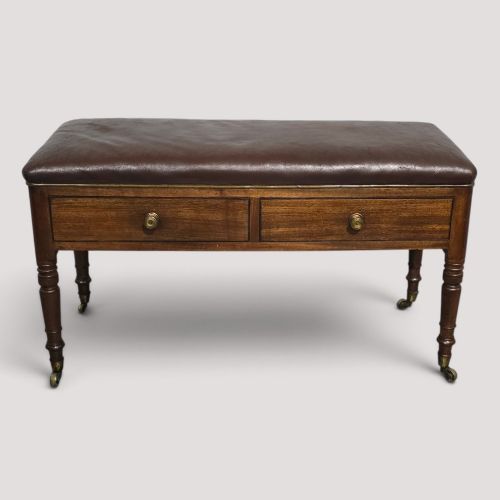
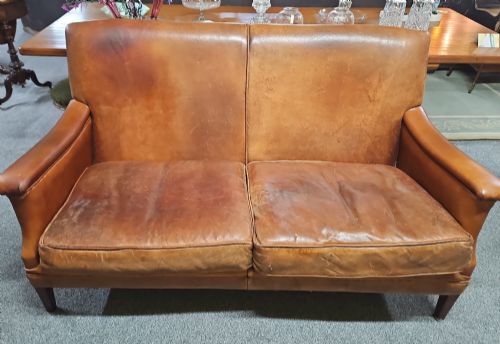
When you search for a vintage leather two seater, you encounter compact seating options rooted in periods spanning the Victorian era through the 1930s. These pieces range from country house settees to button back sofas, designed to seat two occupants comfortably.
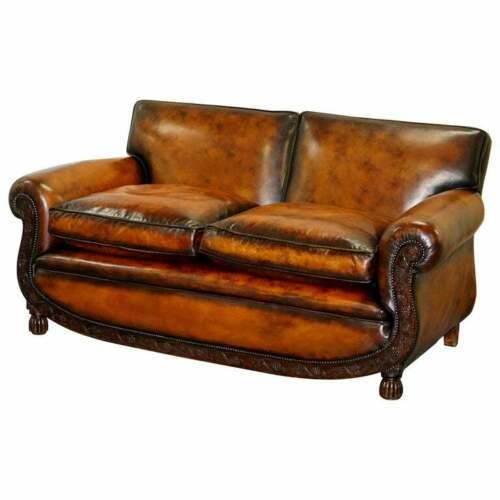
The selections available here predominantly showcase traditional English and Victorian styles, alongside George II style highbacks and 1930s Art Deco influences. Such sofas frequently incorporate hand-carved wooden details, deep buttoning, and rich brown or bottle green upholstery.
Buyers seeking a vintage leather two seater frequently find compact forms like drop arm chaise lounges and two-seat button back sofas. These objects serve as focal points in studies, libraries, and living spaces, reflecting decades of domestic history.
How they were made
Craftsmen built the frames of these sofas using sturdy hardwoods such as mahogany and general timber, providing a robust skeleton to support daily use. Traditional upholstery methods incorporated horsehair and linen for internal padding and foundation support.
The outer upholstery relied on durable leather hides, occasionally enhanced with hand-dyed finishes or specific automotive hides like Alpha Romeo leather during restorations. Brass elements, including tacks and castors, added functional and decorative detailing to the woodwork and upholstery edges.
One 1930s Chesterfield sofa on this page was re-upholstered using Alpha Romeo leather, giving a motoring twist to a classic lounge seat.
What varies in quality
The caliber of a vintage leather two seater rests on the depth of hand-carved detailing in the wooden framework and the integrity of the original or restored upholstery. Finer examples display meticulous buttoning and substantial hardwood frames that endure through generations.
The treatment and ageing of the leather hide define the visual depth of the piece, with hand-dyed finishes offering richer tonal variation than flat applications. Structural soundness in the horsehair filling and internal webbing further separates standard items from superior specimens.
The Vintage Leather Two Seater Glossary
- Button back
- A traditional upholstery technique where deep depressions are formed in the leather by pulling tufting buttons through to the internal webbing. This method secures the padding and creates a distinctive geometric pattern.
- Horsehair fill
- A traditional stuffing material gathered from the tails and manes of horses, prized for its natural resilience and breathability. It provides firm, lasting support inside antique seating.
- Drop arm
- A functional sofa arm design that can be lowered or adjusted via mechanical hinges. This mechanism allows the piece to convert between a seated sofa and a reclined lounge.
- George II style
- An architectural furniture style originating from the mid-eighteenth century, characterised by robust proportions and carved wooden ornamentation. Reproductions in this style emulate the heavy cabriole legs and detailed woodwork of the period.
Vintage Leather Two Seater: Frequently Asked Questions
How do I date a leather sofa?
Dating relies on examining the framing timbers, upholstery materials like horsehair, and stylistic cues such as Victorian buttoning or Art Deco lines. Construction methods often reveal the era of manufacture.
Comparing the hardware, such as brass tacks and castors, alongside the type of leather finish helps narrow down whether a piece originates from the Victorian period or the 1930s.
Are these sofas comfortable for daily use?
These pieces were built for sitting rooms and parlours, utilising traditional springing and horsehair stuffing designed for domestic comfort. Many retain supportive frames suited to regular seating.
Restored examples often feature refreshed internal foundations while maintaining their original proportions, ensuring they function well in modern living spaces.
How should I care for vintage leather?
Maintenance involves keeping leather conditioned to prevent drying, using appropriate natural balms suited to aged hides. Avoiding direct sunlight and excessive heat protects the dye and prevents cracking.
Regular dusting with a soft, dry cloth preserves the finish, while professional cleaning is recommended for deep restoration work.