
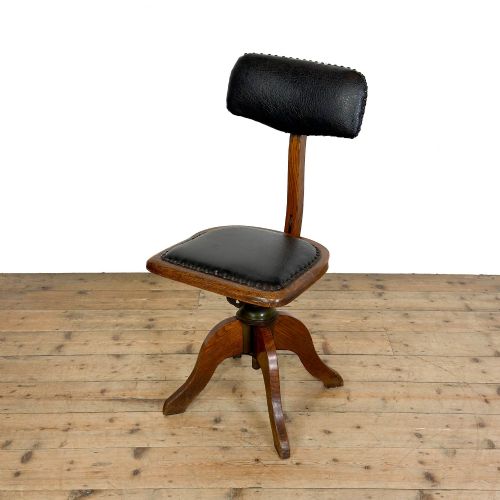
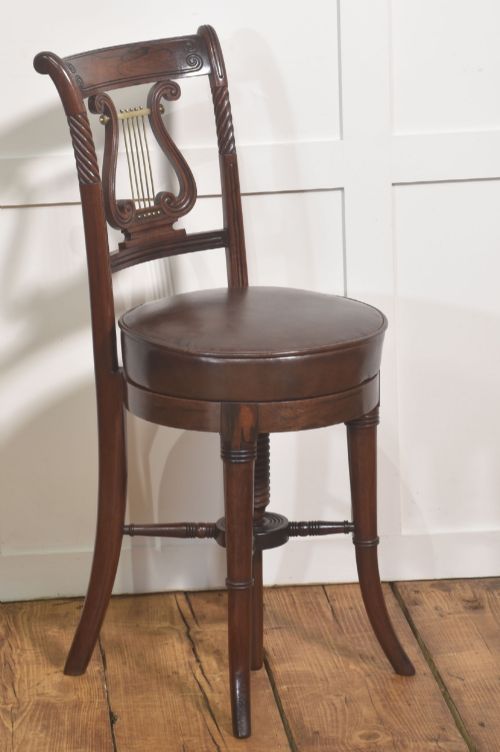
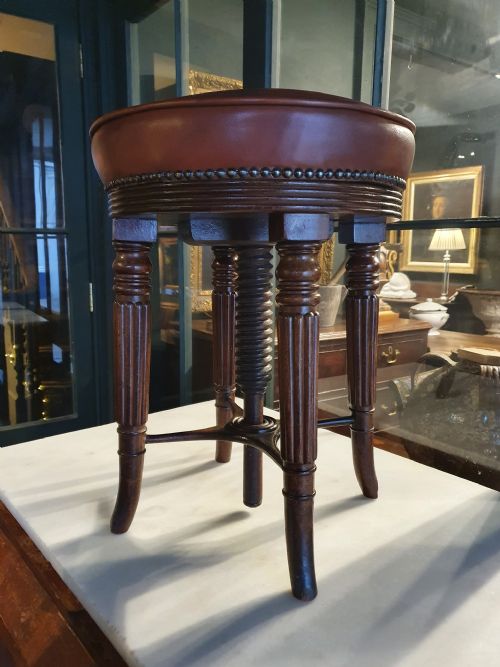
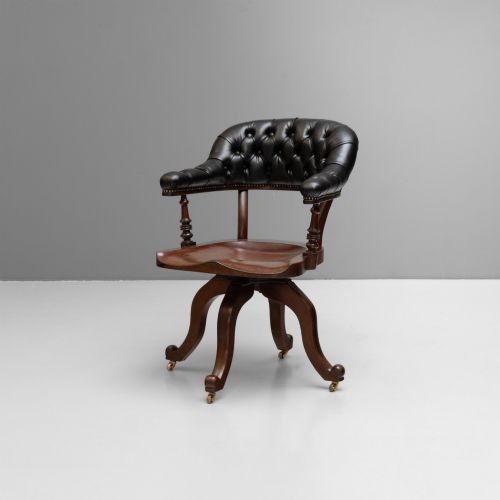
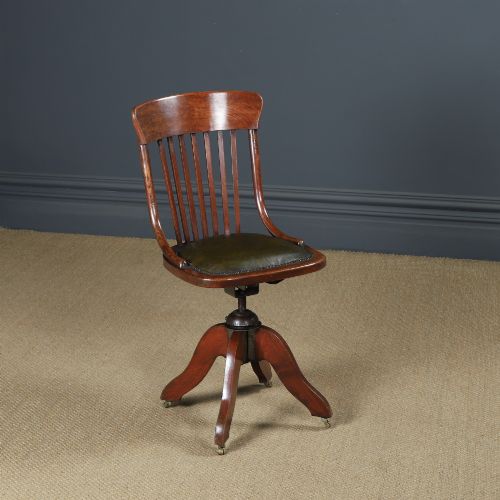


Vintage Leather Swivel Chair
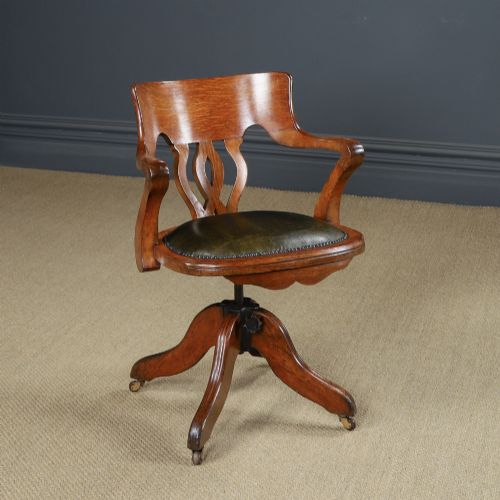
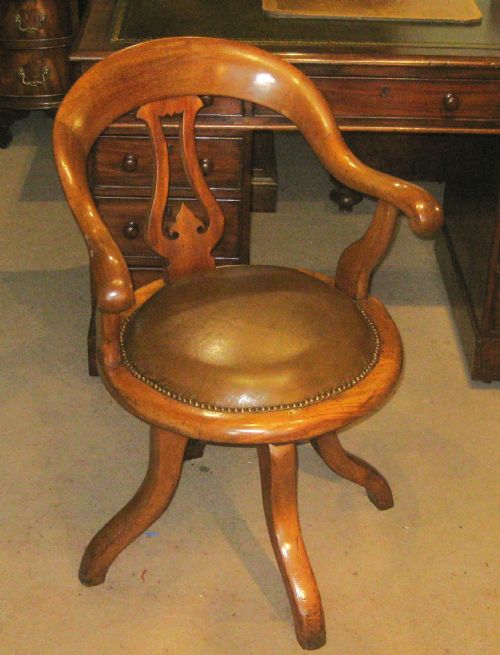
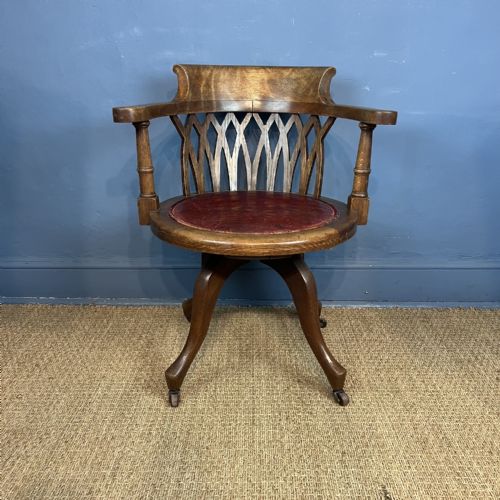
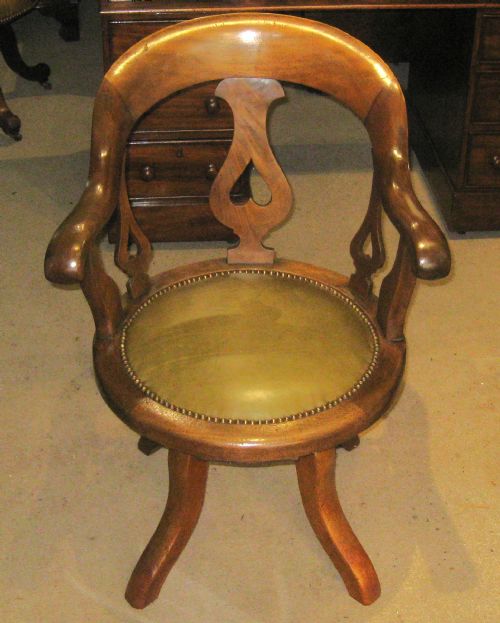
A vintage leather swivel chair brings working comfort to a room, offering practical desk seating with period character.
Vintage Leather Swivel Chair
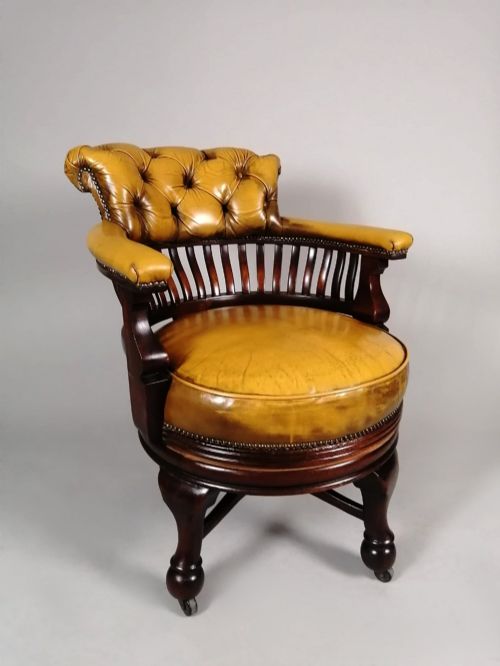
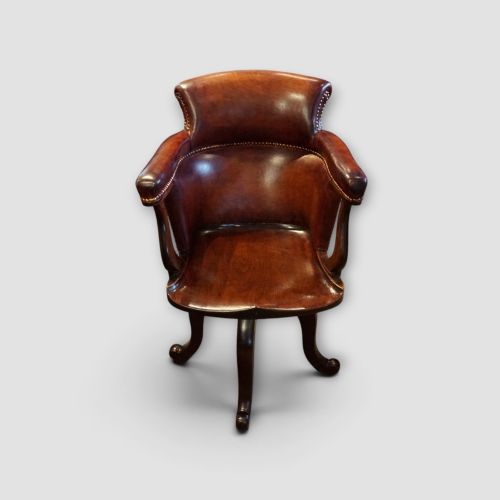
A vintage leather swivel chair combines functional rotation with traditional materials for everyday workspace use. These seats range from office and desk chairs to revolving armchairs spanning the Victorian, Edwardian, and early twentieth-century periods.
Buyers will encounter multiple wood species paired with leather upholstery, including oak, mahogany, beech, and walnut. Forms extend to ships chairs, piano stools, and dressing chairs equipped with revolving and adjusting mechanisms.
Materials and construction methods
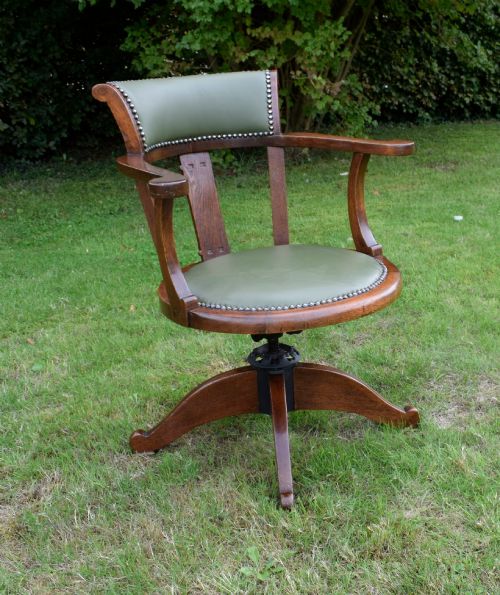
Construction relies heavily on durable hardwoods like oak and mahogany to form the supportive frames and rotating bases. Metal and cast iron components often underpin the swivel and tilt mechanisms found beneath the seat.
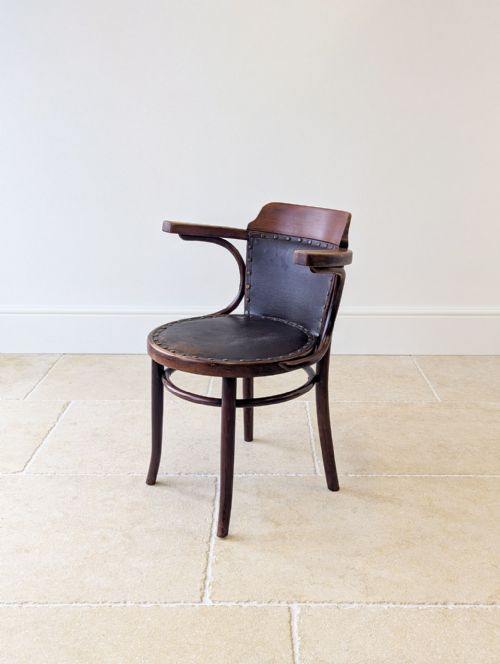
Leather hide provides the primary seat and backrest upholstery, occasionally secured with brass studs. Bentwood techniques also appear among specific Edwardian and Victorian office variants.
Judging build quality and materials
Superior examples demonstrate robust joinery in the timber frames and smooth operation within the mechanical swivel and height-adjustment systems. The thickness and finish of the leather upholstery further distinguish standard utility seating from finer library and captain's chairs.
Carved detailing, such as that seen on ships chairs and burgermeister's chairs, indicates higher craftsmanship in specific Victorian and Edwardian workshops.
S&H Jewell·Fritz Hansen
The Vintage Leather Swivel Chair Glossary
- Revolving
- Describes a seat mechanism that turns fully on its vertical axis. This allows the user to rotate freely without moving the entire base.
- Bentwood
- A technique involving steam-heated timber curved into rounded shapes. It creates strong, lightweight frames seen in period office seating.
- Captains chair
- A robust armchair with a rounded wooden back rail supported by spindles. When mounted on a swivel base, it functions as a desk seat.
- Hide
- The natural leather pelt used for upholstery. It provides a durable, supple surface for seat pads and backrests.
- Tilt
- A mechanical function allowing the upper portion of the chair to lean backward. It adds ergonomic flexibility to vintage office furniture.
Vintage Leather Swivel Chair: Frequently Asked Questions
What periods do these chairs come from?
The available selection spans the nineteenth century through the mid-twentieth century, encompassing Victorian, Edwardian, and early 1900s eras.
Craftsmen during these decades utilised traditional timbers like oak and mahogany alongside brass hardware and leather upholstery.
How do swivel mechanisms work on antique chairs?
Period revolving chairs typically utilise a central metal spindle and collar system hidden beneath the seat frame. Some examples incorporate tilt functions or height-adjustment screws.
These mechanical parts allow the upper wooden structure to rotate independently of the fixed base or legs.
Where were these chairs originally used?
Many examples served in professional offices, ship captain quarters, libraries, and studies as functional workspaces. Others functioned domestically as piano stools, dressing chairs, or general desk seating.
Their rotating designs prioritised utility and convenience for working environments.
Are the leathers original?
Leather upholstery on these pieces varies, with some retaining aged original hide while others feature professional re-leathering. The condition of the leather depends on past usage and restoration history.
Both patinated antique surfaces and restored hides appear across different listings.