


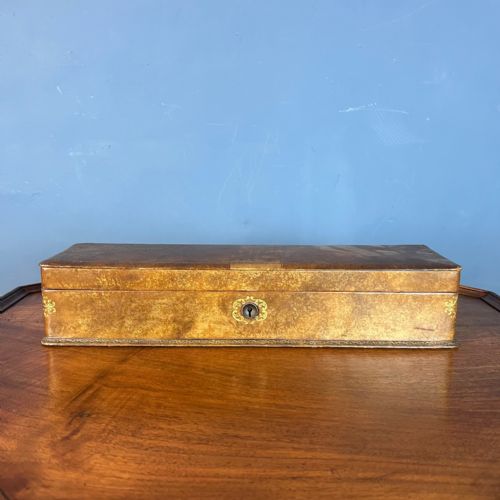


Vintage Leather Accessory
A vintage leather accessory brings utilitarian function and tactile warmth into daily interiors through nineteenth and early twentieth-century desk sets, travel cases and hearth equipment.
Vintage Leather Accessory
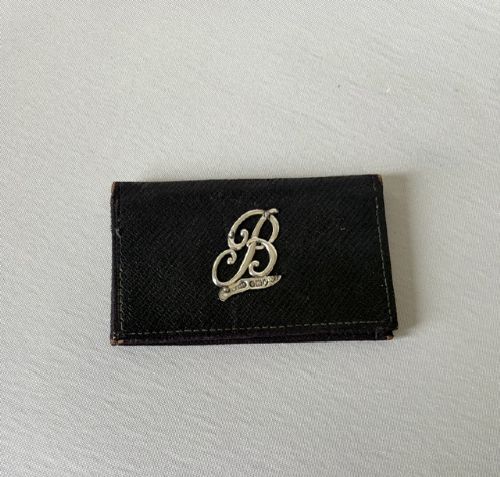
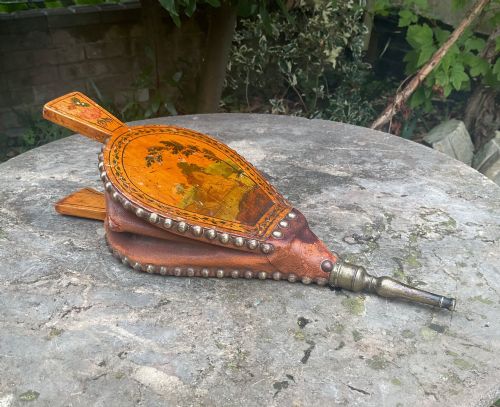
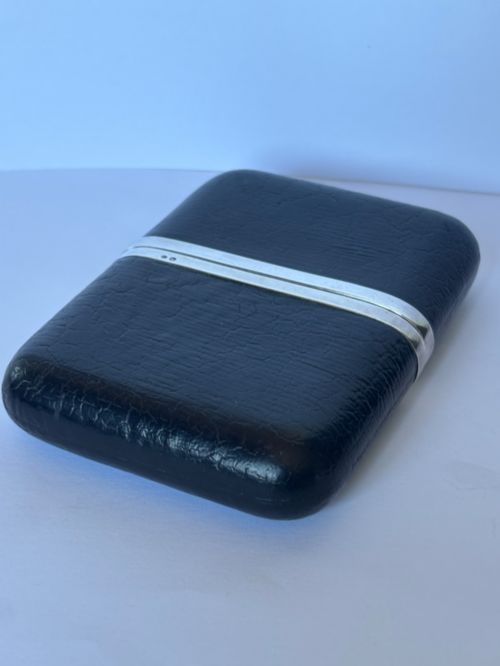
When searching for a vintage leather accessory, collectors encounter a diverse assemblage of portable and desktop items spanning the Georgian, Victorian, Edwardian and Art Deco periods. These practical objects range from pocket items like cigar cases and stamp wallets to substantial domestic furnishings including fire buckets and bellows.
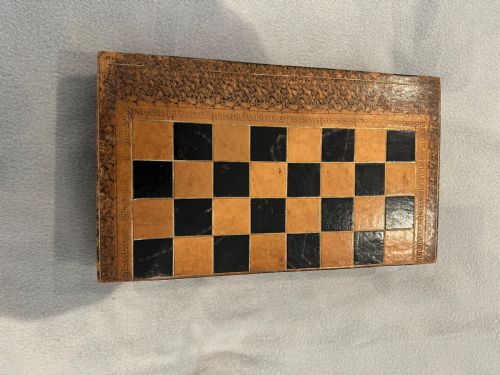
The most frequently encountered pieces on this page are personal travel and smoking accoutrements, alongside desk accessories fashioned from hide, skin and wood. Examples span domestic games boards, writing boxes and vanity sets produced across Britain, France, Austria and beyond during the nineteenth and early twentieth centuries.
How They Were Made
Maker workshops utilised cattle hide, crocodile leather and skin combined with structural elements in beech, walnut and brass mounts. Tooling, embossing and hand-painting decorated the surfaces of boxes, bellows and blotters.
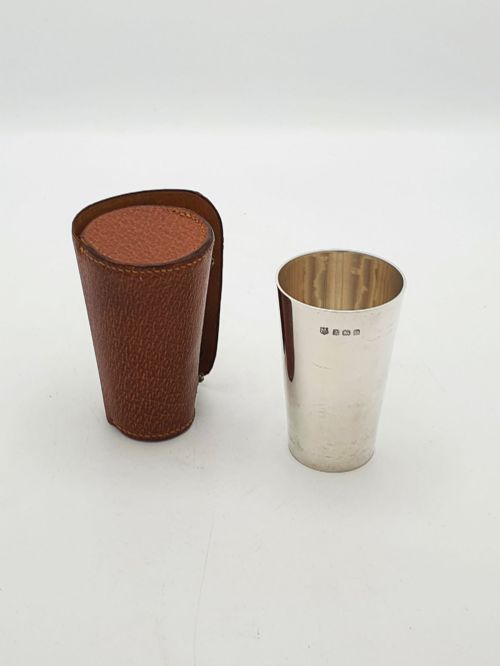
Precious metals such as sterling silver, gold leaf and 900 silver provided structural reinforcement and decorative clasps for travel beakers, notelet cases and cigar holders.
Vintage Leather Accessory Retail Price Guide 2026
Typical asking prices for vintage leather accessory among the pieces listed under this phrase on Sellingantiques today, from the lower quarter to the upper quarter. They describe what is for sale here now, not the wider market.
Listings feature items from the eighteenth, nineteenth and early twentieth centuries, incorporating materials from sterling silver to crocodile skin.
What Varies in Quality
The distinction between standard utility items and exceptional pieces rests upon the precision of the leather tooling and the quality of the precious metal mounts. Hand-embossed designs and substantial silver hardware elevate domestic items above plain commercial equivalents.
Integrity of construction in hinges, locks and internal linings determines the distinction between well-preserved survivals and heavily worn examples. Intricate details such as Chinoiserie decoration or bespoke maker signatures separate standard production from high-grade commissions.
Carl Heiss Vienna·J C Vickery·Liberty & Co.·Cartier·Maxwell London·Auguste Robert Kauffman
The Vintage Leather Accessory Glossary
- Cigar case
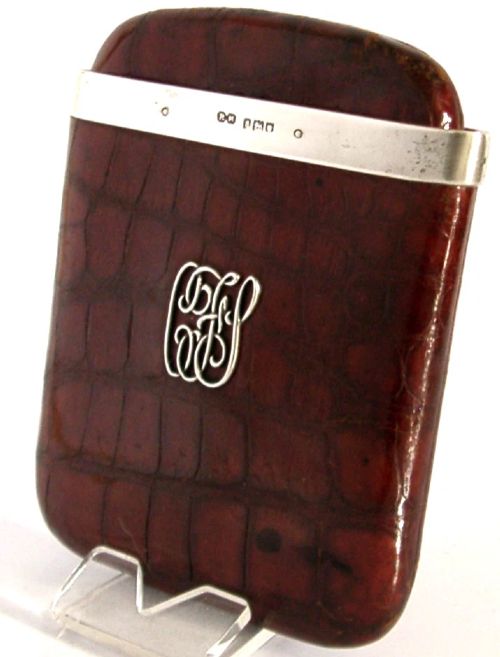
- A rigid or semi-rigid pocket container designed to protect cheroots and cigars from damage during travel. These pieces frequently incorporate metal frames and secure clasps.
- Desk blotter
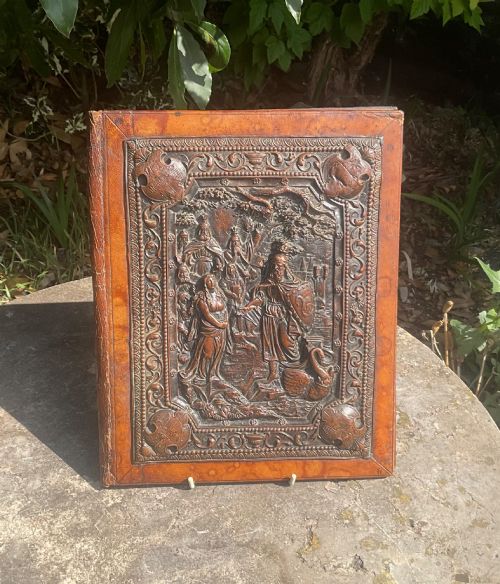
- A desktop accessory used to absorb excess ink from handwritten correspondence, often mounted with leather panels and decorative corners.
- Bellows
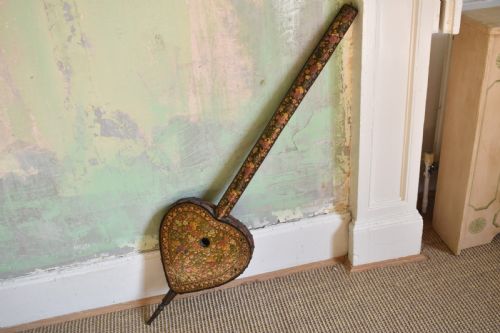
- A device constructed from leather and wood panels to deliver a stream of air to a fire, frequently ornamented with painted figures or brass studs.
- Stamp wallet
- A small folding leather case fitted with internal compartments to organise postage stamps during the Edwardian period and earlier.
- Vanity case
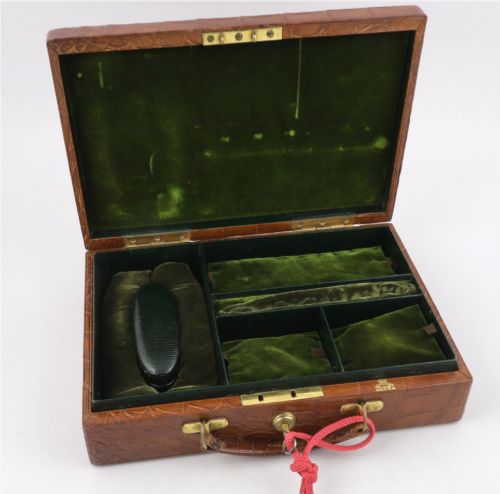
- A portable container housing grooming implements, manicure sets or cosmetic bottles, lined in silk or velvet.
Vintage Leather Accessory: Frequently Asked Questions
How do I identify a Victorian piece?
Victorian pieces often display heavy embossing, dark tooled finishes and robust brass hardware consistent with nineteenth-century manufacturing methods.
Examine the interior linings and fasteners for period-specific construction techniques.
What were travel beakers used for?
Travel beakers served personal refreshment needs during transit and were stored within protective leather carry cases.
Their compact design allowed gentlemen and travellers to carry drinking vessels securely.
Are these items suitable for daily use?
Many items retain their structural integrity and function effectively within contemporary interiors and desk setups.
Careful handling preserves delicate leather surfaces and precious metal mounts.
How should I clean antique leather?
Maintenance requires gentle dusting and avoiding harsh chemical cleaning agents that damage historic hides.
Consult specialist conservators for advice on preserving nineteenth-century finishes.