


Vintage Ladies Writing Table
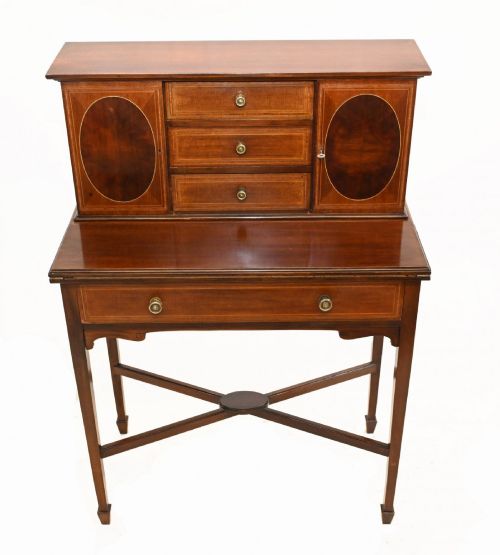
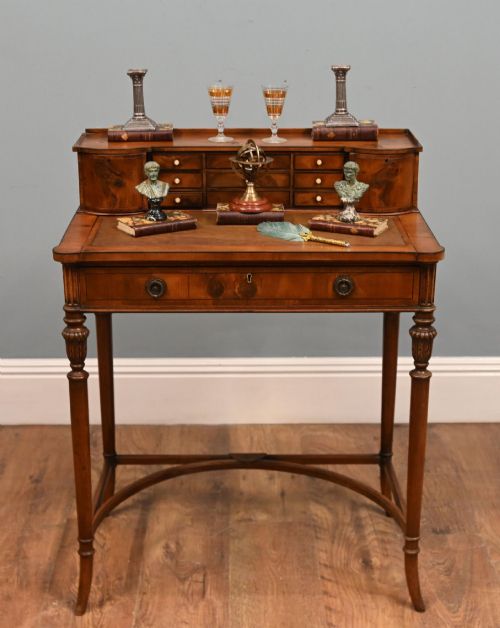
A vintage ladies writing table brings refined scale and fitted compartments to domestic studies, offering a compact surface for correspondence.
Vintage Ladies Writing Table
A vintage ladies writing table serves as a compact workspace designed for correspondence and light administrative tasks within the home. These pieces emerge predominantly from the Victorian and Edwardian eras, alongside pieces dated around nineteen hundred and the early twentieth century.
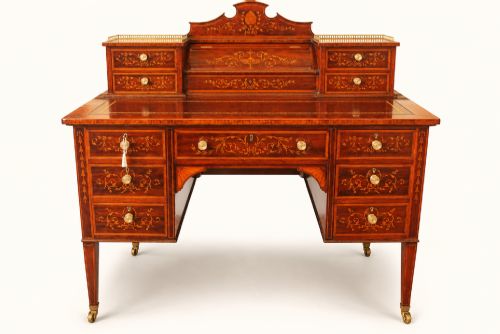
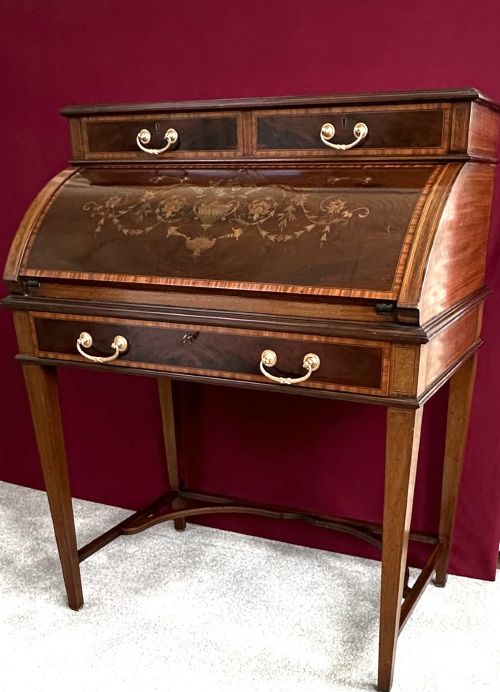
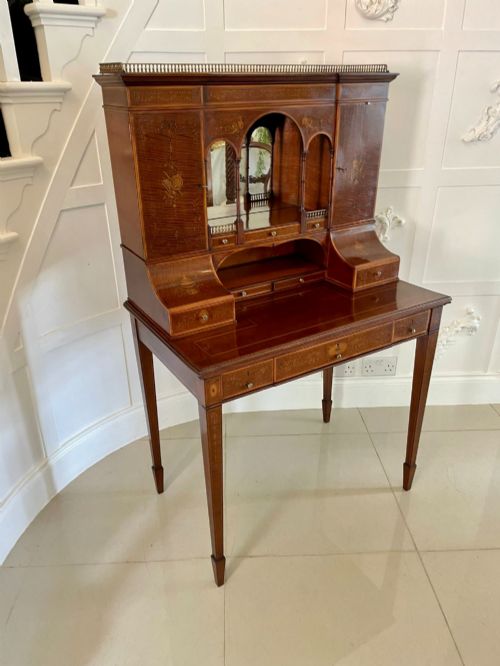
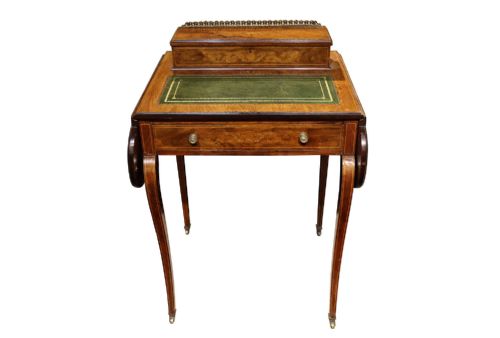
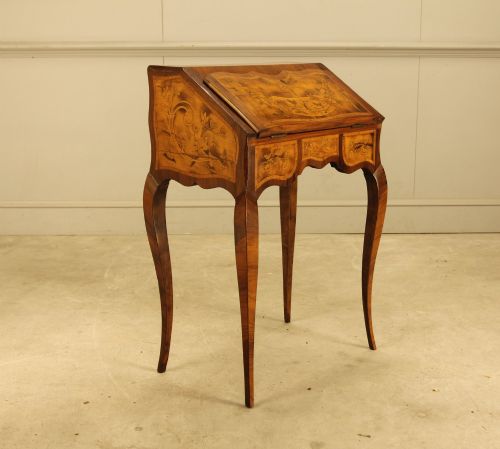
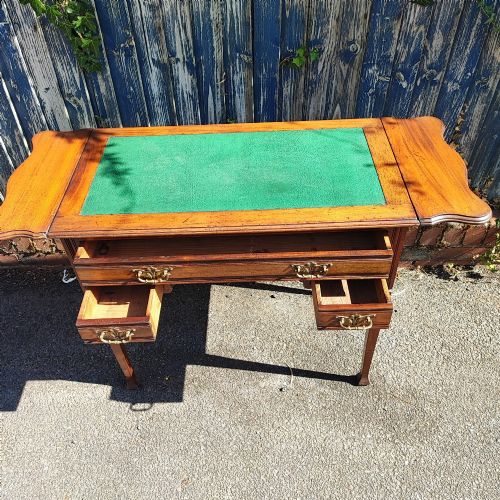
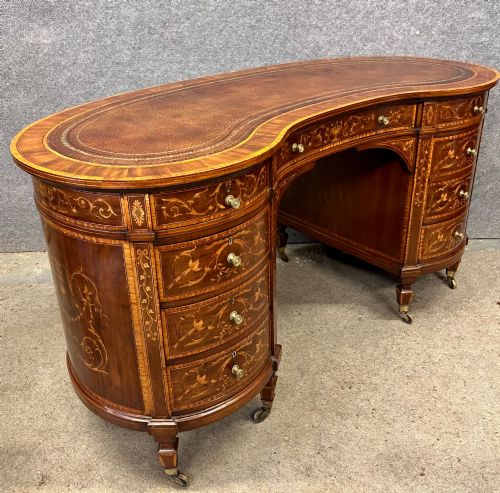
The form appears frequently in mahogany, satinwood, and walnut, often shaped as a freestanding desk, a bureau, or a kidney-shaped table. Smaller domestic iterations include fitted interiors, leather slides, and drop side flaps suited to smaller sitting rooms.
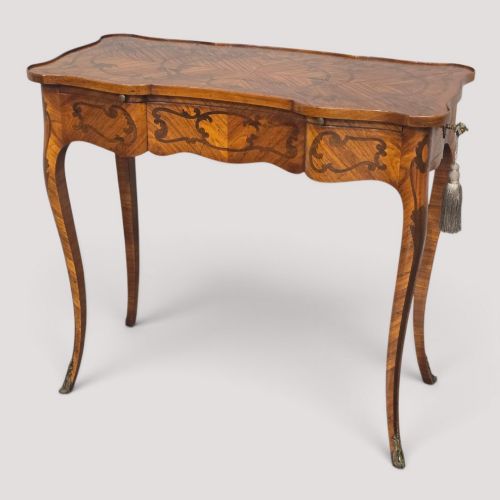
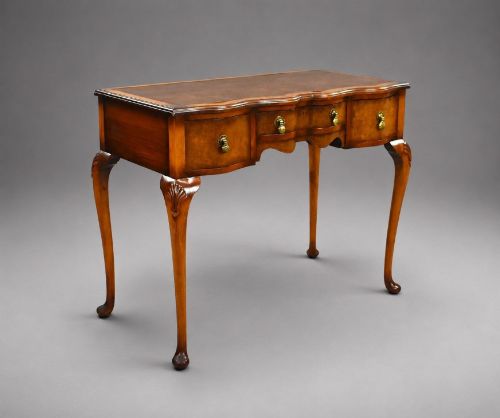
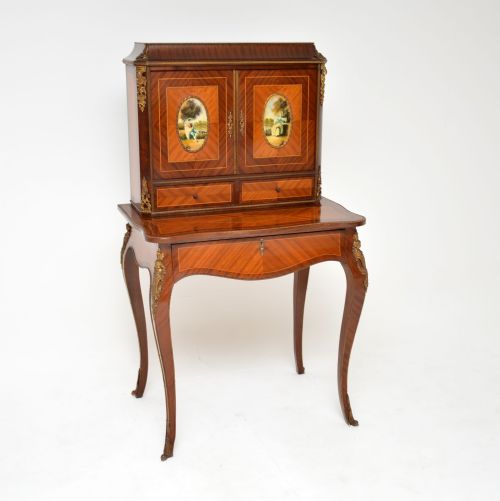
Makers and workshops of the nineteenth and early twentieth centuries produced these tables in styles ranging from Sheraton Revival and Queen Anne Revival to Louis XV Revival and Italian Rococo.
Materials and construction
Cabinetmakers utilised dense hardwoods such as mahogany, walnut, and rosewood, frequently pairing them with contrasting satinwood veneers and delicate marquetry inlays. Structural stability relied on precise joinery applied to smaller proportions than standard partners desks.
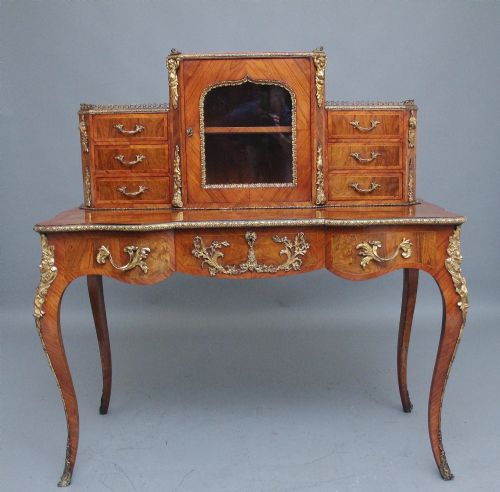
Surface details incorporate tooled leather writing inserts, brass mounts, and cast ormolu ornamentation. French polishing techniques brought out the natural grain figures of flame mahogany and burr walnut across cylinder tops and fall-front writing desks.
Vintage Ladies Writing Table Retail Price Guide 2026
Typical asking prices for vintage ladies writing table among the pieces listed under this phrase on Sellingantiques today, from the lower quarter to the upper quarter. They describe what is for sale here now, not the wider market.
Listings span the Victorian and Edwardian periods, featuring mahogany, satinwood, walnut, and rosewood across various revival styles.
Distinctions in quality
Quality rests in the crispness of the inlaid decoration, the selection of figured timber veneers, and the integration of fitted interior drawers. Pieces carrying attribution to documented cabinetmakers demonstrate superior cabinetwork compared to standard commercial workshop production.
The refinement of brass hardware, the smoothness of sliding writing surfaces, and the integrity of original ormolu mounts elevate certain examples above simpler utility pieces.
Edwards and Roberts·Gillows
The Vintage Ladies Writing Table Glossary
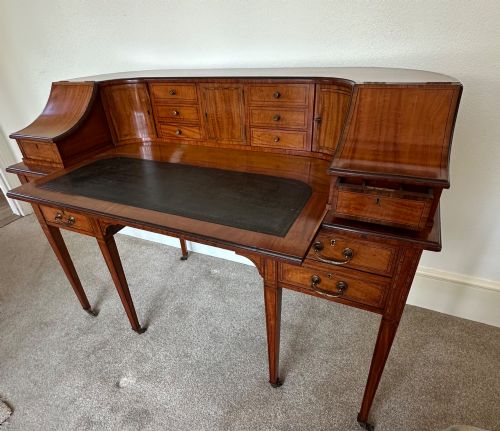
- Carlton house desk
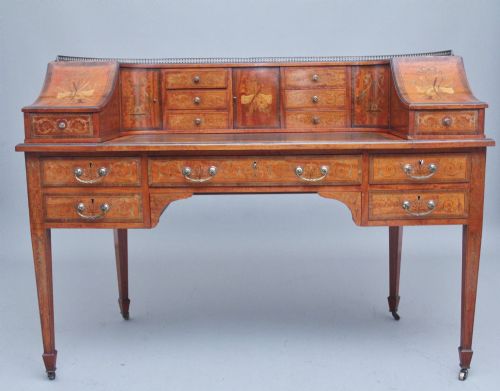
- A fitted writing desk featuring a curved superstructure of small drawers and pigeonholes running around the back and sides of the writing surface.
- Bonheur du jour
- A light dainty writing desk with a small cabinet or set of drawers standing on the upper surface.
- Marquetry
- Decorative woodwork where pieces of wood veneer are fitted together to form pictorial or geometric patterns on the surface.
- Ormolu
- Gilded bronze ornamentation applied to furniture mounts, feet, and key escutcheons during the eighteenth and nineteenth centuries.
- Kidney shaped desk
- A writing table designed with a curved, concave front that wraps around the user, often seen in Edwardian and late Victorian variants.
Vintage Ladies Writing Table: Frequently Asked Questions
What is a vintage ladies writing table?
A vintage ladies writing table is a smaller, lighter desk produced primarily during the Victorian and Edwardian periods for personal correspondence.
These pieces often include specialised compartments, leather writing surfaces, and decorative inlay work suited to domestic spaces rather than formal offices.
How do I use one today?
These tables function effectively as compact home office desks, dressing tables, or decorative console surfaces in living rooms and bedrooms.
The fitted interiors and small drawers provide practical storage for stationery, modern tablets, and everyday accessories.
How do I distinguish Edwardian from Victorian pieces?
Victorian examples generally feature heavier timbers, darker finishes, and more robust proportions reflecting nineteenth century taste.
Edwardian interpretations tend to incorporate lighter satinwood veneers, painted decorations, and neoclassical revival motifs.
What materials were used?
Construction relies heavily on hardwoods like mahogany, walnut, and rosewood, enhanced by decorative satinwood and marquetry veneers.
Fittings incorporate brass handles, tooled leather writing panels, and occasional ormolu mounts on French influenced designs.