
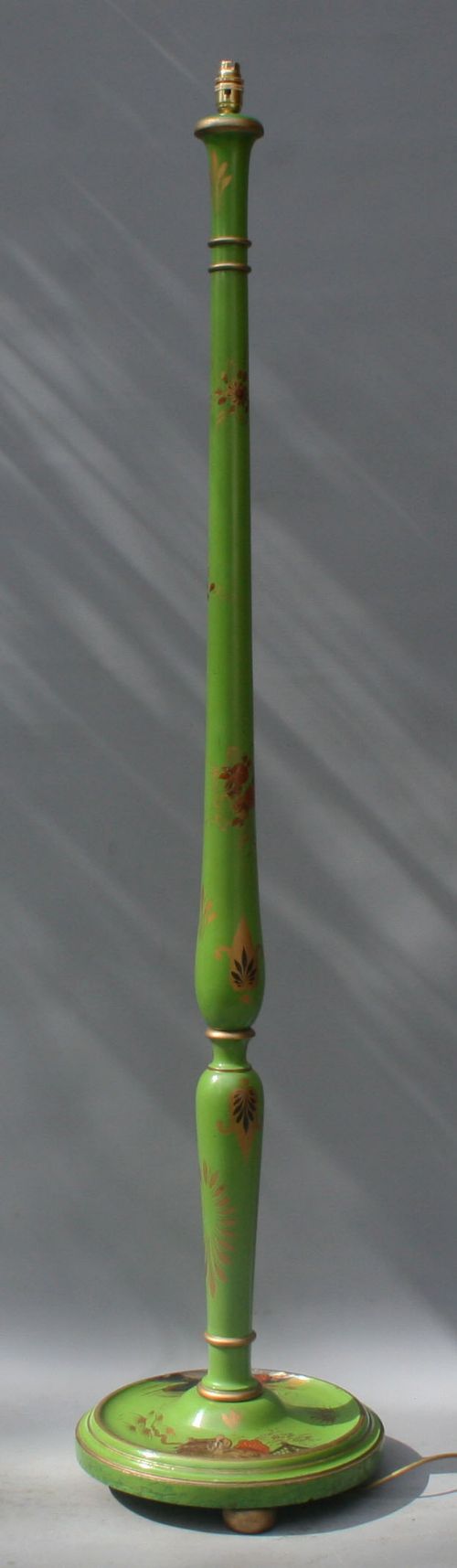


Vintage Lacquered Standing Lamp
A vintage lacquered standing lamp brings height and painted decoration to a room, drawing the eye with its upright form.
Vintage Lacquered Standing Lamp
A vintage lacquered standing lamp is an upright lighting fixture finished with a protective and decorative surface coating, appearing across periods from the nineteenth century into the twentieth century. These pieces stand tall to illuminate a space while introducing distinct ornament through varied surface finishes.
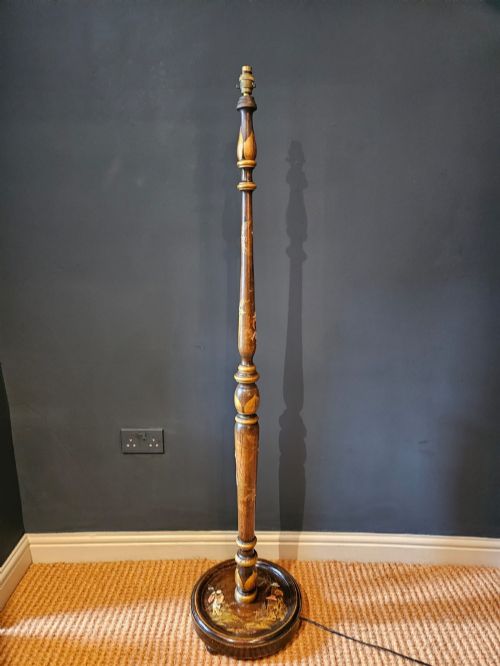
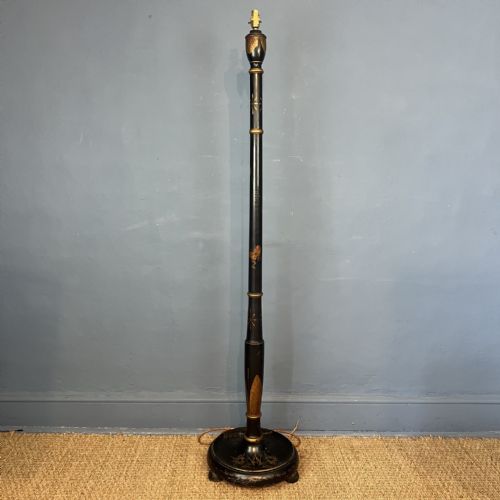
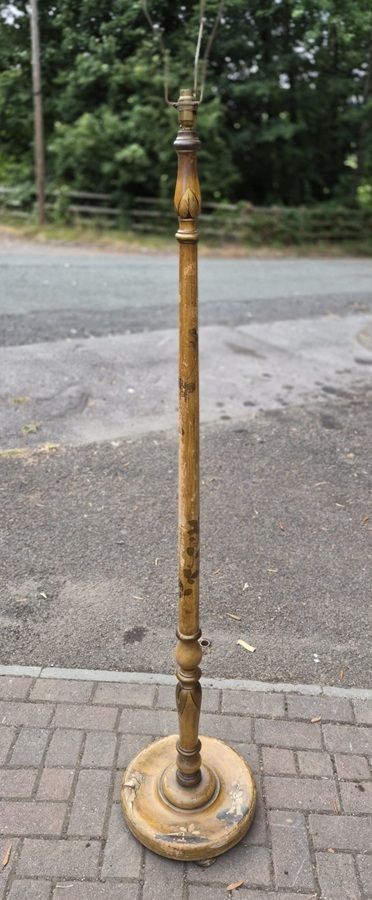
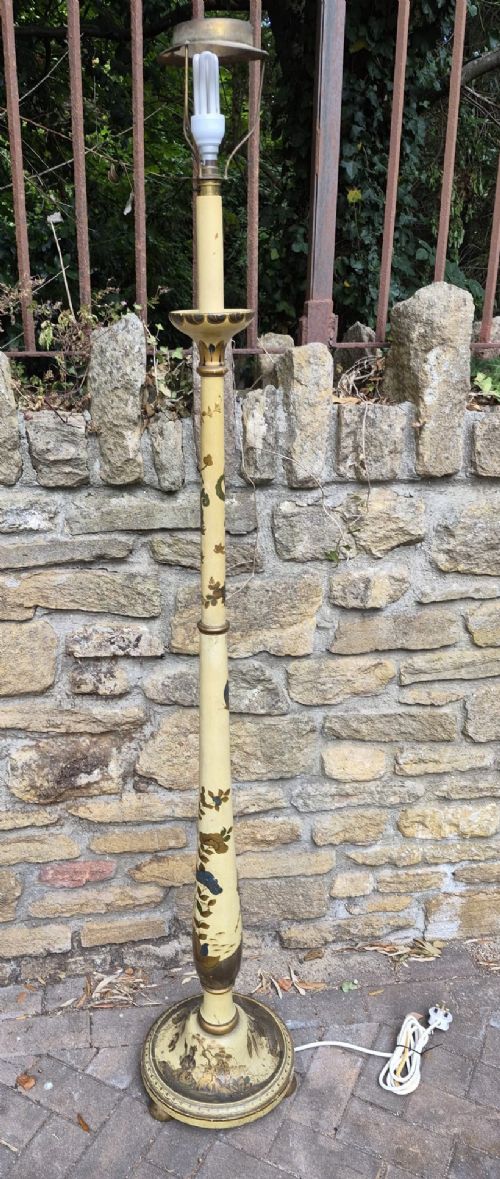
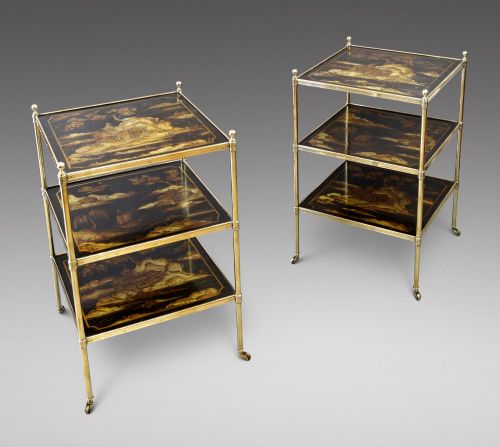
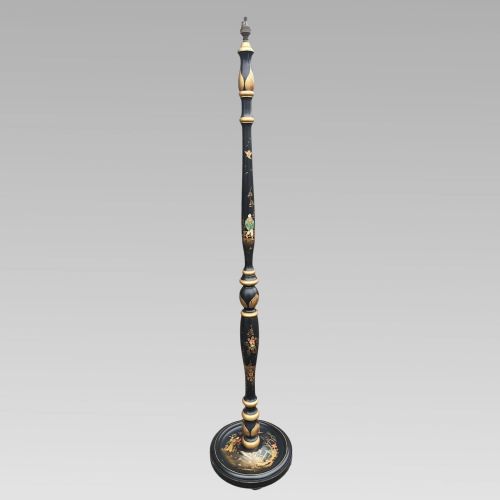
The most common examples on this page are standard lamps and floor lamps decorated in styles such as Chinoiserie and Edwardian Chinoiserie. Alongside these tall lighting forms, the evidence also records occasional tables, side tables, and etageres sharing similar decorative treatments.
Originating across Victorian, Edwardian, and later decades up to the nineteen-twenties and nineteen-thirties, these objects reflect period tastes for Orientalism and classical revival. Makers utilised wood, painted wood, and lacquered wood as foundations for these tall furnishings.
Assessing quality and craftsmanship
Quality in these upright lamps rests upon the depth of the lacquer finish and the execution of the painted decoration. Smoother surfaces and finer brushwork distinguish the superior examples from simpler production.
The integration of materials also defines the tier of the piece, with substantial wooden frames and well-preserved gilt accents indicating higher grade manufacture. Consistency in the decorative scheme across the tall shaft determines the overall success of the object.
Red lacquer stands out boldly amongst the dark ebonised finishes, bringing an unexpected flash of pigment to the upright lamps.
The Vintage Lacquered Standing Lamp Glossary
- Chinoiserie
- European decorative style reflecting Chinese artistic influences, featuring painted scenes of figures, landscapes, and pavilions on lacquered grounds. This style appears frequently across the standard lamps on this page.
- Standard lamp
- A tall floor-standing lighting fixture designed to hold a bulb and shade at height. These objects provide ambient illumination in a room.
- Lacquer
- A durable resin finish applied in multiple coats and polished to a hard sheen. It protects the wood beneath while providing a smooth ground for painted ornament.
- Etagere
- A piece of furniture consisting of open shelves for displaying small objects. The evidence includes brass and ebonised examples from the early twentieth century.
- Gilt
- A thin layer of gold or gold-coloured material applied to a surface for decoration. It highlights raised details and adds metallic contrast.
Vintage Lacquered Standing Lamp: Frequently Asked Questions
What is a vintage lacquered standing lamp?
A vintage lacquered standing lamp is a tall lighting fixture featuring a finished surface of resin or varnish, often decorated with painted Chinoiserie scenes. These pieces rise from the floor to provide illumination while serving as decorative vertical elements in a room.
The listings show examples spanning the Victorian and Edwardian eras into the nineteen-twenties and thirties. They combine utilitarian lighting with the ornate aesthetic of their respective periods.
How do I identify Chinoiserie on these lamps?
Chinoiserie decoration on these lamps typically appears as hand-painted motifs depicting figures, birds, landscapes, or architectural structures in gold, red, or black. The designs mimic traditional East Asian art through a distinct European lens.
This ornamentation covers the wooden shaft of the standard lamp, often paired with contrasting background colours like red or black lacquer.
What materials make up these standing lamps?
The primary materials recorded in the evidence include wood, lacquered wood, painted wood, and brass. Fabric components frequently accompany the lighting fixtures in the form of shades.
Makers utilised brass for structural fittings and bases, while the wooden shafts received layers of lacquer and paint to achieve the finished decorative effect.
How do Edwardian standard lamps differ from Victorian ones?
Victorian standard lamps in the evidence often connect to nineteenth-century aesthetic movements and bamboo forms, alongside early Chinoiserie interpretations. They reflect the heavier proportions and eclectic tastes of the late eighteen-hundreds.
Edwardian examples tend towards refined Chinoiserie standard lamp designs from around nineteen-ten, balancing slender upright forms with lighter painted decoration.
Where should I place a standard lamp?
A standard lamp suits placement in corners or beside seating areas where it can cast downward light for reading or ambient room illumination. Its tall vertical profile allows it to fill empty wall space without occupying a large floor footprint.
The decorative lacquer and painted details ensure the piece remains a visual feature even when unlit.