


Vintage Kurdish Bidjar Rug
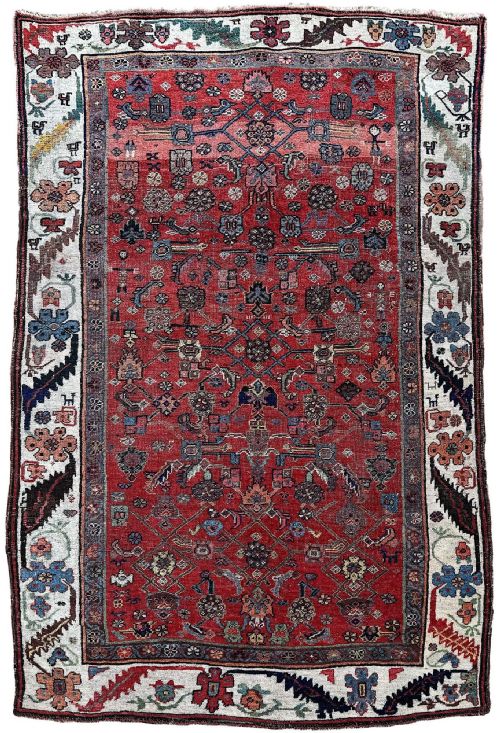
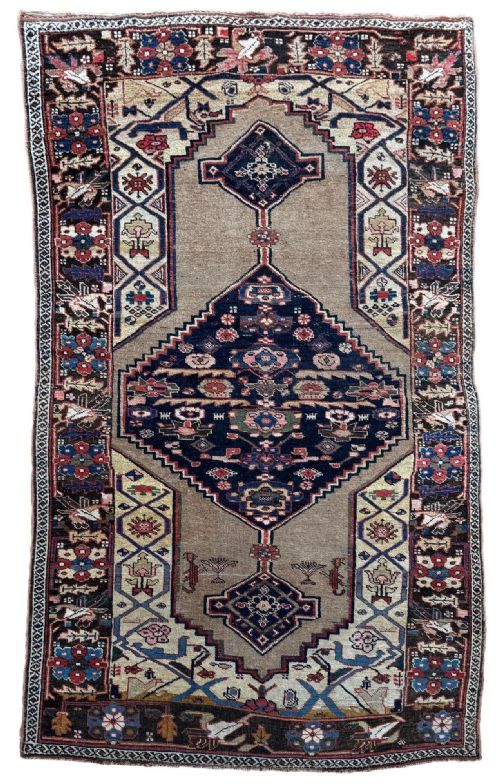
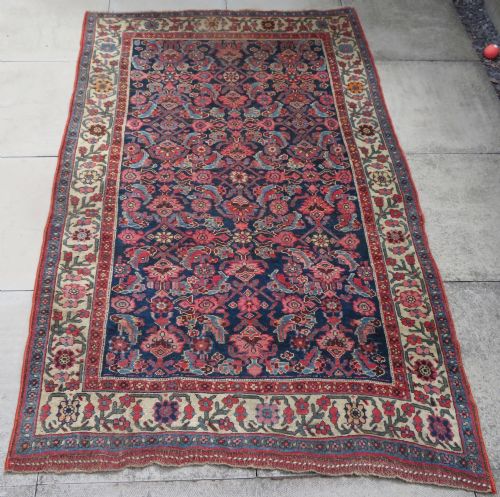
A vintage Kurdish Bidjar rug brings heavy tribal knotting and robust wool construction to the floor, built to endure generations of foot traffic.
Vintage Kurdish Bidjar Rug
A vintage Kurdish Bidjar rug is a heavy wool textile produced by the Kurdish tribes of the Bidjar region in Persia, designed for functional durability rather than light decoration. These floor coverings span production dates from the late nineteenth century into the early twentieth century, appearing as standard rugs, runners, room-sized kelleh carpets, and small bag faces.
The versions most frequently met on this page date around nineteen hundred, alongside examples from the eighteen eighties and nineties, sharing traditional Persian village and tribal aesthetic traits. They serve as dense, hard-wearing floor coverings that anchor a room with deep pile and saturated colour.
Makers from the Kurdish tribes relied on traditional village motifs handed down through generations, combining Persian town aesthetics with bold tribal geometry. The resulting pieces range from smaller formats measuring around one metre by two metres up to larger regional carpets exceeding three metres in length.
How they were made
Weavers constructed these rugs using heavy wool pile knotted onto sturdy cotton foundations, creating a dense and rigid structure that resists curling at the edges. This tight packing of the knots requires immense physical effort during production, resulting in the characteristic heavy handle associated with the region.
The materials draw entirely from local resources, utilising resilient sheep wool for the pile to absorb dye deeply and withstand heavy use. Natural dyes provide the saturated ground colours, which include distinctive uncommon shades like lemon alongside traditional deep reds and blues.
The listings here feature wool and cotton materials across nineteenth and early twentieth century production dates.
What varies in quality
Quality in these textiles depends on the tightness of the knotting and the density of the wool pile, which dictate how well the structure resists crushing over decades of use. Finer examples maintain an exceptionally rigid foundation and precise geometric or floral drawing across the field.
The choice of palette and the preservation of original edge finishes also separate standard village weaving from more striking regional expressions. Unusual ground colours and intact original side cordings elevate the visual impact of an individual piece.
The Vintage Kurdish Bidjar Rug Glossary
- Bidjar
- A town and surrounding Kurdish weaving district in western Persia known for producing exceptionally heavy and durable rugs. The district style combines town sophistication with robust tribal utility.
- Kelleh
- A large room-sized Persian carpet format that is significantly longer than it is wide, designed specifically for traditional reception rooms. These long carpets provide substantial floor coverage.
- Bag face
- The functional front panel of a nomadic storage bag, woven with particularly dense pile and compressed dimensions. These smaller panels were later removed from their original backing to be used as small mats.
- Pile
- The vertical or slanted loops of yarn that form the soft upper surface of a rug, distinct from the flat foundation underneath. In these rugs, the pile is packed densely to stand upright.
Vintage Kurdish Bidjar Rug: Frequently Asked Questions
How do I clean a vintage Kurdish Bidjar rug?
Regular gentle vacuuming without a rotating brush lift surface dust away from the dense wool pile safely. Professional specialist washing is necessary for deeper cleaning to protect the natural dyes and heavy cotton foundation.
Avoid household chemical cleaners and excessive water immersion, which can damage the traditional wool fibres and cause dye bleeding.
Where were these rugs made?
These textiles were produced by Kurdish weaving communities living in and around the town of Bidjar in western Persia. The makers worked within village and tribal environments rather than large urban manufactories.
Their output reflects a distinct regional tradition focused on creating exceptionally sturdy floor coverings for daily domestic use.
Are these rugs durable enough for hallways?
The dense wool construction and tight knotting make these textiles exceptionally well-suited for high-traffic areas like hallways and entranceways. Their heavy structure prevents them from sliding easily and resists the crushing effects of frequent footfall.
Placing a quality underlay beneath the rug helps prevent slipping and reduces friction between the floorboards and the wool foundation.
What is a Kelleh carpet?
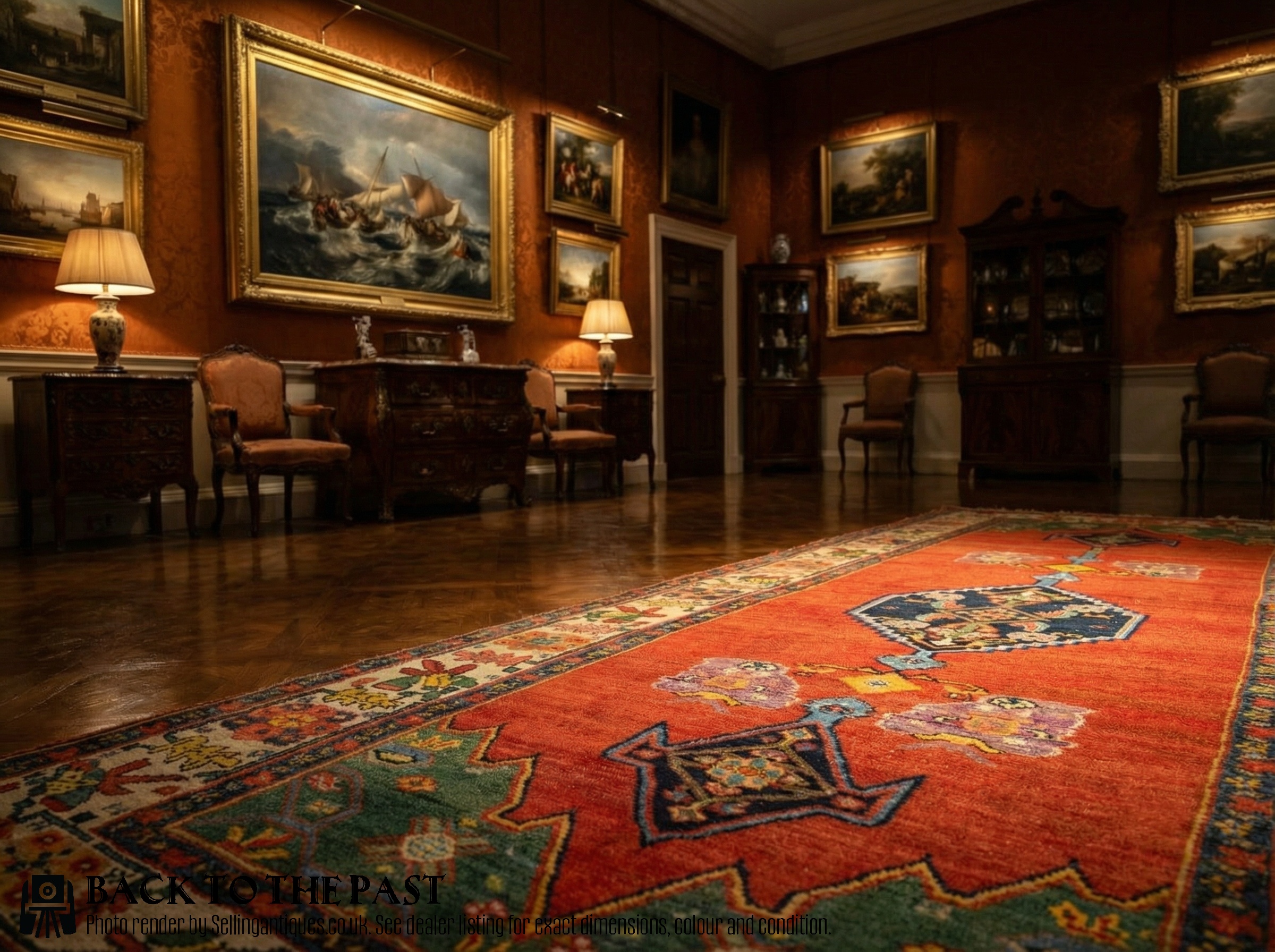
A kelleh is a specific large format of Persian carpet characterised by an elongated rectangular proportion. These pieces were traditionally used to line the perimeter of a main room.
Their substantial length distinguishes them from standard square or small area rugs produced in the same regional workshops.