
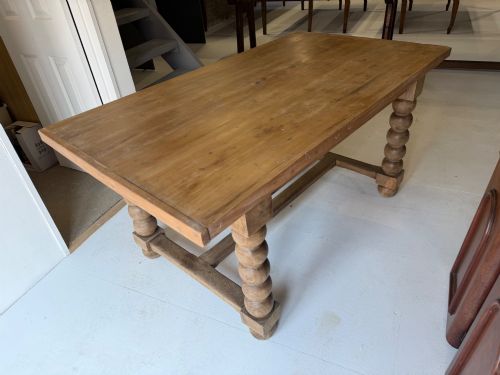
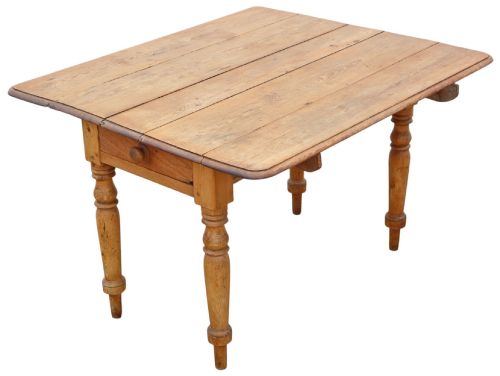
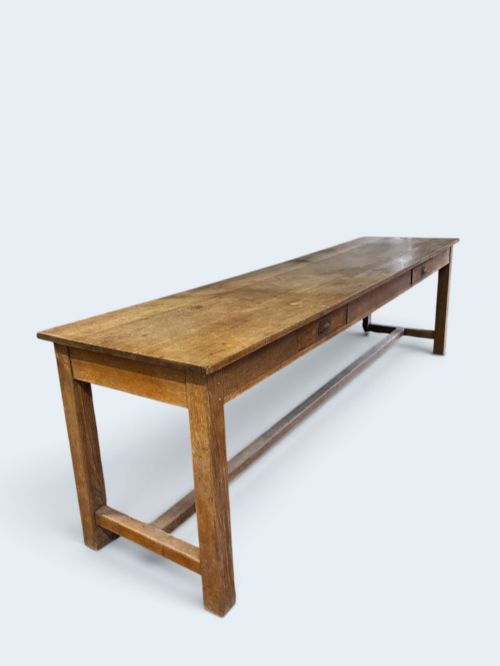
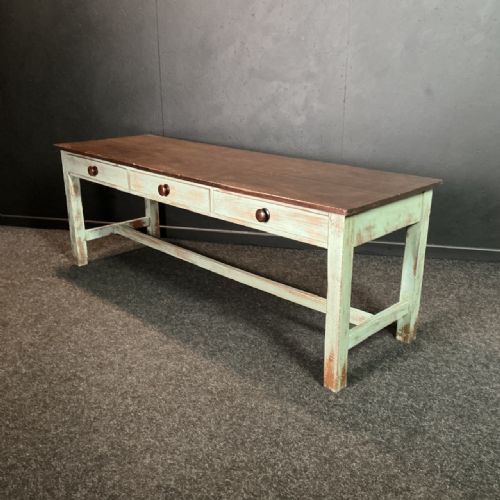
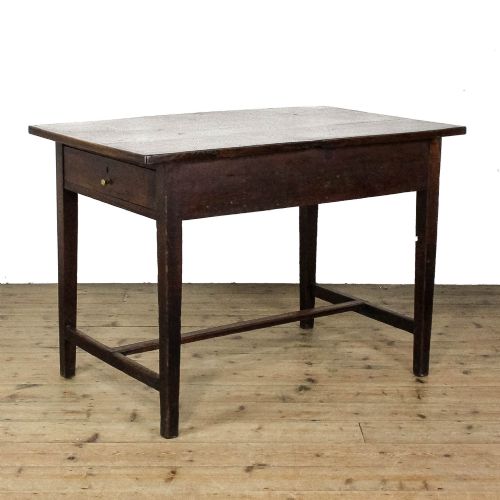
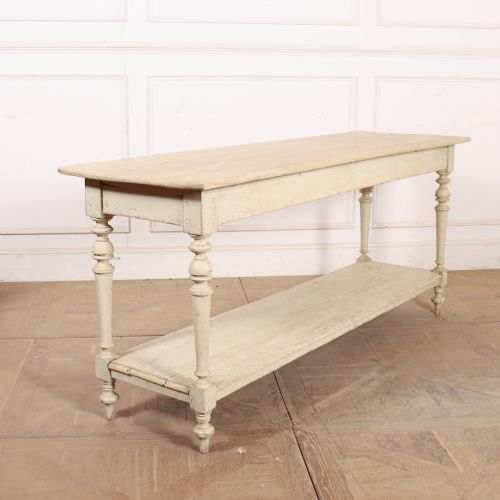
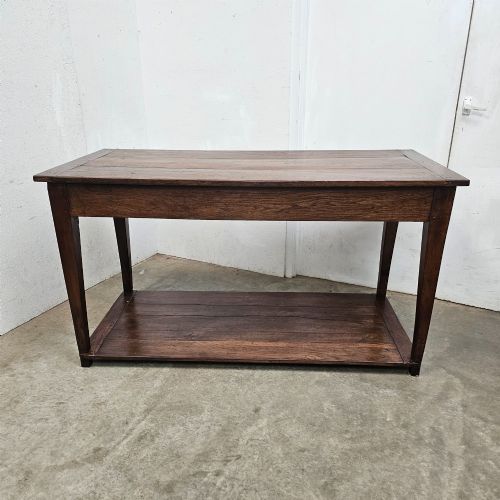
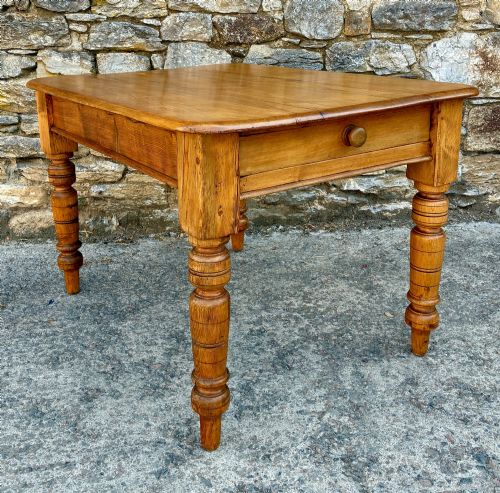
Vintage Kitchen Side Table
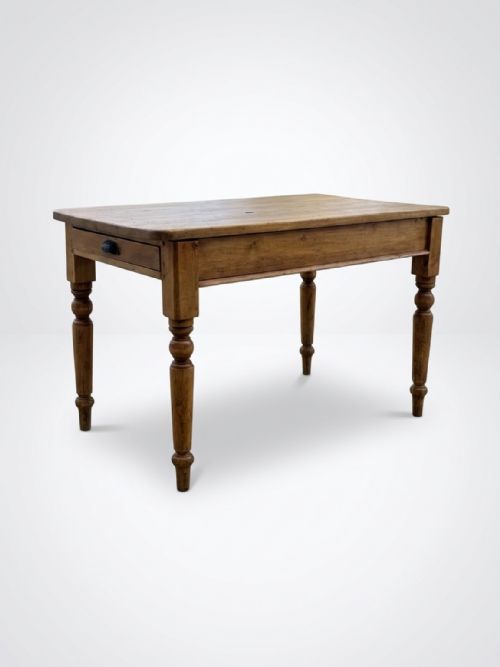
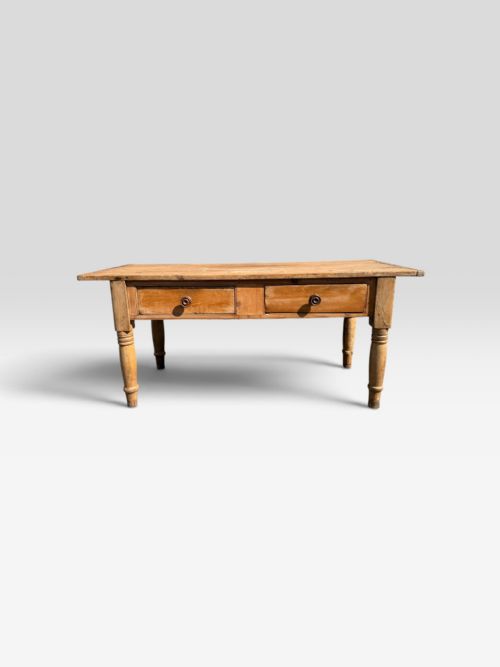
These vintage kitchen side tables bring honest utility and timeworn character to any room, offering robust surfaces shaped by generations of domestic work.
Vintage Kitchen Side Table
A vintage kitchen side table encompasses hardworking utility furniture built for historical domestic and commercial spaces, ranging from compact prep tables to large farmhouse work surfaces. When you search for a vintage kitchen side table, you encounter diverse forms created for specific tasks like dairy preparation, baking, or general scullery work.
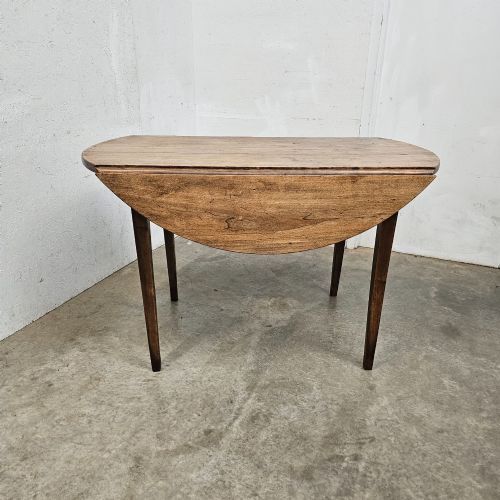
The pieces appearing on this page originate predominantly from the nineteenth and early twentieth centuries, spanning Victorian, Edwardian, and various regional country styles. Pine and oak predominate, often shaped into functional side tables, serving tables, and drop-leaf formats designed to adapt to busy interior spaces.
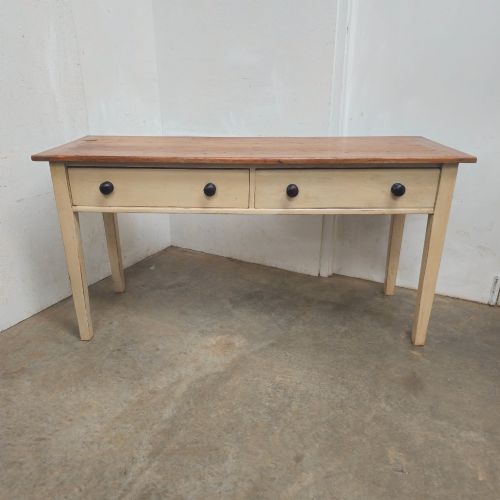
Regional variations include English dairy tables, French drapers tables, and Welsh pine work tables, each bearing the structural marks of their original trade use. Buyers find both scrub-top wooden surfaces and painted finishes, reflecting how different European households maintained and decorated their utility furniture.
How they were made
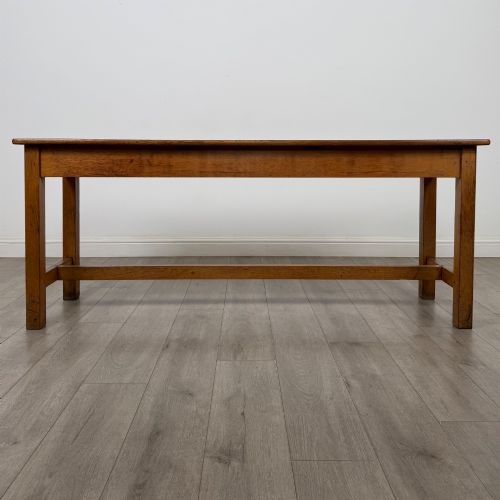
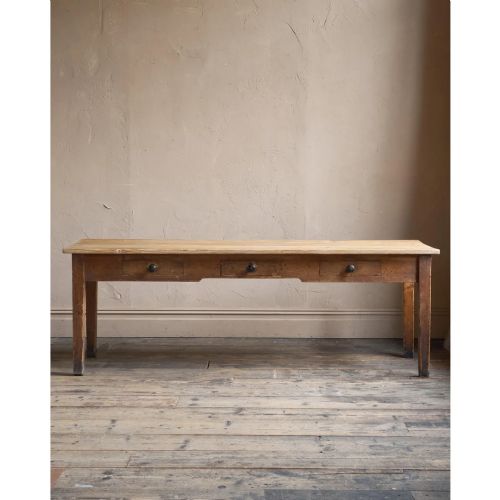
Construction relies heavily on sturdy domestic timbers such as pine, oak, and elm, selected for their ability to withstand heavy daily use. Makers joined heavy tops to robust legs using traditional joinery, occasionally incorporating drawers with simple wooden runners or brass pulls.
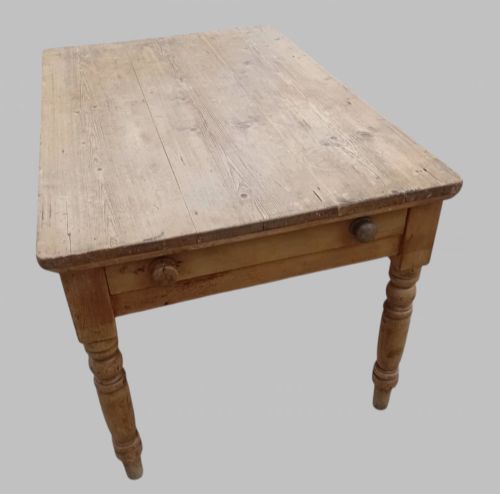
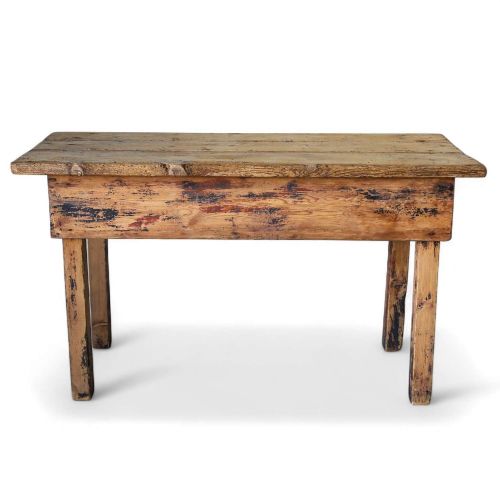
Surfaces frequently show the unvarnished results of scrubbing and cutting, while other examples retain layers of original paint, such as traditional Falu red or white lead coatings. Iron and brass fittings appear on folding mechanisms, drop-leaf supports, and handles, adding mechanical utility to the timber frames.
What varies in quality
Quality in these utility tables is defined by the integrity of the original construction and the character of the timber rather than decorative ornamentation. Tables retaining their original scrubbed tops, untouched painted legs, or functional drawers command greater interest than heavily altered pieces.
Proportion and scale also separate standard domestic tables from monumental commercial or institutional examples like drapers tables or butchers blocks. The depth of patina built up through decades of cleaning and use determines the visual strength of each surviving piece.
The Vintage Kitchen Side Table Glossary
- Scrub-top
- A solid wooden table top, usually pine or oak, repeatedly scrubbed clean with water and sand, leaving a pale, textured surface. This method creates a distinct undulating grain pattern valued by collectors.
- Drop-leaf
- A table design featuring hinged flaps on one or both sides that fold down to save space or lift up to extend the surface area. Brass or wooden brackets typically support the folding leaves.
- Drapers table
- A long, deep display table historically used in fabric shops, often featuring multiple tiers or drawers. These large surfaces now serve as substantial kitchen islands or prep tables.
- Dairy table
- A specialised low-permeability wooden table designed for cheese-making and milk processing, often featuring slatted lower tiers for air circulation. They originated in large country house dairies.
- Falu paint
- A traditional deep red or dark matte paint originating in Sweden, composed of copper mine waste and linseed oil. It provides durable weather and wear resistance on utilitarian wood furniture.
Vintage Kitchen Side Table: Frequently Asked Questions
How were these tables used originally?
These tables served as heavy-duty work surfaces in sculleries, dairies, farmhouses, and shops where food preparation, pastry rolling, and trade tasks took place daily.
Their robust timber construction handled constant chopping, scrubbing, and general utility work long before modern fitted kitchens existed.
Can I use a vintage table for food prep?
Most antique pine and hardwood tables make excellent functional prep surfaces, provided the timber is clean and sealed appropriately for modern hygiene standards.
Many buyers choose scrub-top or solid oak tables specifically to use them as working kitchen islands or baking stations.
How do I tell an Edwardian table from a Victorian one?
Victorian tables generally date from the mid to late nineteenth century and often display heavier proportions, darker patinas, and utilitarian pine or oak construction.
Edwardian pieces from the early twentieth century frequently exhibit slightly lighter frames, simpler lines, and occasional influences from vernacular country revivals.
Are painted finishes on these tables original?
Some pieces retain early or original painted finishes, such as milk paint, historic lead paint, or regional Scandinavian coatings applied to protect the soft pine.
Examining the wear patterns around the legs and edges helps distinguish genuine historical paint layers from later decorative updates.