

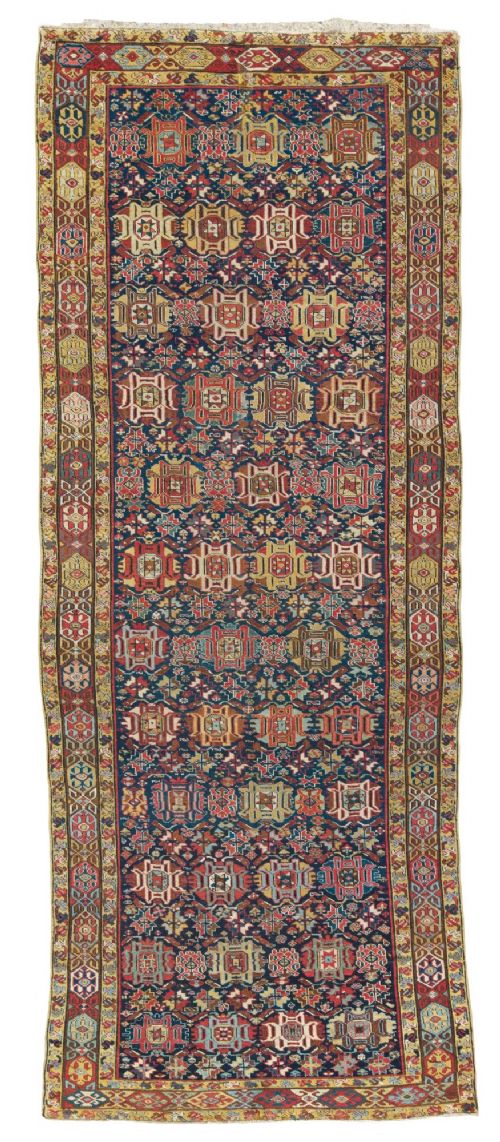


Vintage Kelleh Rug
These vintage kelleh rug pieces are elongated tribal carpets woven in Persia and Central Asia, offering rich geometric motifs and deep historical character for living spaces.
Vintage Kelleh Rug
A vintage kelleh rug represents an elongated carpet format traditionally used in nomadic and village households across Persia and surrounding regions. Buyers searching for this phrase encounter substantial runners and narrow carpets produced by tribal weavers from various nineteenth and early twentieth century periods.
The pieces on this page span several distinct regional traditions, including Kurdish, Bidjar, Malayer, and Luri styles. Most examples feature characteristic rectilinear or floral field designs rendered in generous proportions suited for hallway or gallery placement.
Materials and construction
Production relies primarily on sturdy wool piles knotted onto cotton or hand-spun wool foundations. This combination provides the dense handle and structural resilience needed for heavy domestic use over generations.
Weavers utilised traditional hand-knotting techniques specific to their tribal groups, incorporating natural dyes that yield enduring earthy tones and deep blues, reds, and golds.
Vintage Kelleh Rug Retail Price Guide 2026
Typical asking prices for vintage kelleh rug among the pieces listed under this phrase on Sellingantiques today, from the lower quarter to the upper quarter. They describe what is for sale here now, not the wider market.
Several carpets conceal tiny weaver signature knots and deliberate asymmetry within their borders, proving human hands guided every row.
Assessing quality and character
Quality in these carpets rests on the fineness of the knotting and the integrity of the foundation structure. Superior examples maintain crisp drawing within complex border systems and even wear across the heavy wool pile.
The nuance of the natural dye palette and the originality of the tribal motifs further distinguish finer pieces. Structural balance and well-preserved geometric or boteh patterns elevate the visual impact of individual carpets.
The Vintage Kelleh Rug Glossary
- Kelleh
- A format descriptor for a carpet that is noticeably longer than a standard room size yet wider than a runner. These proportions suit long corridors or narrow reception rooms.
- Boteh
- A stylised almond or paisley motif representing a floral sprout or cypress tree. It appears frequently as a repeating element across tribal fields.
- Bidjar
- A Persian weaving centre known for exceptionally dense, heavy carpets constructed with a stiff foundation. These pieces earn a reputation for iron-like durability.
- Hand-spun wool
- Yarn spun by hand rather than machinery, resulting in variable thickness that absorbs natural dye with subtle tonal shifts.
Vintage Kelleh Rug: Frequently Asked Questions
Where should I place a long kelleh carpet?
These elongated formats work exceptionally well in hallways, grand corridors, or as anchor pieces alongside narrow living room layouts. Their proportions naturally guide movement through a space.
Ensure you use a quality underlay to keep the carpet stable on hard floors and protect the historical foundation from direct friction.
How do I clean an antique woolen rug?
Regular gentle vacuuming without a beater bar removes surface dust and prevents grit from settling into the wool pile. Professional specialist cleaning remains essential for deep maintenance.
Avoid chemical spot treatments or soaking the foundation, as older natural dyes can react unpredictably to harsh detergents.
Are these carpets suitable for high traffic areas?
Traditional tribal weaves utilise dense wool and sturdy foundations designed for active domestic floors. Their robust construction handles daily foot traffic capably.
Rotating the carpet periodically ensures even wear patterns develop across the surface over years of use.
How do I distinguish regional tribal styles?
Regional identity shows through specific border arrangements, knotting density, and palette choices. Kurdish and Bidjar pieces often display robust geometric structures, whereas Malayer and Luri styles lean toward softer floral interpretations.
Comparing border guards and central medallion geometry helps identify the specific workshop or tribal group.