




Vintage Japanese Wall Plate
These vintage japanese wall plate examples bring decorative porcelain, cloisonne enamel, and patinated iron into the home.
Vintage Japanese Wall Plate
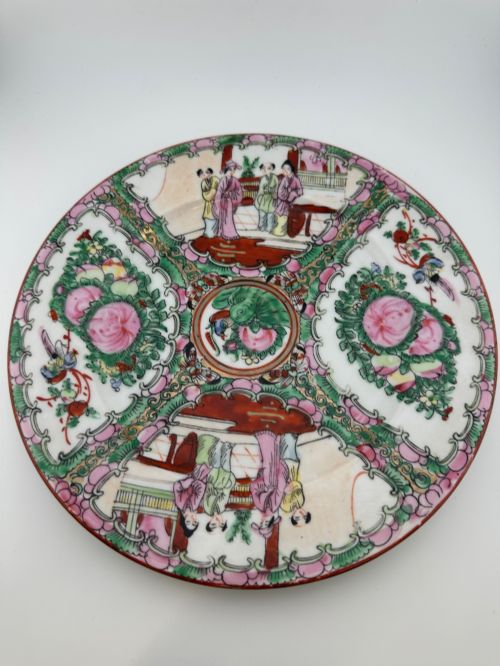
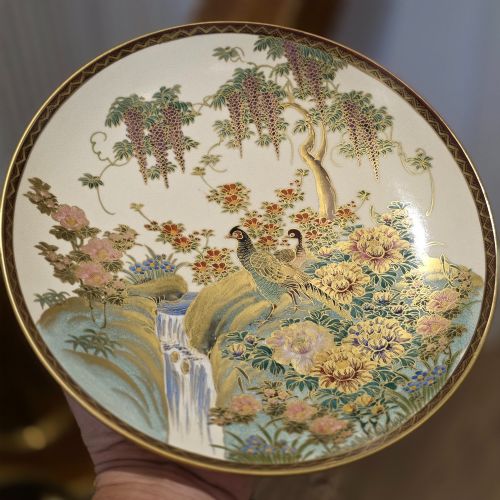
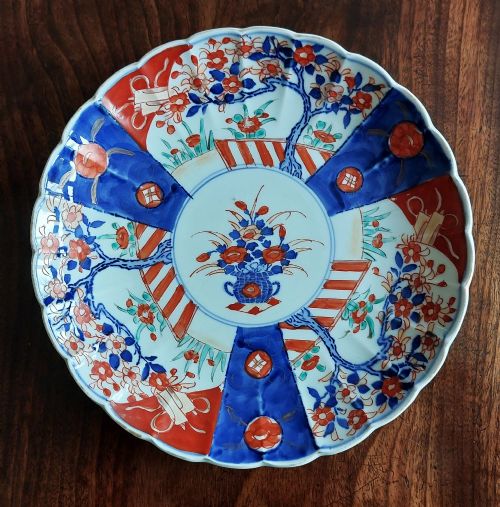
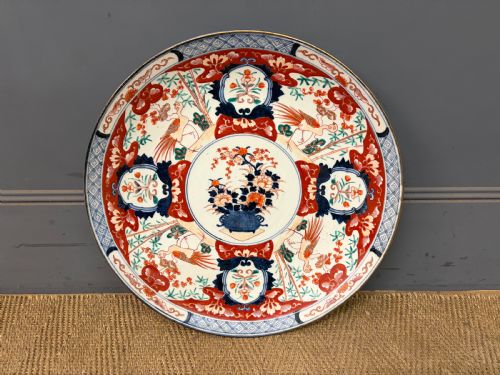
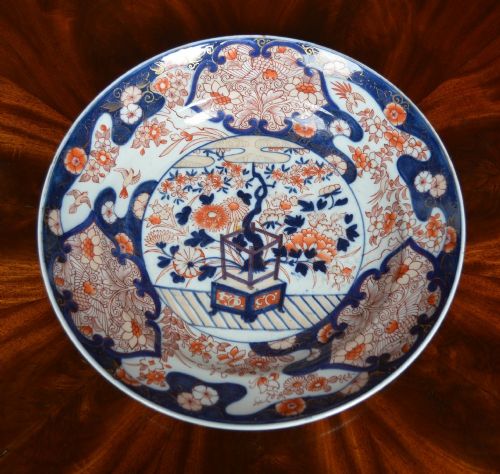
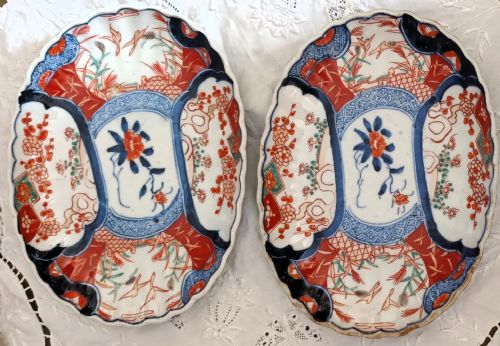
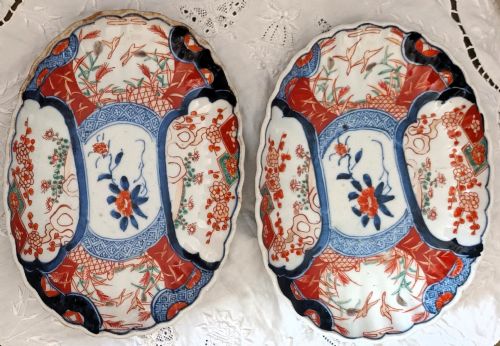
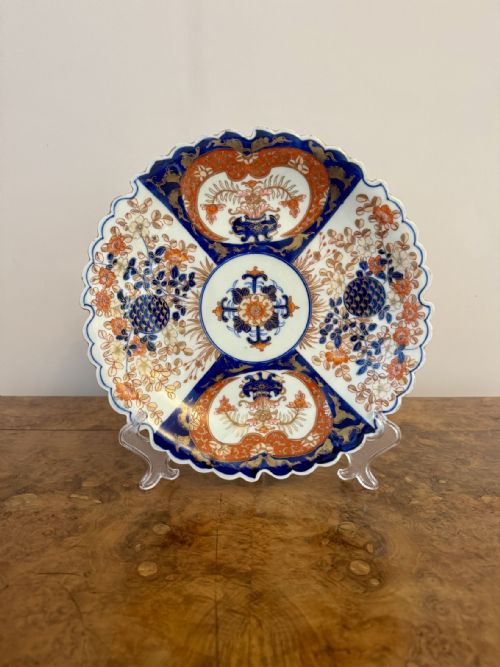
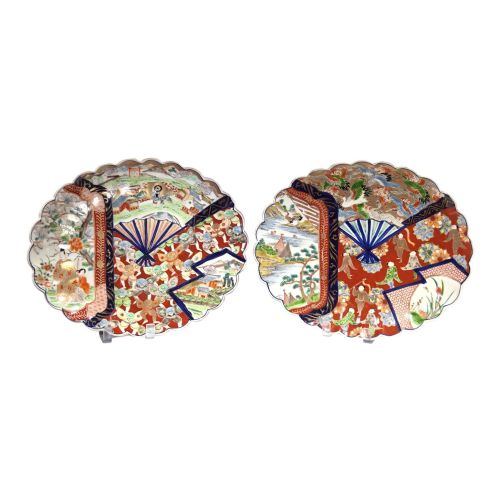
A vintage japanese wall plate search centres on decorative plates, chargers, and plaques made during the Meiji, Taisho, and Victorian periods. The pieces encountered most frequently on this page are porcelain imari dishes and chargers displaying traditional cobalt blue and iron red ironwork.
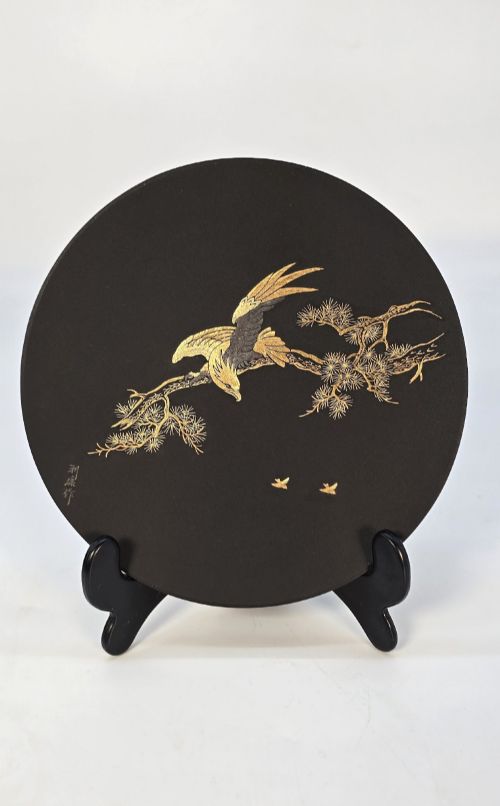
Beyond porcelain, the selection includes cloisonne enamel plates featuring birds, koi, and demons, alongside patinated iron and lacquer wall plaques. These items were produced for display in domestic interiors, serving as both surface decoration and focal points for wall hanging.
How they were made
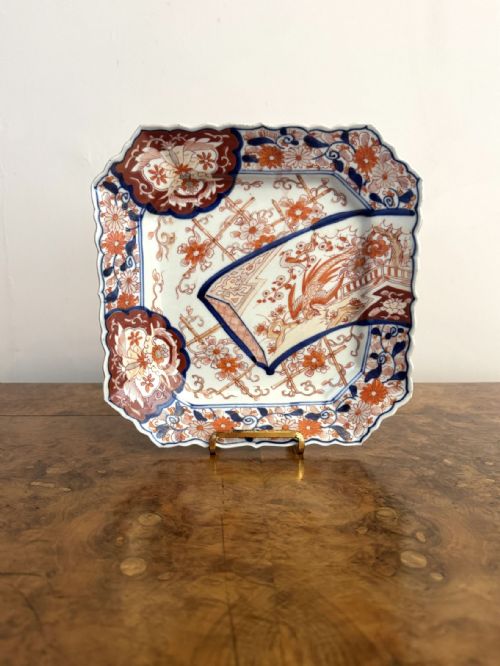
Porcelain imari plates utilise underglaze cobalt blue and overglaze enamel colours, often heightened with gold leaf applied to the fired ceramic body. Artisans shaped these pieces into round, square, and scalloped forms before hand painting intricate floral and figurative scenes.
Cloisonne enamel pieces employ thin copper or brass wires soldered onto a metal base to create compartments, which are then filled with coloured enamel paste and fired in a kiln. Other forms utilise iron bases enhanced with gold and silver inlay or lacquer techniques to build rich surface textures.
Several plates depict legendary demons and clever koi, proving that Meiji artisans enjoyed putting a little mischief on the wall.
What varies in quality
The standard of painting and enamel work dictates the distinction between standard production items and exceptional pieces. Master works display precise brushwork, intricate cloisonne wire placement, and finely detailed subjects such as the Seven Lucky Gods or leaping koi.
The complexity of the form also influences the grade of the item, with square plates, scalloped edges, and large chargers requiring greater technical skill from the potter or metalworker than simple round dishes.
Koshida
The Vintage Japanese Wall Plate Glossary
- Imari
- A style of Japanese porcelain decorated in underglaze blue, iron red, and gold, named after the port from which it was shipped to the West.
- Cloisonne
- A decorative metalwork technique where flat wires form cells on a surface to hold enamel paste.
- Charger
- A large decorative plate intended for display on a wall or sideboard rather than for dining use.
- Patination
- The natural or induced ageing of a metal surface that produces a distinct colour and finish over time.
- Meiji
- The historical period spanning from eighteen sixty-eight to nineteen twelve, known for significant artistic production and export to Europe.
Vintage Japanese Wall Plate: Frequently Asked Questions
How do I hang a heavy charger?
Heavy chargers and plates require robust wall fixings and specialised wire hangers designed to distribute weight evenly around the rim without causing stress to the ceramic or enamel body.
Ensure the mounting hook is secured directly into wall studs or uses appropriate plaster anchors to support the substantial weight safely over time.
Were these plates made for export?
Many of the imari and cloisonne pieces produced during the Meiji and Taisho periods were created specifically for the Western export market, where Japanese aesthetics gained immense popularity.
These items catered to European and American tastes for decorative interior objects while retaining traditional manufacturing techniques.
How do I clean cloisonne enamel?
Dust enamel surfaces gently with a soft, dry cloth to prevent the accumulation of particles within the wire crevices. Avoid using liquid cleaners, abrasive cloths, or chemical solvents, which can damage the delicate glass paste or the metal framework.