


Vintage Japanese Lamps
These vintage japanese lamps bring artisan metalwork, porcelain and carved wood from East Asia into Western interiors, offering rich texture and distinct historical character.
Vintage Japanese Lamps
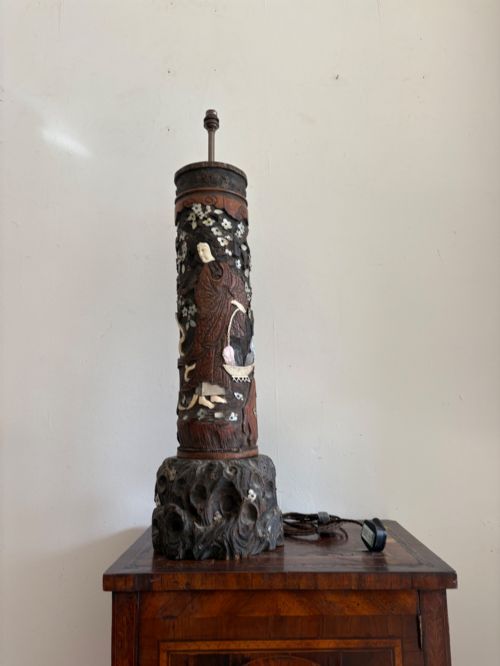
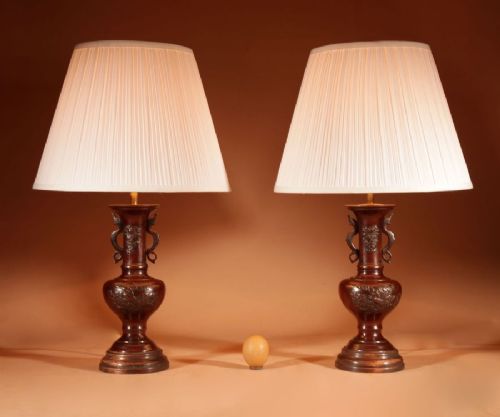
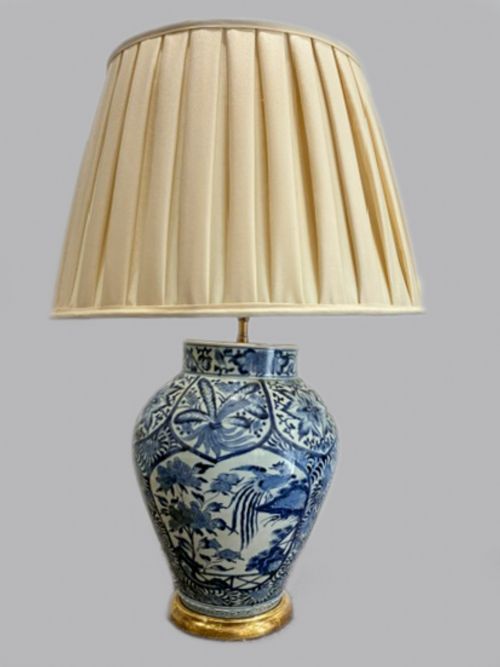
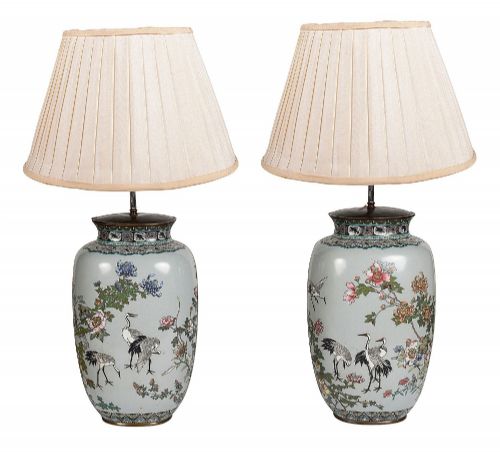
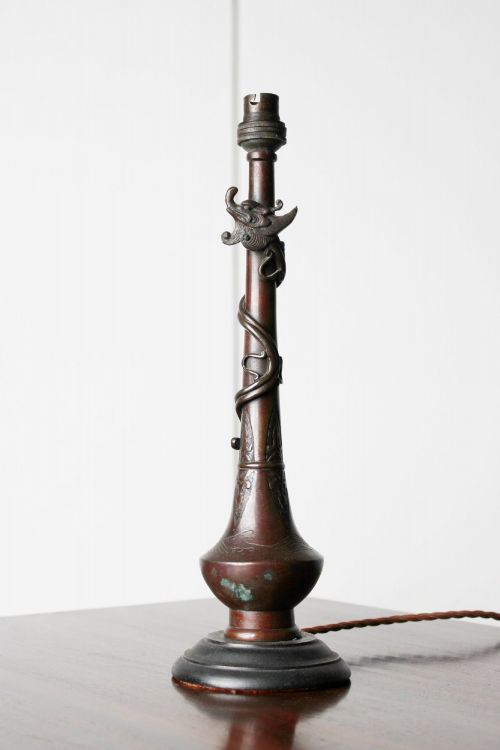
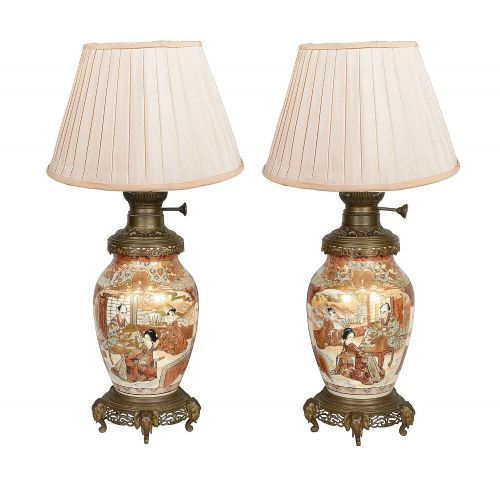
Makers and manufacturers adapted traditional temple vases, brush pots and root wood sculptures into functional illumination during later periods, often pairing Asian bodies with European mounts. Buyers encounter pairs of blue and white vases alongside single decorative table lights, merging oriental export wares with domestic period styling.
The assortment spans diverse aesthetic movements including Meiji period craftsmanship, Edo period survivals, Anglo-Japanese tastes and Chinoiserie interpretations. Each piece retains the decorative language of its original kiln or workshop while serving contemporary lighting needs.
Assessing quality and finish
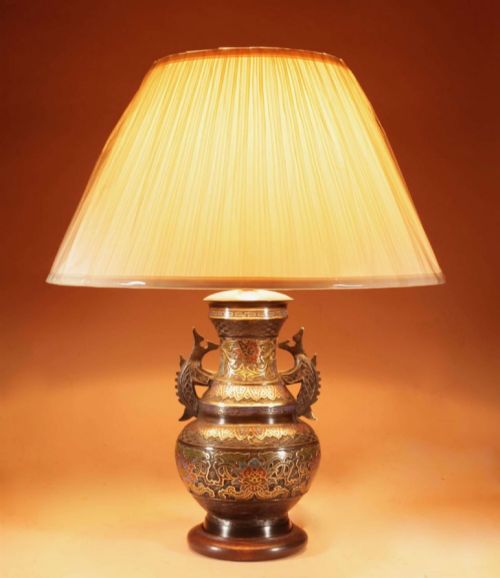
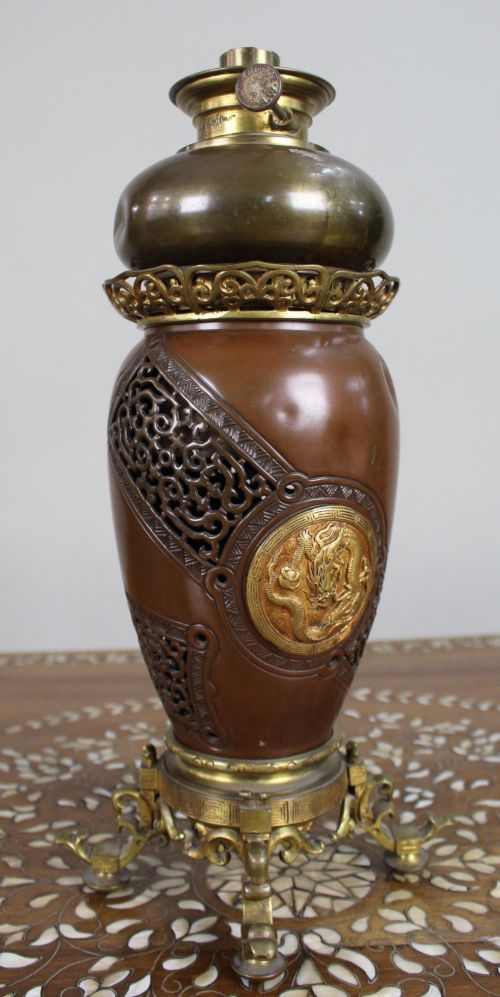
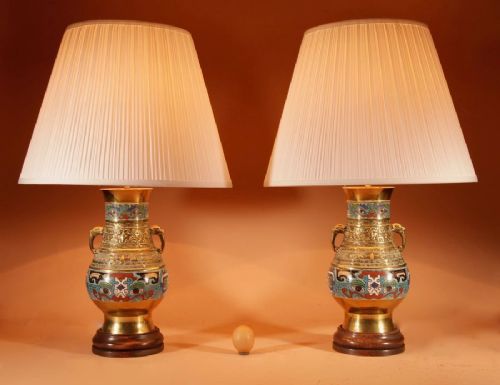
Quality rests upon the crispness of the bronze casting, the precision of cloisonné wirework and the delicacy of hand-painted ceramic glazes. Superior items display harmonious proportions between the converted vessel and its electrical fittings, maintaining the integrity of the original export ware.
The depth of the enamel work and the complexity of root carvings distinguish finer workshop output from simpler decorative items. Patination on bronze and the preservation of original mounts also influence the standing of an individual piece.
Some nineteenth-century artisans thoughtfully turned functional scholar's brush pots into domestic illumination for Victorian drawing rooms.
The Vintage Japanese Lamps Glossary
- Meiji Period
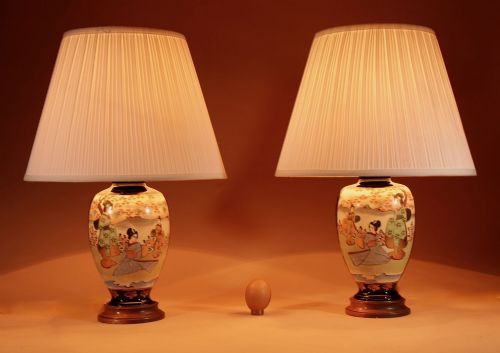
- The era in Japanese history spanning from 1868 to 1912, characterised by extensive artistic production for export. Pieces from this time often exhibit detailed bronze work and elaborate Satsuma pottery.
- Cloisonne
- A decorative metalwork technique using thin wire soldered to a metal body to create cells filled with enamel paste. These cells are subsequently fired and polished to a smooth finish.
- Imari
- A style of Japanese porcelain decorated in underglaze blue and overglaze red, gold and green. Originating in Arita, these ceramics were widely exported to Europe.
- Satsuma
- A type of Japanese earthenware featuring a pale, ivory-coloured crackle glaze painted with polychrome enamels and gilt. It remains a prominent material among converted lamp bases.
- Champleve
- An enamelling technique where troughs or cells are carved directly into the metal surface to hold coloured enamel. This differs from cloisonné by sinking the design into the base material.
Vintage Japanese Lamps: Frequently Asked Questions
How are these lamps powered?
Most vintage japanese lamps have been rewired for contemporary electrical sockets while retaining their original ceramic or bronze bodies. Buyers should consult professional electricians regarding modern safety standards and plug configurations.
Older wiring is routinely replaced to accommodate standard domestic bulbs, ensuring the lamps function safely within modern rooms.
Are these lamps sold in pairs?
The inventory includes both individual table lights and matched pairs of vases converted to lamps. Pairs frequently originate from nineteenth-century export consignments intended for European drawing rooms.
Single pieces often started life as distinct decorative vessels, such as root wood carvings or brush pots, before receiving electrical fittings.
How do I date a lamp?
Dating relies upon the period of the underlying vessel, determined through ceramic styles, reign marks or metallurgical techniques. Nineteenth-century Meiji pieces account for a large share of the available stock.
Earlier examples trace back to eighteenth-century Arita production and seventeenth-century export porcelain, identifiable through specific glaze characteristics.
Where should I place them?
These lamps suit side tables, mantels and dark corners where their detailed bronze or porcelain bodies contribute ambient lighting and texture. Their rich ornamentation pairs effectively with both traditional period interiors and eclectic spaces.
Placing them away from direct sunlight preserves the delicate enamels and painted Satsuma glazes over time.