








Vintage Japanese Bedside Lamps
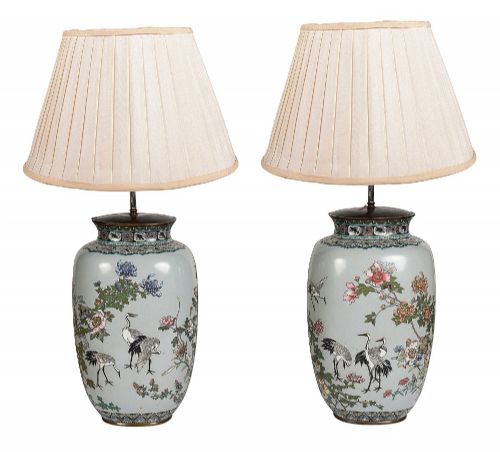
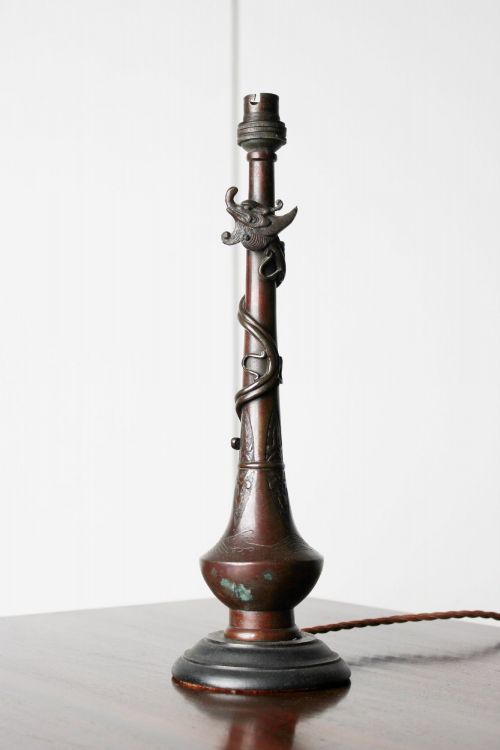
These vintage japanese bedside lamps bring hand-worked bronze, Satsuma pottery and intricate champlevé enamel straight into the bedroom.
Vintage Japanese Bedside Lamps
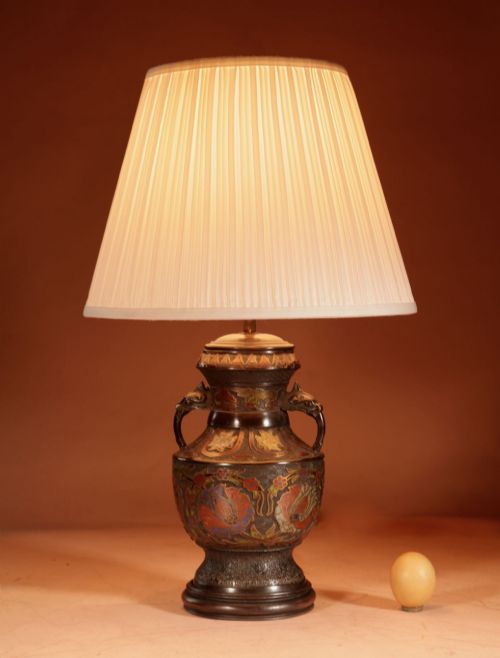
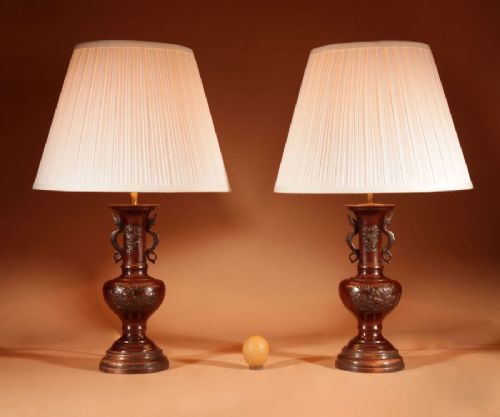
When you search for vintage japanese bedside lamps, you are looking at table lamps adapted from nineteenth-century bronzes, Satsuma pottery and Kutani porcelain vases. The selection relies heavily on Meiji period craftsmanship, featuring bronze, brass, enamel and carved wood forms that bring historical texture to a modern room.
Most pieces you meet here originate from the late nineteenth century and the early decades of the twentieth century, including Edwardian interpretations and pieces created under the influence of Japonisme. These objects bridge the gap between traditional East Asian decorative arts and Western domestic lighting.
The primary forms on this page take the shape of converted vases, brush pots and champlevé vessels fitted for electrical use. Their scale suits a bedroom table, offering a focused pool of light alongside intricate surface detail.
How they were made
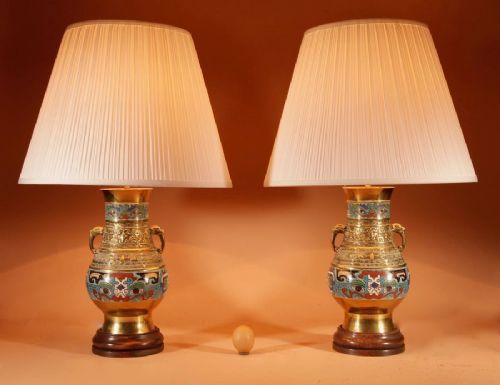
Makers shaped these lamps from cast bronze, brass, wood and ceramic, employing traditional techniques such as champlevé and cloisonné enamel to build up rich surface patterns. Mother of pearl inlay and delicate carving appear on specific wooden and brush pot pieces, showing varied artisan skills.
Porcelain elements display hand-painted glazes in Kutani and Satsuma styles, while metal bodies incorporate raised decorative cells filled with coloured enamel. Each material required specialised firing or metalworking expertise before later conversion into a functioning table lamp.
Vintage Japanese Bedside Lamps Retail Price Guide 2026
Typical asking prices for vintage japanese bedside lamps among the pieces listed under this phrase on Sellingantiques today, from the lower quarter to the upper quarter. They describe what is for sale here now, not the wider market.
Listings for vintage japanese bedside lamps span the nineteenth century, the Edwardian era, and the nineteen-twenties, using fabric, brass, wood and bronze.
What varies in quality
Quality rests in the crispness of the bronze casting, the precision of the enamel work and the depth of the hand-painted ceramic glazes. Finer examples show tight, deliberate cloisonné wirework and well-defined Satsuma pictorial scenes rather than rushed or muddy brushwork.
The integrity of the original vessel before its conversion plays a major part in value, as does the balance of the overall composition when fitted as a lamp. Matching pairs demonstrate greater consistency in pattern and scale than assembled individual pieces.
The Vintage Japanese Bedside Lamps Glossary
- Champlevé
- A metalworking technique where troughs or cells are sunk into the surface of bronze or brass and filled with enamel before firing. This method creates distinct coloured patterns bordered by lines of exposed metal.
- Cloisonné
- An enamel technique where thin metal wires are soldered to a metal base to create compartments that are then filled with paste and fired. The resulting surface presents a detailed mosaic of coloured glass.
- Satsuma
- A type of Japanese earthenware featuring a pale, ivory-coloured crackle glaze decorated with enamel and gilt. It became widely exported and collected during the late nineteenth century.
- Kutani
- A style of Japanese porcelain known for its bold decorative palettes, often dominated by greens, blues, yellows, purples and reds. These wares frequently depict natural scenes and figures.
- Meiji Period
- The era in Japanese history spanning from 1868 to 1912, marked by the opening of trade with the West. Objects from this time combine traditional craftsmanship with export-driven decorative ambition.
- Japonisme
- A nineteenth-century Western artistic movement reflecting the strong influence of Japanese art on European design. It manifests in decorative arts through asymmetric compositions and borrowed motifs.
Vintage Japanese Bedside Lamps: Frequently Asked Questions
Are these lamps safe to plug in?
Most vintage pieces have been rewired for modern use, but checking the internal wiring with a qualified electrician ensures complete safety before daily operation.
Older metal and ceramic bodies retain their structural integrity well, though older plugs and cords benefit from professional replacement.
How do I clean a bronze or enamel lamp?
Dusting gently with a dry, soft cloth prevents the buildup of grime on enamel and metal surfaces without risking the finish. Avoid chemical polishes that can strip patination from bronze or damage delicate cloisonné wires.
Ceramic sections respond well to a slightly damp cloth, provided moisture is kept away from any electrical components.
What is the difference between Satsuma and Kutani?
Satsuma ware relies on a distinctive ivory crackle-glaze earthenware body decorated with detailed enamel and gilt pictorial scenes. It has a warm, porous feel compared to porcelain.
Kutani refers specifically to porcelain items finished with vibrant, multi-coloured glazes. The base material is harder and whiter than Satsuma pottery.
Can I find matching pairs of lamps?
Yes, several listings feature matched pairs derived from original vases or bronzes. These sets provide balanced symmetry when placed on matching bedside tables.
Pairs usually display identical decorative motifs and comparable heights, though minor hand-made variations remain normal.
How do I date a Meiji period lamp?
Dating relies on stylistic markers from the Meiji period between 1868 and 1912, when Japanese export wares surged in popularity. Surface techniques and material signatures help narrow the window of production.
The conversion into a lamp often happened later in the twentieth century, while the base vessel retains its nineteenth-century origin.