




Vintage Italian Majolica
These vintage italian majolica pieces are tin-glazed earthenware vessels and display pieces that bring rich Mediterranean colour and traditional forms into a room.
Vintage Italian Majolica
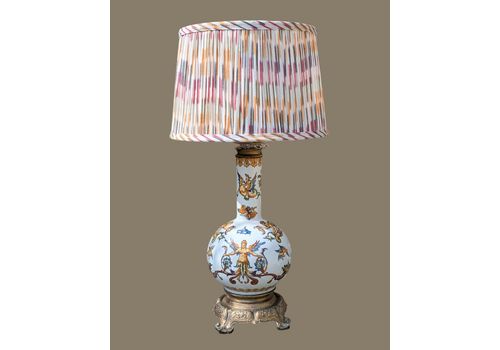
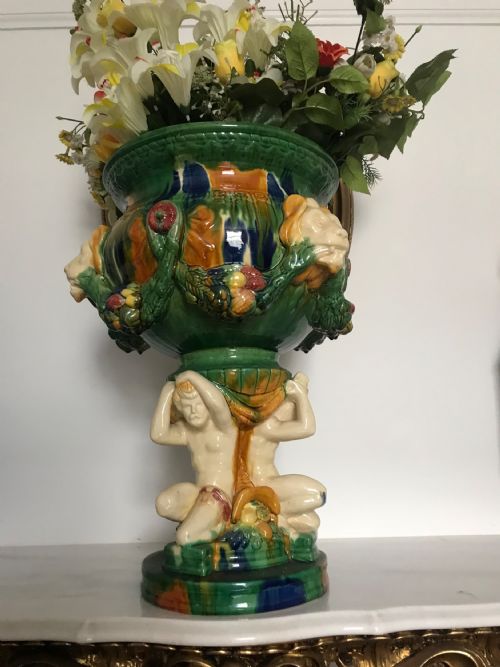
Vintage italian majolica encompasses a diverse range of tin-glazed earthenware objects spanning several centuries of production, from eighteenth-century apothecary jars to nineteenth-century table lamps and chargers. Buyers searching for vintage italian majolica encounter both utilitarian pharmacy vessels and decorative display items such as jardinieres and centrepiece bowls.
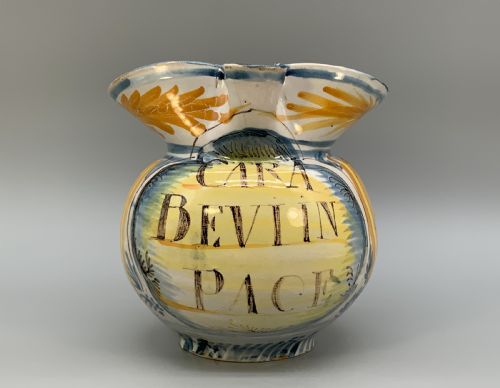
The objects on this page reflect traditional Italian styles including Renaissance Revival, Baroque, and the Urbino style, alongside regional wares like Garofano and Bassano pottery. Functional pharmaceutical vessels such as albarello drug jars sit alongside grand decorative planters and table lamps adapted from earlier forms.
Materials and construction
These pieces are constructed from earthenware ceramic, finished with an opaque tin glaze that provides a smooth white ground for painting. Polychrome pigments, manganese, and yellow tones are applied directly to the unfired or biscuit-fired glaze before a final firing seals the colours.
Mounts and structural additions sometimes incorporate brass or fabric elements, particularly in later table lamps and altered forms. The underlying body remains porous earthenware, characteristic of traditional majolica and faience manufacturing techniques across Italy.
Vintage Italian Majolica Retail Price Guide 2026
Typical asking prices for vintage italian majolica among the pieces listed under this phrase on Sellingantiques today, from the lower quarter to the upper quarter. They describe what is for sale here now, not the wider market.
Listings feature earthenware ceramics with tin glazes, spanning eighteenth-century apothecary jars to nineteenth-century table lamps and decorative planters.
Distinguishing quality
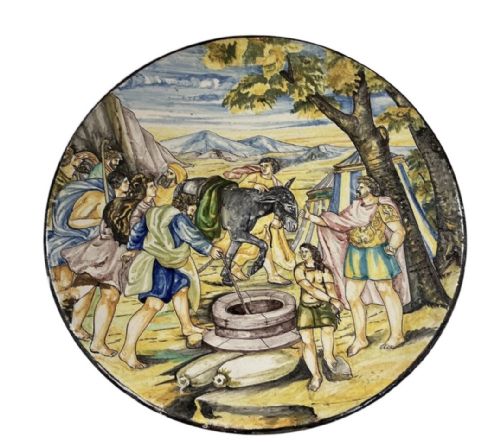
Quality in vintage italian majolica is evident in the precision and complexity of the painted decoration, ranging from simple blue and white patterns to elaborate polychrome narrative scenes in the Urbino style. The depth of the tin glaze and the control of manganese and yellow pigments reveal the skill of the potter or painter.
Form and proportion also differentiate pieces, with large chargers, figural base stands featuring lions head decoration, and well-proportioned albarello drug jars representing more ambitious workshop production than standard utility wares.
Cantagalli·Bassano pottery works
The Vintage Italian Majolica Glossary
- Majolica
- Tin-glazed earthenware produced in Italy, featuring opaque white glazes painted with metallic oxide colours. The technique developed during the Renaissance and continued through later revival periods.
- Albarello
- A cylindrical earthenware jar used by apothecaries to store drugs, ointments, and dry medications. These vessels often feature distinctive waisted bodies for ease of handling.
- Charger
- A large decorative plate or dish intended for display on a wall or sideboard rather than for dining. In majolica, these frequently showcase intricate historical or mythological scenes.
- Faience
- European tin-glazed earthenware, often used interchangeably with majolica or applied to pieces made in imitation of Italian styles. The finish relies on an opaque white glaze.
- Polychrome
- Decoration employing multiple distinct colours, commonly utilising manganese, yellow, and blue pigments on tin-glazed surfaces. This palette distinguishes many traditional Italian wares.
Vintage Italian Majolica: Frequently Asked Questions
What is vintage italian majolica?
Vintage italian majolica refers to tin-glazed earthenware ceramics produced in Italy, encompassing both historical pieces and later revival styles.
These items range from functional apothecary jars and wet drug containers to decorative chargers, planters, and table lamps.
How were pharmacy jars used?
Apothecary jars, such as albarelli, were utilised by pharmacists and druggists to hold dried herbs, ointments, and liquid medicines.
Their distinctive cylindrical shapes and labelled surfaces allowed for efficient organisation and identification on dispensary shelves.
How do I date these pieces?
Dating relies on stylistic clues, glaze characteristics, and specific decorative motifs that correspond to periods like the eighteenth or nineteenth century.
Revival styles often emulate earlier Renaissance or Baroque aesthetics, while material composition and potting techniques provide further chronological context.
Where should I display chargers?
Chargers are large decorative dishes traditionally hung on walls or exhibited on sideboards and mantels.
Because they serve as display art rather than tableware, their painted surfaces can be viewed without risk of everyday wear.