
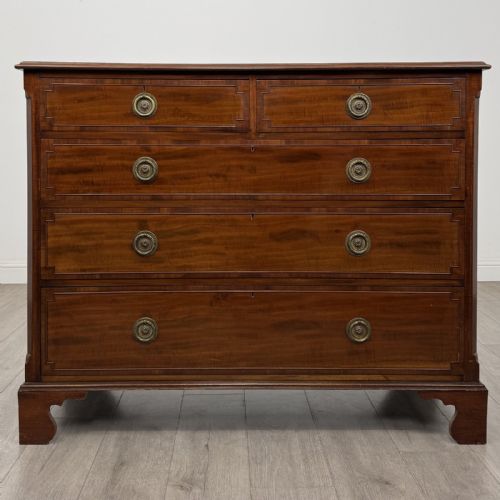
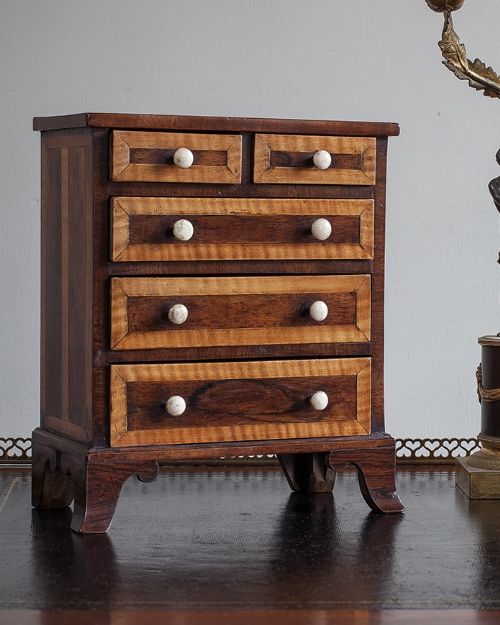
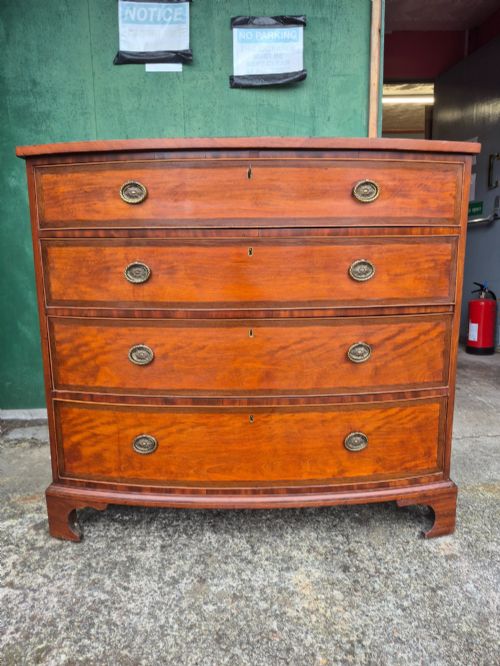
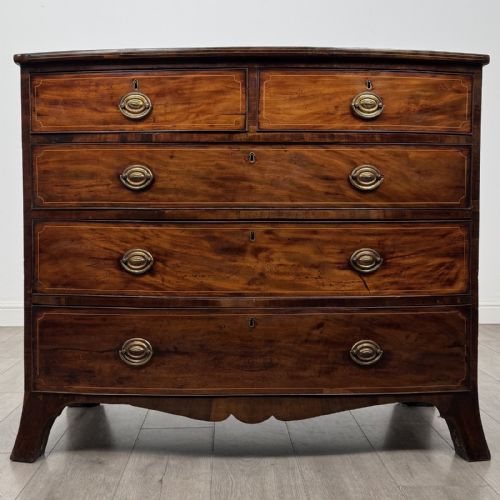
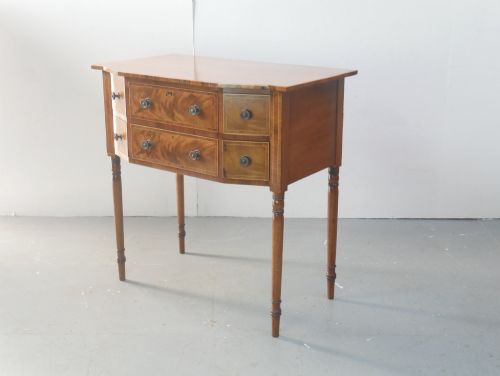
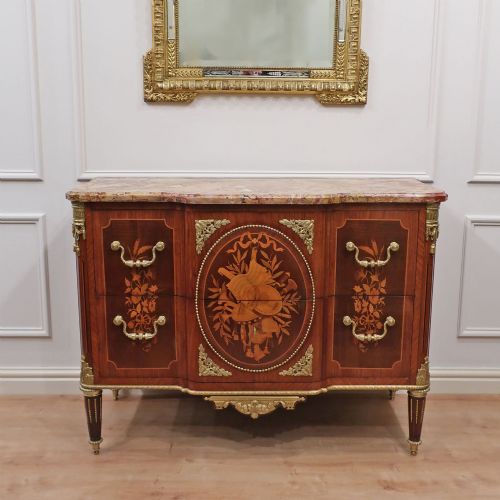
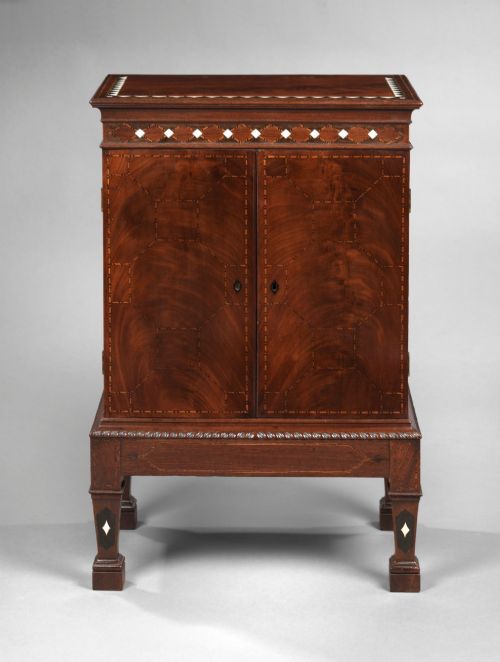
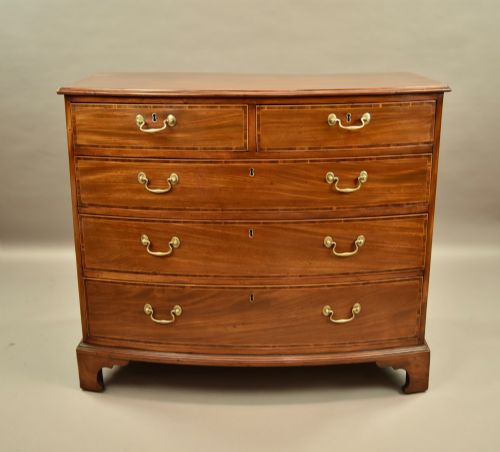
Vintage Inlaid Wooden Chest
A vintage inlaid wooden chest brings rich timber grain and precise geometric or botanical details into a room, offering both practical storage and focal presence.
Vintage Inlaid Wooden Chest
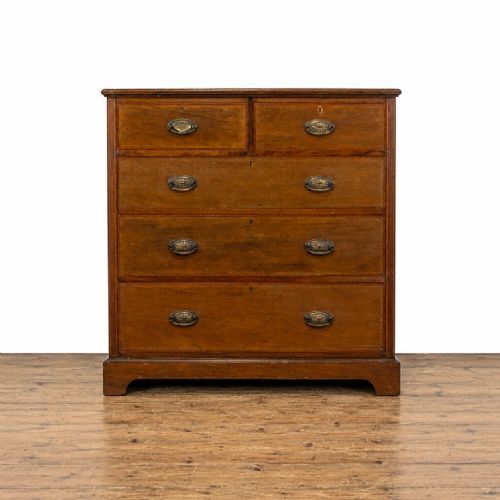
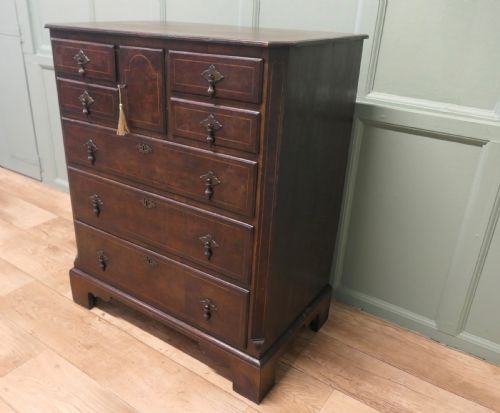
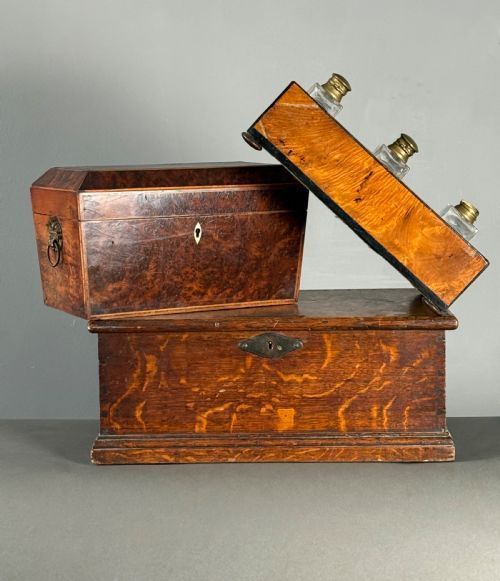
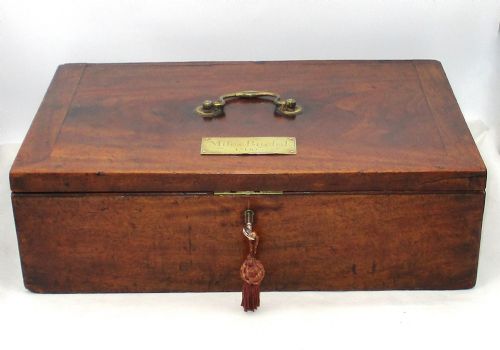
Buyers seeking a vintage inlaid wooden chest encounter a diverse range of domestic furniture and small decorative containers spanning from the eighteenth century through to the early twentieth century. The selection encompasses large bedroom storage items such as bowfront chests of drawers and linen presses alongside smaller tabletop pieces like tea caddies, jewellery boxes, and document containers.
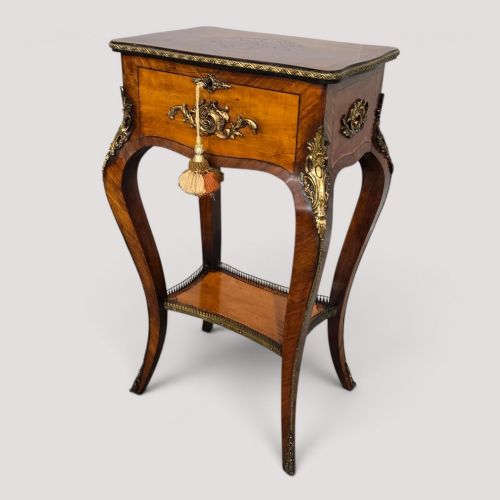
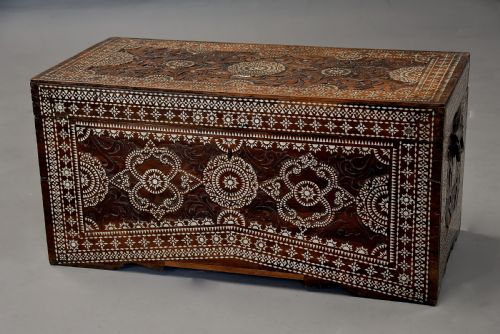
Pieces originating from the Georgian, Victorian, Edwardian, and Regency eras sit alongside later items from the nineteen-twenties and nineteen-thirties, reflecting stylistic revivals including Sheraton Revival and Louis XV designs. Alongside British cabinetmaking, the inventory incorporates international forms such as Middle Eastern trunks, Anglo-Indian collector chests, and carved teak dowry cabinets.
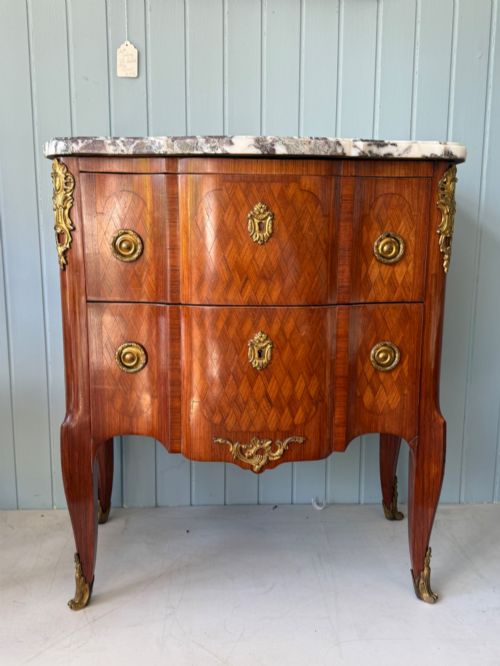
The primary large-scale format remains the chest of drawers in various timber configurations, supported by bedside cabinets, commodes, and music cabinets. Smaller storage forms utilise precious hardwoods and intricate surface decoration, serving specialised functions for tea, documentation, and jewellery storage.
Materials and construction methods
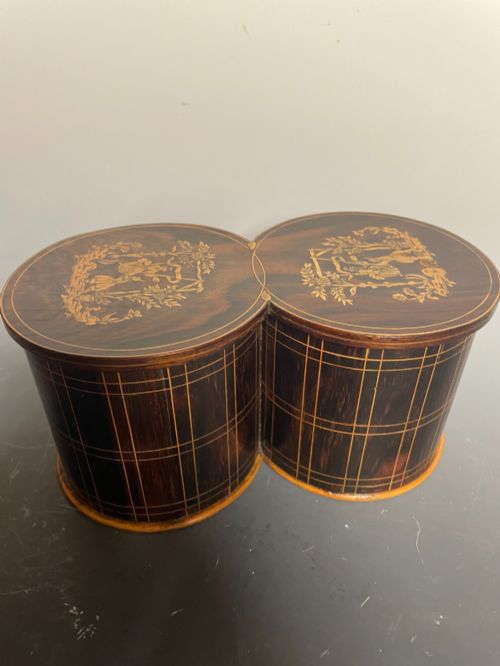
Cabinetmakers constructed these pieces using dense hardwoods such as mahogany, walnut, rosewood, and satinwood, frequently applying contrasting stringing and banding in boxwood and ebony. Inlaid surfaces often feature marquetry work using various tinted woods, alongside decorative additions of mother-of-pearl, brass, and glass elements.
Structural methods involve traditional joinery tailored to the specific object type, from the dovetailed carcases of large chests of drawers to the delicate framing required for tea caddies and jewellery boxes. Surface decoration relies on precise recessing of contrasting timbers and metalwork into the primary wood grain to create flush geometric or pictorial patterns.
The selection includes eighteenth-century walnut and mahogany examples alongside nineteenth-century rosewood, satinwood, and brass-mounted pieces.
Distinctions in construction and decorative execution
Quality depends upon the precision of the timber matching and the intricacy of the inlay work, where crisp lines between contrasting woods indicate superior cabinetmaking skill. The choice of primary timber density and the complexity of supplementary materials, such as brass stringing or mother-of-pearl, distinguish standard domestic items from finer examples.
The execution of secondary details, including the handling of drawer linings, the retention of original hardware, and the subtlety of crossbanding, separates workshop production levels. Structural integrity in weight-bearing items like chests of drawers and commodes reflects the underlying joinery standards employed during manufacture.
Heals·Holtzapffel and Co
The Vintage Inlaid Wooden Chest Glossary
- Inlay
- The technique of inserting pieces of contrasting material into a depressed wooden surface to form a decorative design. This method creates flat, flush patterns across furniture panels and box lids.
- Marquetry
- Elaborate veneer work applied to furniture surfaces to form pictorial or geometric patterns using various coloured woods. It differs from simple inlay by covering the entire substrate rather than isolated channels.
- Crossbanding
- A narrow strip of veneer applied across the grain of the primary surface, usually bordering the edge of a drawer front or table top. This frames the central wood panel with a contrasting grain direction.
- Stringing
- Thin lines of contrasting wood or light-coloured timber inlaid into shallow channels on furniture surfaces. It provides delicate linear framing on drawer fronts and cabinet doors.
- Commode
- A low piece of furniture featuring drawers or doors, originating in French design and commonly associated with decorative nineteenth-century examples. The term often describes formal chests designed for display as well as storage.
- Cellarette
- A fitted cabinet or box designed to hold bottles of wine safely during the eighteenth and nineteenth centuries. These items frequently incorporate internal dividers and secure locking mechanisms.
Vintage Inlaid Wooden Chest: Frequently Asked Questions
What is the difference between a tea caddy and a jewellery box?
A tea caddy is specifically constructed with internal compartments designed to store loose tea leaves securely, often featuring foil lining or wooden lids to preserve the aroma. Jewellery boxes contain shallow trays and velvet-lined sections intended for rings, watches, and small personal valuables.
While both share compact dimensions and decorative inlay, their internal architecture reflects their distinct historical domestic uses.
How do I care for an antique inlaid wooden surface?
Protect inlaid wooden surfaces by maintaining stable room humidity and keeping pieces away from direct sunlight or strong heat sources, which can cause timber to dry and veneers to lift. Dust regularly with a dry cloth and apply occasional natural wax to nourish the grain without sealing the wood.
Avoid using silicone-based polishes or damp cloths that might penetrate hairline cracks in the older marquetry or stringing.
How do I distinguish a Georgian chest from a Victorian one?
Georgian chests generally display restrained proportions, simpler bracket feet or shaped aprons, and dense mahogany or walnut timbers with subtle stringing. Victorian examples often feature heavier proportions, applied moulded decoration, turned feet, and brighter satinwood or exotic wood contrast.
Examining the interior drawer construction and timber choice helps clarify the manufacturing period.