
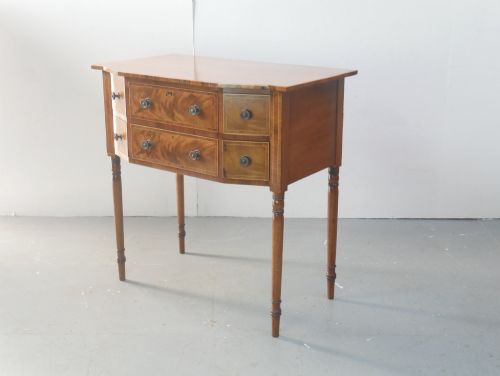
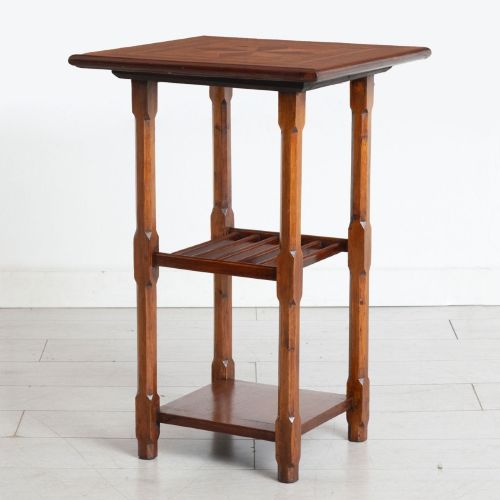
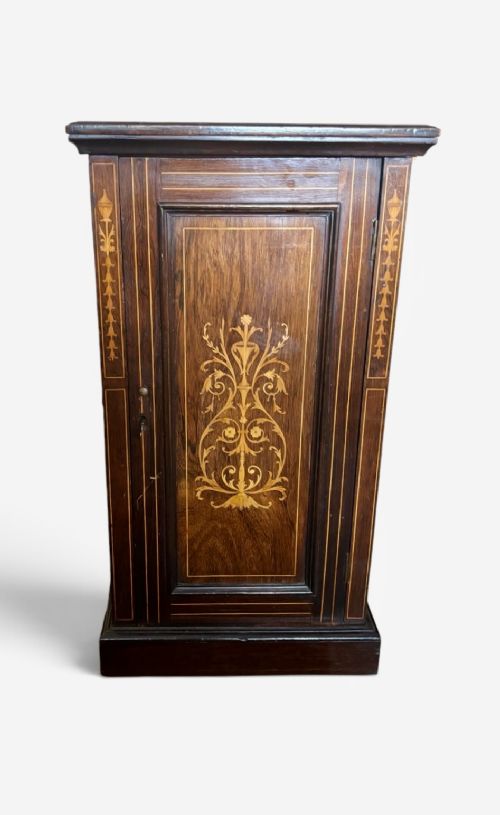
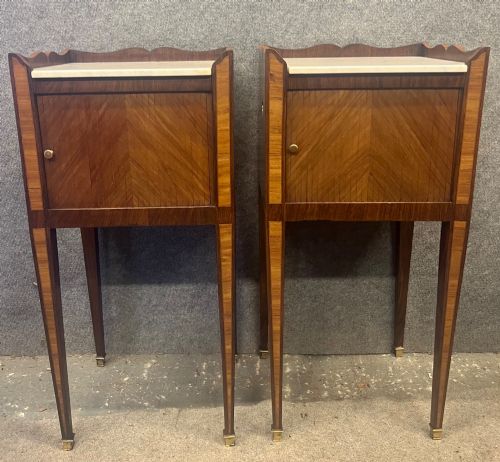
Vintage Inlaid Side Cabinets
These vintage inlaid side cabinets bring together marquetry, timber and brass to hold your evening glass and lamp.
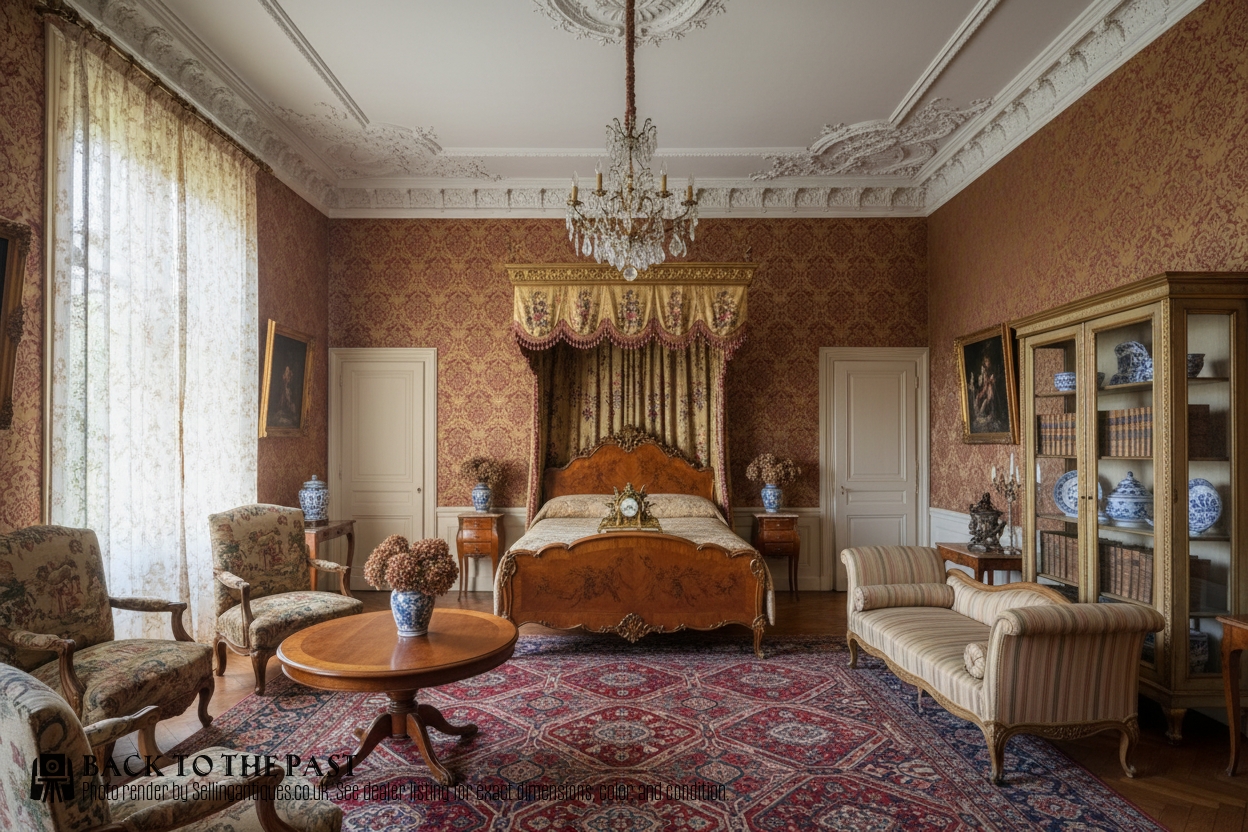
Vintage Inlaid Side Cabinets
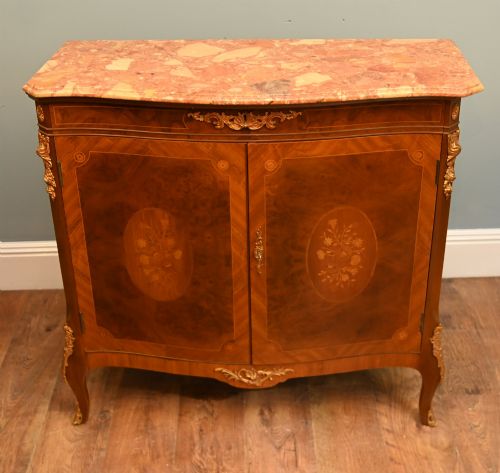
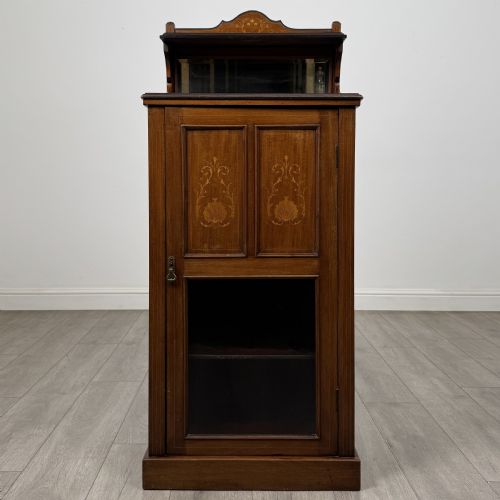
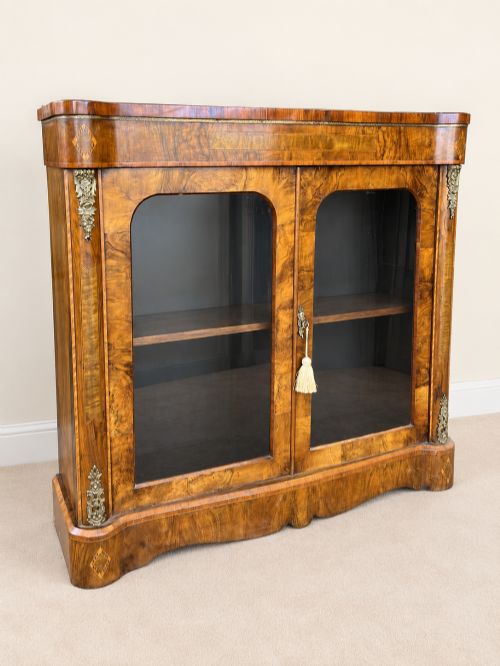
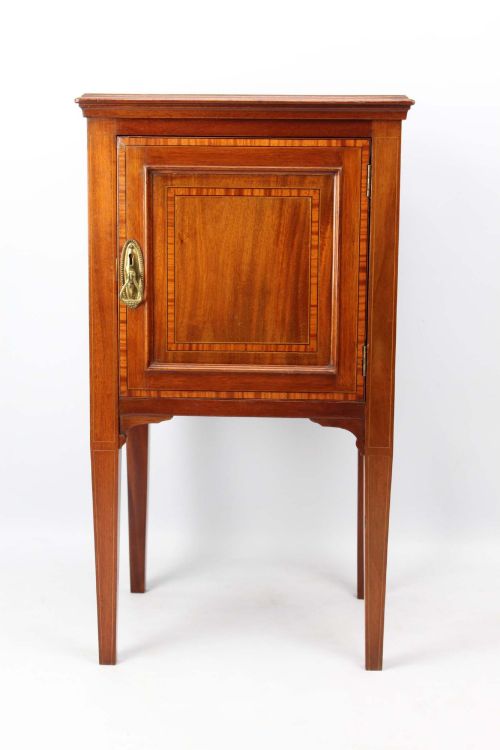
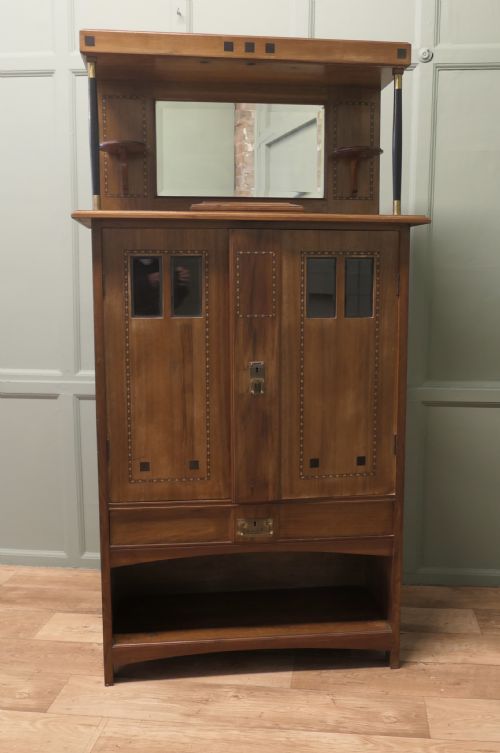
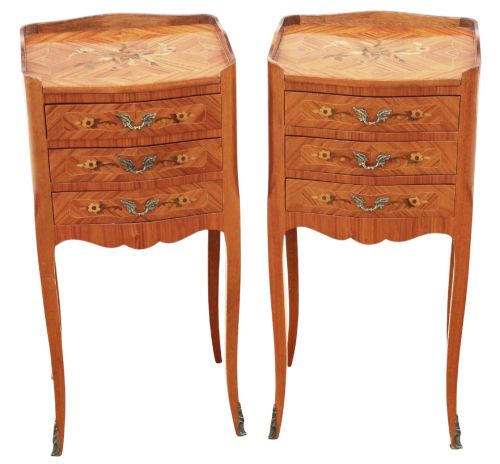
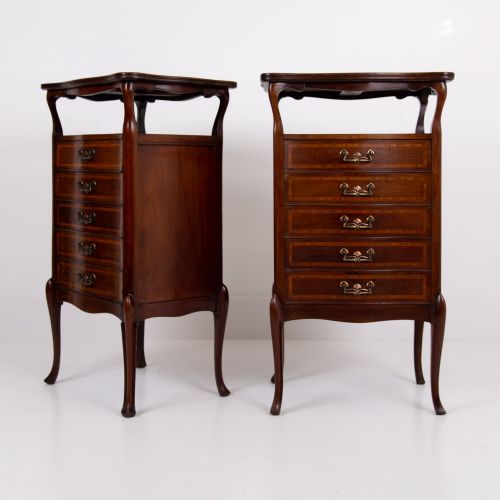
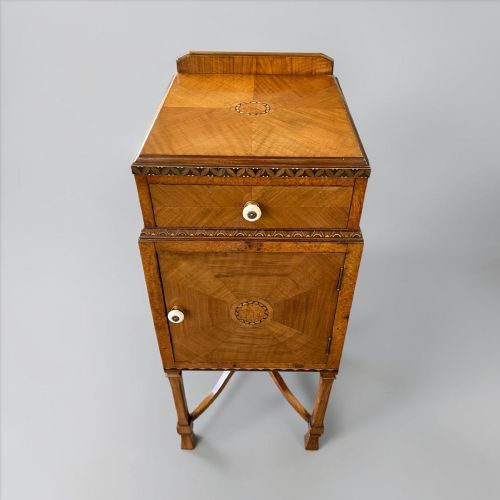
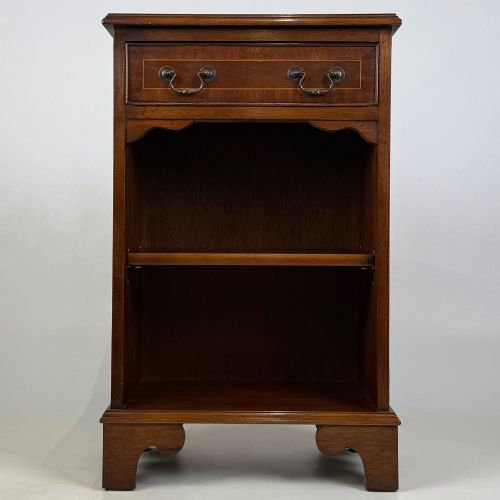
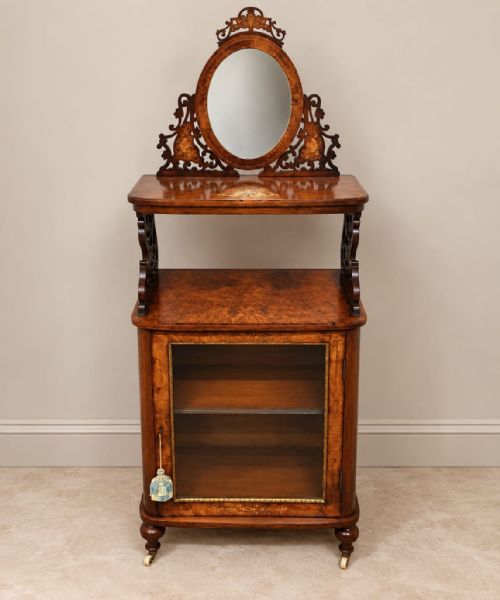
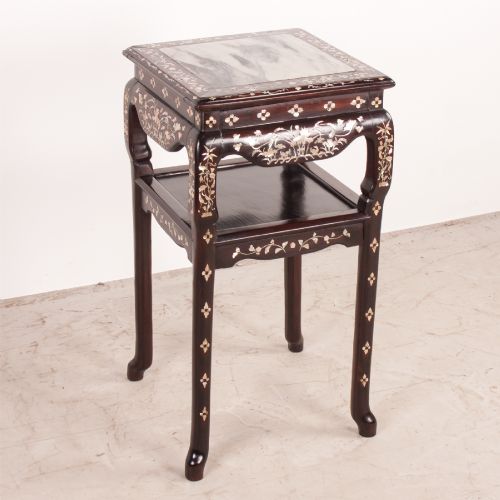
Vintage inlaid side cabinets include bedside tables, commodes, small bookcases and pier cabinets originating across the nineteenth and twentieth centuries. When searching for vintage inlaid side cabinets, collectors frequently encounter Edwardian mahogany pieces and French marquetry designs from the nineteen-twenties and nineteen-thirties.
Form follows function closely across these examples, ranging from narrow lamp tables and bedside chests to drop-leaf work tables and glass-fronted display cases. The selection spans straightforward British utility work alongside ornate continental revival styles rooted in earlier court aesthetics.
Materials and construction
Cabinet makers utilised dense primary timbers including mahogany, walnut, rosewood, satinwood and kingwood as foundations for decorative surface work. Marquetry patterns and contrasting stringing lines were then let directly into the face veneers.
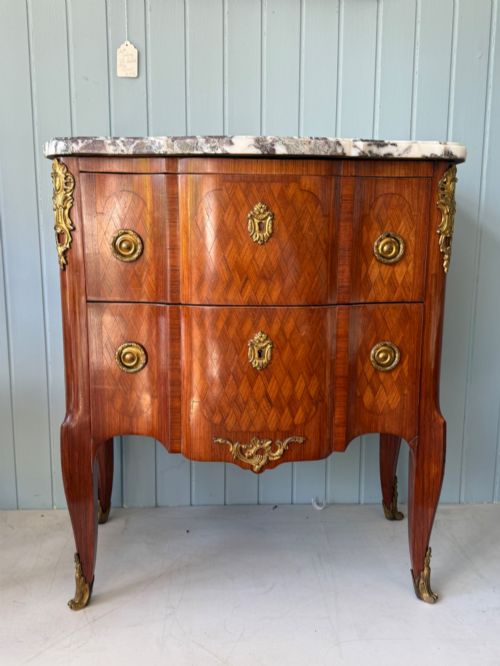
Metal mounts in brass and ormolu strengthen corners and key escutcheons, while inset tops of polished marble provide durable surfaces on French bedside variants. Secondary woods support internal drawer boxes and carcases behind the finished exterior.
Several Edwardian work tables retain their original internal silk sewing baskets beneath the inlaid lids.
Judging execution and finish
Quality rests upon the precision of the timber matching and the crispness of the inlaid floral or geometric motifs. Tighter joints and smoother drawer actions distinguish workshop production from standard commercial output.
The depth of polish and the selection of figured burr veneers dictate the visual weight of the piece. Well-balanced proportions separate finer examples from heavier, utilitarian storage.
Walter Carter Harrods
The Vintage Inlaid Side Cabinets Glossary
- Marquetry
- Decorative patterns formed by fitting together thin slices of various coloured woods and other materials onto a carcase. This technique allows complex pictorial scenes and repeating geometric borders to run smoothly across doors and drawer fronts.
- Ormolu
- Gilded bronze used for decorative mounts and furniture feet. The technique involves applying a mercury and gold amalgam to cast bronze before heating.
- Kingwood
- A dense, heavy tropical timber prized for its rich dark violet-brown tones and distinctive figuring. Makers utilised it extensively in high-grade French cabinet work.
- Demi lune
- A semicircular shape common in commodes and side tables designed to sit flat against a wall. This profile softens room angles while offering practical surface depth.
Vintage Inlaid Side Cabinets: Frequently Asked Questions
Where should I place a side cabinet?
These compact pieces fit easily beside a bed, armchair or sofa to hold lamps, books and daily objects. Their modest footprint allows them to occupy awkward hallways and landings.
Taller display variants suit dining rooms or sitting rooms for china and glassware storage, whilst low commodes function well as lamp tables.
How do I care for inlaid wood?
Keep wooden surfaces away from direct sunlight and strong heat sources to prevent the veneer from drying and lifting. Regular dusting with a dry cloth maintains the finish without moisture damage.
Apply a traditional wax polish sparingly once or twice a year to nourish the grain and protect the delicate inlay work.
Are French and English cabinets different?
French pieces often showcase elaborate floral marquetry, shaped fronts, marble tops and ormolu mounts, leaning towards Louis styles. English examples tend to favour straight lines in mahogany and satinwood with subtle boxwood stringing.
Both traditions employ expert cabinet-making techniques, though continental designs frequently prioritise decorative veneer work over simple timber grain.
What is the difference between a commode and a side cabinet?
A commode typically refers to a low chest of drawers with decorative marquetry or shaped fronts, often topped with marble. Side cabinets encompass a broader category including cupboards, bookcases and open shelving.
Both served similar household storage roles in bedrooms and reception rooms during the nineteenth and twentieth centuries.