

Vintage Inlaid Secretary
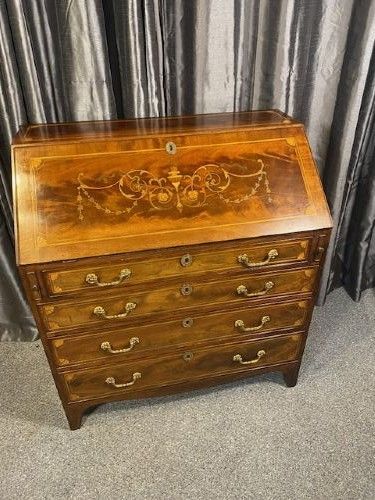
A vintage inlaid secretary brings together fine cabinetmaking and practical workspace, offering fitted drawers and hidden compartments beneath decorative marquetry.
Vintage Inlaid Secretary
When a buyer searches for a vintage inlaid secretary, they encounter a range of writing furniture designed for correspondence and storage, spanning Georgian beginnings through Edwardian revivals.
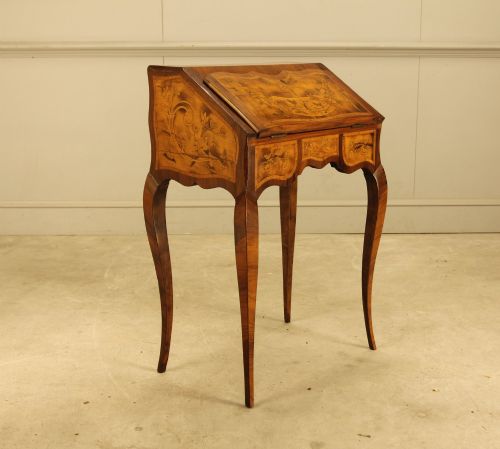
Origins stretch across English workshops and continental makers, incorporating styles from Sheraton Revival to Dutch Baroque.
Materials and construction methods
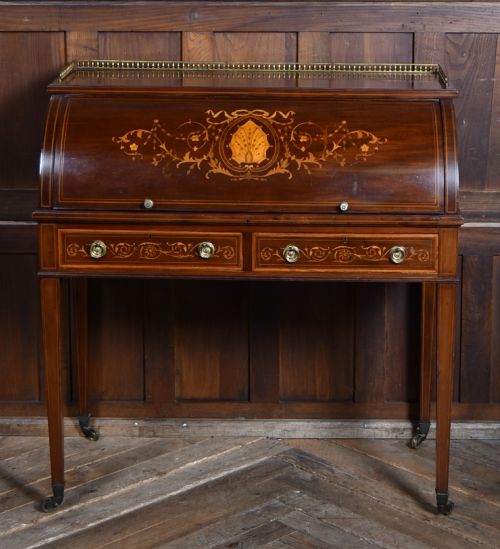
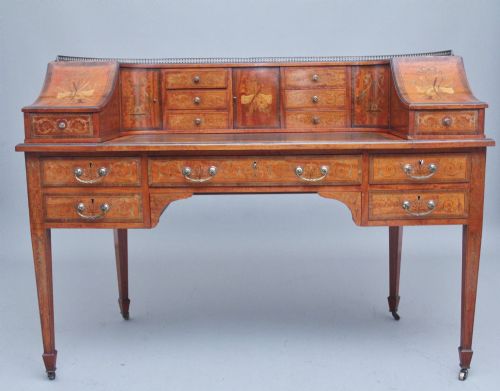
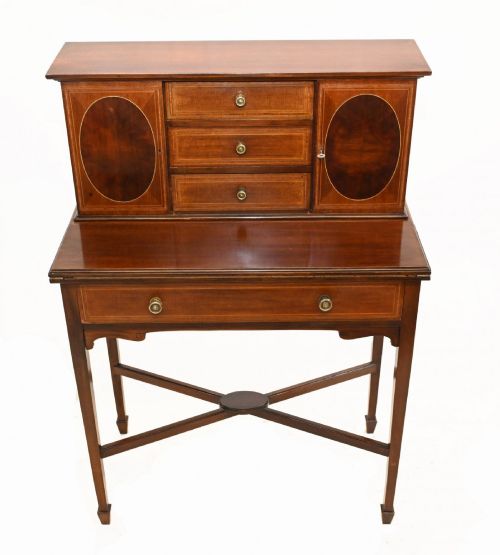
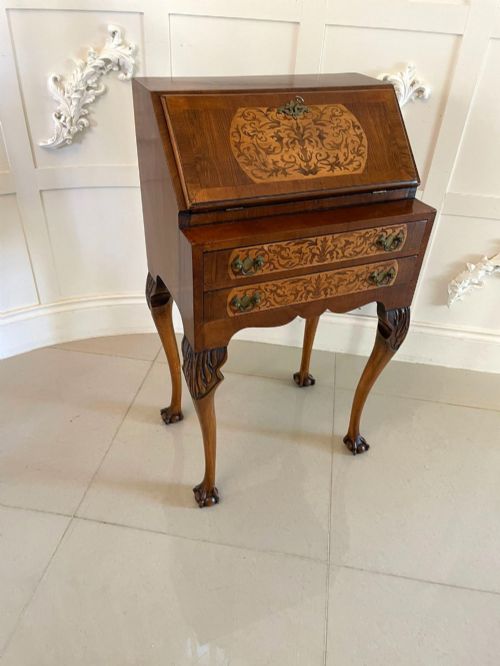
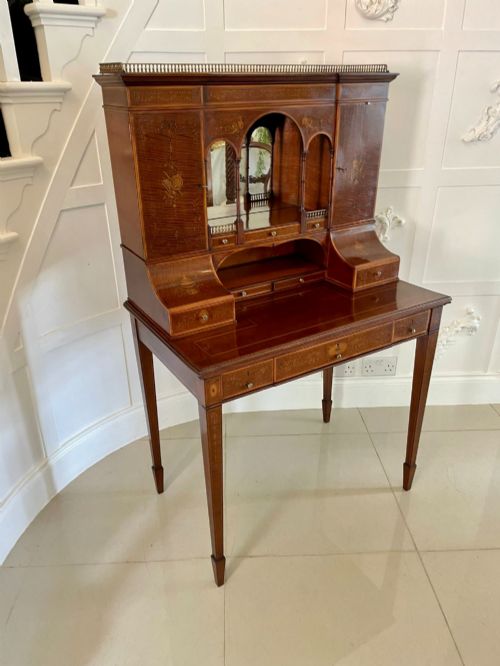
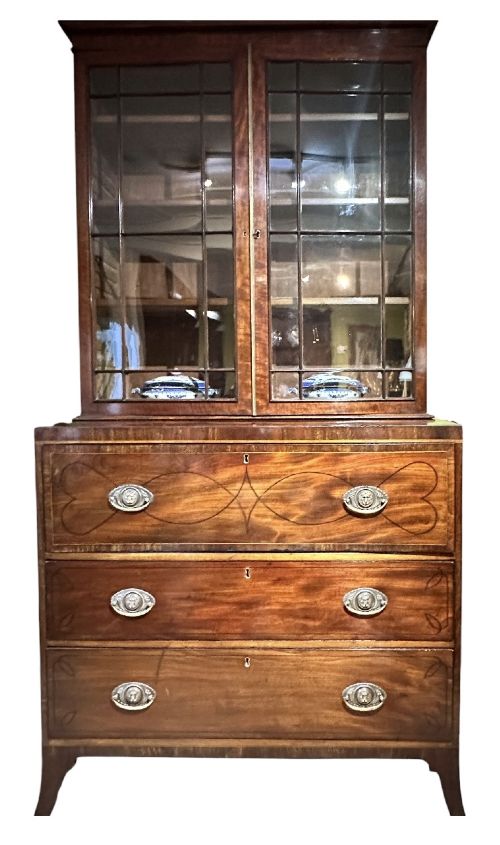
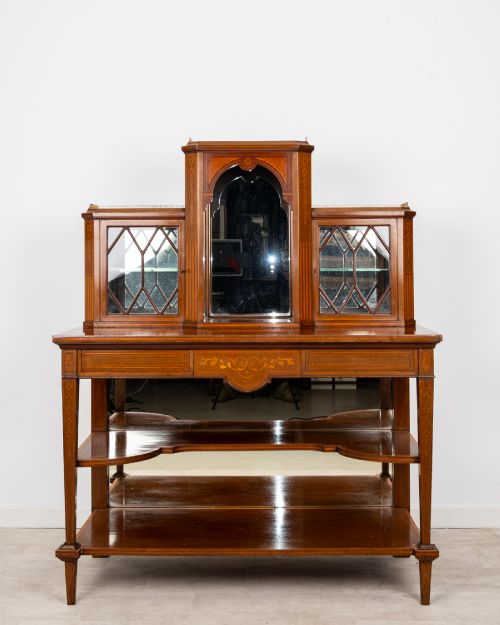
Cabinetmakers built these pieces using solid timbers like mahogany, walnut, and yew, often applying figured veneers and contrasting satinwood inlay to create decorative geometric or floral patterns.
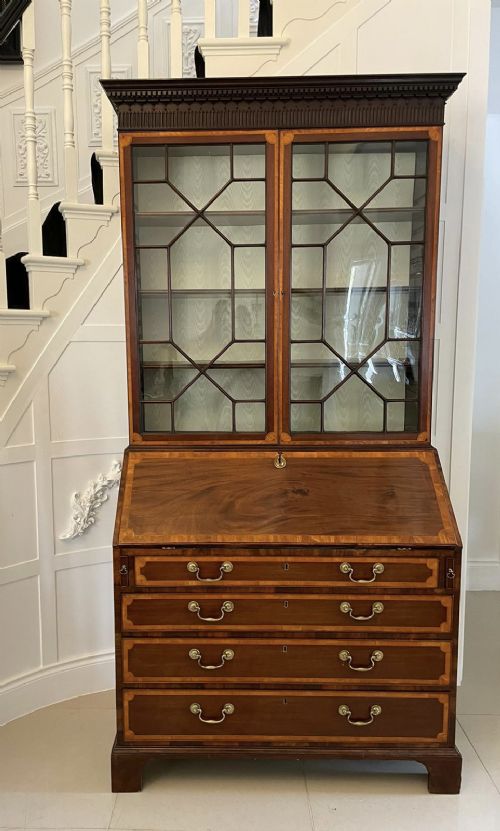
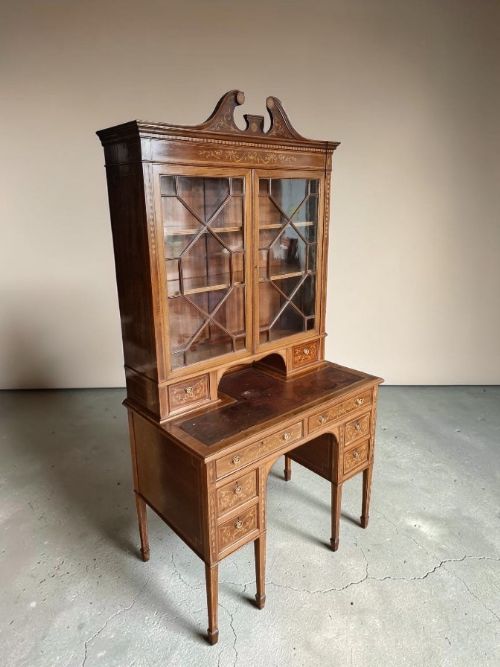
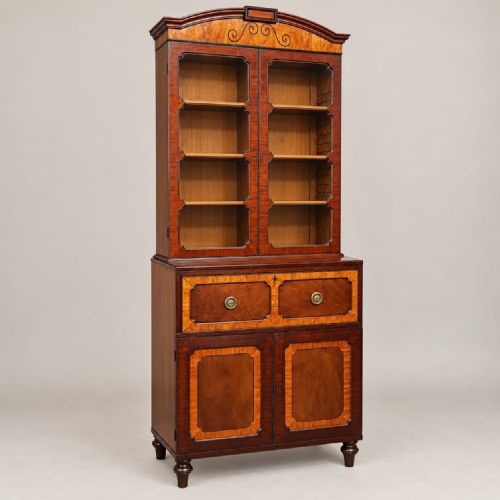
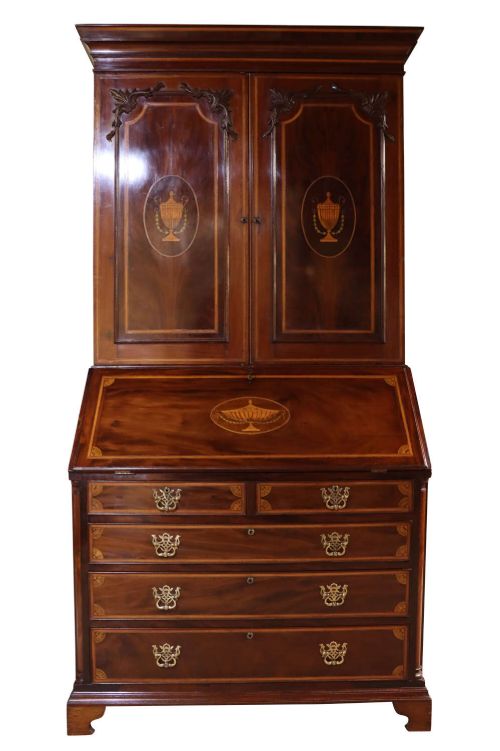
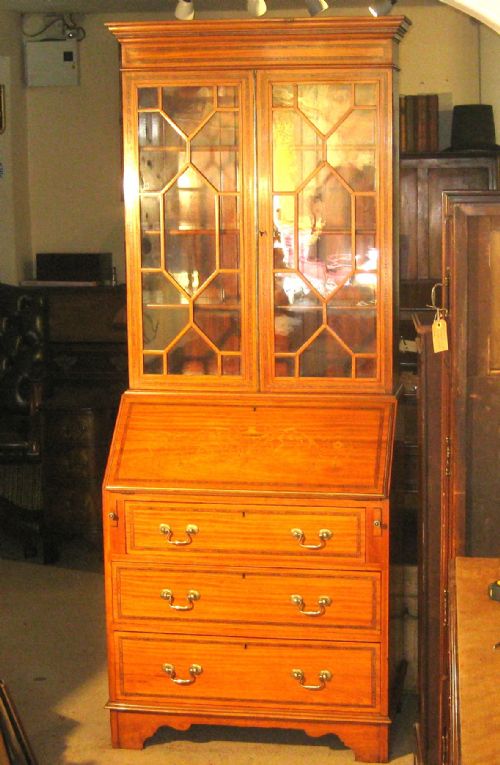
Glazing bars formed delicate astragal patterns on upper bookcase doors, while internal writing compartments relied on precise dovetail joinery for small drawers and pigeonholes.
Vintage Inlaid Secretary Retail Price Guide 2026
Typical asking prices for vintage inlaid secretary among the pieces listed under this phrase on Sellingantiques today, from the lower quarter to the upper quarter. They describe what is for sale here now, not the wider market.
Periods represented span from the eighteenth century through the Edwardian era and the early twentieth century.
Distinctions in craftsmanship
The standard of a vintage inlaid secretary rests on the crispness of the marquetry and the selection of figured timbers, where symmetrical grain alignment elevates the piece.
Superior examples maintain original brass hardware, smoothly operating fall-front hinges, and intact internal fittings without heavy restoration.
Lamb And Co
The Vintage Inlaid Secretary Glossary
- Secretary
- A desk featuring a hinged writing flap that drops down to reveal a fitted interior of small drawers and pigeonholes.
- Marquetry
- The art of applying decorative pieces of veneer to a structure to form intricate pictorial or geometric patterns.
- Astragal
- A moulded bar dividing panes of glass within a cabinet or bookcase door.
- Cylinder desk
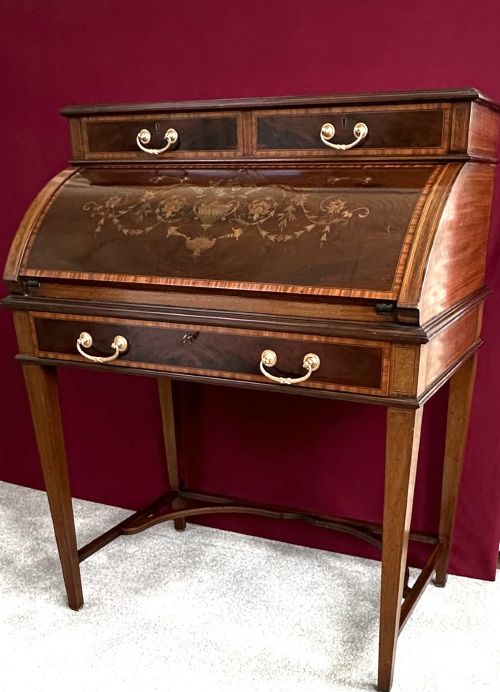
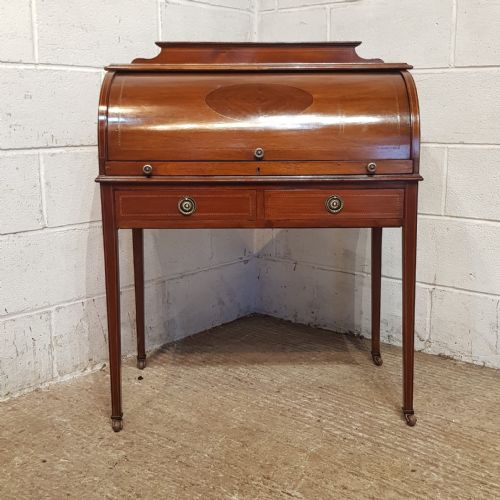
- A writing desk featuring a curved, rolling wooden shutter that conceals the writing surface and interior compartments.
- Bureau bookcase
- A dual-purpose piece combining a lower writing desk with an upper shelving or display cabinet enclosed by doors.
Vintage Inlaid Secretary: Frequently Asked Questions
How do I use a secretary desk?
Lower the fall-front flap to create a stable writing surface, utilising the internal pigeonholes and small drawers for letters and stationery.
Many versions include upper bookcase sections for storing library collections or displaying decorative objects behind glass doors.
What is the difference between a bureau and a secretary?
In British furniture terminology, both terms often describe a writing cabinet with a sloping or folding writing flap.
Regional preferences historically varied the name, though taller combinations incorporating upper shelving frequently use the bookcase designation.
How do I identify a Sheraton Revival piece?
Sheraton Revival furniture borrows classical late eighteenth-century proportions, featuring delicate satinwood inlay, tapered legs, and restrained neoclassical motifs.
These later interpretations date predominantly from the late Victorian and Edwardian periods.
Where should I place a cylinder desk?
Position the desk away from direct sunlight and heat sources to protect sensitive wood veneers and prevent the timber from drying out.
Ensure adequate clearance in front of the piece for the rolling cylinder mechanism and the pulled-out writing slide.