





Vintage Inlaid Dining Chair
A vintage inlaid dining chair brings timber and careful marquetry together around the table, offering a seat rooted in periods from the Georgian era to the Edwardian years.
Vintage Inlaid Dining Chair
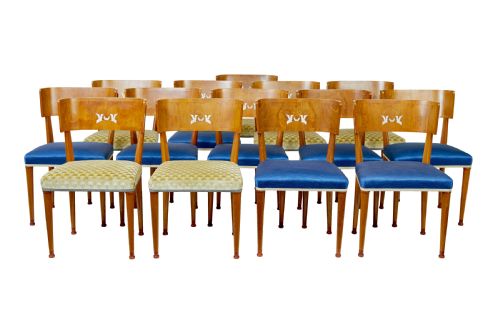
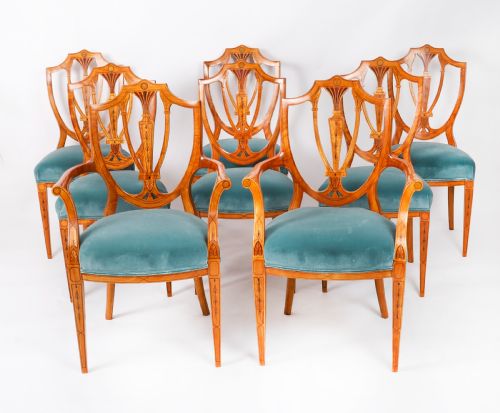
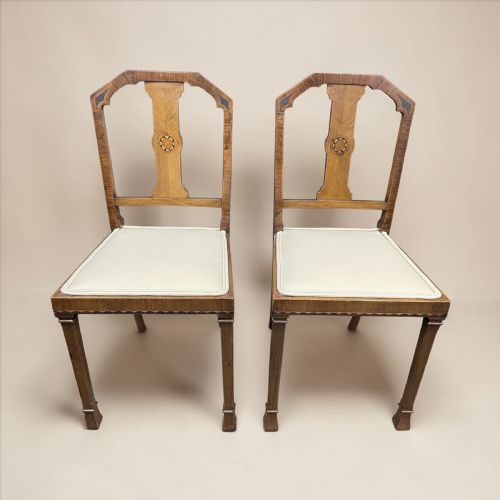
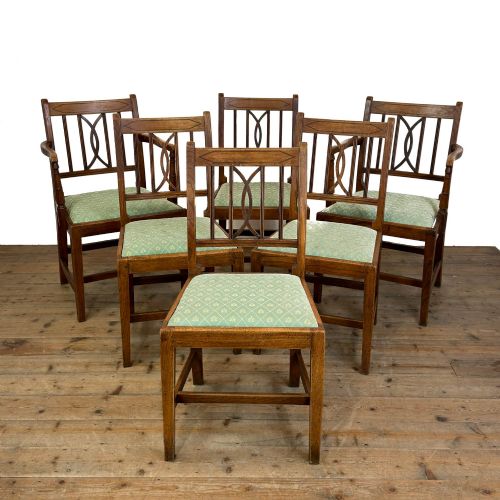
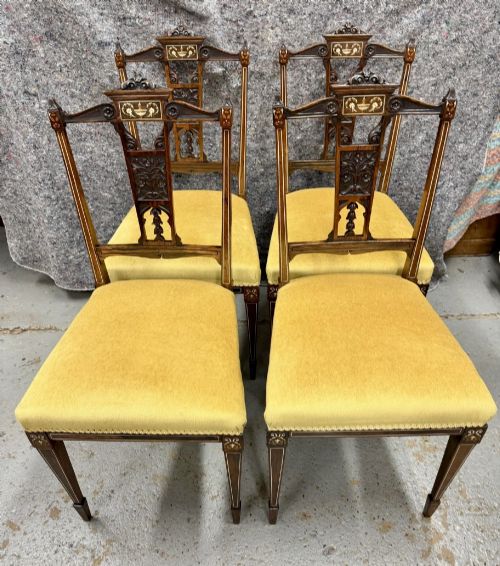
A vintage inlaid dining chair encompasses dining chairs, armchairs, side chairs, salon chairs, and occasional chairs shaped by periods ranging from the Georgian and Regency eras through the Victorian and Edwardian years, up to Art Deco and 1930s designs. Buyers searching for a vintage inlaid dining chair encounter everything from single hall chairs to large matched sets intended for formal dining rooms.
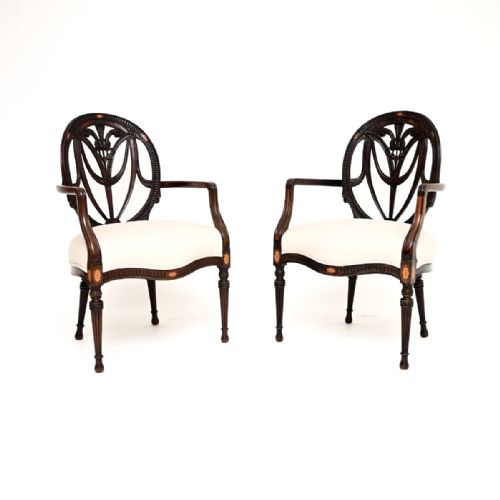
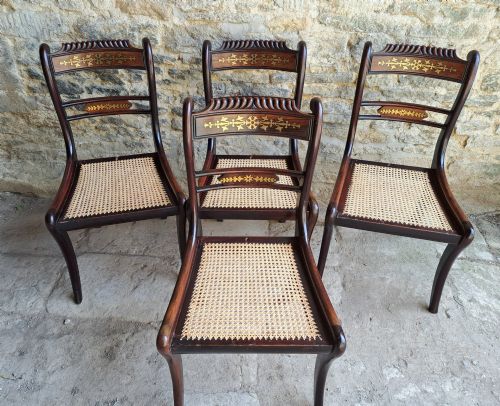
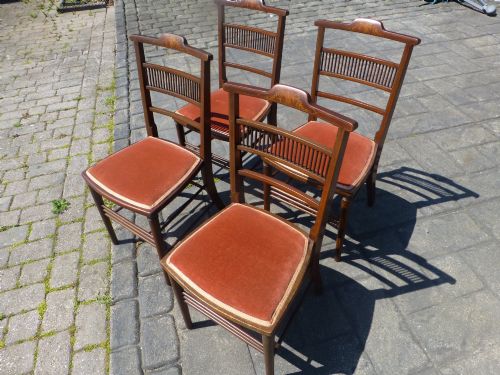
The Edwardian period and the turn of the twentieth century provide many of the examples seen here, often taking the form of mahogany salon chairs and carver armchairs decorated with delicate string inlay. Alongside these lighter Edwardian pieces, earlier nineteenth-century and Regency examples appear, featuring brass inlay set into rosewood, mahogany, or faux rosewood frames.
How they were made
Makers constructed these chairs primarily from hardwoods such as mahogany, rosewood, walnut, satinwood, and oak, often shaping structural frames to support daily use around the table. Timber selection dictated the character of each piece, with dense grain and rich natural colour forming the base for subsequent enrichment.
Wood inlay and contrasting stringing were integrated directly into the timber surfaces, while brass inlay appeared on Regency pieces to create sharp metallic lines against dark woods. Fabric, velvet, and leather upholstery were then applied to seats and elbow pads, completing chairs built for both the salon and the dining room.
Listings feature mahogany, rosewood, satinwood, and oak, alongside brass inlay and fabric upholstery across Georgian, Regency, Victorian, and Edwardian periods.
What varies in quality
The standard of timber preparation and the precision of the inlay separate one chair from another across these periods. Finely cut satinwood and intricate stringing demonstrate disciplined handwork, whereas simpler execution relies on plain wood surfaces without contrasting detail.
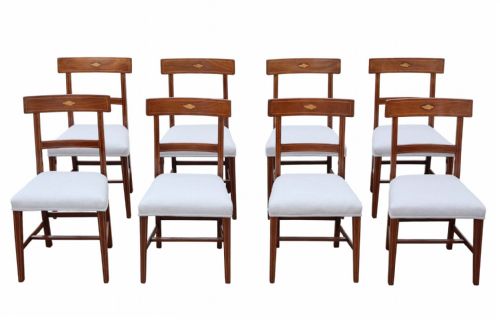
The integrity of the frame construction and the matching of sets dictate the overall standard of surviving seating. Cohesive sets of four, six, or eight chairs maintain a unified silhouette and decorative scheme, while individual salon or hall chairs reveal individual cabinetmaker decisions in their carving and joinery.
Cowtan & Sons·Shoolbred
The Vintage Inlaid Dining Chair Glossary
- Inlay
- The technique of inserting contrasting strips or pieces of wood, brass, or other materials into depressions carved into the primary timber surface to create decorative patterns.
- Carver
- An armchair designed with elbow supports, traditionally placed at the head of a dining table or used singly in a salon.
- Satinwood
- A pale, lustrous hardwood native to tropical regions, frequently used for contrasting stringing and decorative panels on late nineteenth-century and Edwardian furniture.
- Stringing
- Very narrow strips of contrasting wood or light-coloured timber inlaid into the surface of furniture to outline panels, legs, and crest rails.
- Salon chair
- A light, decorative chair designed for entertaining or sitting in a drawing room rather than for heavy daily use at a dining table.
Vintage Inlaid Dining Chair: Frequently Asked Questions
How do I spot an Edwardian inlaid chair?
Edwardian chairs frequently feature light mahogany frames decorated with delicate string inlay and satinwood banding. They often take the form of salon or dining chairs produced around the turn of the twentieth century.
These pieces tend to have lighter proportions than their Victorian or Georgian predecessors, reflecting the refined domestic tastes of the Edwardian era.
Are Regency chairs comfortable for dining?
Regency dining chairs and elbow chairs were built for formal dining rooms of the early nineteenth century. Their solid mahogany or rosewood frames provide sturdy seating, though original upholstery may be firm.
Many buyers retain the structural frames while updating the fabric or leather inserts to suit modern dining comfort.
What is the difference between a side chair and a carver?
A side chair is built without arms, allowing several chairs to sit closely together side by side along the edges of a dining table. A carver includes armrests and was traditionally reserved for the host at the head of the table.
In many antique dining sets, a smaller number of carvers accompanied a larger group of matching side chairs.
How do I mix different wood tones in the dining room?
Mixing wood tones relies on balancing different timber grains and periods within the same space. Mahogany, rosewood, and walnut share warm undertones that allow Edwardian and Regency pieces to sit comfortably together.
Focusing on shared design details, such as inlaid stringing or similar leg shapes, helps tie varied antique chairs into a cohesive room.