



Art Nouveau High Back Chair
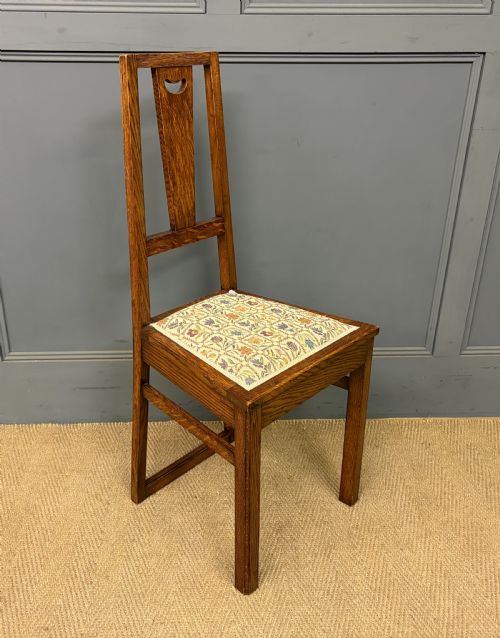
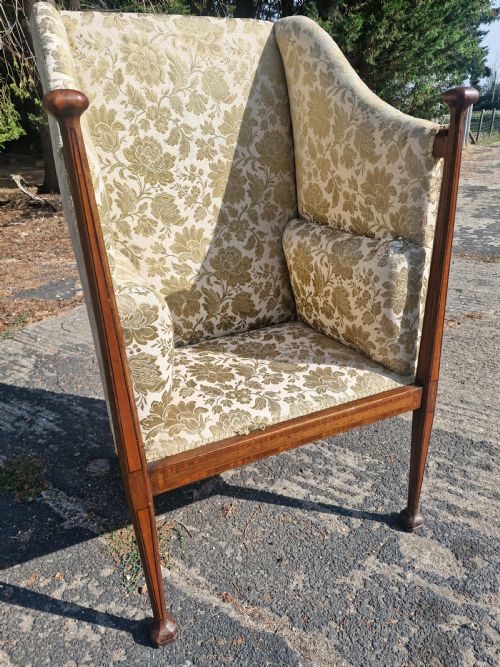
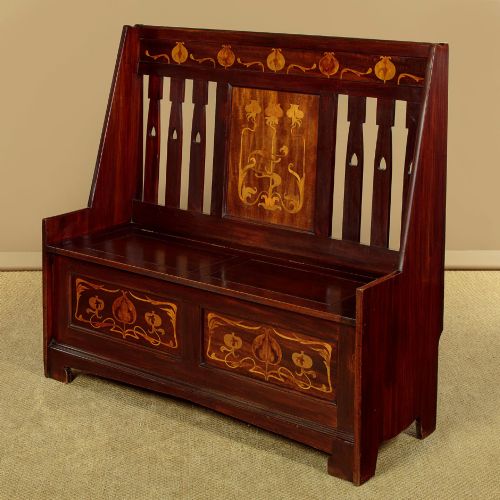
These striking examples of an art nouveau high back chair bring dramatic vertical lines and organic forms directly into your interior.
Art Nouveau High Back Chair
An art nouveau high back chair commands attention through its elongated vertical proportions and characteristic flowing, organic design motifs. When searching for an art nouveau high back chair, you encounter forms ranging from single armchairs and hall seats to dining sets and benches spanning the late Victorian and Edwardian eras.
The pieces appearing on this page encompass various configurations, including solid oak dining sets with slat backs and wavy stretchers, as well as inlaid mahogany armchairs. Makers and workshops from 1890 through 1900 produced these striking seats in walnut, beech, and oak, often featuring upholstered pads or wing fireside formats.
How they were made
Cabinet makers utilised dense hardwoods such as mahogany, oak, walnut, and beech to construct the robust frames required to support such elevated backrests. Joinery methods of the period ensured structural integrity despite the dramatic vertical extension of the stiles.
Decoration relied heavily on contrasting wood inlay, boxwood details, and carved organic splats rather than applied ornamentation. Upholstery materials included velvet, damask, and standard fabric pads secured to the seats and back panels.
Art Nouveau High Back Chair Retail Price Guide 2026
Typical asking prices for art nouveau high back chair among the pieces listed under this phrase on Sellingantiques today, from the lower quarter to the upper quarter. They describe what is for sale here now, not the wider market.
Listings feature periods spanning 1890, 1900, Victorian, and Edwardian, utilising mahogany, oak, walnut, beech, brass, and damask upholstery.
What varies in quality
The standard of design execution and timber selection separates simpler utility seating from finer workshop productions. Better examples display harmonious proportions where the elongated backrest integrates seamlessly with the seat frame.
Craftsmanship shows in the precision of the wood inlay, the crispness of any carved splats, and the integrity of the joinery along the tall uprights. The choice of primary timber, from standard beech to figured mahogany or golden oak, dictates the overall refinement of the piece.
James Shoolbred & Co.·Liberty & Co·Louis Majorelle
The Art Nouveau High Back Chair Glossary
- High back
- A chair featuring an elongated backrest that extends significantly above the seat level. This proportion provides a dramatic visual anchor in a room.
- Slat back
- A backrest constructed from vertical wooden slats rather than a solid panel. These often incorporate gentle curves typical of the period.
- Wood inlay
- Pieces of contrasting timber fitted into recesses within the primary wood surface to create decorative patterns. Boxwood was frequently utilised for this purpose on mahogany frames.
- Settle
- A wooden bench featuring a high back designed to block draughts, often incorporating enclosed storage beneath the seat. They served practical seating roles in hallways or living spaces.
- Stretcher
- A horizontal bar connecting the legs of a chair to provide structural rigidity. Some period variations feature distinctive wavy profiles.
Art Nouveau High Back Chair: Frequently Asked Questions
How do I use a high back chair today?
These tall seats work exceptionally well as statement pieces in hallways, studies, or bedrooms where their vertical lines can be fully appreciated. Dining versions function practically around a table while adding architectural interest to a dining room.
Ensure you measure your ceiling height and clearance before placing a tall armchair in a smaller room, as the extended stiles demand visual space.
Are these chairs comfortable for daily sitting?
Most period examples provide firm support, particularly the upholstered armchairs and fireside models designed for relaxation. Dining variants feature upright angles intended for posture during meals.
Upholstered sections can be modernised or restored with appropriate period-style fabrics like damask or velvet to suit personal comfort preferences.
What woods were used for these chairs?
Makers predominantly utilised oak, mahogany, walnut, and beech depending on the specific regional style and workshop tradition. Golden oak frequently appears alongside contrasting boxwood inlay.
The choice of timber often indicates the origin, with rich mahogany favouring refined parlour pieces and sturdy oak suiting Arts and Crafts dining settings.
How do I distinguish Edwardian from Victorian pieces?
Victorian examples tend to feature darker, heavier mahogany construction with ornate carved details, reflecting transitional tastes from the late nineteenth century. Edwardian pieces often embrace lighter oak or beech frames with cleaner geometric or organic lines.
Examining the construction methods and the specific integration of the inlay helps confirm the manufacturing period.