
Vintage Inlaid Desk
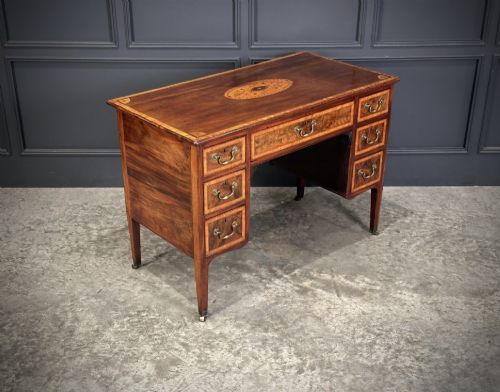
A vintage inlaid desk brings together traditional cabinet-making and detailed surface ornament to provide a practical workspace.
Vintage Inlaid Desk
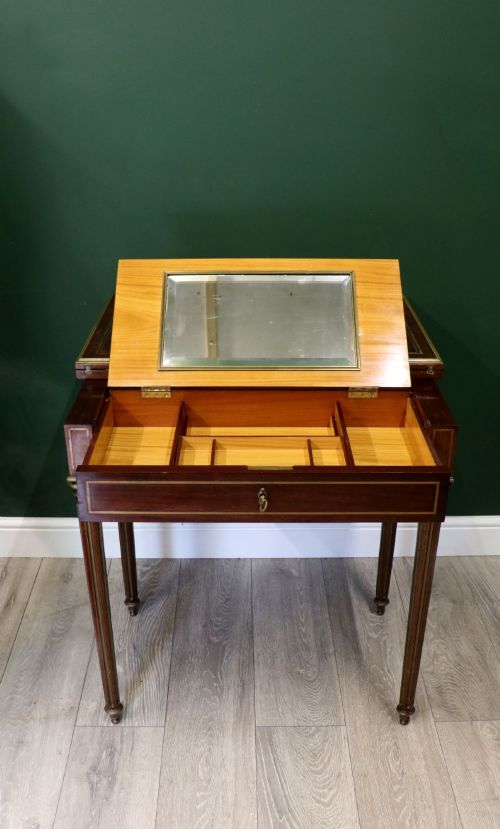
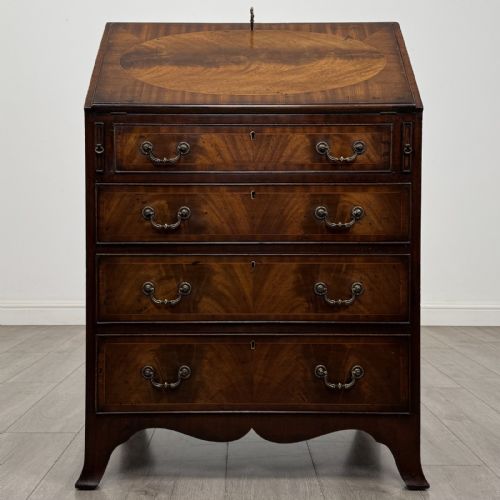
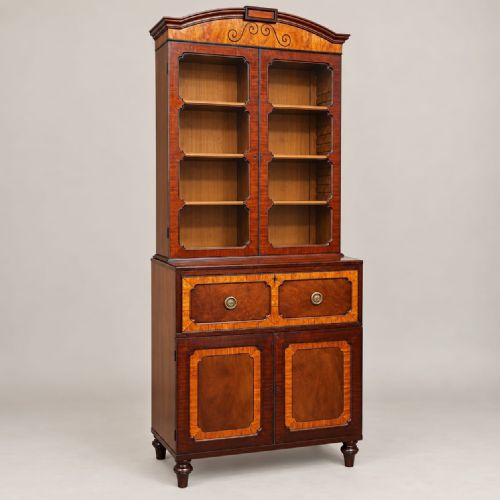
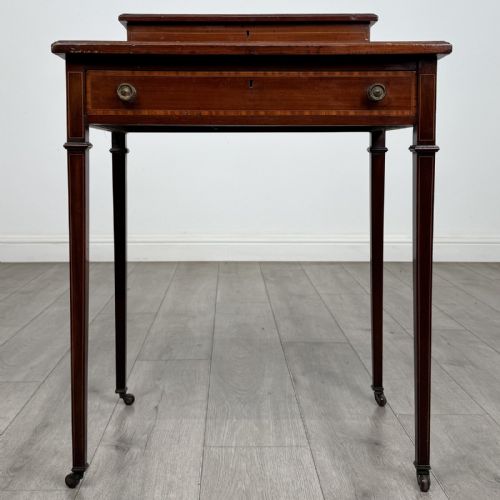
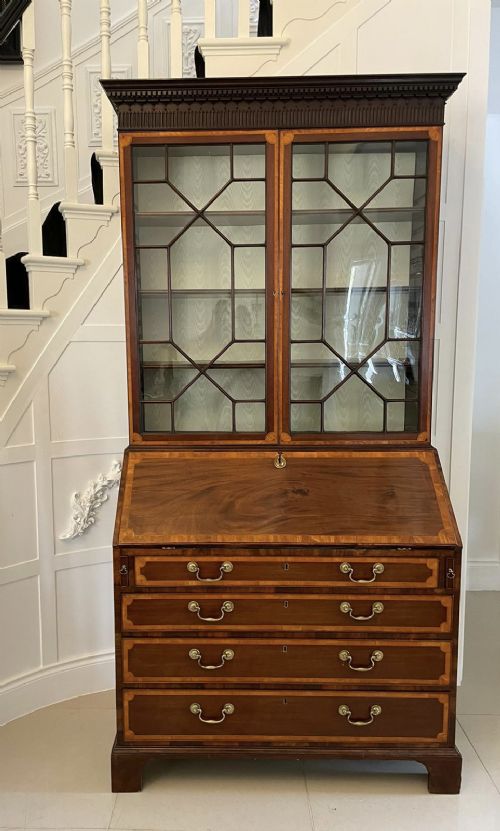
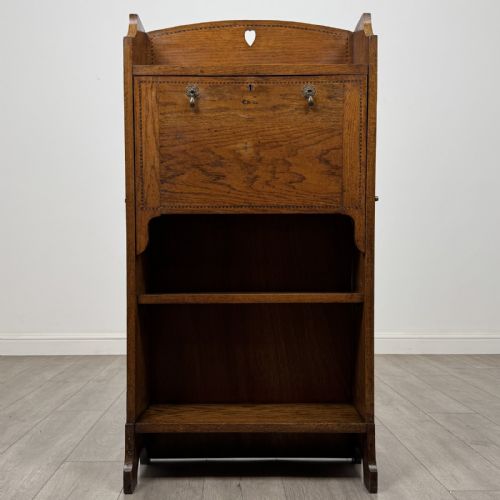
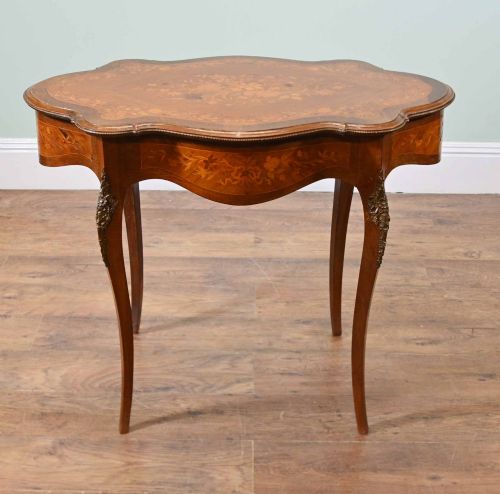
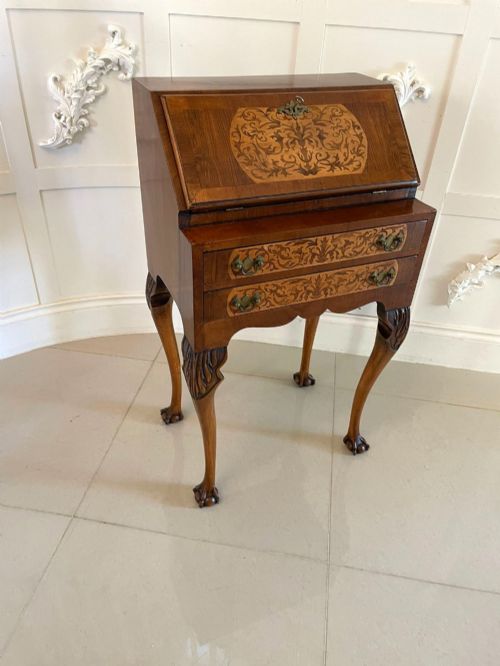
A vintage inlaid desk is a writing surface decorated with contrasting woods, mother-of-pearl, or metal set flush into the primary timber. Buyers searching this phrase encounter forms ranging from compact writing tables and kneehole pedestals to kidney shapes and bureau bookcases.
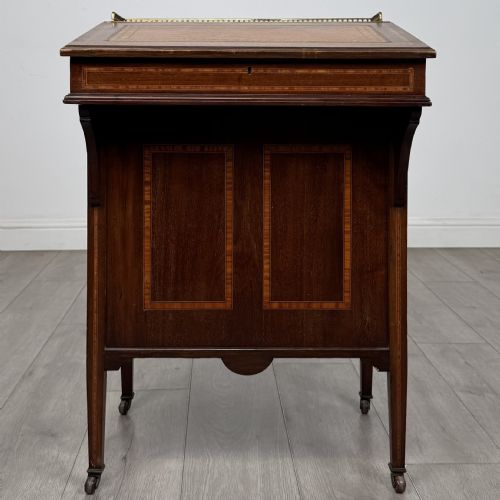
The Edwardian period supplies a large share of the examples seen here, often executed in mahogany or satinwood with delicate bandings. Alongside these, nineteenth-century and Georgian pieces appear, offering deeper timber patination and heavier proportions.
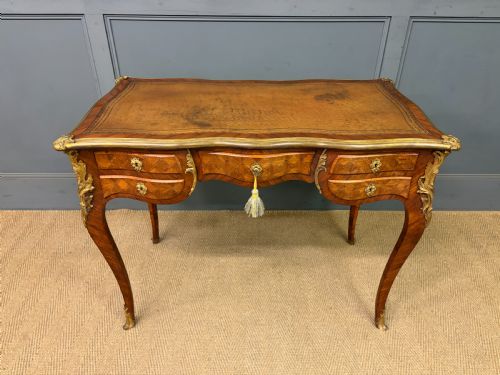
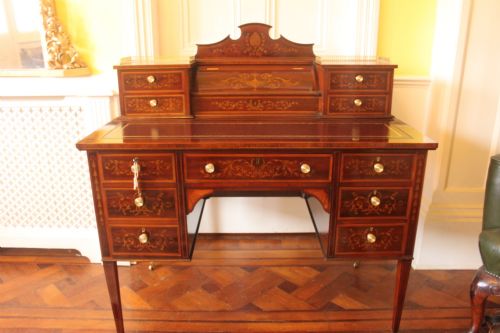
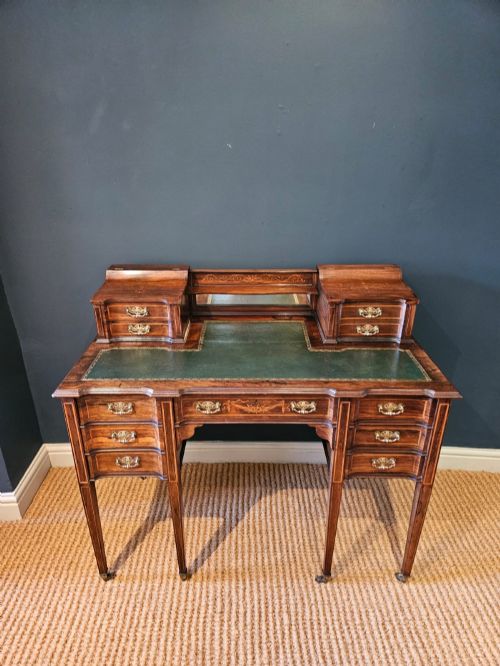
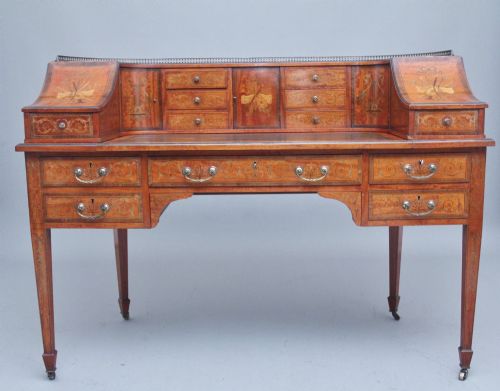
Makers utilised various formats, including freestanding centre tables, bureau plats, and Carlton house desks with fitted superstructures. Each variation provides a distinct arrangement of drawers, pigeonholes, and writing surfaces tailored to domestic study.
Materials and construction methods
Construction relies heavily on timbers such as mahogany, walnut, rosewood, and satinwood, selected for grain movement and colour contrast. Artisans cut recesses into solid or veneered surfaces to fit delicate stringing and pictorial marquetry.
Surface details incorporate brass fittings, ormolu mounts, and leather writing inserts tooled with gilt borders. Carved elements and turned supports provide structural framing for the decorated writing boxes and pedestals.
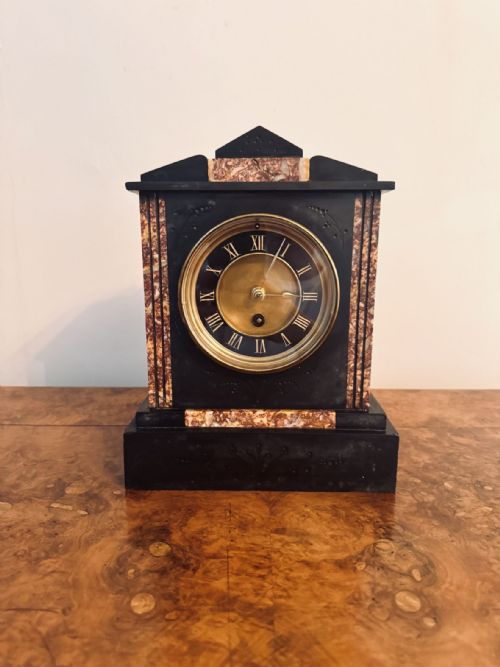
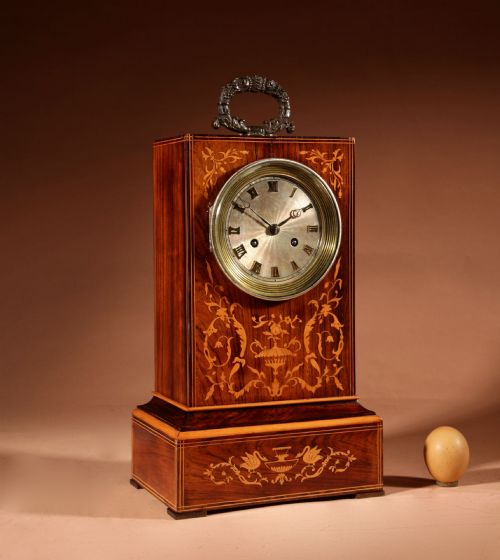
Some miniature grandfather clocks share desk space with full-sized libraries.
Distinguishing quality across examples
Quality rests on the precision of the joinery and the tightness of the timber joints where the inlay meets the primary wood. Superior items maintain flush surfaces without shrinkage gaps around the contrasting motifs.
Fitted interiors, original hardware like brass handles, and intact leather skivers elevate an example above standard utility pieces. The depth of hand-rubbed polish and the crispness of any applied brass or ormolu further separate workshop tiers.
Edwards & Roberts
The Vintage Inlaid Desk Glossary
- Marquetry
- The art of creating decorative patterns on furniture using thin veneers of various timbers. This technique produces pictorial or geometric scenes across the desk top.
- Satinwood
- A durable hardwood with a lustrous yellowish grain used extensively for banding and cabinet fronts. It provides a bright contrast against darker timbers like mahogany.
- Carlton house desk
- A form of writing table featuring a curved superstructure of small drawers and compartments around the back and sides. It originated in the late eighteenth century and continued into the Edwardian era.
- Bureau plat
- A flat-topped writing table, typically French in origin, finished on all sides so it stands away from walls. These often incorporate leather writing surfaces and ormolu mounts.
- Stringing
- Thin strips of contrasting wood inlaid into grooves on table tops and drawer fronts. This linear detail defines the edges and panels of the desk structure.
Vintage Inlaid Desk: Frequently Asked Questions
What is a vintage inlaid desk used for?
These desks serve as functional writing surfaces, providing a dedicated space for correspondence, paperwork, and study within a home.
Many examples include integrated drawers, pigeonholes, and fitted interiors to organise stationery and small documents.
How do I identify an Edwardian desk?
Edwardian desks frequently feature light mahogany or satinwood timbers combined with delicate floral or geometric stringing.
They often reflect Sheraton Revival influences, displaying lighter proportions and refined tapered legs compared to heavier Victorian pieces.
Are these desks suitable for daily work?
Many vintage writing tables and pedestal desks provide adequate surface area and knee clearance for modern laptops and paperwork.
Leather or skiver writing panels offer a durable surface for writing, though antique finishes require careful daily maintenance.
How do I care for inlaid wood surfaces?
Maintenance involves applying quality beeswax and polishing with a soft cloth to protect the timber grain and the inlay.
Keep desks away from direct sunlight and heat sources to prevent the veneers from drying out and lifting.