





Vintage Inkstand
A vintage inkstand brings a tangible sense of ritual to the desk, holding inkwells, pens, and sanders in fitted trays of brass, glass, or polished wood.
Vintage Inkstand
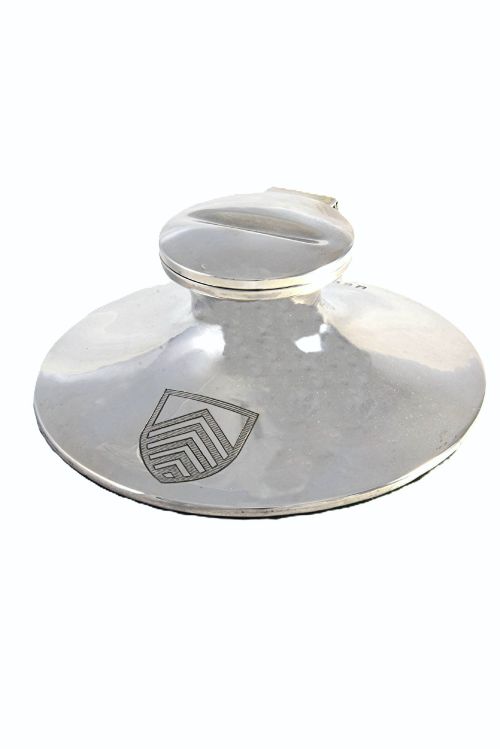
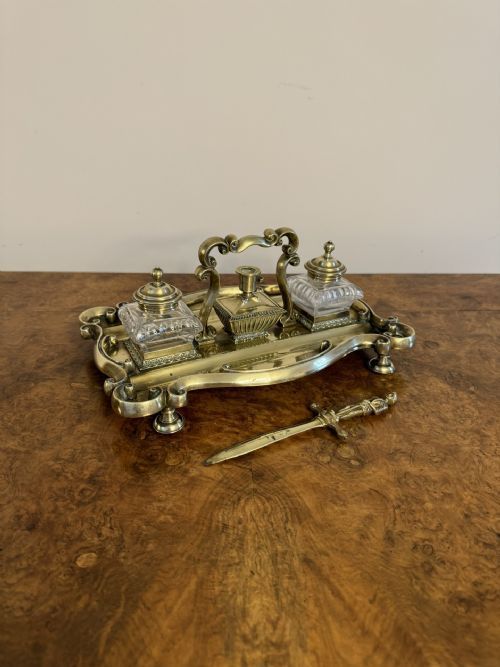
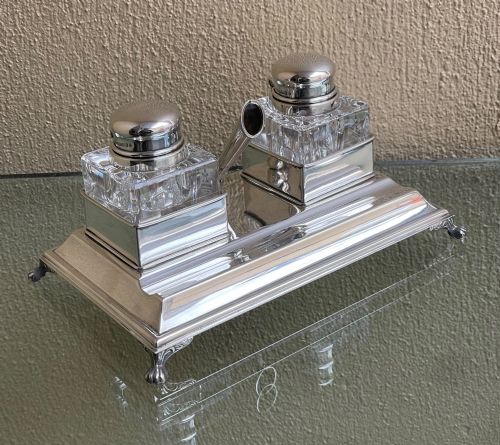
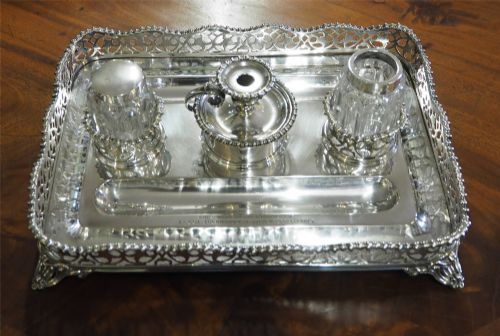
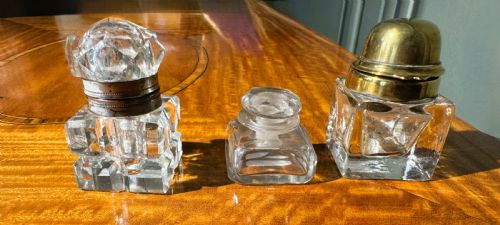
When searching for a vintage inkstand, a buyer encounters desk accessories spanning the nineteenth and twentieth centuries, from simple glass wells to elaborate multi-piece sets. The items on this page range from compact single glass receptacles to substantial double inkstands fitted with pen rests and matching candlesticks.
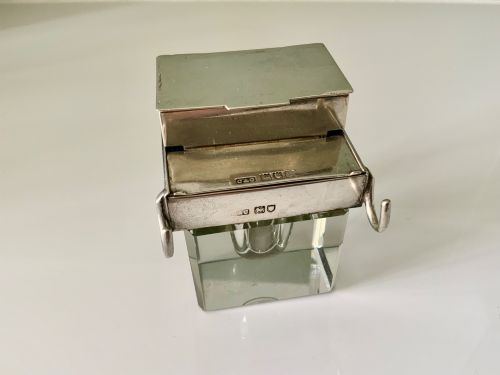
Victorian and Edwardian iterations dominate, frequently combining heavy cut glass with brass, silver plate, or solid sterling silver mounts. Form follows function closely here, with trays incorporating dedicated channels for dipping pens and small compartments for stamps or wax.
Materials and Construction
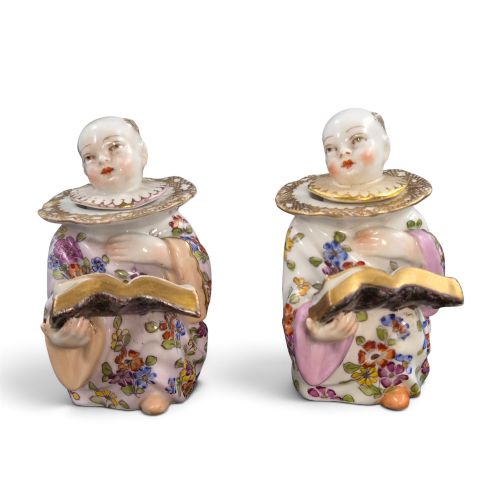
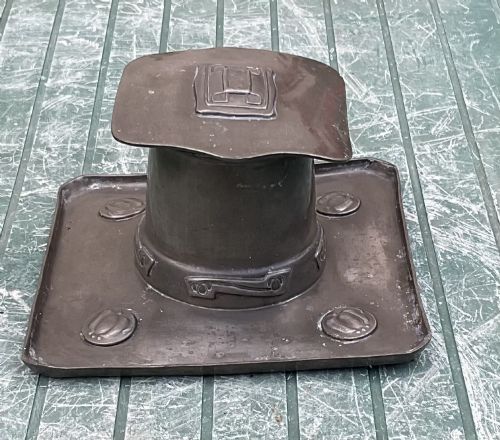
Maker materials divide between hardstones, metals, and ceramics, utilising heavy cast brass, spun pewter, and sterling silver alongside carved walnut, coromandel, and papier-mâché. Cut glass and heavy ceramic bodies provide the stable weight required to prevent tipping during use.
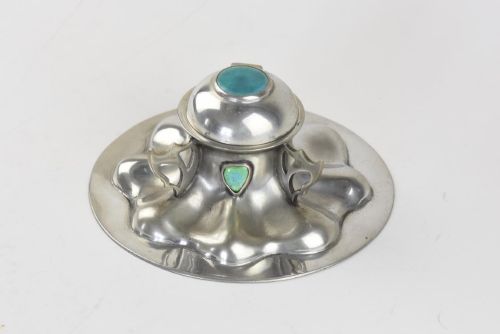
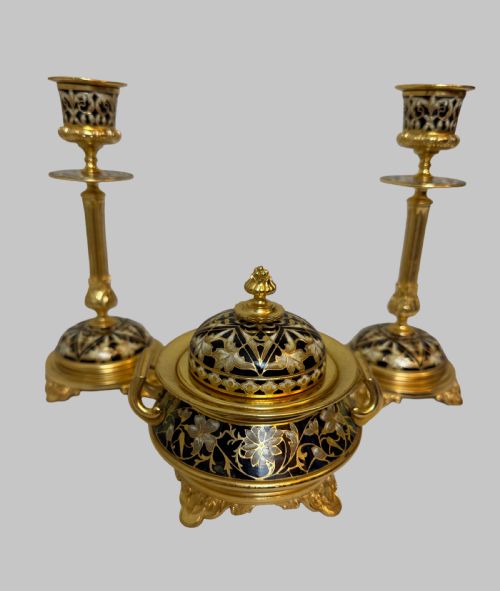
Decorative techniques recorded across these pieces include champlevé enamelling, parcel-gilding, hand-painted floral motifs on porcelain, and the insertion of contrasting cabochons such as Ruskin pottery into pewter frameworks.
Vintage Inkstand Retail Price Guide 2026
Typical asking prices for vintage inkstand among the pieces listed under this phrase on Sellingantiques today, from the lower quarter to the upper quarter. They describe what is for sale here now, not the wider market.
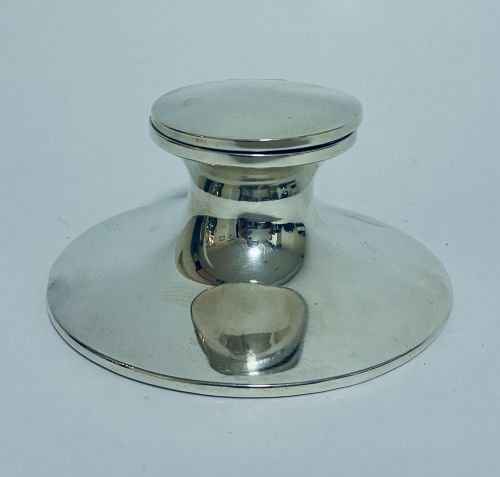
The selection includes specialised forms such as capstan inkwells, novelty bell inkwells, and double-sided desk sets designed for use across large tables.
Evaluating Craftsmanship
Quality rests on the integrity of the fitted components, the weight of the metal or stone base, and the crispness of any cast ornament. Superior examples feature well-fitting hinged lids with sound collars that protect the glass inserts.
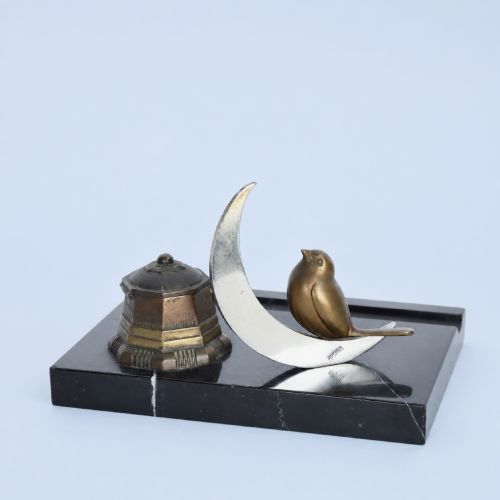
The choice of secondary materials marks out better pieces, such as the inclusion of heavy-gauge sterling silver, genuine hardstone inlay like Ashford marble or lapis lazuli, and undamaged cut-glass reservoirs with matching facets.
Whitefriars·Edmé Samson·Archibald Knox Liberty Tudric·William Hutton·Elkington·Walker And Hall·Harrods·WMF·Marson And Jones
The Vintage Inkstand Glossary
- Capstan inkwell
- A desk accessory shaped like a ship's capstan, typically tapering inward from a wide base to a smaller top with a hinged lid. This form provides exceptional stability on a sloping surface.
- Pounce pot
- A small shaker container used to sprinkle powdered sand or cuttlefish bone over freshly written ink to speed up drying. It pairs closely with inkwells on writing desks.
- Desk tidy
- A broader stationary organiser that incorporates one or more inkwells alongside slots for envelopes, blotting paper, and pens. These larger pieces anchor the writing surface.
- Faience
- Tin-glazed earthenware produced in various European centres, particularly noted in blue and white Dutch Delft inkstands. The glaze provides a smooth white ground for painted decoration.
- Ormolu
- Gilded bronze mounts applied to furniture and desk accessories during the nineteenth century. The technique involves coating bronze in a mercury-gold amalgam and heating it.
Vintage Inkstand: Frequently Asked Questions
What is an inkstand?
An inkstand is a desk accessory comprising a tray or stand fitted with one or more inkwells, often accompanied by pen rests, stamp boxes, and pounce pots.
Historically placed in studies and libraries, it gathered all the implements required for writing by hand into a single portable unit.
How do I date a metal inkstand?
Dating relies on stylistic markers and assay marks, with Victorian pieces often displaying ornate cast brass or heavy walnut construction.
Later Edwardian and George V examples frequently incorporate sterling silver mounts stamped with specific date letters and city hallmarks.
Are glass inserts original?
Original glass inserts fit snugly within the collars and match the period cut or mould style of the outer stand.
Replacement liners are common due to breakage over time, though matched antique glass preserves the integrity of the piece.
How do I use a vintage inkstand today?
Many collectors use these pieces to hold fountain pens, paperclips, or desk trinkets rather than functional wet ink.
If filled with modern ink, glass inserts should be cleaned regularly to prevent staining and corrosion of surrounding metal collars.