

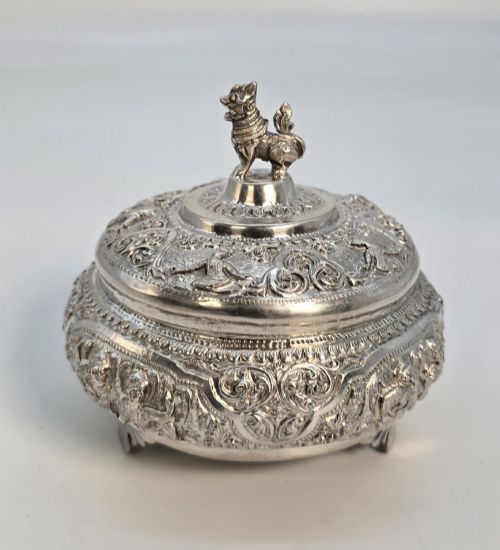


Vintage Indian Silver
Vintage Indian silver pieces bring ornate craftsmanship and intricate surface work into daily interiors through boxes, bowls, and trays.
Vintage Indian Silver
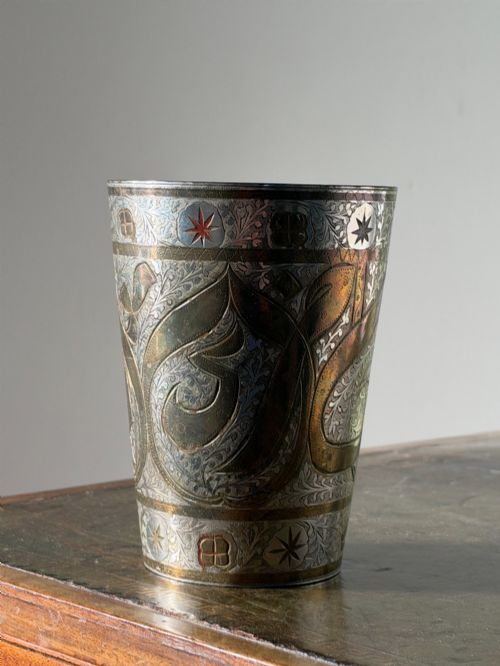
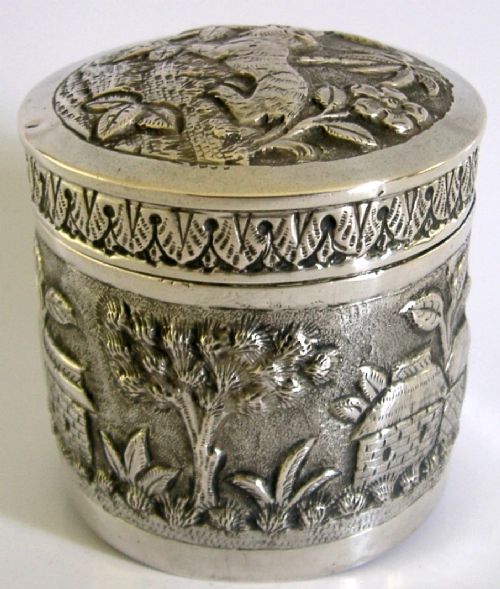
When buyers search for vintage indian silver, they encounter a diverse range of domestic and decorative objects spanning the nineteenth and twentieth centuries. The selection includes trinket boxes, tea caddies, presentation trophies, and decorative bowls reflecting regional styles such as Anglo-Indian, Indo-Persian, and Rajasthani Tribal.
Most items on this page date from the nineteenth century through the 1940s, encompassing both colonial adaptations and traditional indigenous forms. Common practical vessels include betel nut containers, pandan boxes, and card cases alongside purely decorative presentation pieces.
Materials and Working Techniques
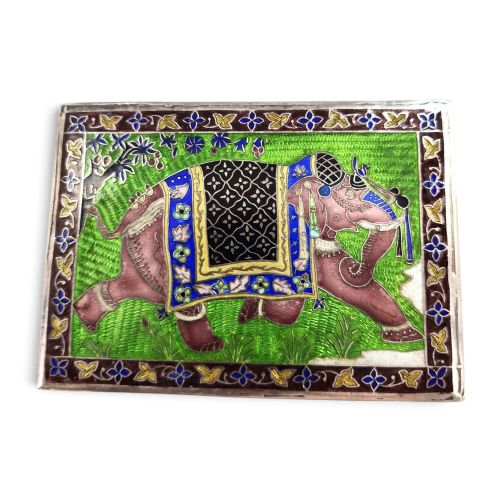
The objects recorded here utilise solid silver, sterling silver, and silver plate, frequently combined with base metals such as copper, brass, and white metal. Enamel accents, carved wood elements, and wirework details also appear across various boxes and dishes.
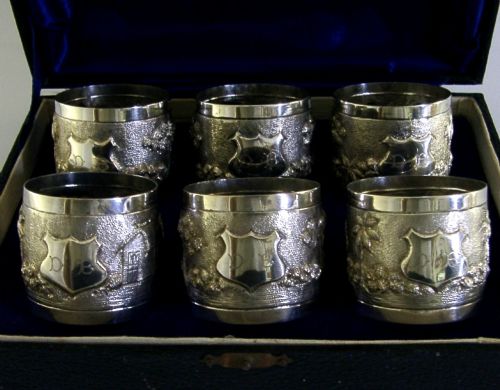
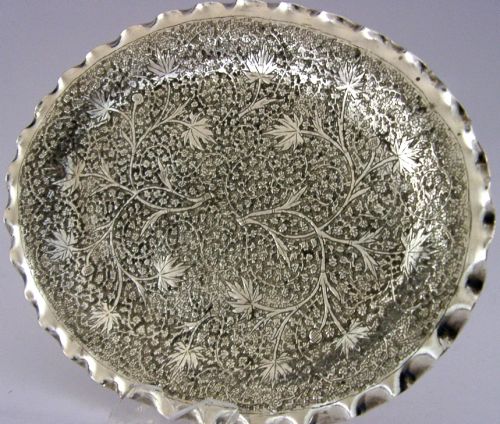
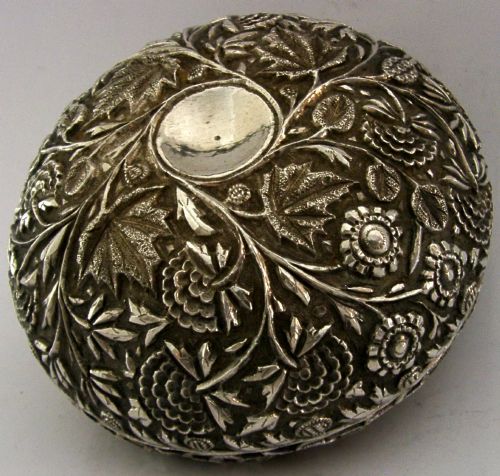
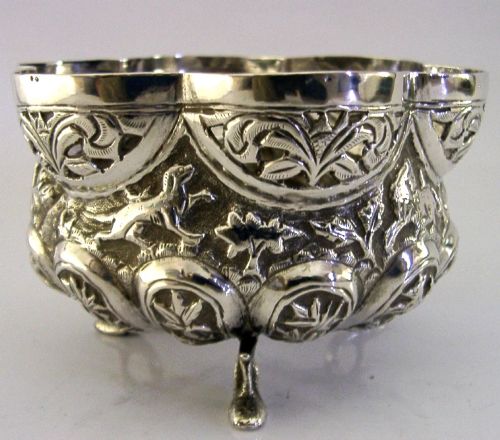
Craftsmen employed techniques including pierced repoussé work, intricate embossing, and hand-embroidery to ornament surfaces with animals, foliage, and figural scenes. These methods created highly textured objects, from heavy bowls to hinged presentation boxes.
Vintage Indian Silver Retail Price Guide 2026
Typical asking prices for vintage indian silver among the pieces listed under this phrase on Sellingantiques today, from the lower quarter to the upper quarter. They describe what is for sale here now, not the wider market.
Current listings feature items in solid silver, silver plate, and white metal, spanning the nineteenth century through the 1940s.
Distinctions in Quality
Quality in these pieces rests primarily on the crispness and depth of the metalwork, distinguishing sharply between flat stamping and deeply chased or embossed relief. Superior items exhibit precise detailing in figural motifs and animal elements without losing structural integrity in hinges or lids.
The weight and purity of the metal further divide the range, with heavier solid silver items offering a more substantial feel than silver-plated copper or light white metal variants. Preservation of delicate enamelwork or wirework also determines the standing of individual pieces.
The Vintage Indian Silver Glossary
- Repoussé
- A metalworking technique where the artisan hammers the design from the reverse side to form a raised relief on the front. This method creates the characteristic dimensional patterns seen on many trays and boxes.
- Pandan
- A traditional container used for holding betel leaf preparations and spices. These boxes often feature multiple internal compartments and elaborate exterior decoration.
- Anglo-Indian
- A stylistic classification describing objects made in India during the British colonial period for both export and local European markets. These pieces often blend traditional Indian motifs with Western furniture and vessel forms.
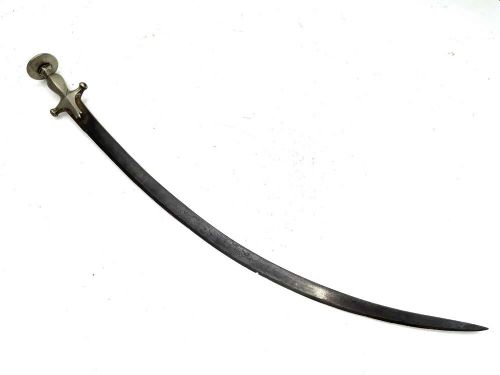
- Tulwar
- A traditional curved sword originating from the Indian subcontinent. The hilts frequently incorporate distinct metalwork and grip construction.
Vintage Indian Silver: Frequently Asked Questions
What are these silver items typically used for?
These pieces function primarily as decorative objects or small storage containers for trinkets, cards, and dry goods. Many items like bowls and caddies translate easily to modern display or desktop use.
Larger presentation pieces and trophies serve as focal points for interior styling, while smaller boxes suit bedside tables and hallways.
How do I identify Anglo-Indian silver pieces?
Anglo-Indian items usually combine traditional regional motifs, such as local fauna or deities, with European functional forms like tea caddies or beakers. Examining the decorative vocabulary reveals this cross-cultural design approach.
The historical context often links these objects directly to the colonial period of the nineteenth and early twentieth centuries.
Are these objects made of solid silver?
The listings include a mix of solid silver, sterling silver, and silver-plated items over copper or brass. Weight specifications and hallmarks help distinguish solid construction from plated variants.
White metal and base metals also appear in specific regional objects, providing different textures and weights across the selection.
How should I care for vintage silver items?
Gentle dusting with a soft cloth preserves the detailed repoussé and embossed surfaces without removing desirable patination. Avoid harsh chemical dips, particularly on pieces with enamel or wooden elements.
Storage in stable humidity conditions protects delicate wirework and hinged components from unnecessary strain.