
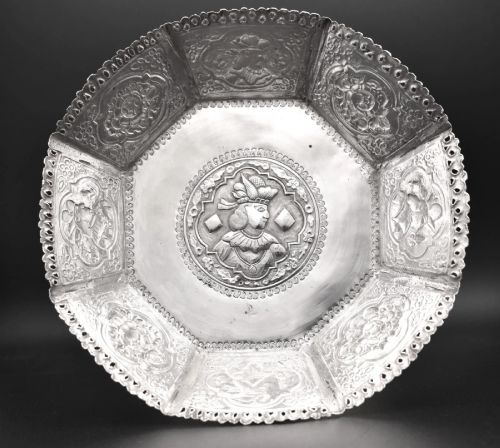


Embossed Silver Bowl
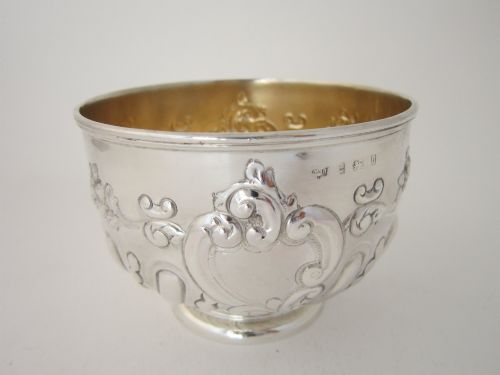
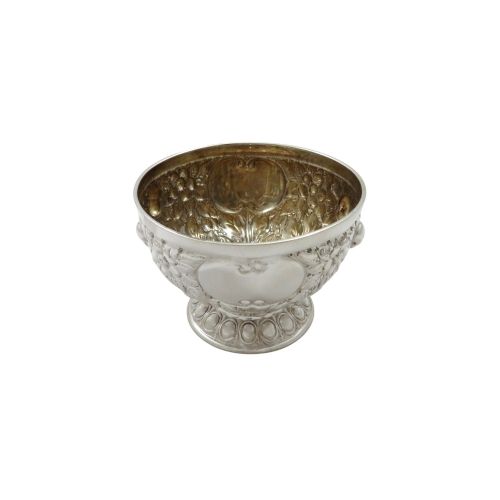
An embossed silver bowl brings tactile weight and raised ornamental depth to a table, combining chased floral motifs with the gleam of solid metal.
Embossed Silver Bowl
An embossed silver bowl is a hollow vessel decorated with raised designs hammered or pressed from the reverse side of the metal, creating a high-relief surface texture. When you search for this phrase, you encounter forms ranging from compact Victorian sugar basins and trinket dishes to broad Edwardian fruit bowls and deep punch vessels.
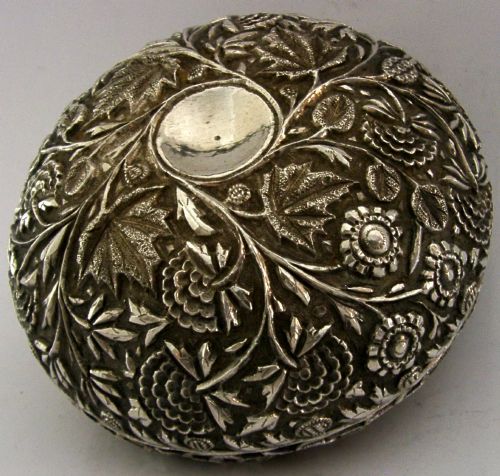
The pieces appearing on this page span the Georgian, Victorian, and Edwardian eras, alongside regional styles such as Anglo-Indian, Chinese Export, and Thai silverwork. Domestic British items sit alongside imported pieces bearing intricate repoussé figures, floral scrolls, and oriental panels.
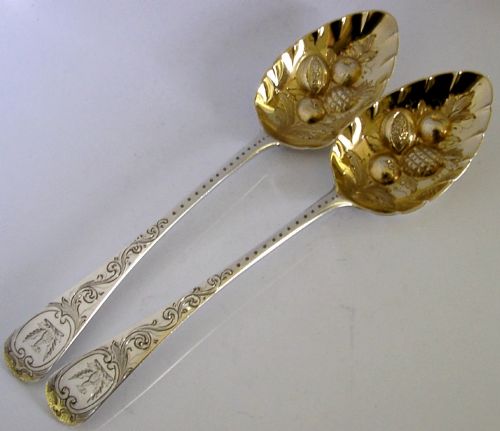
While the selection includes matching berry spoons, caddy spoons, and footed tazzas, the central focus remains the hollow bowl itself. These objects served utilitarian and decorative purposes in nineteenth-century and early twentieth-century households, functioning as sugar containers, rose bowls, or sweetmeat dishes.
Materials and working methods
Silversmiths utilised sterling silver, solid silver, and silver plate over base metals, occasionally incorporating gilt finishes or silver gilt to enrich the interior surfaces. Certain vessels incorporate supporting materials such as velvet or satin within presentation cases.
The primary technique relies on repoussé and chasing, where metal is hammered from the underside to raise the design, then refined from the top with punches to sharpen floral motifs, scrolls, and figures. Piercing and hand-chasing further defined the openwork edges seen on imported and domestic basket forms.
Listings feature pieces spanning the Georgian, Victorian, and Edwardian periods, executed in sterling silver, silver plate, and solid silver.
Distinctions in craftsmanship
The depth and crispness of the repoussé work dictate the distinction between standard production and superior craftsmanship, as shallow pressing lacks the sculptural dimension found in hand-chased pieces. Crisp undercutting of floral petals and figures demonstrates a silversmith's control over the metal.
Weight and gauge contribute significantly to the structural integrity of the vessel, separating thin plated items from heavy solid silver pieces that resist denting. Clear hallmarks indicating maker marks, town assay offices, and date letters provide historical grounding that enhances the integrity of the piece.
William Chawner II·James Hennell·Robert Hennell I and David Hennell II·Samuel Kirk·Jay Richard Attenborough
The Embossed Silver Bowl Glossary
- Repoussé
- A metalworking technique where the design is hammered into relief from the reverse side of the object. This method creates the raised floral and figural surfaces characteristic of the vessels.
- Chasing
- Working the metal from the front side using punches and hammers to refine the details of a repoussé design. It provides texture and cleans up the lines after the initial hammering.
- Sterling silver
- An alloy containing ninety-two point five percent silver and seven point five percent other metals, usually copper. It offers the durability required for domestic tableware.
- Silver gilt
- Silver objects that have been coated with a thin layer of gold on the surface, usually restricted to the interior of bowls and spoons. This treatment protected the silver from reactive foods.
- Sweetmeat bowl
- A small container historically used for serving confections, nuts, or dried fruits. These pieces often feature footed bases and decorative pierced or embossed rims.
Embossed Silver Bowl: Frequently Asked Questions
How do I care for silver?
Clean silver gently using a soft cloth and a specialised silver polish designed to remove tarnish without abrading the raised repoussé details. Avoid harsh chemical dips that strip the natural dark oxidation in recessed areas.
Store pieces away from direct moisture and humidity, using lined presentation cases or acid-free tissue to prevent surface scratching.
How do I date a silver bowl?
Dating relies primarily on hallmarks stamped into the metal, which include maker marks, standard marks indicating silver purity, city assay marks, and date letters. Comparing the style of the embossing, such as Victorian Rococo Revival or Edwardian floral scrolls, helps confirm the era.
Documentation or original cases accompanying pieces also provide reliable clues to their exact period of manufacture.
Were these bowls used for food?
Many nineteenth-century bowls served specific dining purposes, holding sugar, fruit, sweetmeats, or punch during formal meals. Gilt interiors were frequently applied to protect the silver metal from acidic contents.
Others functioned purely as decorative rose bowls, trinket dishes, or presentation pieces displayed on sideboards and tables.