

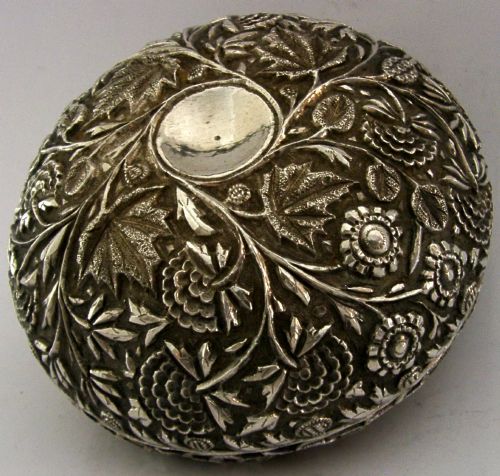


19th Century Indian Silver
These 19th century indian silver pieces offer intricate repousse work and traditional forms that collectors prize for their rich regional craftsmanship.
19th Century Indian Silver
When you search for 19th century indian silver, you encounter a diverse array of domestic and ceremonial objects spanning boxes, bowls, and trophy cups. The version you are most likely to meet on this page is the decorative bowl or specialised box, often associated with regional styles such as Kutch, Anglo-Indian, and Burmese workmanship.
The material evidence encompasses solid silver, silver plate, and white metal, frequently paired with wood, steel, or iron in items like edged weapons and walking sticks. Forms range from utilitarian items like milk jugs and cigarette cases to elaborate ceremonial ewers and ritual objects.
Geographic attribution stretches across various distinct traditions, including Indo-Persian, Indo-Tibetan, and Indian Colonial designs. These pieces capture the stylistic synthesis of local craftsmanship and period tastes during the Raj period.
What Varies in Quality
The distinction between ordinary and exceptional items lies in the crispness and depth of the repousse chasing, where master silversmiths achieved high-relief figures of animals and foliage with precise definition. Crisp detailing on complex subjects like fish, snakes, and figural scrolls separates the finer bowls and trophy cups from standard production.
Material composition also dictates standing, with heavy gauge solid silver commanding greater interest than silver plate or base white metal. Additionally, the complexity of the form - such as fitted boxes with intricate mechanisms or multi-part ceremonial ewers - elevates the standing of a piece within the range.
19th Century Indian Silver Retail Price Guide 2026
Typical asking prices for 19th century indian silver among the pieces listed under this phrase on Sellingantiques today, from the lower quarter to the upper quarter. They describe what is for sale here now, not the wider market.
The 19th Century Indian Silver Glossary
- Repousse
- Metalworking technique where the design is hammered into relief from the reverse side. This method allowed silversmiths to create three-dimensional scenes of animals and foliage on bowls and vases.
- Pandan
- A traditional box used for holding betel nut or spices. These hinged containers often feature elaborate silver wirework or repousse decoration.
- Kutch
- A regional style of Indian silversmithing known for dense, high-relief floral and animal scrollwork. Artisans from this area produced distinctive bowls, dishes, and cigarette cases.
- Compote
- An elevated pedestal bowl or dish used for serving fruit or sweets. Examples from this period often feature intricate wirework and solid silver construction.
- Katar
- A traditional Indian push dagger characterised by an H-shaped horizontal grip. Surviving examples sometimes feature pierced steel sheaths alongside silver or steel blades.
19th Century Indian Silver: Frequently Asked Questions
What is Anglo-Indian silver?
Anglo-Indian silver describes pieces made in India during the colonial period that combined traditional local motifs with European forms. These items were often commissioned by British residents.
Craftsmen adapted indigenous techniques to suit Western domestic habits, resulting in specialised objects like beakers, salvers, and cigarette cases.
How do I care for antique silver?
Antique silver requires minimal intervention, relying on gentle dusting and occasional careful cleaning to preserve the natural patina. Avoid harsh chemical dips that strip away the subtle darkening in deep recesses.
Display pieces away from direct sunlight and damp environments to protect any underlying wooden elements or mixed-media mounts.
How are Kutch silver items identified?
Kutch silver is recognised by its characteristic dense foliage, scrollwork, and frequently incorporated animal figures such as lions, elephants, and birds. The decoration covers the entire surface in high relief.
This distinct regional aesthetic appeared on various domestic items, including dishes, vases, and cigarette cases.