
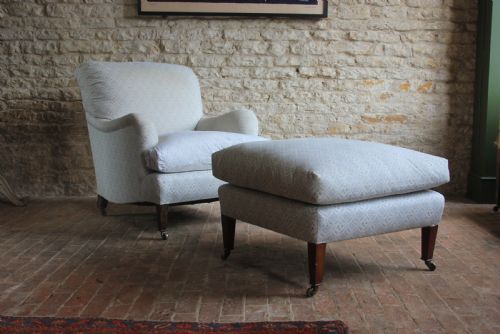

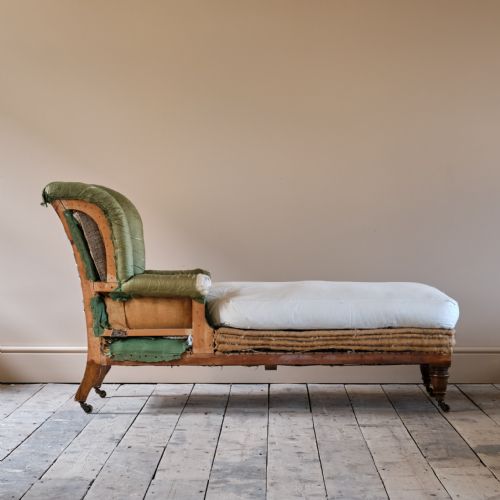


Vintage Howard Sons Chair
A vintage howard sons chair brings unmatched comfort and timeless English country house style to a room through deep upholstery and generous proportions.
Vintage Howard Sons Chair
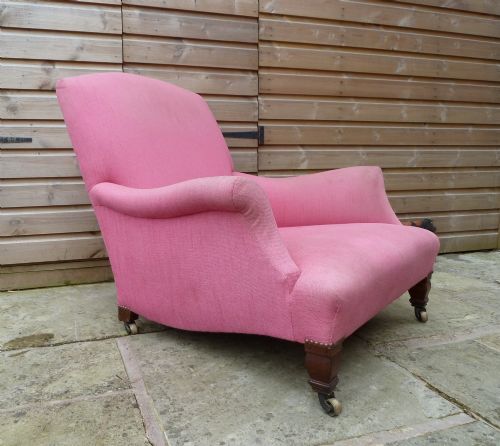
A vintage howard sons chair represents the pinnacle of Victorian and Edwardian seating comfort, taking forms such as the iconic Bridgewater armchair, the club armchair, and the open armchair. Buyers searching for a vintage howard sons chair seek pieces defined by deep seats, low backs, and rolled arms designed for supreme relaxation.
The selection on this page spans the nineteenth century through the early twentieth century, encompassing pieces from the Victorian and Edwardian eras alongside later revival interpretations. Alongside standard armchairs, the evidence records related forms including daybeds, chaise longues, carver dining chairs, wing chairs, and sofas.
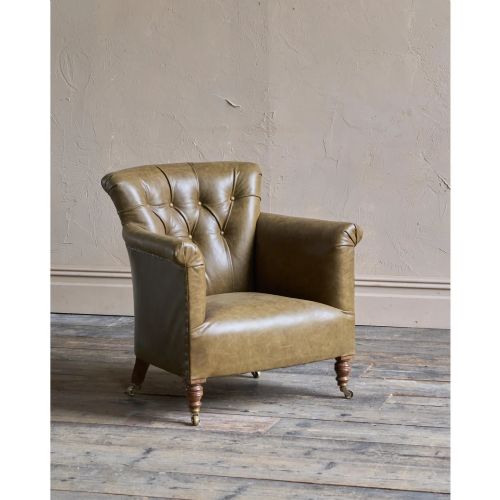
Makers and retailers such as Howard and Sons and James Shoolbred shaped this tradition, producing seating upholstered in fabrics ranging from simple ticking and cotton to patterned kilim, Ushak turkey carpet, velvet, and leather. These pieces suit traditional country house interiors as well as modern spaces requiring a strong anchor of craftsmanship and design history.
Distinctions in quality
Quality in a vintage howard sons chair rests upon the integrity of the underlying timber frame and the authenticity of the maker's stamp or labels. Pieces bearing direct attribution to the firm command greater attention than general revival pieces due to documented workshop standards.
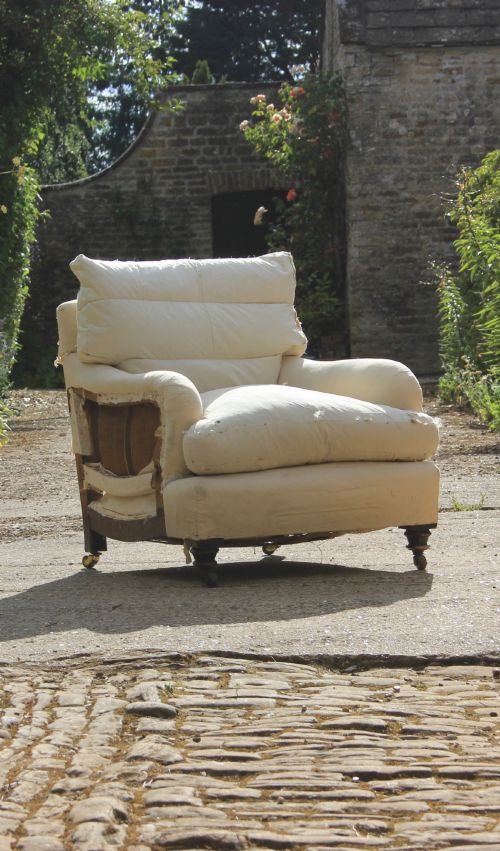
The grade and originality of the upholstery materials further separate examples, with specialised textiles like kilim or stamped leather representing distinct tiers of production. Master upholsterer techniques in the springing and padding dictate whether a piece maintains its intended comfort and contour over decades.
One enthusiastic Victorian chose to upholster a club armchair in an Ushak Turkey carpet, proving country house comfort brooks no rules.
Howard and Sons·James Shoolbred
The Vintage Howard Sons Chair Glossary
- Carver
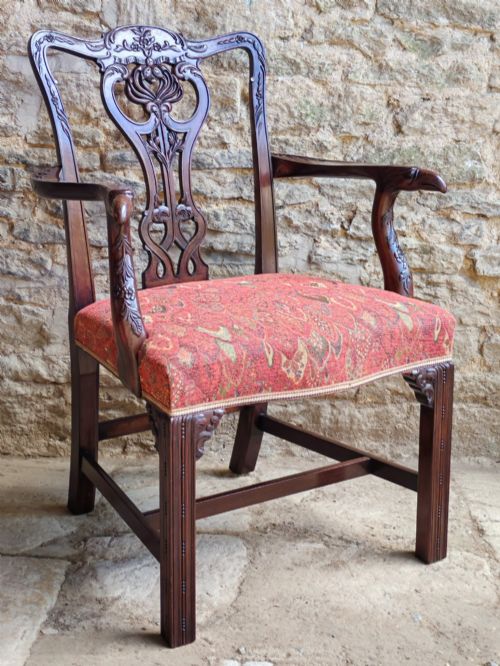
- An armchair, often with open wooden arms, designed originally for the head of a dining table or as a parlor seat. These incorporate mahogany or walnut frames.
- Kilim
- A flat-woven textile often utilised as upholstery on club armchairs to add rich geometric patterns and texture. Such coverings reflect country house taste.
- Ticking
- A durable cotton or linen fabric historically used as the base lining or primary upholstery cover on traditional seating. It provides a crisp, understated aesthetic.
- Daybed
- An elongated piece of furniture combining the seating comfort of an armchair with the recline of a small bed. The evidence includes both Victorian and Edwardian variants.
Vintage Howard Sons Chair: Frequently Asked Questions
What is a Bridgewater armchair?
A Bridgewater armchair is a specific low-armed upholstered seat designed for deep, relaxed lounging. The style became a hallmark of late nineteenth-century comfort.
These chairs feature generous proportions and rolled or recessed arms that distinguish them from formal parlour seating.
How do I identify a Howard and Sons chair?
Authentic pieces often feature maker stamps on the wooden frame or castors, alongside characteristic structural proportions. Examining the upholstery style and interior webbing also helps verify origin.
Many pieces from the period follow specific model names or utilise distinct materials like branded ticking fabric.
What materials were used for upholstery?
Traditional upholstery materials include durable cotton ticking, rich velvet, full-grain leather, and imported textiles like kilim or Ushak carpets. These varied according to the specific model and client preference.
Internal padding relied on quality stuffing and coiled spring systems built by hand.
Are these chairs suitable for daily use?
These pieces were built with robust hardwood frames and resilient sprung interiors designed for enduring comfort. They integrate seamlessly into contemporary living spaces as functional seating.
Proper care for the leather or fabric preserves the condition of the upholstery over time.
How do Victorian and Edwardian models differ?
Victorian examples often showcase heavier proportions and ornate details such as claw and ball legs or carpet upholstery. Edwardian pieces frequently lean towards lighter woods like walnut and refined open arm designs.
Both periods share a commitment to deep-seated comfort and exceptional joinery.