
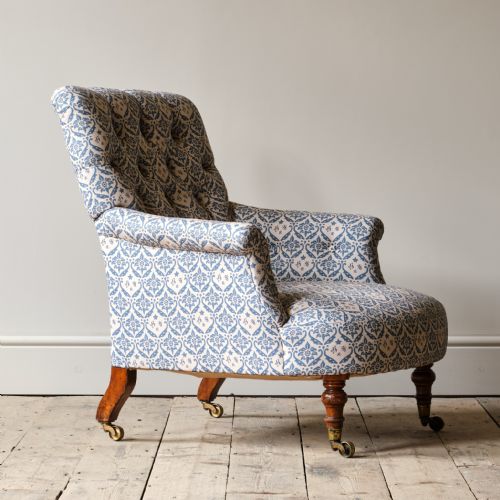



Antique Howard Armchair Frame
An antique howard armchair frame is the bare bones of a classic English seat, stripped back so you can build the upholstery from scratch.
Antique Howard Armchair Frame
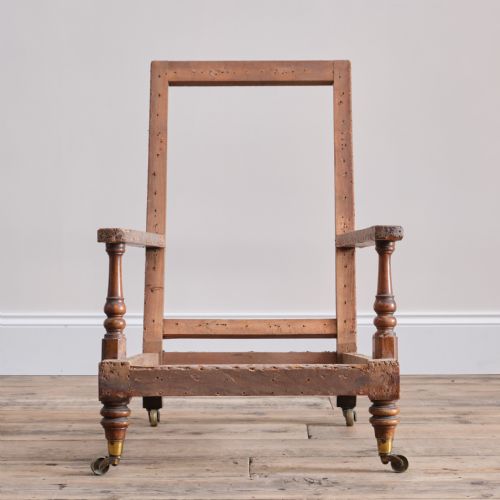
When you search for an antique howard armchair frame, you are looking at the structural wooden skeleton of a deeply comfortable nineteenth or early twentieth century seat. These pieces emerge from periods like the Victorian and Edwardian eras, built with solid timber forms that have survived decades of use.
The versions you are most likely to meet on this page range from mid nineteenth century examples to later Edwardian and 1920s frames. They appear as open armchairs or large easy chairs, often carrying the distinct proportions associated with English country house seating.
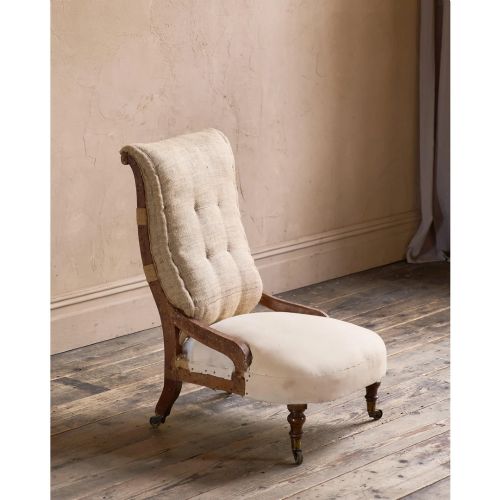
Some of these frames bear the stamp of Howard and Sons, whilst others are built in the distinct Howard style by contemporary makers or later workshops. Every piece presents the naked wooden structure, sometimes retaining traces of hessian, calico, or horsehair stuffing from previous incarnations.
How they were made
The construction relies heavily on sturdy timbers such as beech and walnut, providing a robust frame capable of withstanding heavy interior use. Cabinet makers shaped these woods to form low, deep seats and scrolling arms designed for lounging.
Traditional upholstery techniques are visible in the surviving remnants attached to the frames, utilising horsehair, hessian, and cotton stuffing bound with careful stitching. Brass castors often support the legs, allowing these heavy timber chairs to move smoothly across floorboards.
Listings span the nineteenth and twentieth centuries, featuring materials such as walnut, beech, brass, hessian, cotton, horsehair, and calico.
What varies in quality
Quality rests in the integrity of the timber frame and whether the joints remain tight and original. A superior frame shows crisp proportions and substantial weight in the beech or walnut structure, whereas lesser examples might display replacement timber or compromised joints.
The presence of maker stamps on the back legs or castors elevates a piece significantly, confirming authentic workshop origin over generic country house styling. Original brass castors and uncompromised internal webbing separate the finer workshop productions from standard commercial builds of the period.
Howard and Sons
The Antique Howard Armchair Frame Glossary
- Howard style
- A low, deep-seated armchair design originating in the nineteenth century, celebrated for generous proportions and rolled arms. These pieces set the standard for English country house comfort.
- Open armchair
- A seat construction featuring exposed wooden arms without full upholstered padding down to the seat rail. This form showcases the timber framework of the maker.
- Gainsborough armchair
- A wide seat with an upholstered back and arms, standing on short legs with open space beneath the armrests. Eighteenth-century in origin, the form continued well into the nineteenth century.
- Horsehair
- A traditional upholstery filling material prized for its springiness and durability. Makers layered this natural fibre inside hessian covers to build resilient padding.
- Hessian
- A coarse woven fabric made from jute fibres, utilised as a strong foundation layer for internal padding. Upholsterers stretch this material tightly across the wooden frame.
Antique Howard Armchair Frame: Frequently Asked Questions
What is a howard armchair frame?
A howard armchair frame is the bare wooden skeleton of a nineteenth or twentieth century easy chair, stripped of its outer fabric.
These pieces provide the structural foundation for traditional upholstery, allowing restorers to rebuild the seat using period materials.
How can I tell if a frame is genuine?
Authentic pieces often feature maker stamps on the timber legs or brass castors, alongside traditional joinery methods appropriate to the nineteenth century.
Examining the construction reveals the quality of the beech or walnut timber used by the original workshop.
How do I live with an unrecovered frame?
Living with a bare frame means appreciating the sculptural quality of exposed nineteenth century woodwork and traditional joinery.
Many owners choose to display the skeleton temporarily before sending the piece to an upholsterer for complete restoration.
What materials are hidden inside the upholstery?
Traditional frames typically conceal layers of horsehair, hessian, cotton, and calico secured with iron tacks and twine.
These natural components work together to create the sprung comfort characteristic of English country house seating.